
Hors-série Anatole France

Anatole France belongs to that group of famous authors whose names everyone knows, but whom few have actually read.
His body of work is neither the first nor the last in French literature to suffer this paradoxical fate, but it stands as an emblematic example of it — both for its scale and for the violence of the criticism leveled against it. This Nobel laureate in Literature (1921), member of the Académie française, and author of worldwide bestsellers, was hailed everywhere as the greatest French writer of his time, if not of all time — yet his name has become nearly hollow: Anatole France is almost impossible to find not only in school and university curricula, but also, and above all, with a few rare exceptions, in scholarly research across every field where he might reasonably belong — from the history of French and comparative literature to the history of ideas and the history of intellectuals. This is a striking paradox given the scope of his political engagement as a Voltairean figure: in the Dreyfus Affair, against the Armenian genocide, in support of the 1905 law on the Separation of Church and State (he even wrote the preface to Combes's speeches), and against colonization as well. The literary researchers at the École normale supérieure, now embarking on a vast study project devoted to this "illustrious unknown" (alongside a program to digitize his complete works), could not have framed this contrast more aptly.
On our own modest scale, Librairie Walden wanted — out of curiosity as much as heartfelt conviction that bibliophily remains a living pursuit precisely when it takes the occasional detour — to present a small Anatole France corpus, spanning from his youthful poems and novels to his final works.
These first editions, some handsomely bound, are accompanied by four manuscripts from France's childhood, addressed to one or the other of his parents. We have added to this the earliest studies and biographies published on the author of Thaïs between 1924, the year of his death, and 1960, when the Bibliothèque nationale devoted an exhibition to him.
A first foray in tribute to an author — one that will no doubt call for others to follow…
His body of work is neither the first nor the last in French literature to suffer this paradoxical fate, but it stands as an emblematic example of it — both for its scale and for the violence of the criticism leveled against it. This Nobel laureate in Literature (1921), member of the Académie française, and author of worldwide bestsellers, was hailed everywhere as the greatest French writer of his time, if not of all time — yet his name has become nearly hollow: Anatole France is almost impossible to find not only in school and university curricula, but also, and above all, with a few rare exceptions, in scholarly research across every field where he might reasonably belong — from the history of French and comparative literature to the history of ideas and the history of intellectuals. This is a striking paradox given the scope of his political engagement as a Voltairean figure: in the Dreyfus Affair, against the Armenian genocide, in support of the 1905 law on the Separation of Church and State (he even wrote the preface to Combes's speeches), and against colonization as well. The literary researchers at the École normale supérieure, now embarking on a vast study project devoted to this "illustrious unknown" (alongside a program to digitize his complete works), could not have framed this contrast more aptly.
On our own modest scale, Librairie Walden wanted — out of curiosity as much as heartfelt conviction that bibliophily remains a living pursuit precisely when it takes the occasional detour — to present a small Anatole France corpus, spanning from his youthful poems and novels to his final works.
These first editions, some handsomely bound, are accompanied by four manuscripts from France's childhood, addressed to one or the other of his parents. We have added to this the earliest studies and biographies published on the author of Thaïs between 1924, the year of his death, and 1960, when the Bibliothèque nationale devoted an exhibition to him.
A first foray in tribute to an author — one that will no doubt call for others to follow…
52 works
Anatole France
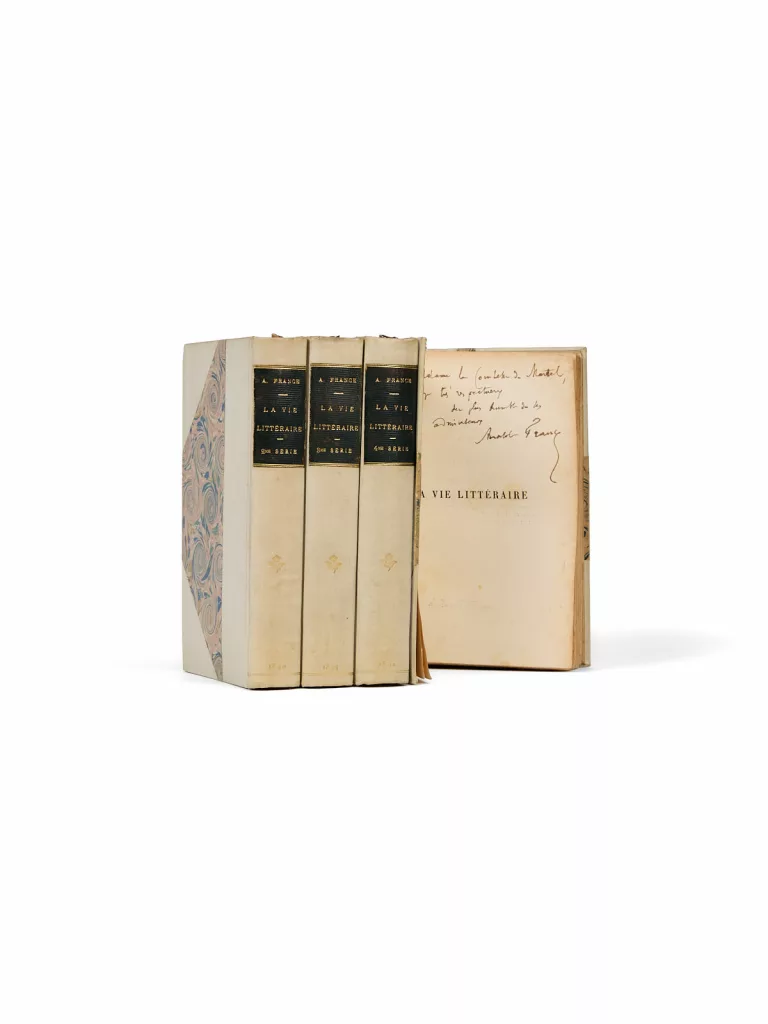
La Vie littéraire
Paris, Calmann Lévy, 1888-1892.A complete set, inscribedSold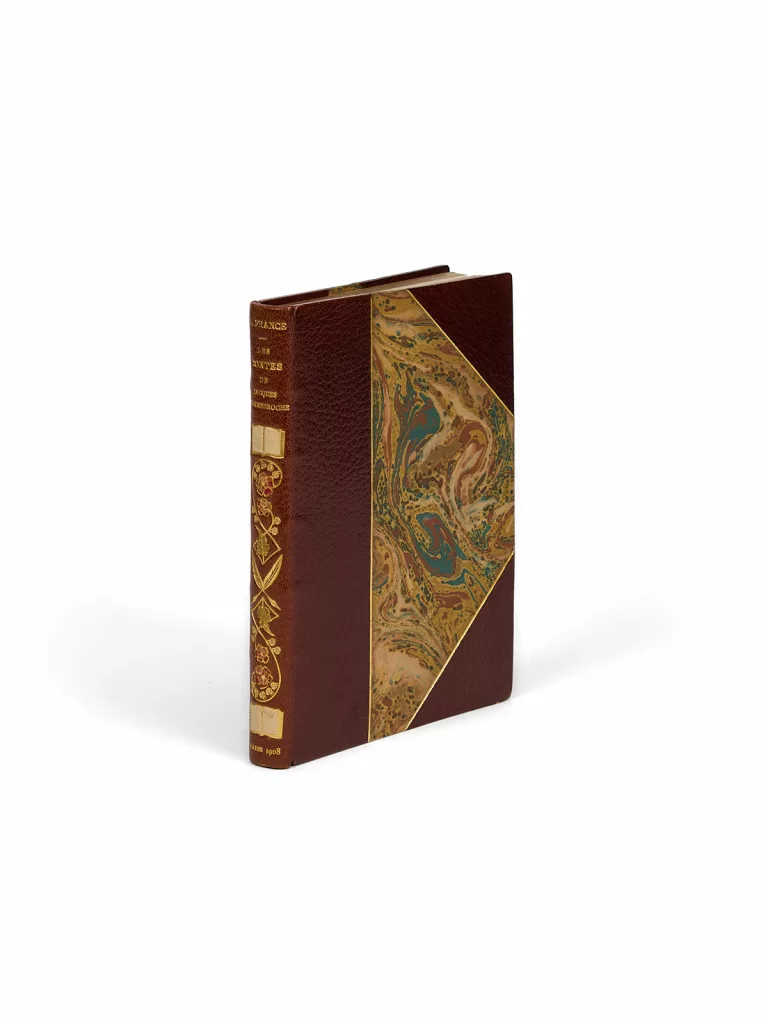
Anatole France
Les Contes de Jacques Tournebroche
Paris, Calmann-Lévy, (June 15) 1908.Copy on China paper in a binding by P. RubanSold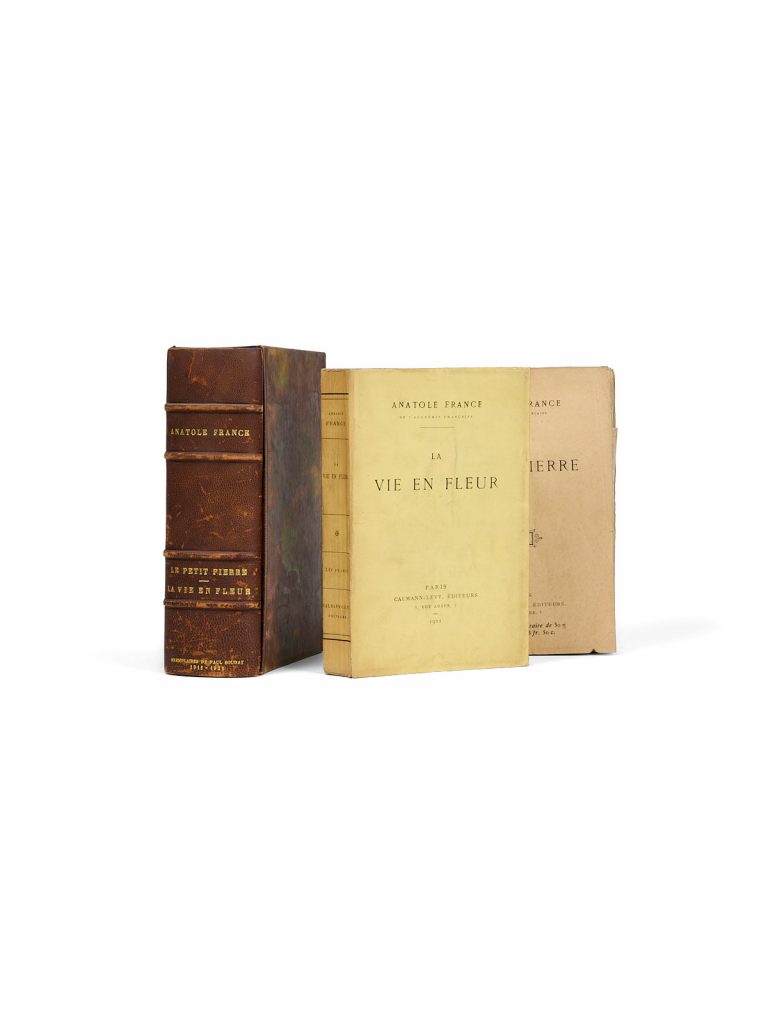
Anatole France
Le Petit Pierre
Paris, Calmann-Lévy, 1918 et 1922.Anatole France's last memoirs: the Paul Souday copySold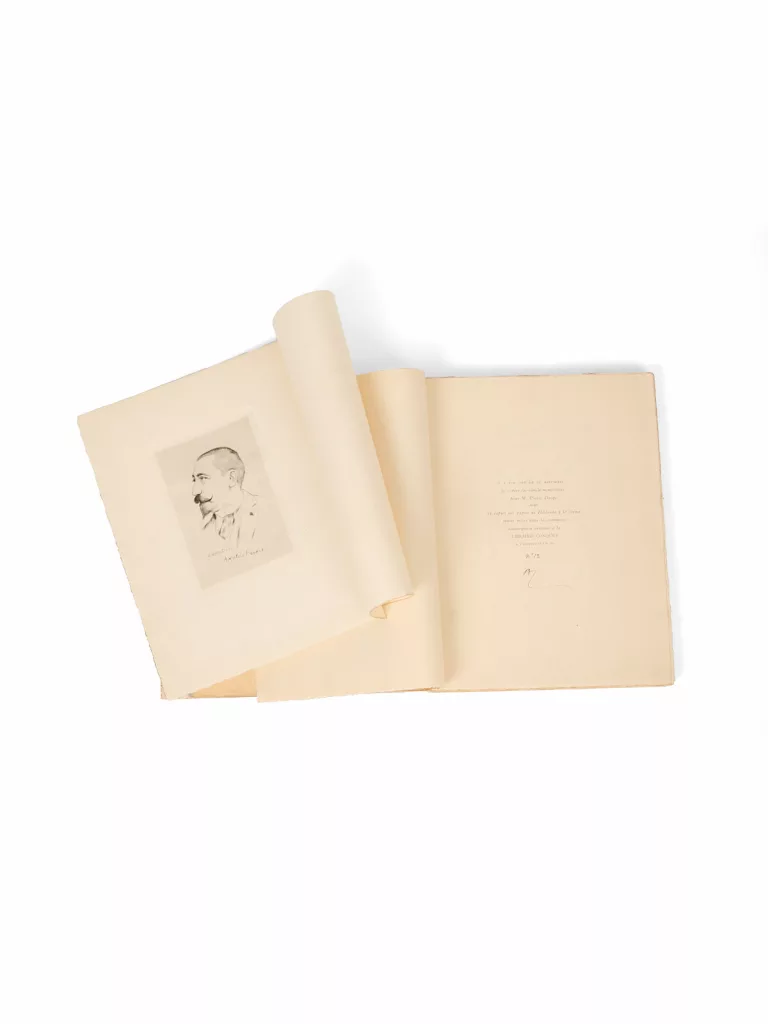
Anatole France
Au petit bonheur
[Paris], Pierre Dauze, 1898.Lucien-Graux's copy, deluxe issueSold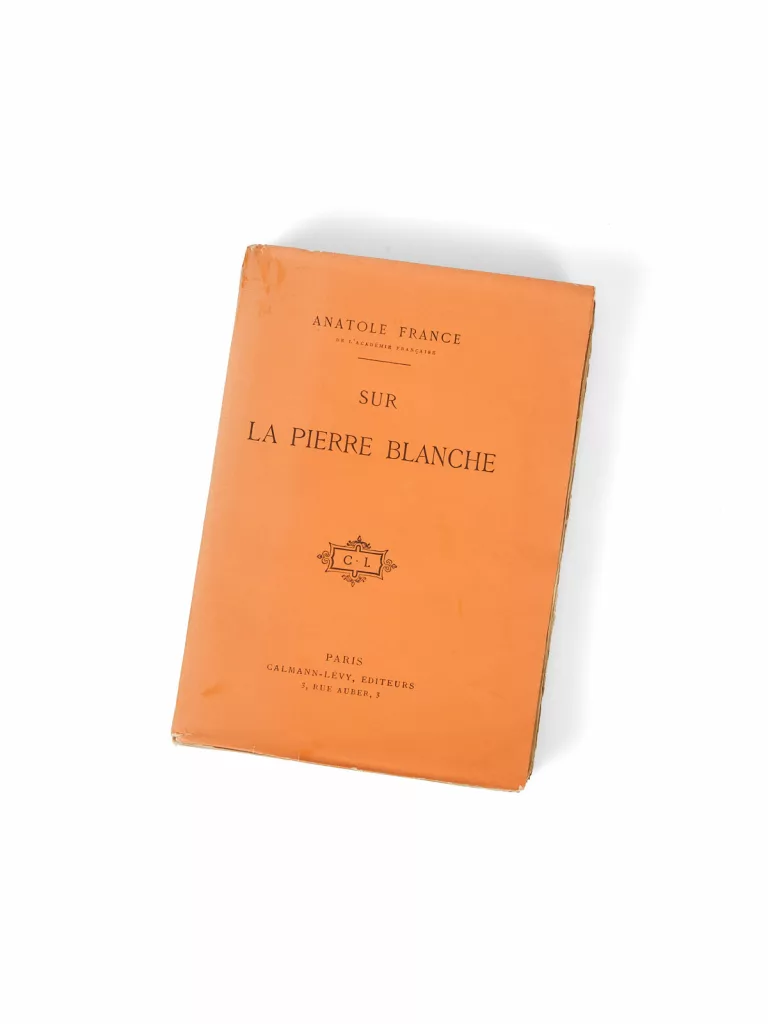
Anatole France
Sur la pierre blanche
Paris, Calmann-Lévy, (November) 1903.First edition, copy on Holland paperSold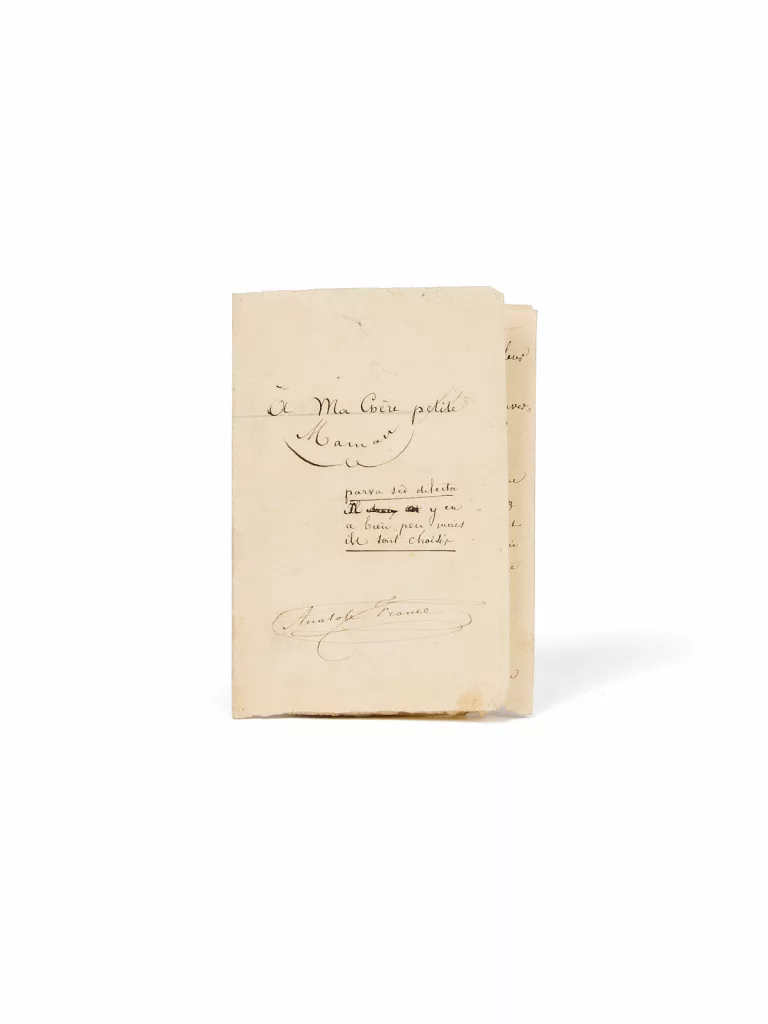
Anatole France
« À ma chère petite maman… »
[Paris, circa 1852].Anatole France's only surviving childhood bookletSold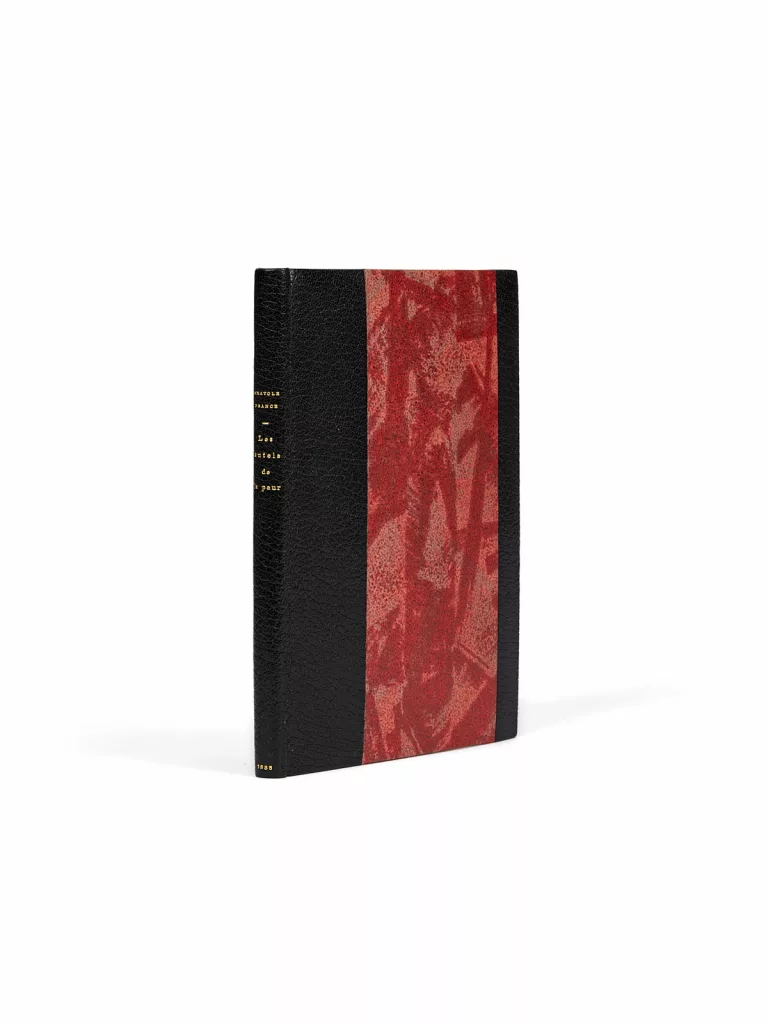
Anatole France
Les Autels de la peur
Paris, s.é., (March 11) 1885.A rare first edition drawn from the dark hours of the French RevolutionSold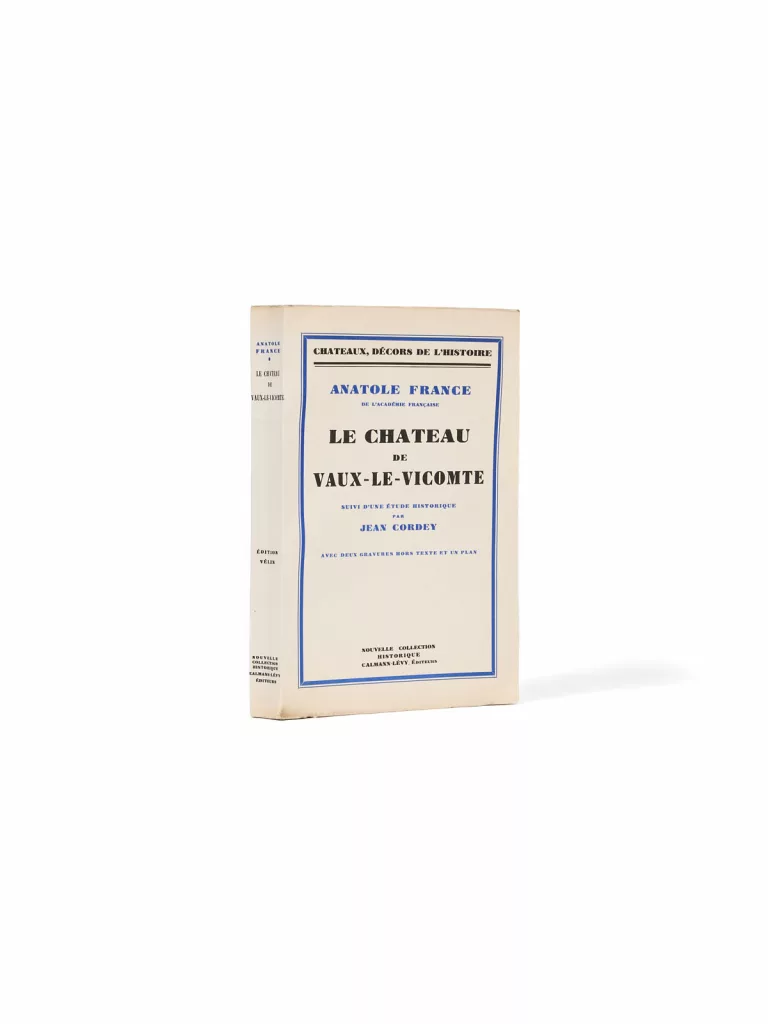
Anatole France
Le Château de Vaux-le-Vicomte
Paris, Calmann-Lévy, (June) 1933.First edition. Copy on vélinSold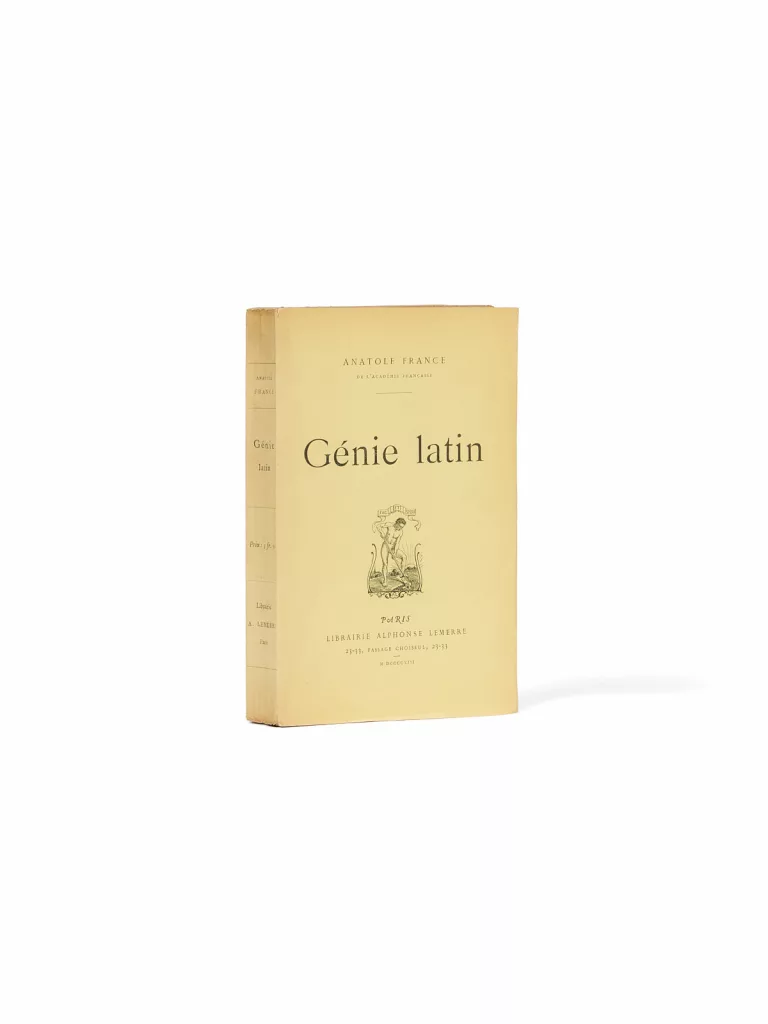
Anatole France
Le Génie latin
Paris, Alphonse Lemerre, 1913.Anatole France's prefaces for LemerreSold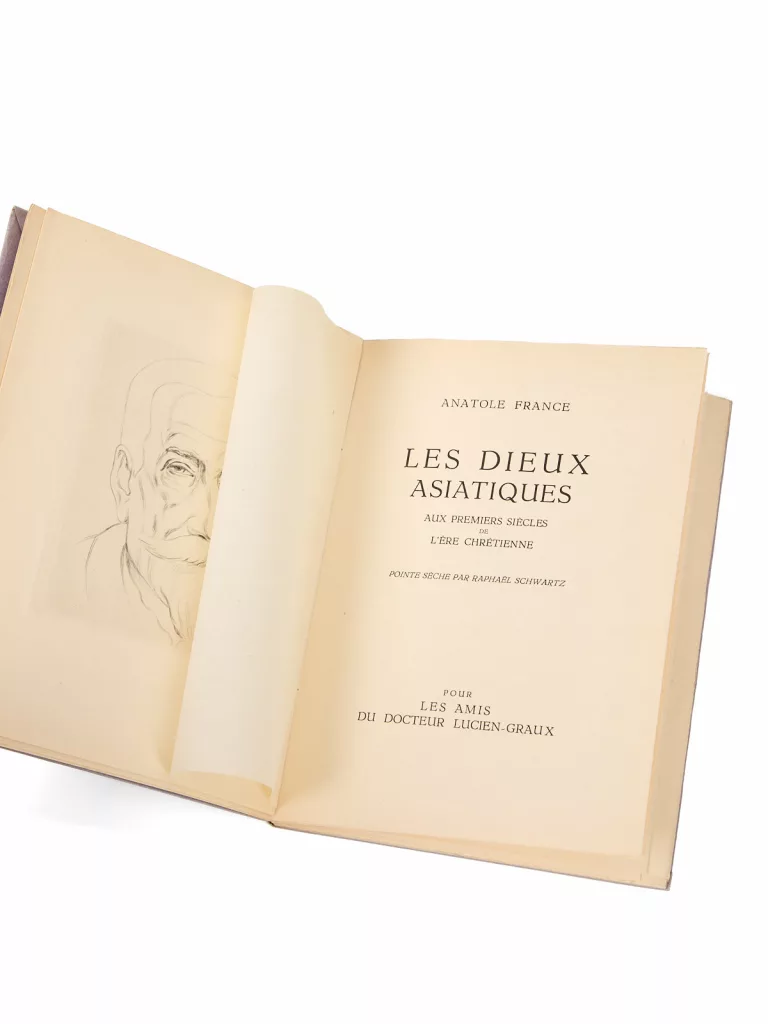
Anatole France
Les Dieux asiatiques
Paris, “Pour les Amis du Docteur Lucien-Graux,” (August 25) 1928.A confidential edition of a lecture by Anatole FranceSold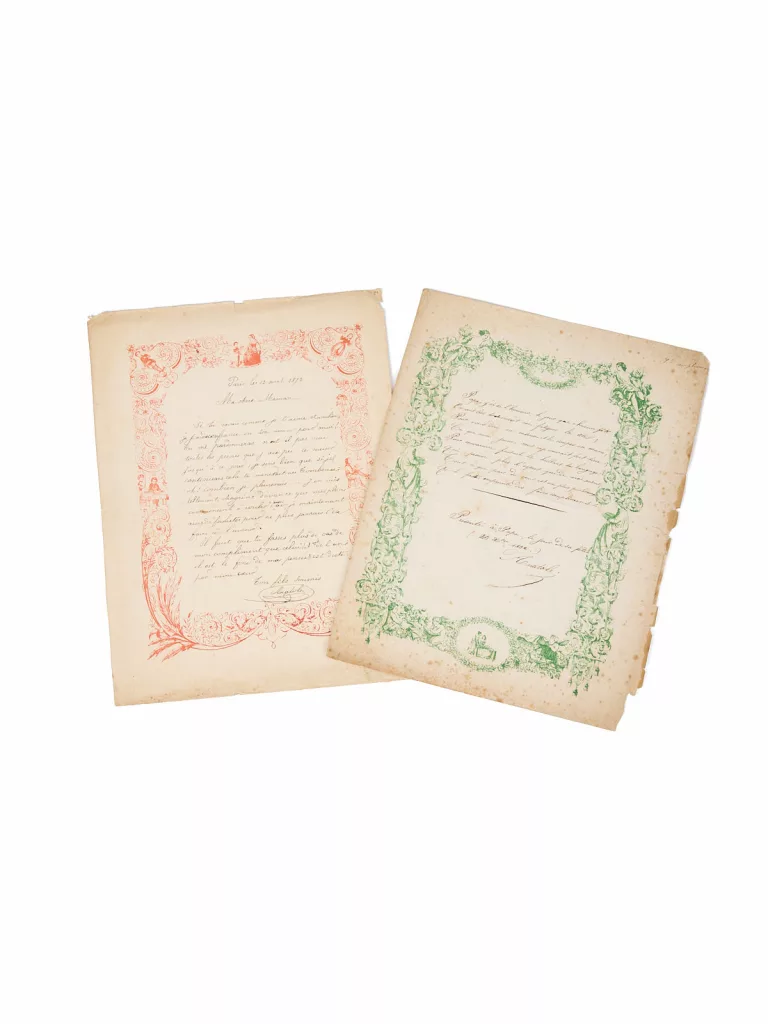
Anatole France
Compliments à chacun de ses parents
[Paris] August 12 and December 25, 1852.Rare childhood manuscripts, one to each of France's parentsSold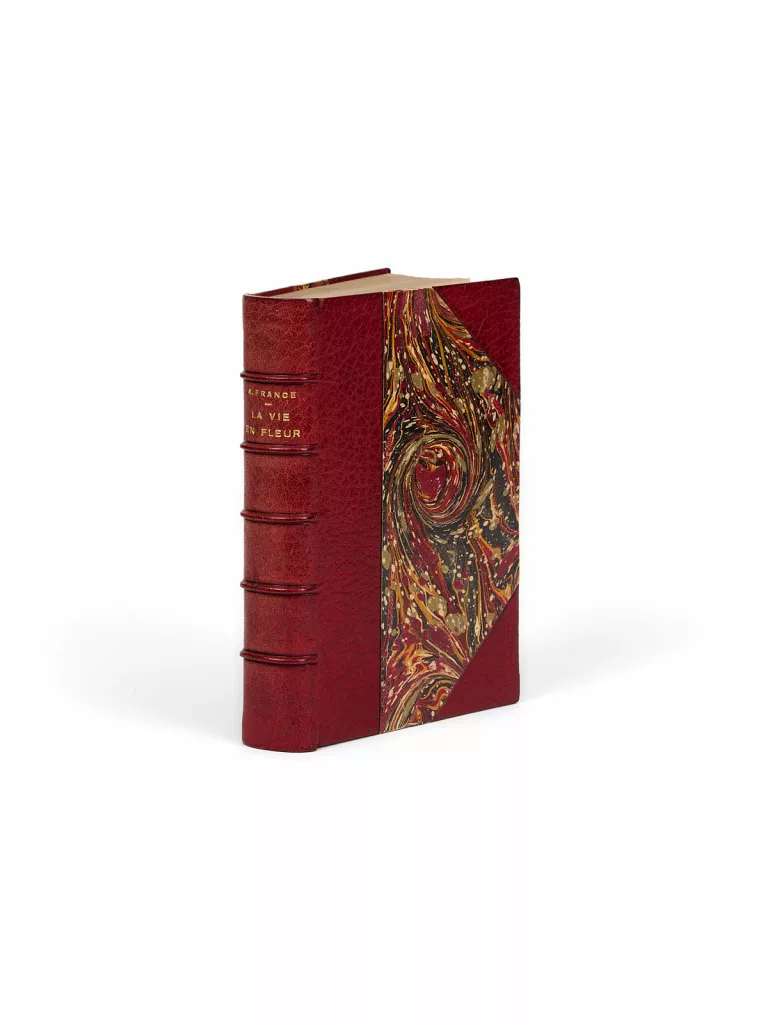
Anatole France
La Vie en fleur
Paris, Calmann-Lévy, (July) 1922.Deluxe copy of Anatole France's last bookSold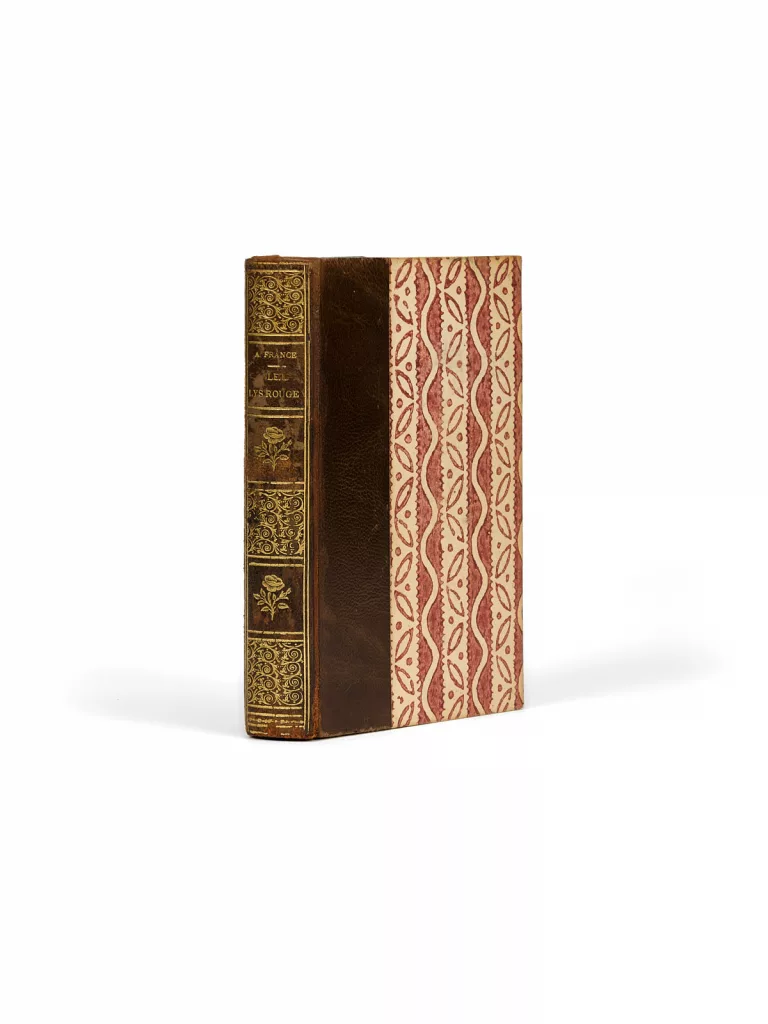
Anatole France
Le Lys rouge
Paris, Calmann Lévy, (July) 1894.France's novel inspired by Léontine de CaillavetSold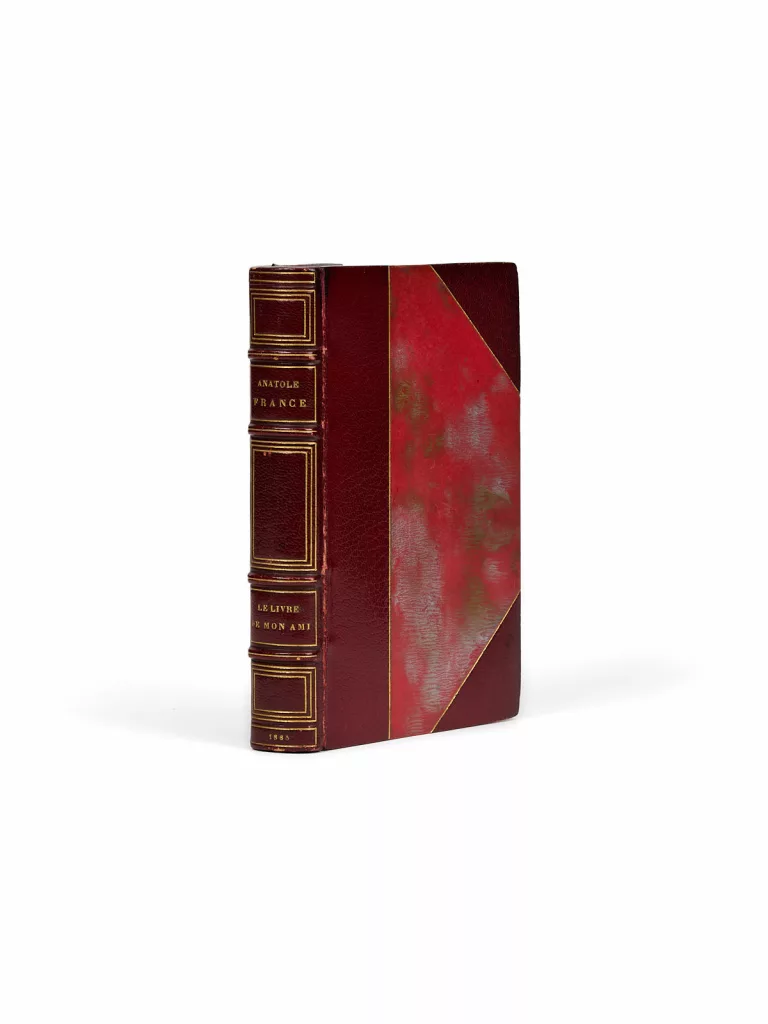
Anatole France
Le Livre de mon ami
Paris, Calmann Lévy, coll. « Bibliothèque contemporaine », 1885.France's first book of memoirs, inscribedSold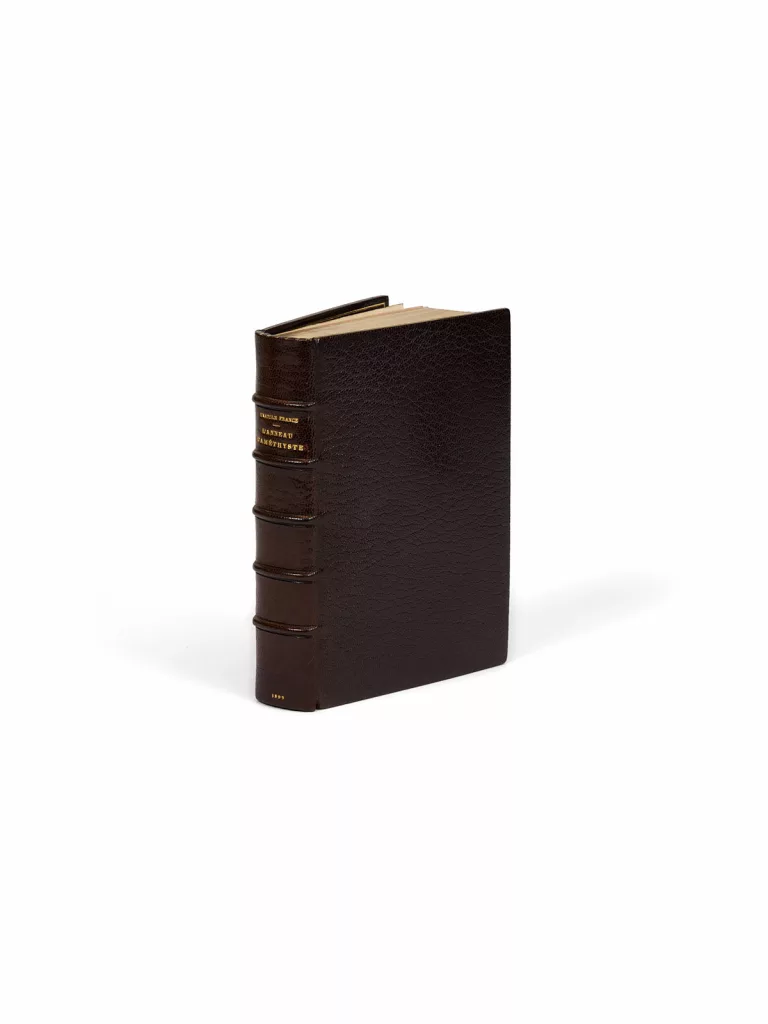
Anatole France
L’Anneau d’améthyste
Paris, Calmann-Lévy, (August) 1898.Deluxe copy on Japanese paper, bound by Canape in doublure moroccoSold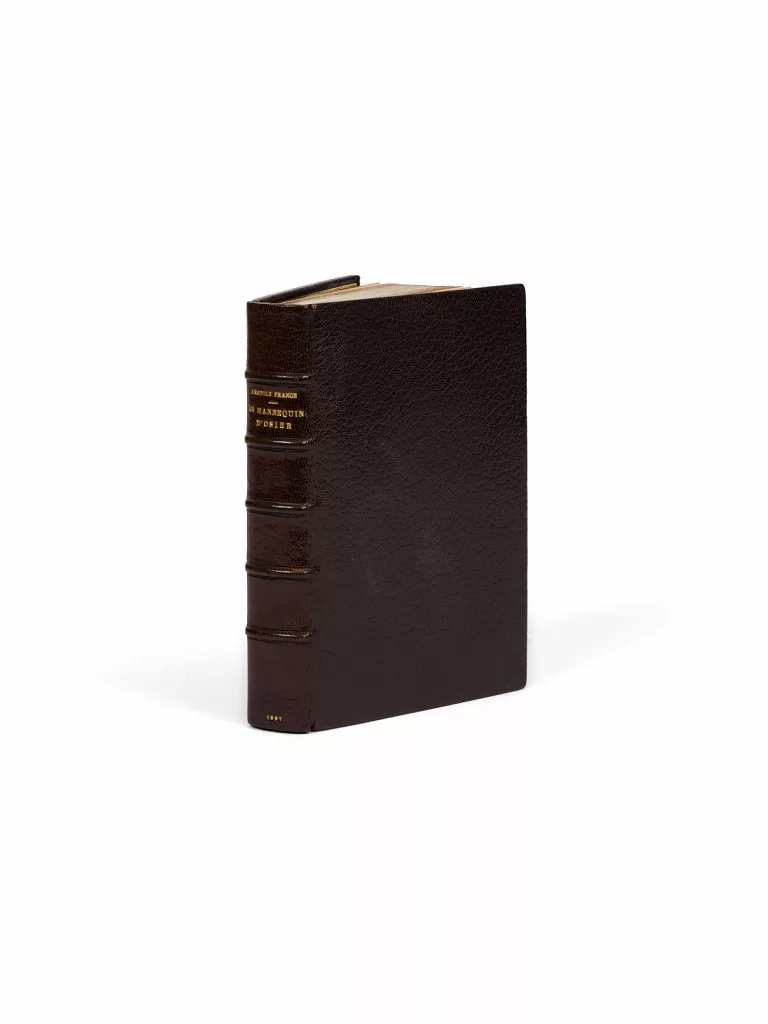
Anatole France
Le Mannequin d’osier
Paris, Calmann Lévy, (August) 1897.Hollande-paper copy, doublure binding by CanapeSold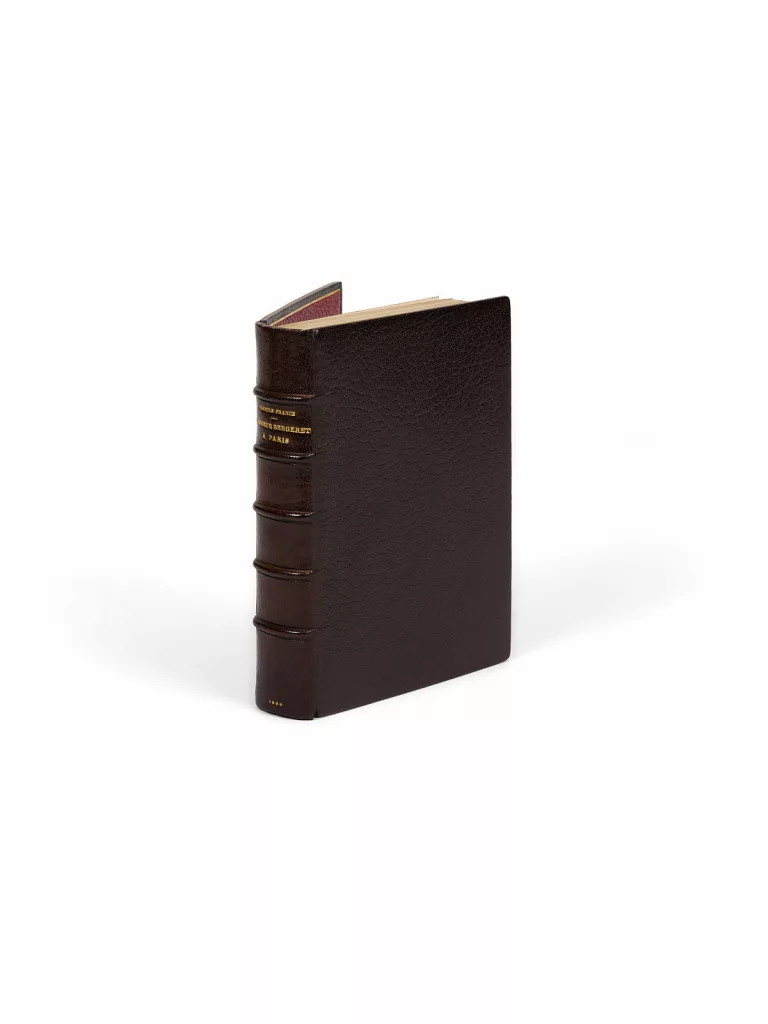
Anatole France
Monsieur Bergeret à Paris
Paris, Calmann Lévy, (February) 1900.Deluxe Japan-paper copy, doublé binding by CanapeSold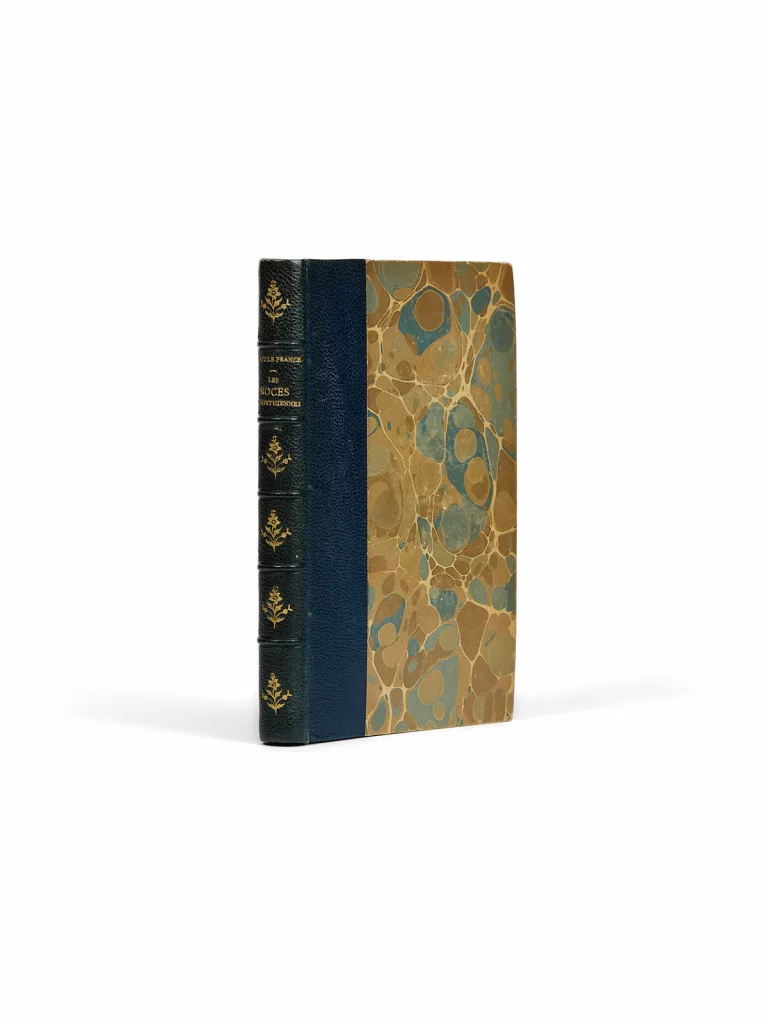
Anatole France
Les Noces corinthiennes
Paris, Alphonse Lemerre, 1876.First edition, inscribed: a Parnassian dramatic masterpieceSold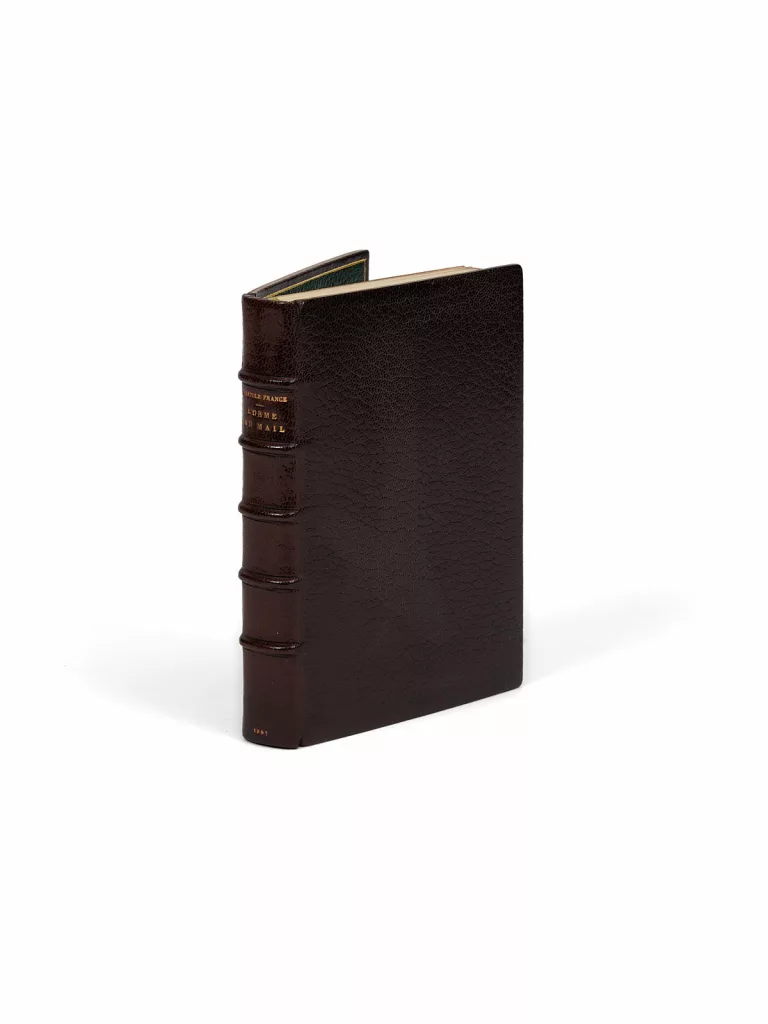
Anatole France
L’Orme du mail
Paris, Calmann Lévy, (July) 1896.Copy on Holland paper, doublure binding by CanapeSold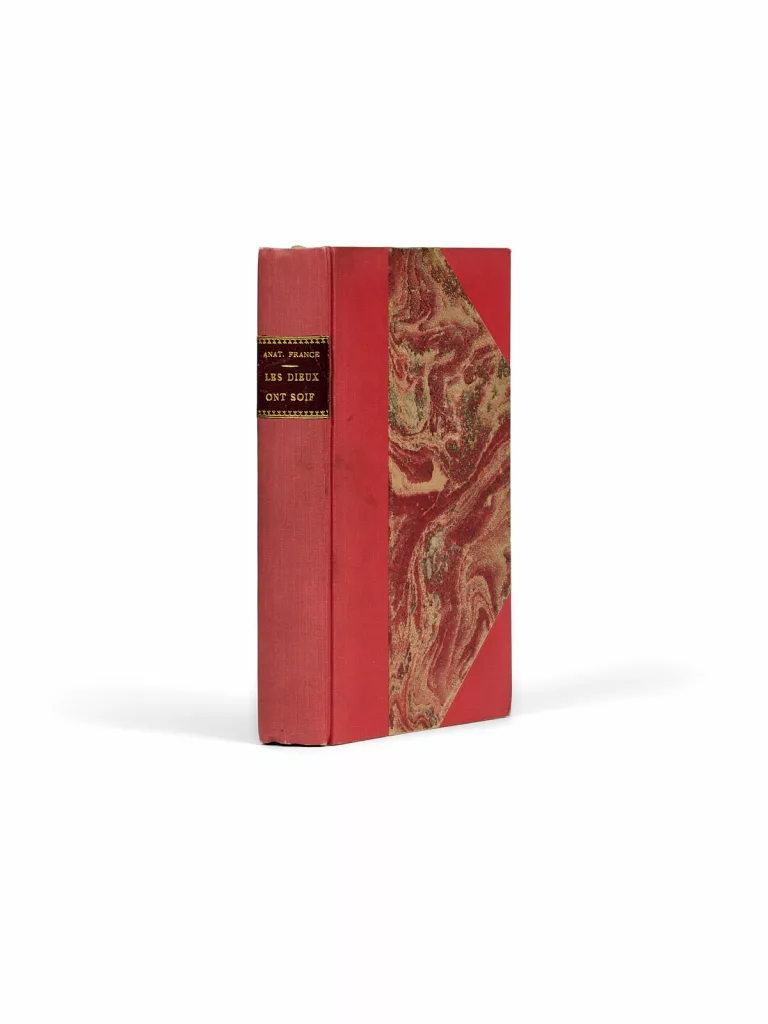
Anatole France
Les dieux ont soif
Paris, Calmann-Lévy, (June) 1912.First edition revealing Anatole France's political thoughtSold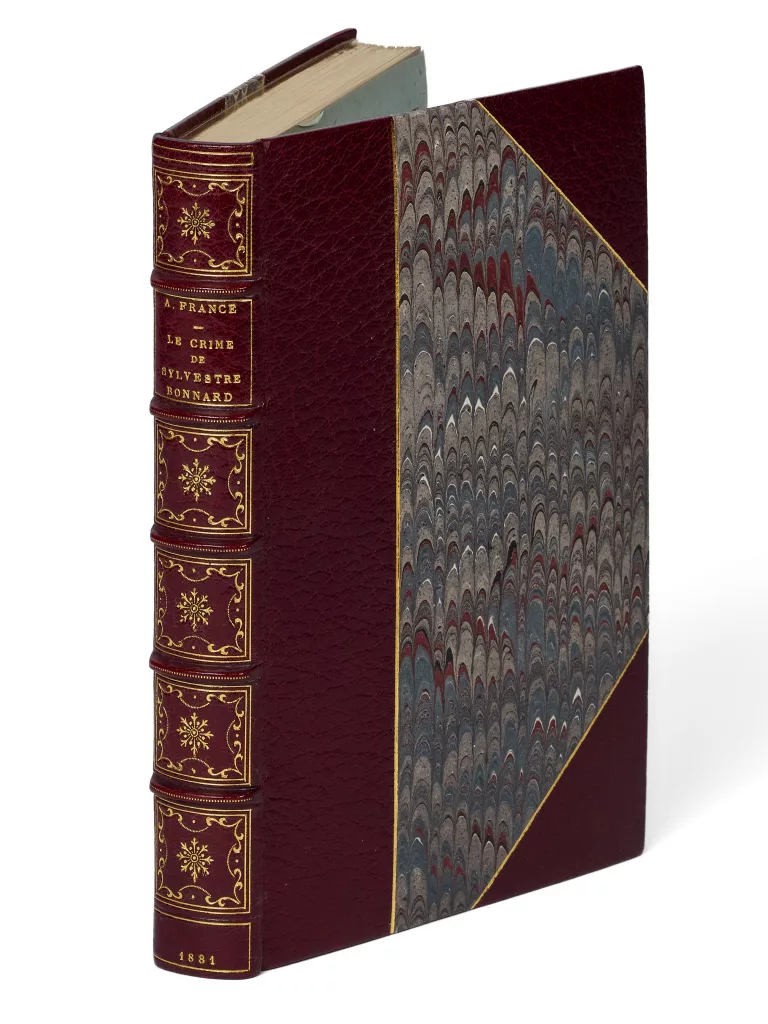
Anatole France
Le Crime de Sylvestre Bonnard
Paris, Calmann Lévy, coll. « Bibliothèque contemporaine », 1881.France's masterpiece, bound with its rare first wrapperSold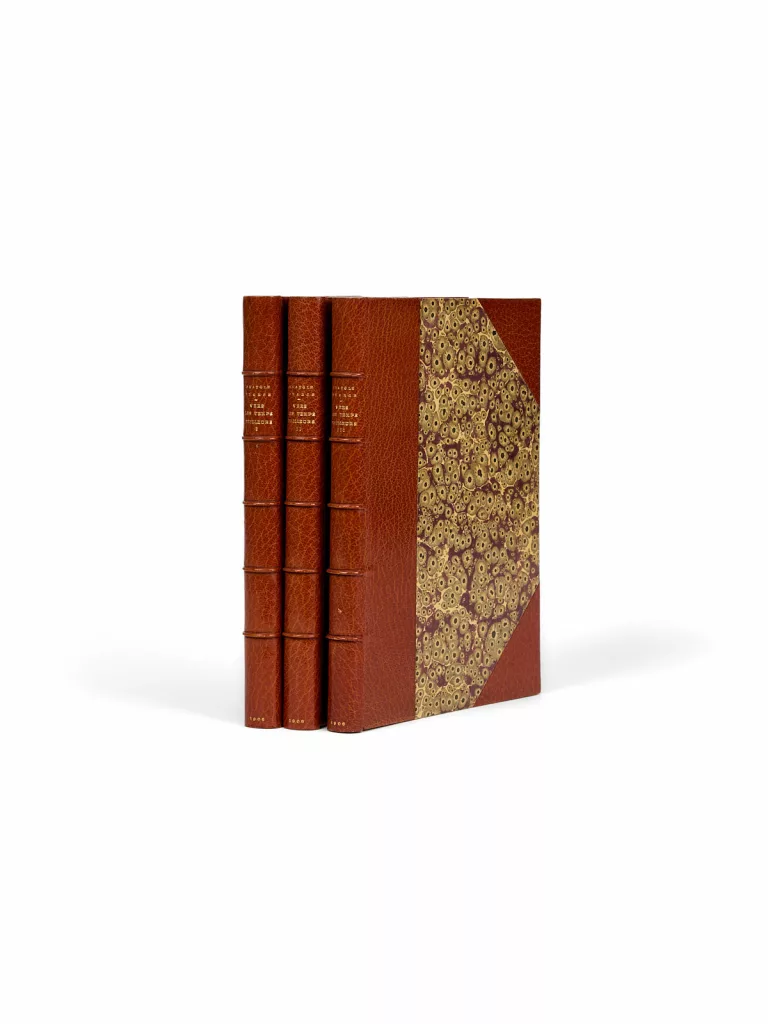
Anatole France
Vers les temps meilleurs
Paris, Pelletan, (July 10, 12 and 16) 1906.Deluxe copy on Japanese paperSold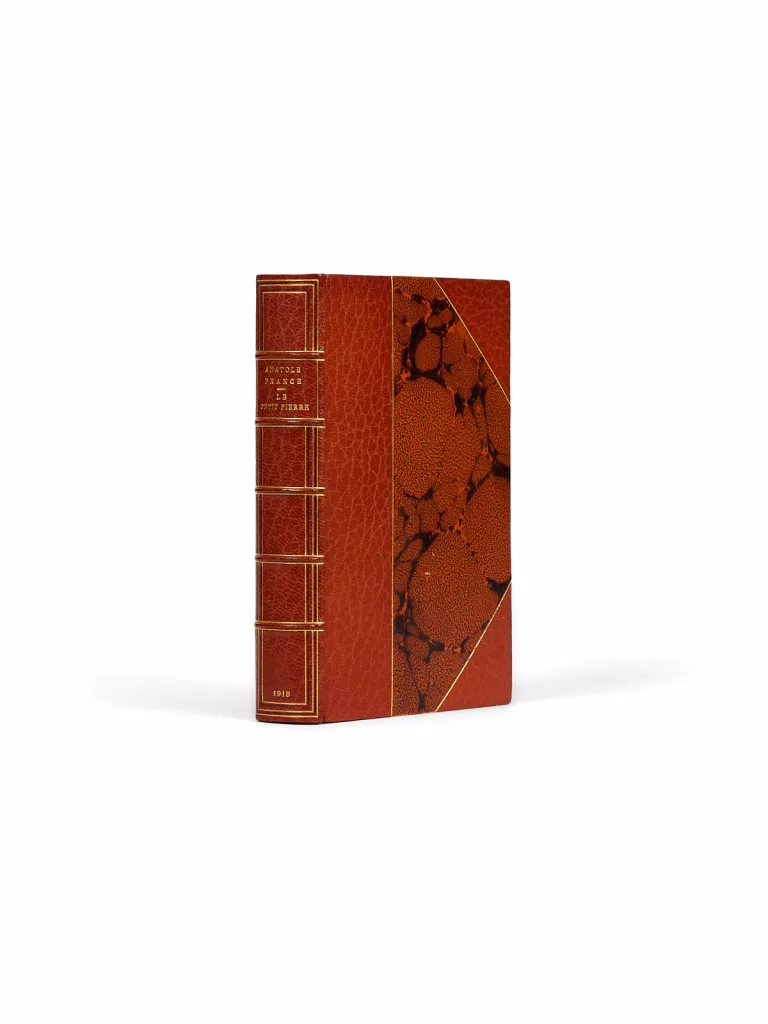
Anatole France
Le Petit Pierre
Paris, Calmann-Lévy, (November) 1918.One of France's three autobiographical texts, on Japanese paperSold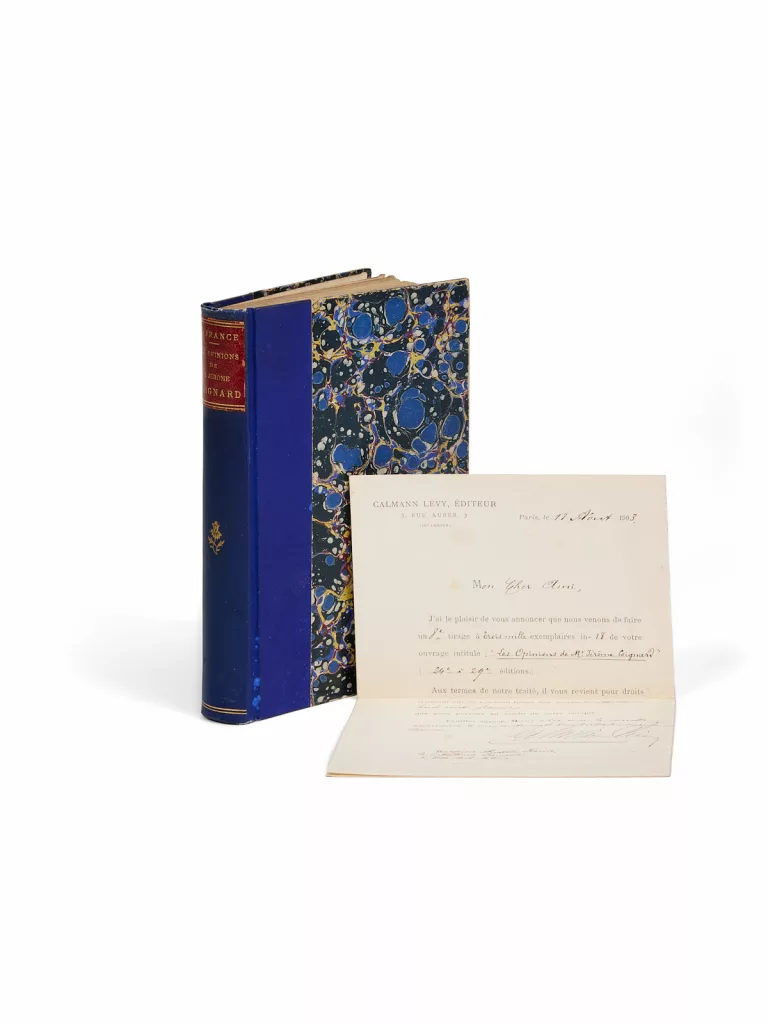
Anatole France
Les Opinions de M. Jérôme Coignard
Paris, Calmann Lévy, 1897.The print dealer Victor Prouté's copySold
Anatole France
L’Affaire Crainquebille
Paris, Cahiers de la Quinzaine, (October 7) 1902.Paul Bourget's copy, inscribedSold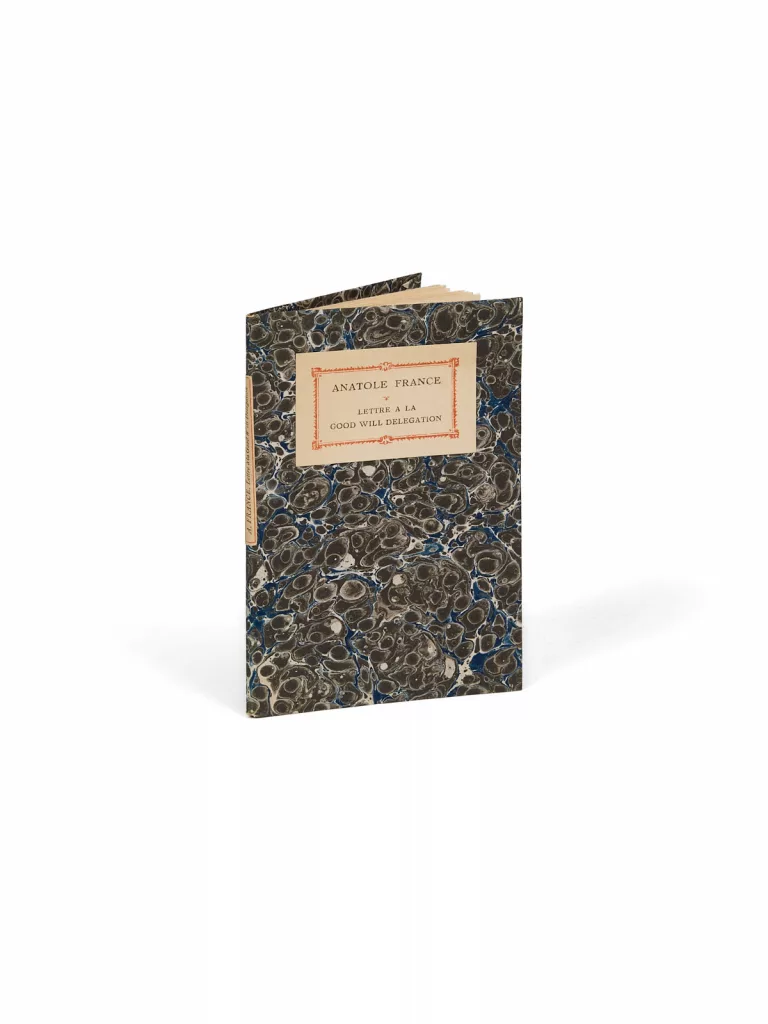
Anatole France
Lettre à la Good Will Delegation
Paris, Impr. Benedict Garfunkel, (July 7) 1923.Copy on Japanese paperSold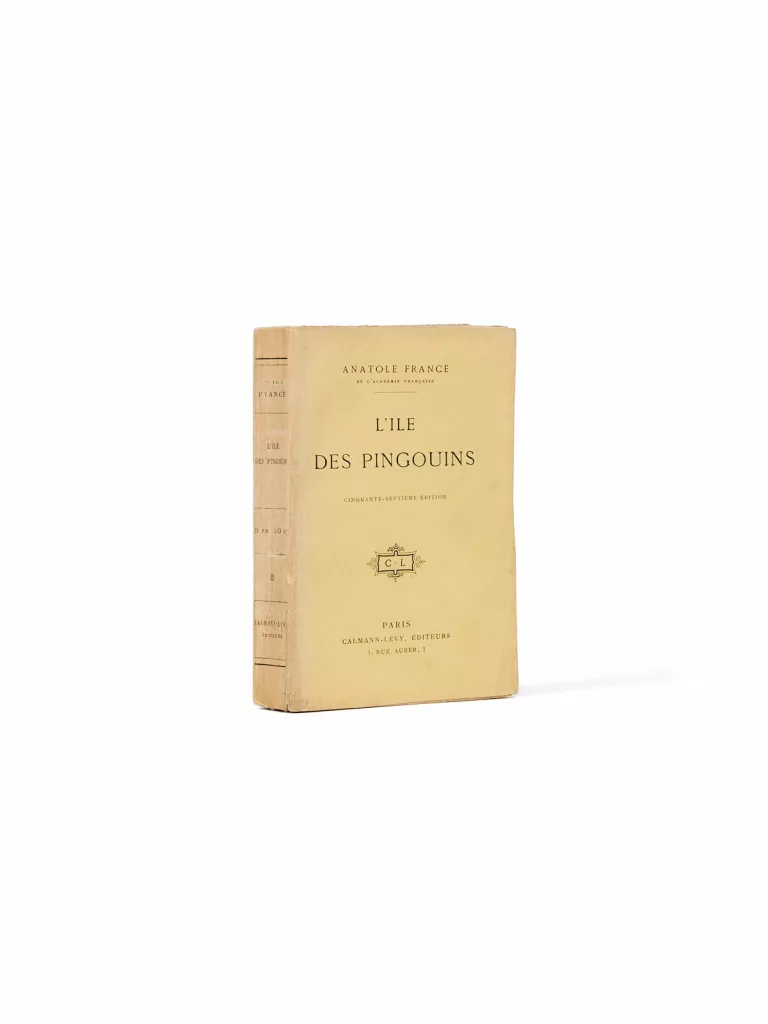
Anatole France
L’Ile des pingouins
Paris, Calmann-Lévy, (October 14) 1908.First editionSold
[FRANCE] Michel Corday
Dernières pages inédites d’Anatole France
Paris, Calmann-Lévy, 1925 & Paris, André Delpeuch, 1928.First edition$96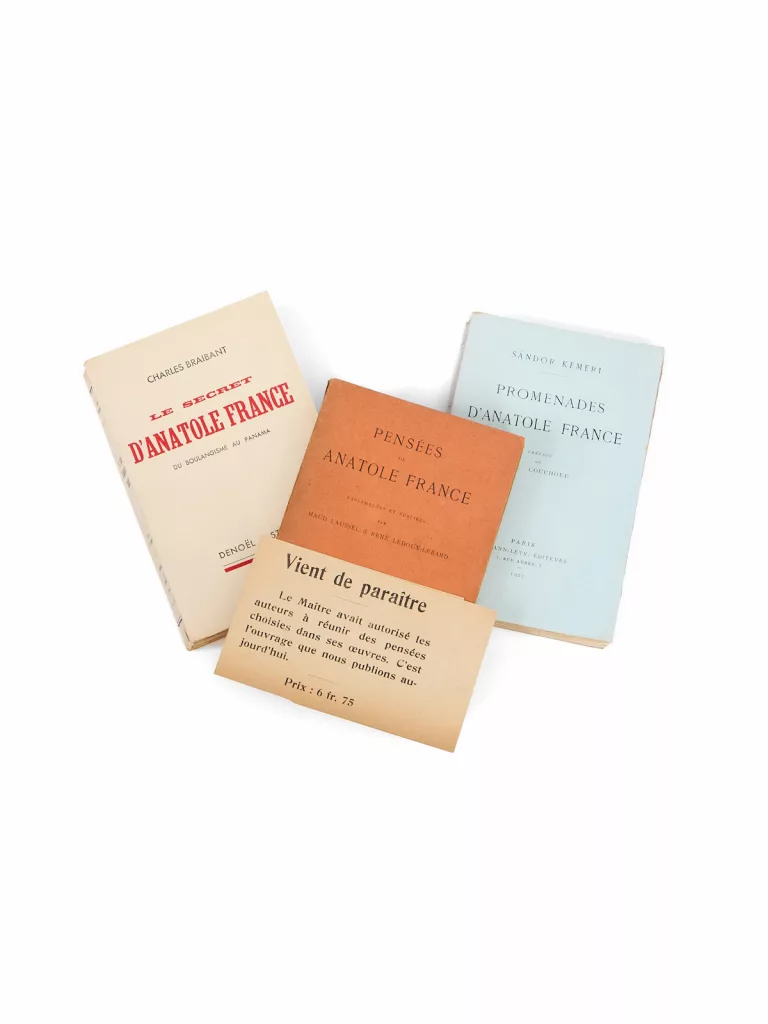
[FRANCE] Maud Laussel & René Ledoux‑Lebrard
Pensées de Anatole France – Promenades d’Anatole France Le secret d’Anatole France
Paris, Calmann-Lévy, (April) 1925.An interesting group of documentation on Anatole France$72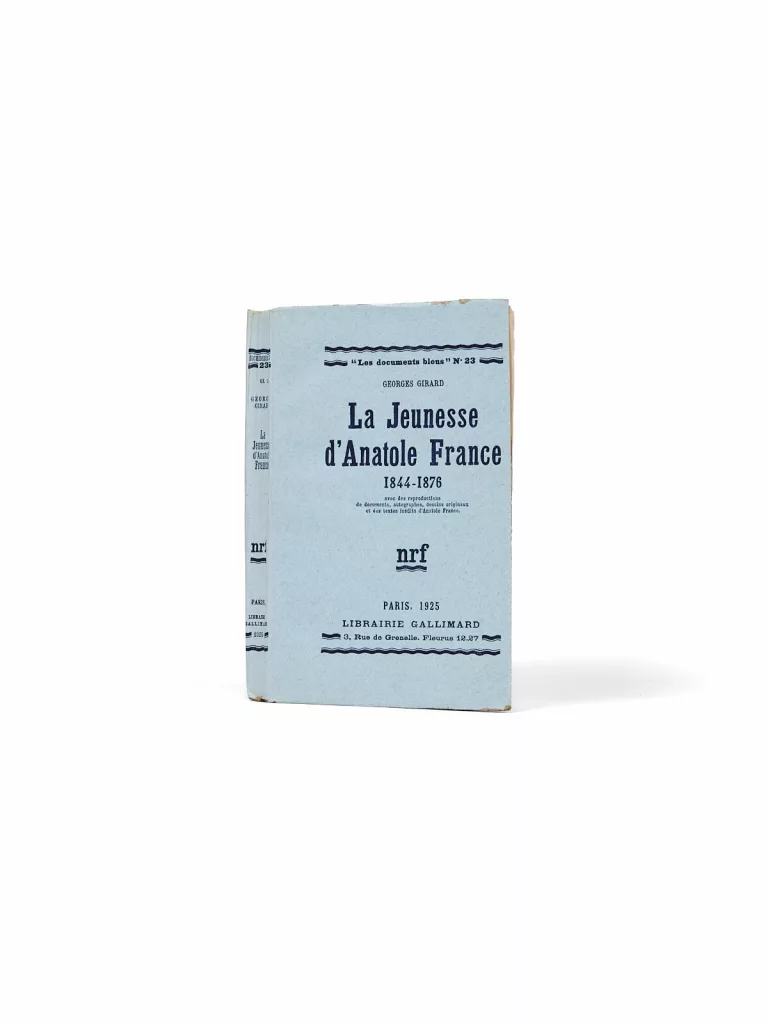
Anatole France
Billet autographe à sa mère
[Paris], July 27, 1851.Young Anatole France’s tender note to his motherSold
Showing 30 works out of 52.
