


Hors-séries
Walden regularly publishes digital special issues (Hors‑séries) dedicated to a particular subject or author.

Collection Goncourt, 2nd part
1902–2026: 124 years of the Prix Goncourt brought together, in first editions, first printings, deluxe paper copies, notable bindings, or provenances. The majority of these works come from two major collections devoted to the subject: that of Hubert Person (1884–1947) and that of Gérard Pouguet (1933–2024), the latter building on the former. We have rounded out the whole with additional copies that further diversify and enrich this unique collection.
Here we offer a selection from the second part of this collection, covering the years 1952 to 2026.
Here we offer a selection from the second part of this collection, covering the years 1952 to 2026.
Publishing date: June 2026
Collection Goncourt, 1st part
1902–2026: 124 years of the Prix Goncourt brought together, in first editions, first printings, deluxe paper copies, notable bindings, or provenances. The majority of these works come from two major collections devoted to the subject: that of Hubert Person (1884–1947) and that of Gérard Pouguet (1933–2024), the latter building on the former. We have rounded out the whole with additional copies that further diversify and enrich this unique collection, all of which we will share in full before the summer.
Here we offer a selection from the first part of this collection, covering the years 1902 to 1951.
Here we offer a selection from the first part of this collection, covering the years 1902 to 1951.
Publishing date: May 2026
René Char, Resistance fighter and surrealist
"I was a rebel and I was looking for brothers."
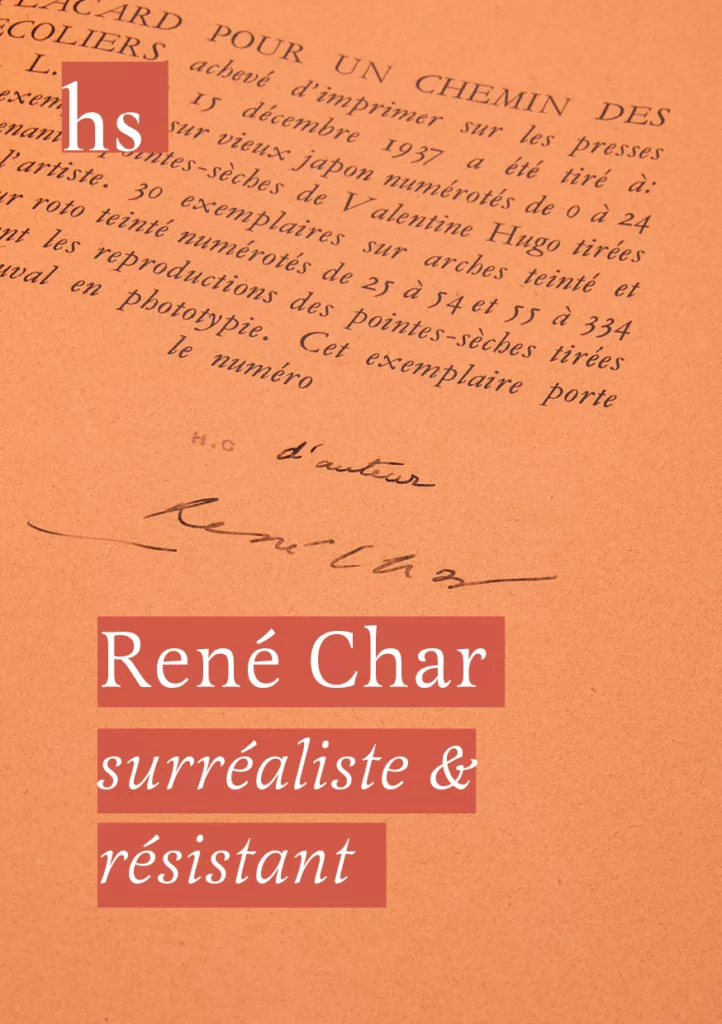
This is how René Char would later remember the young man he was when he joined the Surrealist movement. More than to the movement itself, it was toward two men — André Breton and Paul Éluard — that he turned, and by whom he was welcomed, along with others. That commitment endured, and transformed when he entered the night of the Resistance: there, he showed the same character. From one form of commitment to another, the copies and documents gathered here bear witness to this journey.
This is how René Char would later remember the young man he was when he joined the Surrealist movement. More than to the movement itself, it was toward two men — André Breton and Paul Éluard — that he turned, and by whom he was welcomed, along with others. That commitment endured, and transformed when he entered the night of the Resistance: there, he showed the same character. From one form of commitment to another, the copies and documents gathered here bear witness to this journey.
Publishing date: March 2026
The Great War
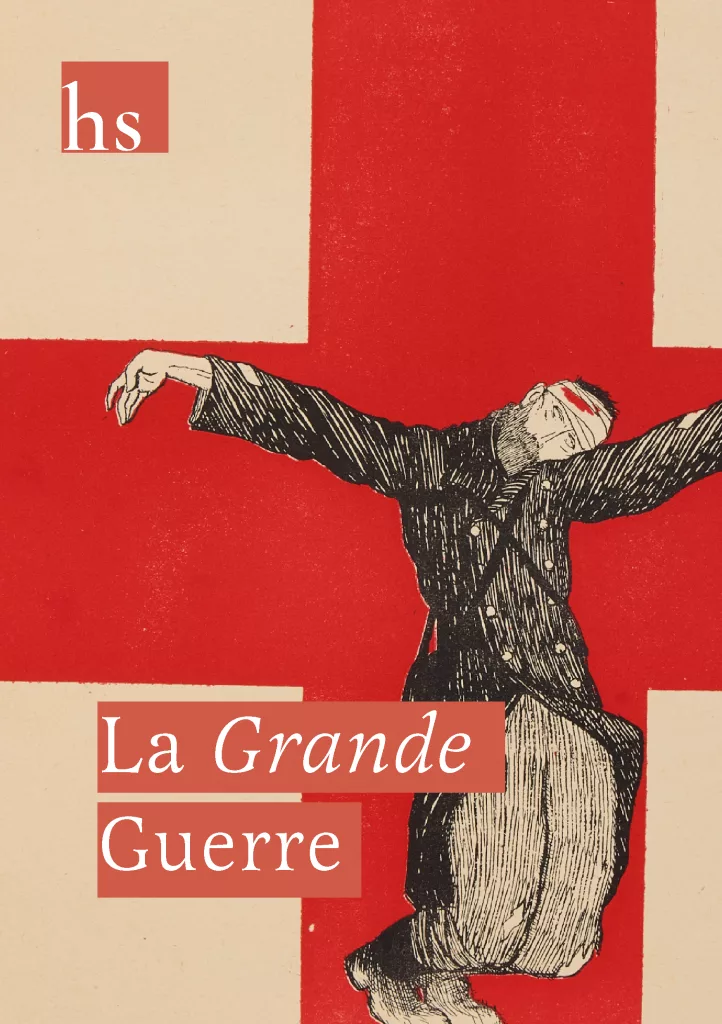
Not that it was "great," but it was global — the first war to be so. Its memory, and the trauma it forged through the accumulation of daily horrors, became permanently fixed in the collective imagination. Gathered here — closing out this tribute to the war books once kept by one of its soldier-writers, Maurice Genevoix — are other writers, other copies, other texts and artists who, whether up close or from a distance, lived the reality of the trenches and were able to bear witness to it.
Publishing date: November 2025
On the boards
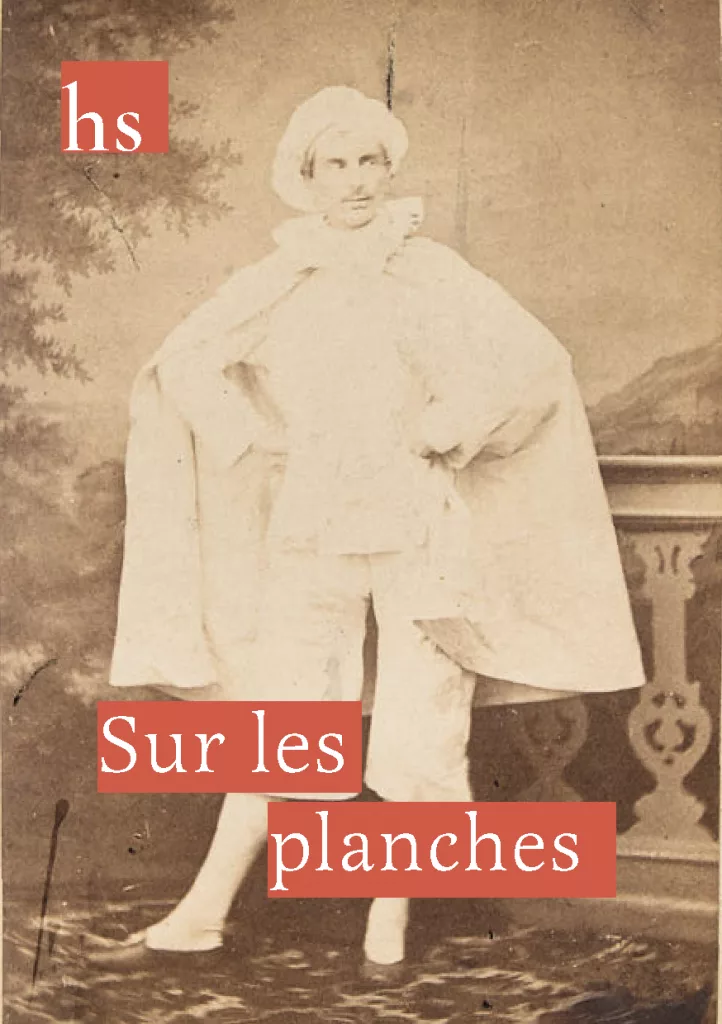
81 selected pieces — first editions, studies, librettos, photographs, programs — devoted to the theater. Here we encounter authors and directors, actors and set designers, from the classical repertoire to the avant-garde. To leaf through as one lifts a curtain: with the care of the bibliophile and the curiosity of the spectator.
Publishing date: October 2025
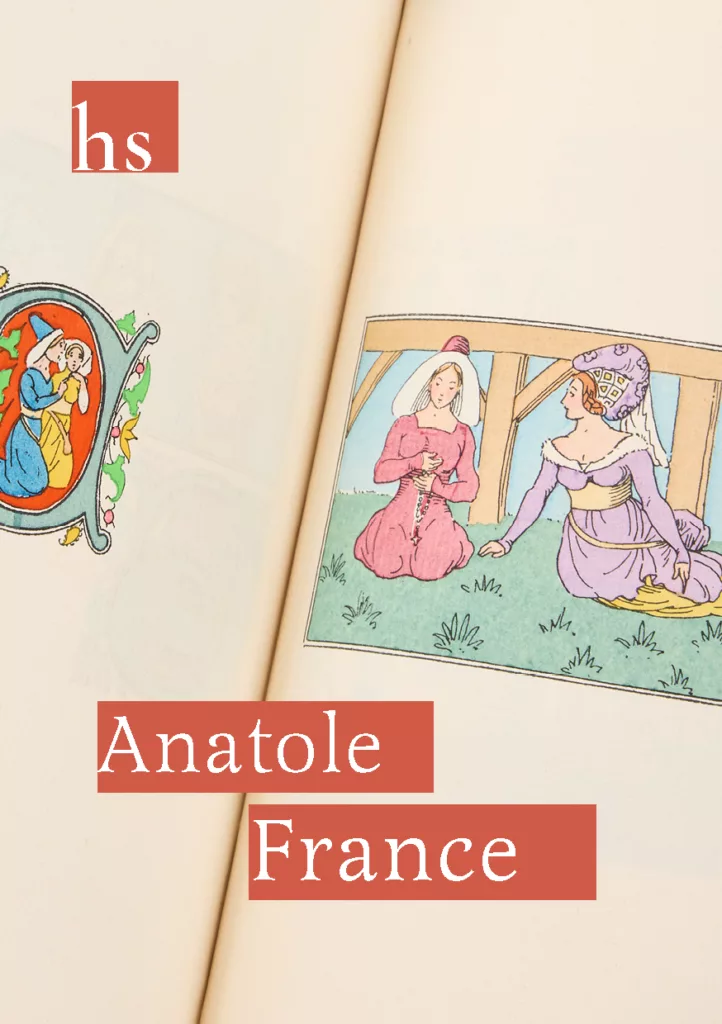
Anatole France
Anatole France belongs to that group of famous authors whose names everyone knows, but whom few have actually read.
His body of work is neither the first nor the last in French literature to suffer this paradoxical fate, but it stands as an emblematic example of it — both for its scale and for the violence of the criticism leveled against it. This Nobel laureate in Literature (1921), member of the Académie française, and author of worldwide bestsellers, was hailed everywhere as the greatest French writer of his time, if not of all time — yet his name has become nearly hollow: Anatole France is almost impossible to find not only in school and university curricula, but also, and above all, with a few rare exceptions, in scholarly research across every field where he might reasonably belong — from the history of French and comparative literature to the history of ideas and the history of intellectuals. This is a striking paradox given the scope of his political engagement as a Voltairean figure: in the Dreyfus Affair, against the Armenian genocide, in support of the 1905 law on the Separation of Church and State (he even wrote the preface to Combes's speeches), and against colonization as well. The literary researchers at the École normale supérieure, now embarking on a vast study project devoted to this "illustrious unknown" (alongside a program to digitize his complete works), could not have framed this contrast more aptly.
On our own modest scale, Librairie Walden wanted — out of curiosity as much as heartfelt conviction that bibliophily remains a living pursuit precisely when it takes the occasional detour — to present a small Anatole France corpus, spanning from his youthful poems and novels to his final works.
These first editions, some handsomely bound, are accompanied by four manuscripts from France's childhood, addressed to one or the other of his parents. We have added to this the earliest studies and biographies published on the author of Thaïs between 1924, the year of his death, and 1960, when the Bibliothèque nationale devoted an exhibition to him.
A first foray in tribute to an author — one that will no doubt call for others to follow…
His body of work is neither the first nor the last in French literature to suffer this paradoxical fate, but it stands as an emblematic example of it — both for its scale and for the violence of the criticism leveled against it. This Nobel laureate in Literature (1921), member of the Académie française, and author of worldwide bestsellers, was hailed everywhere as the greatest French writer of his time, if not of all time — yet his name has become nearly hollow: Anatole France is almost impossible to find not only in school and university curricula, but also, and above all, with a few rare exceptions, in scholarly research across every field where he might reasonably belong — from the history of French and comparative literature to the history of ideas and the history of intellectuals. This is a striking paradox given the scope of his political engagement as a Voltairean figure: in the Dreyfus Affair, against the Armenian genocide, in support of the 1905 law on the Separation of Church and State (he even wrote the preface to Combes's speeches), and against colonization as well. The literary researchers at the École normale supérieure, now embarking on a vast study project devoted to this "illustrious unknown" (alongside a program to digitize his complete works), could not have framed this contrast more aptly.
On our own modest scale, Librairie Walden wanted — out of curiosity as much as heartfelt conviction that bibliophily remains a living pursuit precisely when it takes the occasional detour — to present a small Anatole France corpus, spanning from his youthful poems and novels to his final works.
These first editions, some handsomely bound, are accompanied by four manuscripts from France's childhood, addressed to one or the other of his parents. We have added to this the earliest studies and biographies published on the author of Thaïs between 1924, the year of his death, and 1960, when the Bibliothèque nationale devoted an exhibition to him.
A first foray in tribute to an author — one that will no doubt call for others to follow…
Publishing date: September 2025
Contemporary Literature
Publishing date: July 2025