

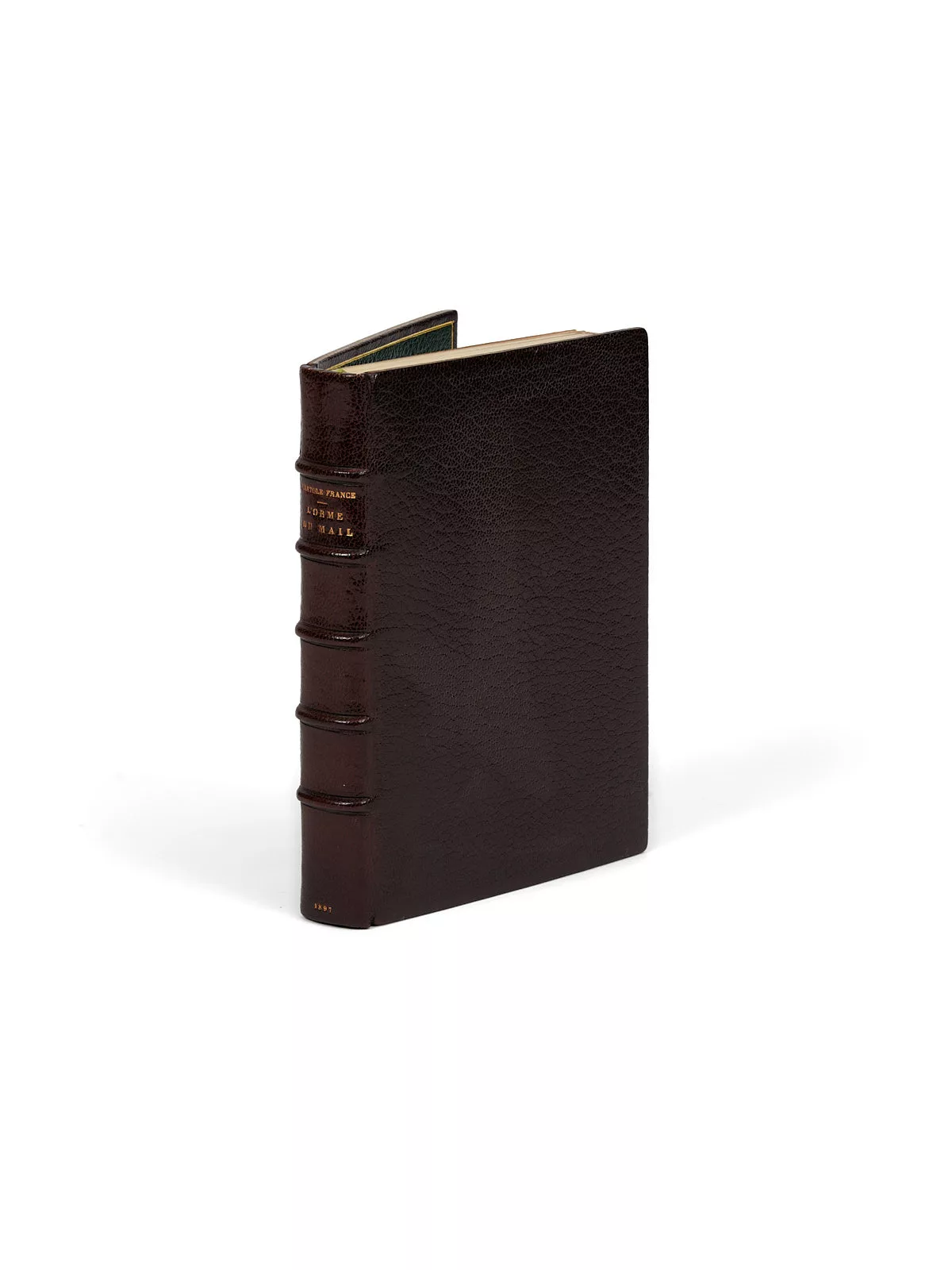
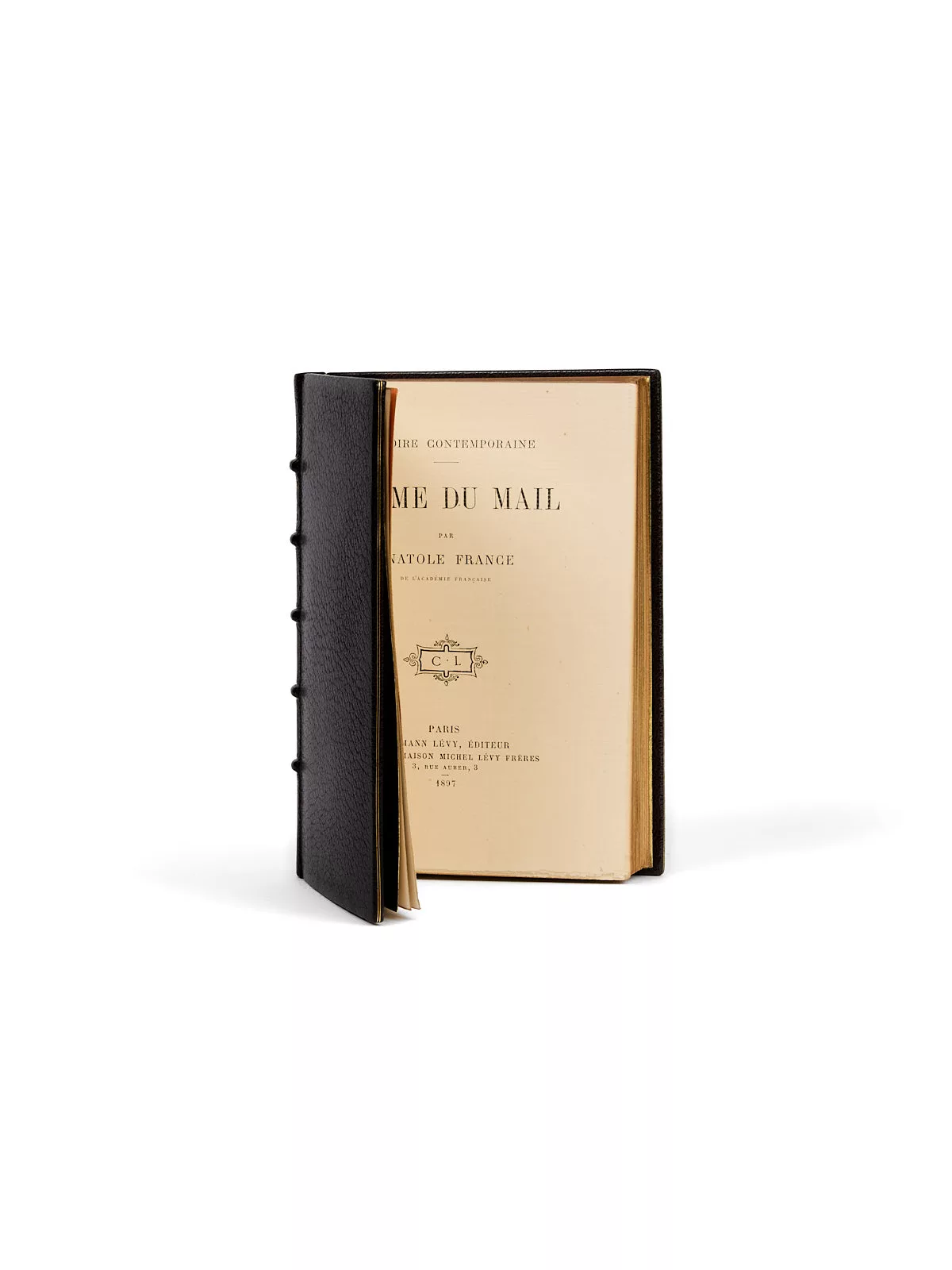
L’Orme du mail
One of 50 copies on Hollande paper (no. 43).
Having reached maturity, and acclaimed after the success of Thaïs and La Rôtisserie de la reine Pédauque, Anatole France sought to renew his manner. He set aside the manuscript of his Vie de Jeanne d’Arc and, leading a worldly existence, “conceived a series of novels of a new kind.” L’Orme du mail, followed by Le Mannequin d’osier, L’Anneau d’améthyste and Monsieur Bergeret à Paris, would form his Histoire contemporaine, “a broad tableau of powerful realism.” A single principal subject serves as the crucible for his study of manners: the appointment of a bishop in a provincial town. It was probably during his visits to Capian, the estate of Arman and Léontine de Caillavet, that Anatole France recorded the confidences of the village priest concerning the negotiations surrounding a vacant bishopric.
L’Orme du mail, the first novel of the Histoire contemporaine, was praised by critics; Faguet wrote: “M. France has written his first realist novel, and it is very good. At last!…”