

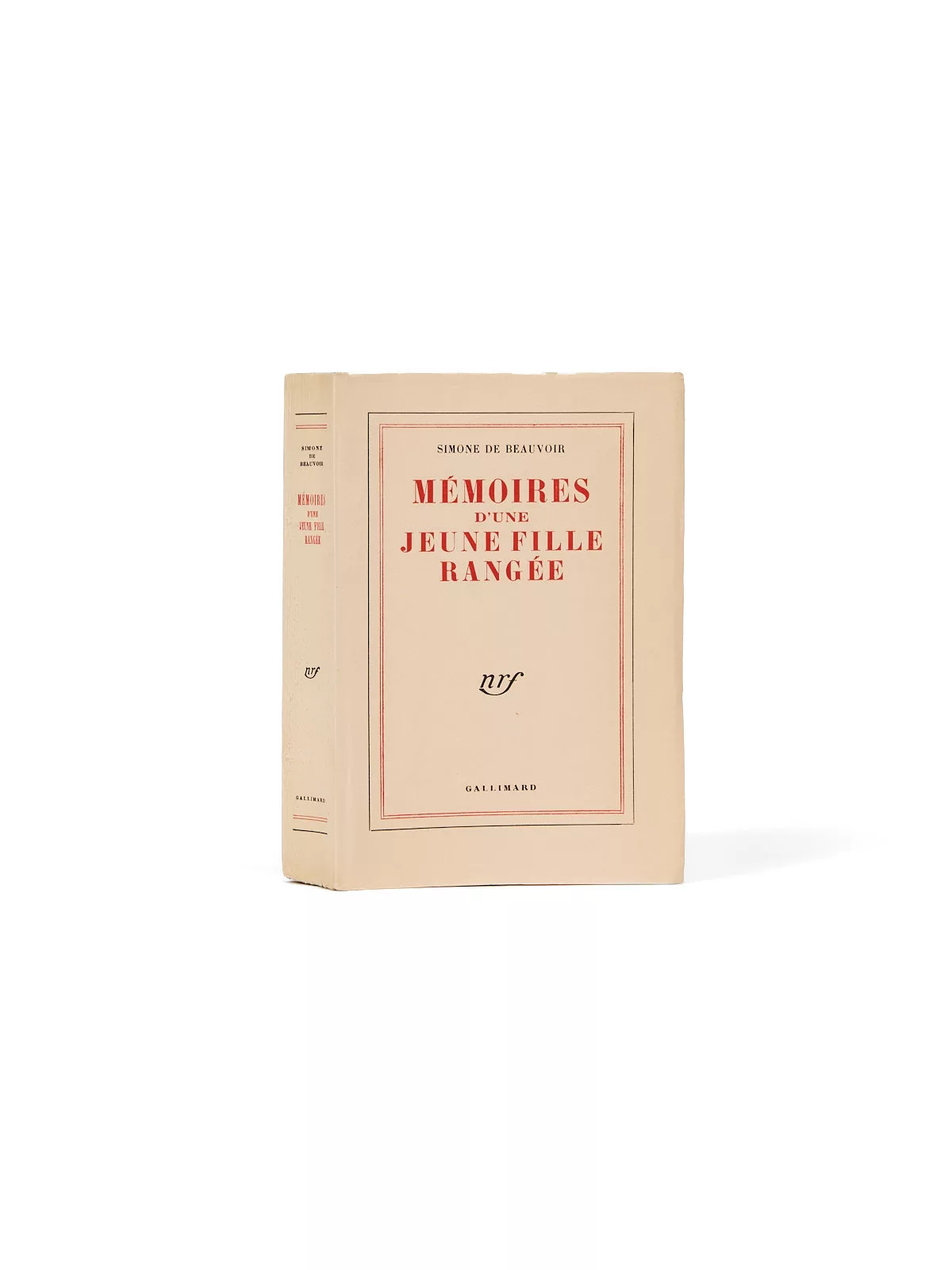
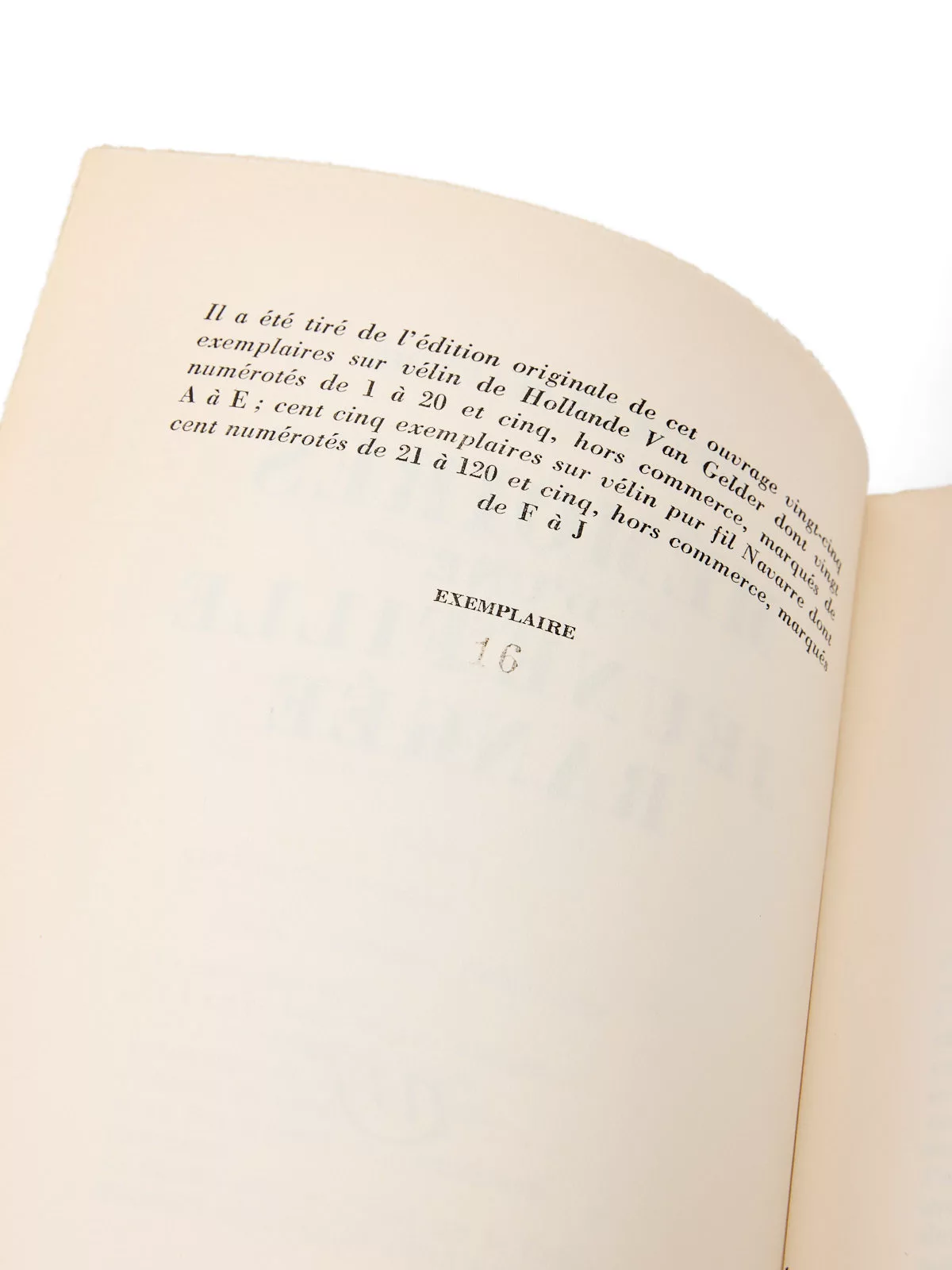
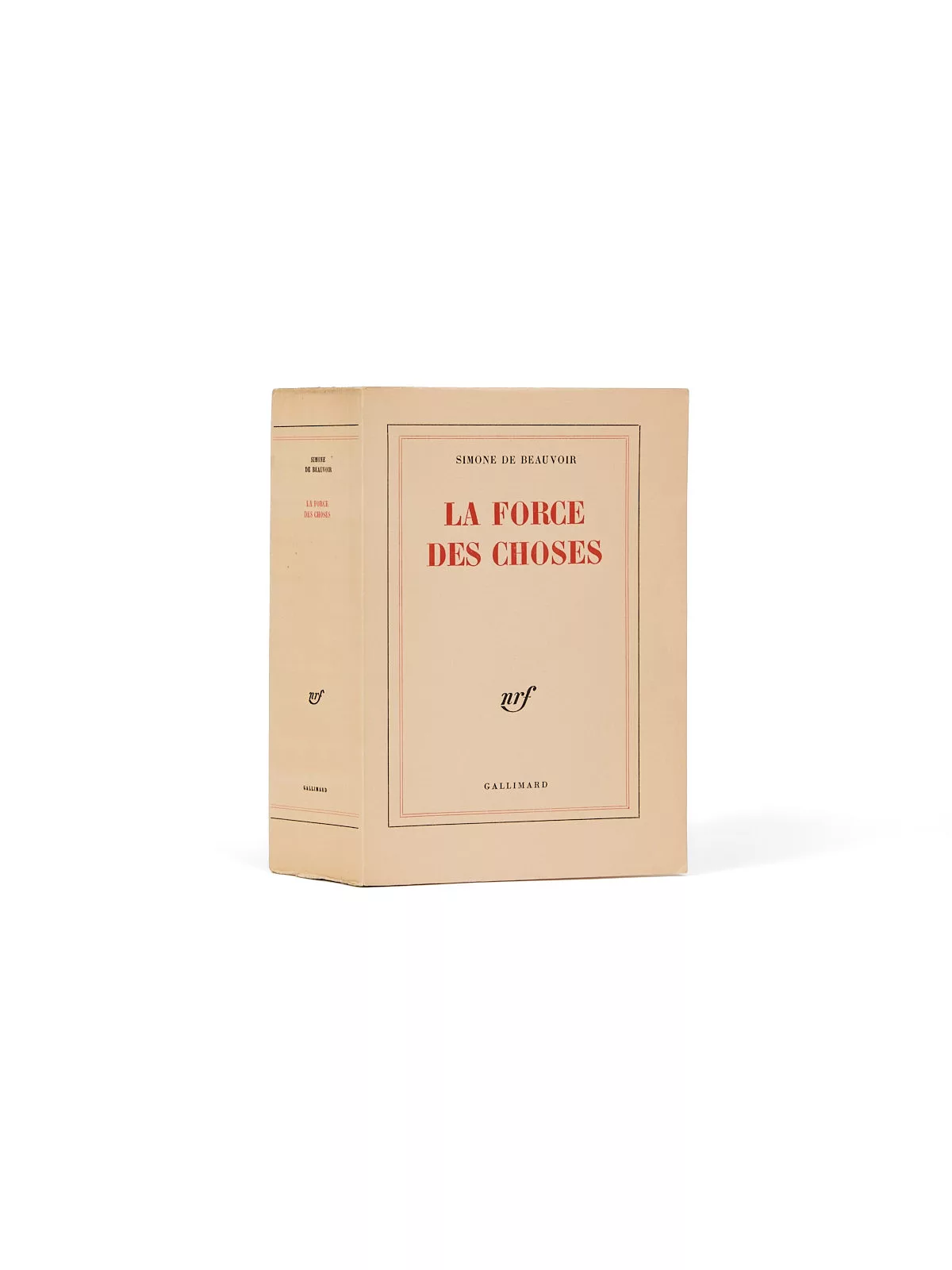
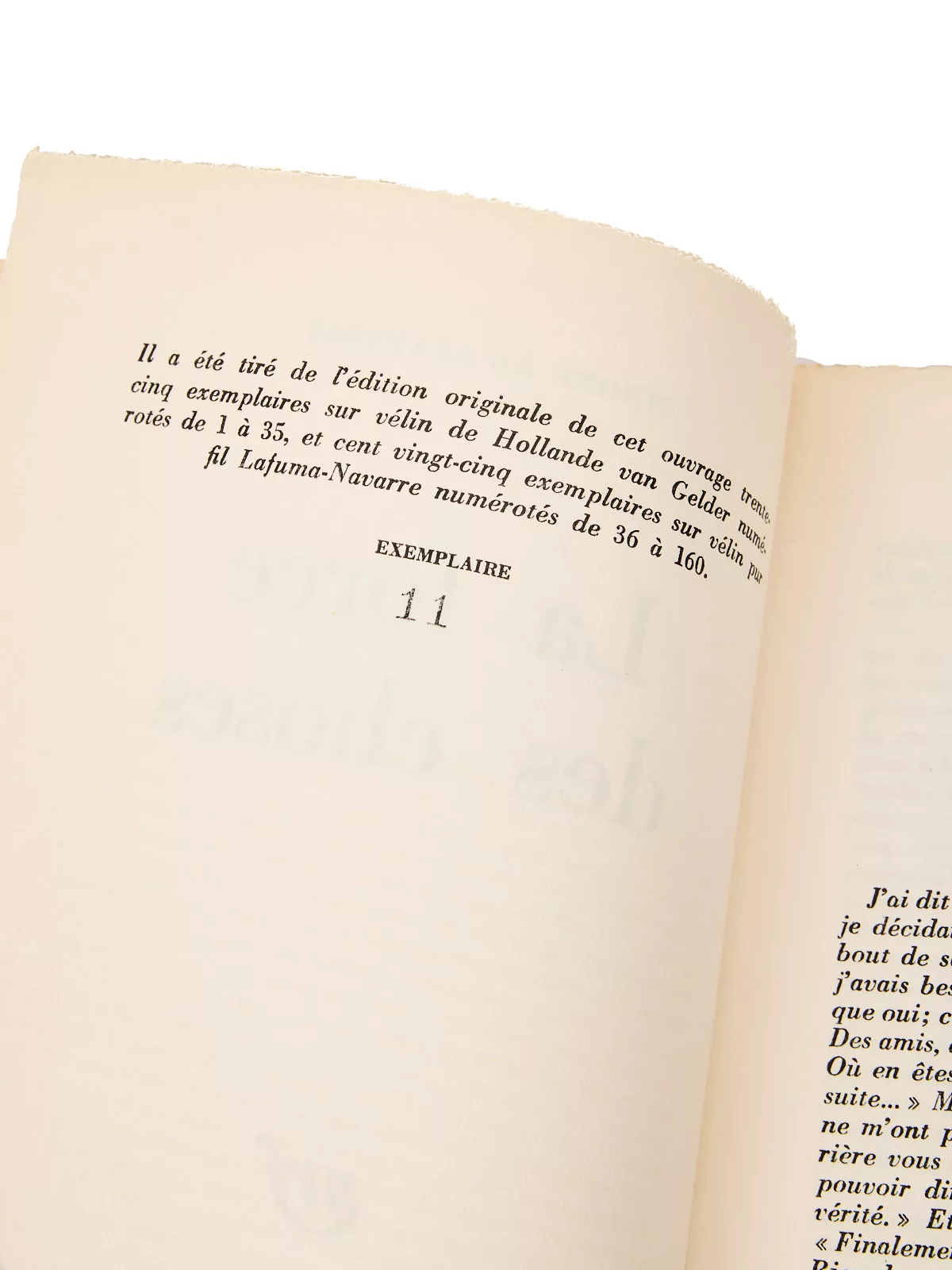
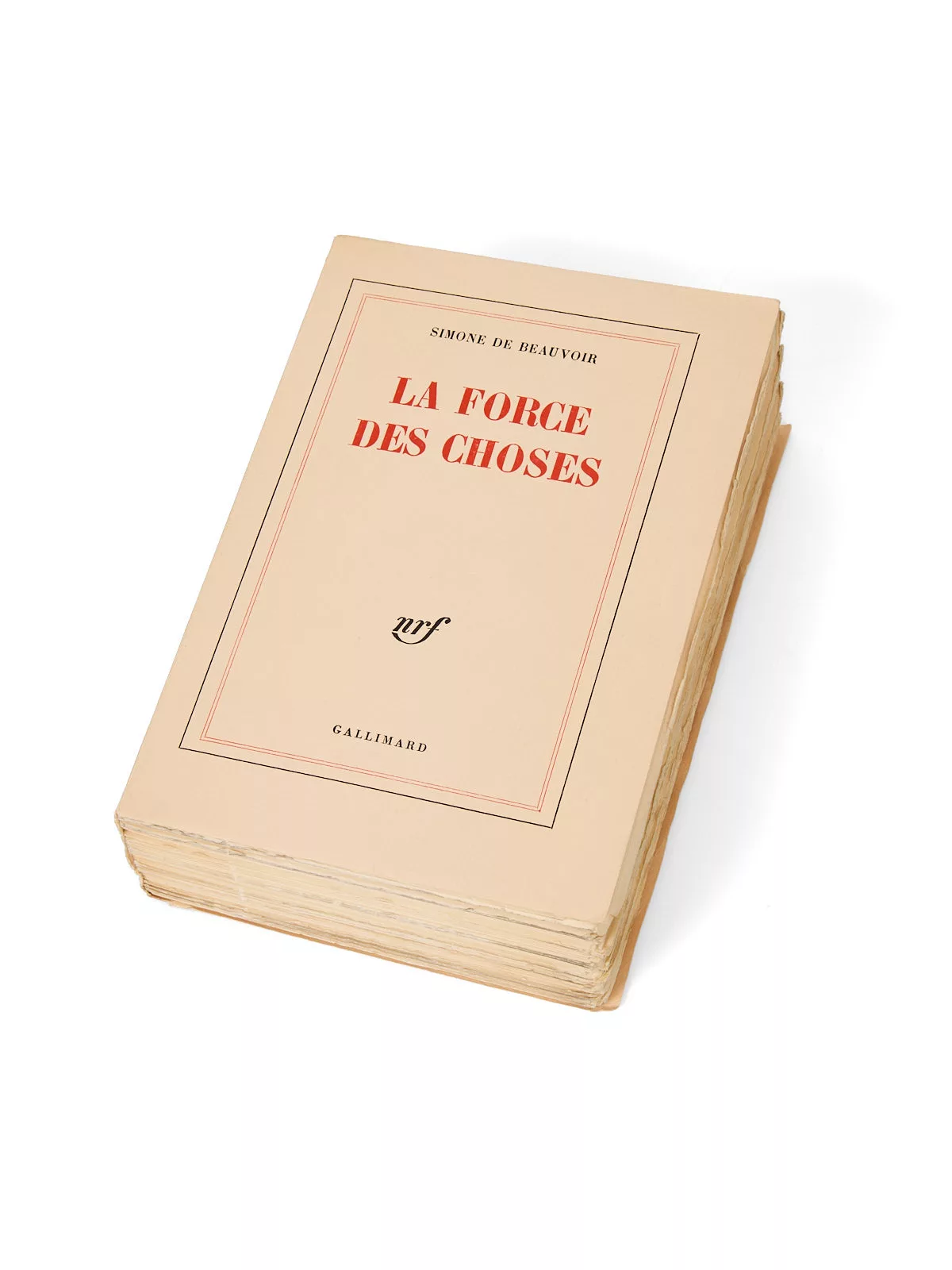
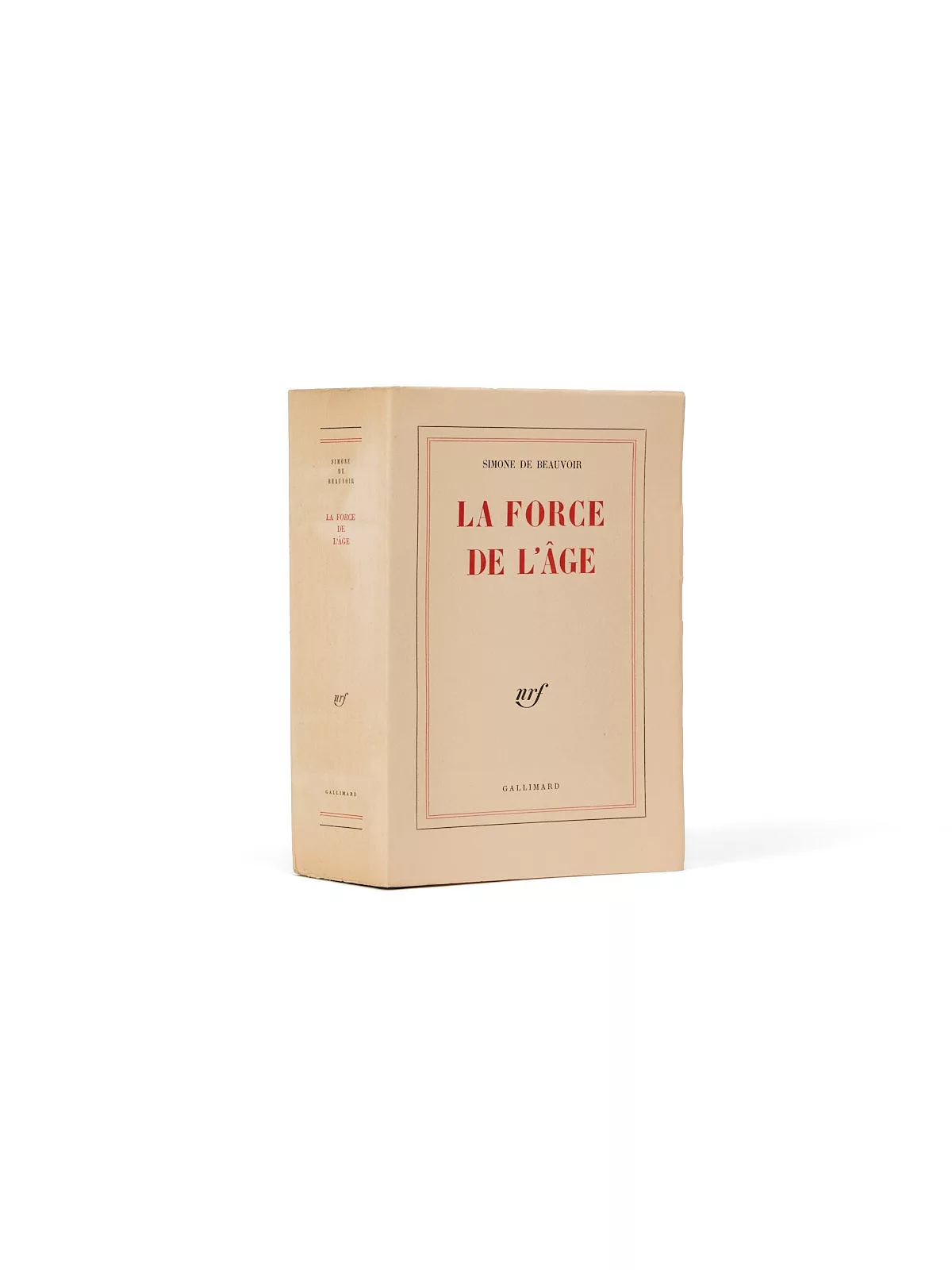
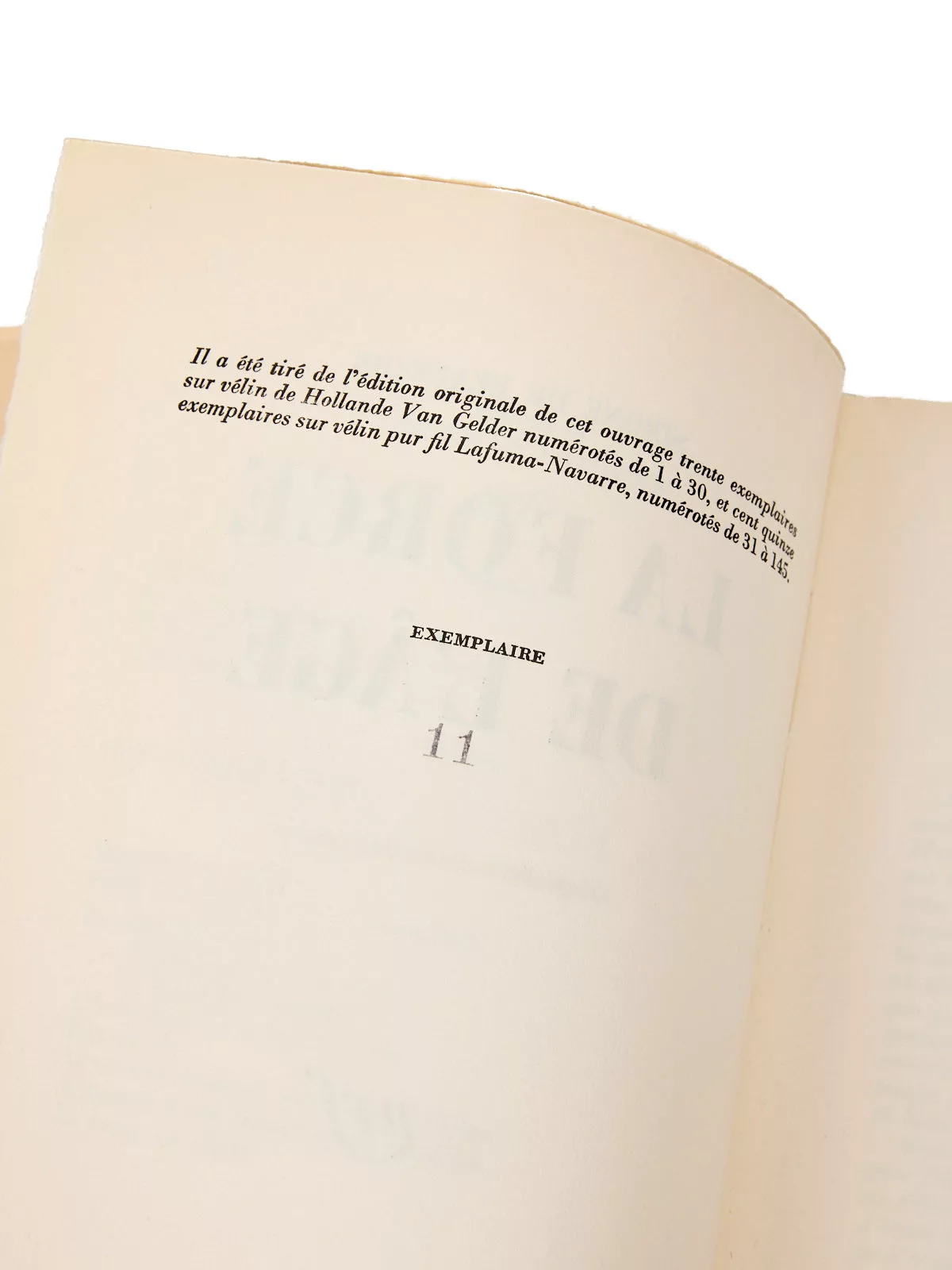
One of the first 25, 30 and 35 copies on vélin de Hollande.
In 1929, Simone de Beauvoir was twenty years old. She had just placed a brilliant second — behind Sartre, who was retaking the exam — in the agrégation de philosophie. Fiercely Cartesian, she intended to live in order to write, “free as air,” and entered into a sacred pact with Sartre: “We would never become strangers to each other, neither would ever call on the other in vain, and nothing would prevail against this alliance.” An alliance sealed by a further vow: “We will tell each other everything.”
“Even if no life can stand as a model, the fact remains that by turning her back on millennia of patriarchal norms, by refusing the obligatory female destiny of wife and mother, and by becoming one of the most celebrated philosophers of her time, she showed her readers that they too could try to open the cage of prejudice that confined them. Our children may no longer read La Nausée or Le Deuxième Sexe, nor any work by either of them, but their names are now inscribed in the history of ideas and in that of romantic mythology. This may not have been Sartre’s original plan. But it is thanks to the Castor, who against all odds built this mythic couple alongside him, that Sartre will endure in posterity. Beauvoir’s sweet revenge: it is with her that he will attain eternity.” (Élisabeth Badinter, Simone de Beauvoir ou les chemins de la liberté, BnF Conférences, 2002).
A remarkable deluxe-paper set of this landmark lesson in female freedom for generations of women.