

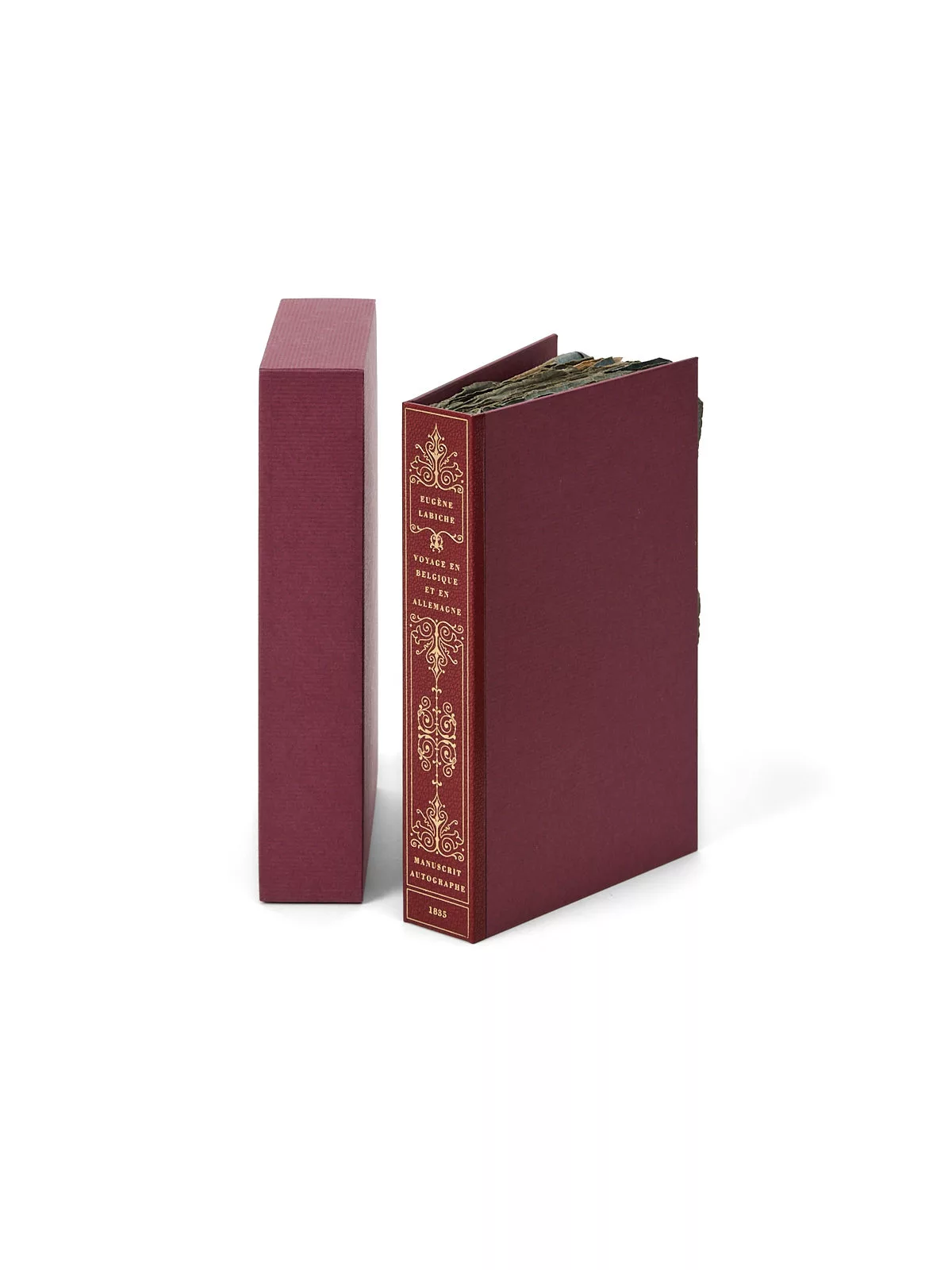
« Voyage en Belgique et en Allemagne »
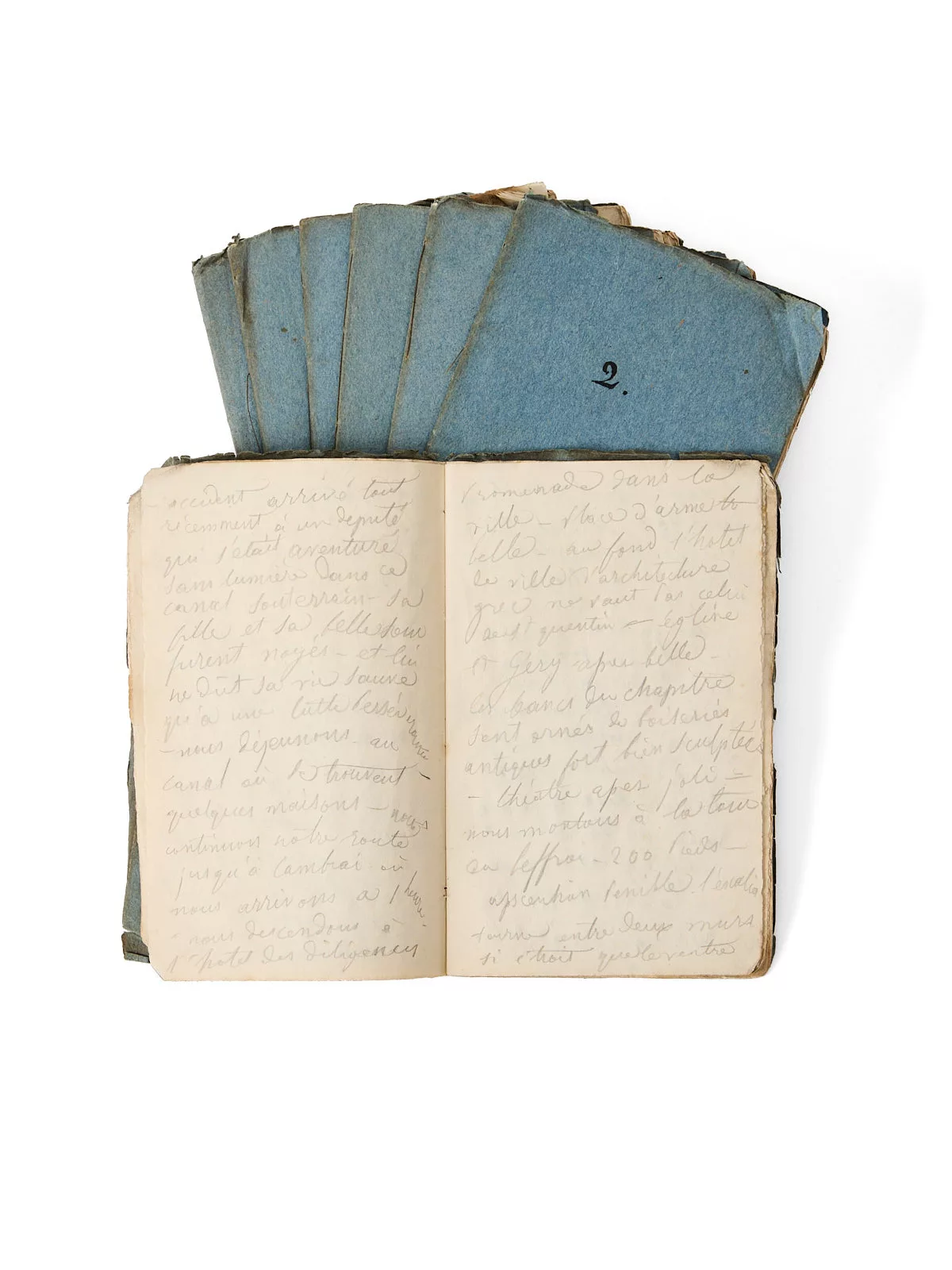
This travel diary, kept day by day by the young Eugène Labiche at the age of twenty, recounts, with a precocious verve and an already sharp sense of observation, his journey through Belgium and Germany in the summer of 1835, in the company of his father and one of his father’s friends, a merchant named Tugot.
We are at the origins of a literary vocation. Labiche had just completed his law studies, but writing drew him irresistibly: a few short stories had already been published in the Revue de France, copies of which he carried with him and distributed from town to town. In Mons, he notes leaving three copies with a café owner:
“Puis je porte au maître de l’établissement les trois premiers numéros de la Revue de France, il les mettra en circulation sur les tables et s’abonnera si le journal plaît à ses consommateurs.”
Whether the gesture of a confident young author or simply a wish to make his mark in letters, one can already read here the hesitant but determined trace of a future playwright. From the very first pages, the writing is lively, sometimes comical, often touching: he records the day’s anecdotes, his emotions, his irritations, his enthusiasm for architecture or theater, his encounters and his meals. Each evening gives rise to a “causerie entre nous,” a way of replaying the day in the intimacy of the notebook, of assessing, judging, telling himself the story of his own day. On 29 July, Labiche is arrested in Valenciennes for lack of a passport, an incident revealing the tense political climate of the time: the previous day, an attempt had been made on the life of Louis-Philippe. The episode is recounted with wit and without gravity — already proof of his talent for defusing reality through lightness of tone.
In Trier or Cologne, he comments on the cathedrals; in Aachen, on the public baths. But it is in Frankfurt, where he attends Mozart’s Don Juan sung in German, that one senses the seed of a future man of the theater:
“Bon dîner – après, au spectacle, le Don Juan de Mozart en allemand – je n’ai pas dormi – j’ai même éprouvé du plaisir par instant. La fin surtout m’a frappé comme effet dramatique : cet homme endurci qui s’opiniâtre dans le crime et sa révolte contre le châtiment qui étend la main sur lui, est d’un effet enlevant. J’aime beaucoup ce recours vers le champagne pour résister à la puissance terrible qui le menace.”
Finally, in the silence of hotel rooms, melancholy breaks through: “Je pense à toi en m’endormant, ma bonne amie, encore à toi en m’éveillant – c’est ma prière du jour.”
A discreet echo of a distant love, perhaps even a promise of marriage he makes to himself: he would marry his then-companion, Marie-Louise Thélot, in 1842, long after this journey, but one senses here the sensitive imprint of a young man still far from the stage but already fully attuned to the world.
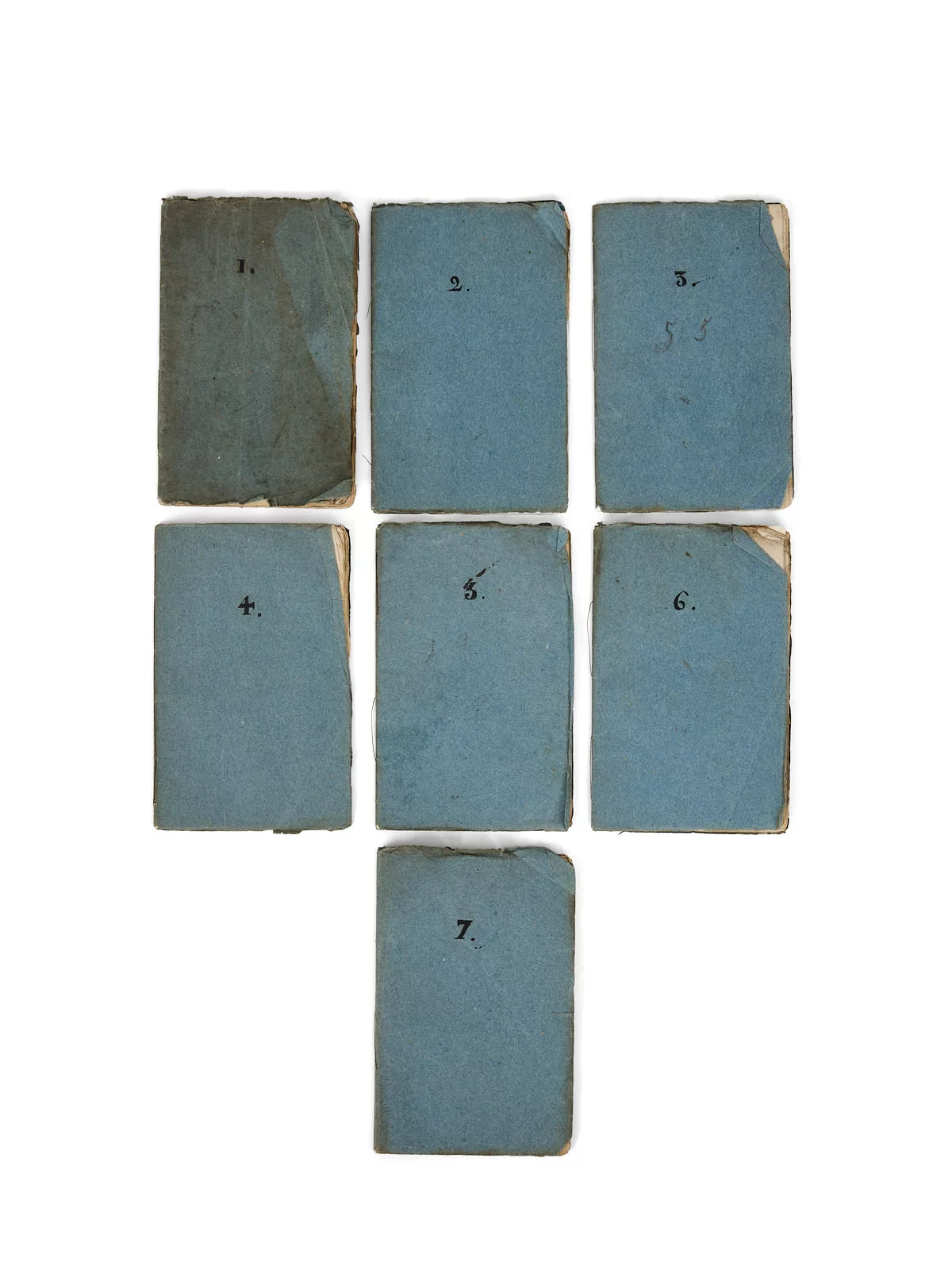
This unpublished manuscript, in five notebooks, constitutes a rare testimony to the incisive, funny and tender eye of a future giant of French theater, and to a little-known period of his youth.
On his return to France, a decision was made: he would join with two university friends, Auguste Lefranc and Marc-Michel, to write plays. The following year, they humorously named their venture “L’Usine dramatique” and wrote their first play at the end of the year, under the collective pseudonym Paul Dandré: La Cuvette d’eau. Nothing is known of this play, never printed, and of which no manuscript survives: it is Eugène de Mirecourt who mentions its existence, writing: “Sa vocation d’auteur dramatique remonte à la fin de l’année 1837. Il donna, je ne sais où, – probablement au théâtre du Luxembourg ou à celui du Panthéon – une pièce intitulée La Cuvette d’eau.” (in Eugène Labiche, Librairie des contemporains, 1869, p. 13). The following year, they achieved their first success with Monsieur de Coislin, performed at the Théâtre du Palais-Royal on 2 July 1838 and published by Basile Marchant in his Magasin théâtral collection. It is Labiche’s very first published play. He was 23 years old.
Other comedies followed, mainly vaudevilles and farces, then very much in fashion. Alone or with his collaborators, he produced, from 1845 onward, an average of ten plays a year, becoming the leading vaudevillist of the 1840s–1860s, with enormous successes such as Embrassons-nous, Folleville! (1850), Un chapeau de paille d’Italie (1851) and Le Voyage de Monsieur Perrichon (1860).