

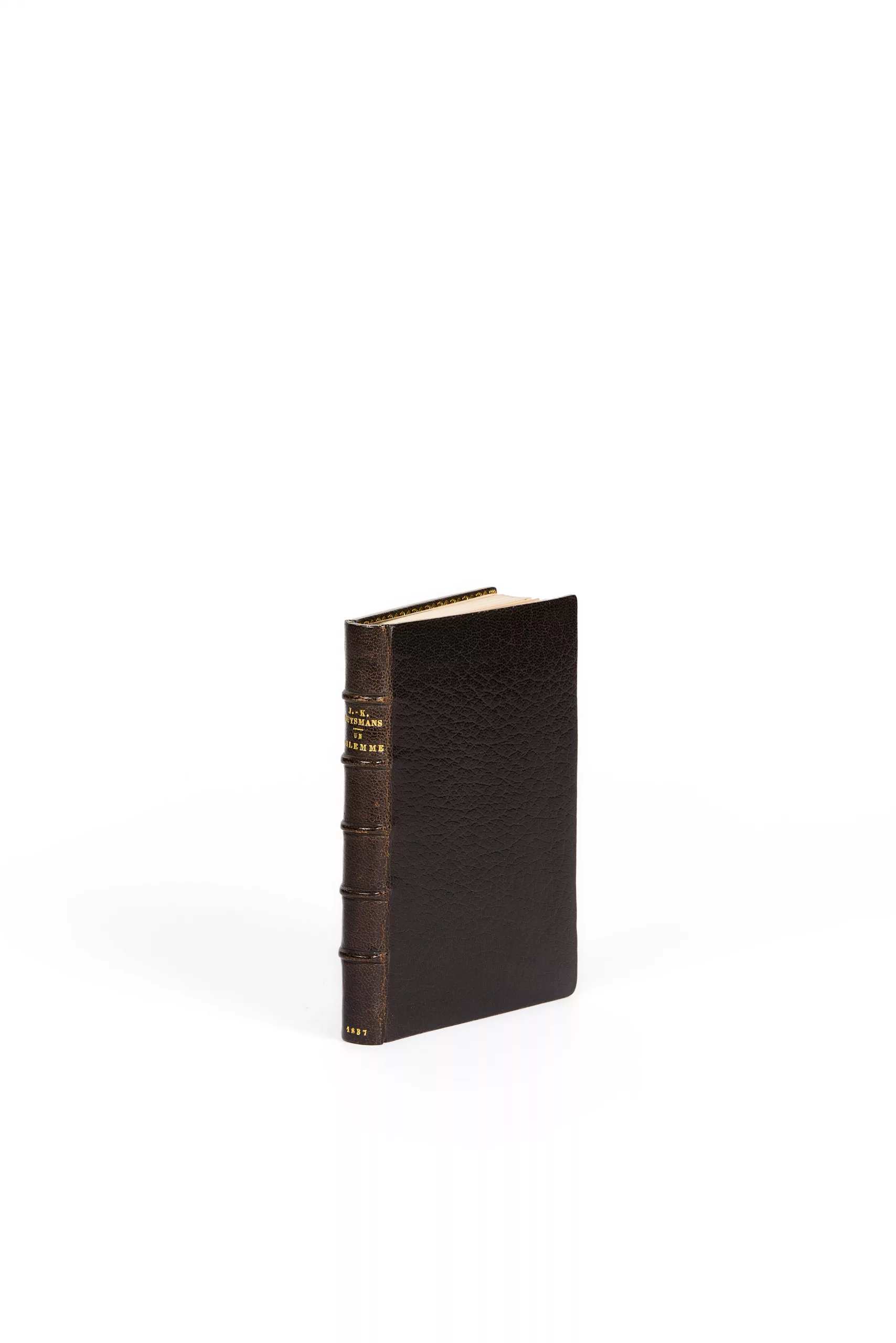
Un dilemme
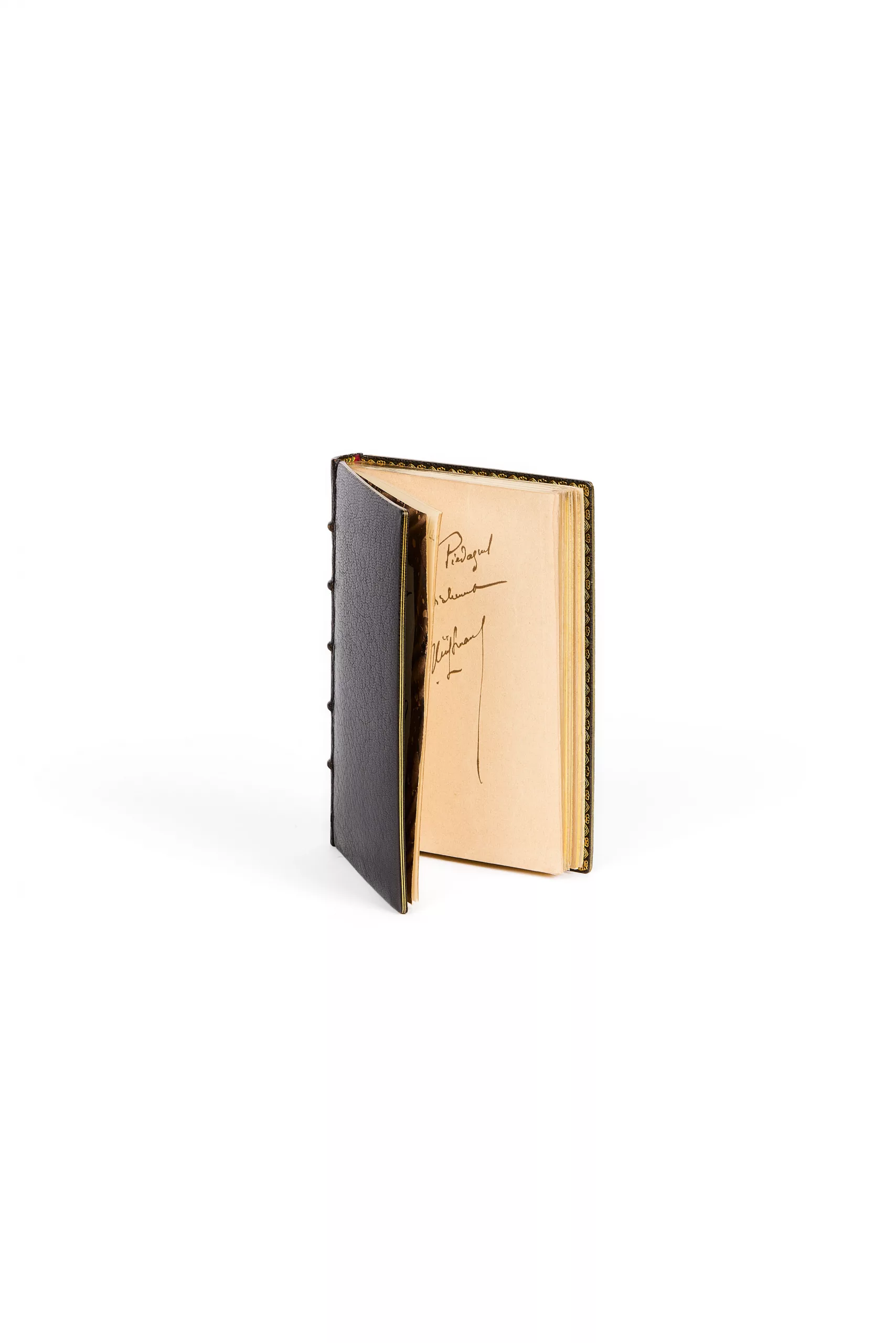
Presentation copy inscribed by Huysmans to Alexandre Piedagnel: “À A. Piedagnel. Bien cordialement J.-K. Huysmans.”
In this short Balzacian novel — or long novella — written with a Flaubertian irony, Huysmans excoriates the smug, phallocratic bourgeoisie, ready to commit any infamy to protect its power, money and appearances, illustrating what he called, in a letter to Zola, its “unalterable filthiness.”
Huysmans tells the story of Sophie Mouveau, a young Parisian maid, pregnant by a man whose recent death she mourns — she had been his mistress. Suddenly destitute, the young woman is harassed and destroyed by the disdain of the dead man’s only heirs: a greedy, gout-ridden father and an odious grandfather, a notary by profession. The grandfather’s whole art consists in preventing the unwed mother from claiming any right whatsoever, under a Civil Code that at the time recognized neither paternity suits nor women’s rights. A substantial inheritance is, of course, at the heart of the matter and the object of everyone’s greed.
This novella, serialized from September to October 1887 in La Revue indépendante, was almost entirely ignored by critics on its appearance, despite the efforts of its new publisher, P. V. Stock. Stock had met Huysmans around the middle of 1886 through Léon Bloy, whose Propos d’un entrepreneur de démolitions (Paris, Tresse, 1884) he had published, and signed him to a ten-year contract. Huysmans would become one of the house’s flagship authors from his very first book with Stock, En Rade, published a few months before Un dilemme.
Paul Éluard’s copy, with his bookplate designed by Max Ernst and bearing the motto “Après moi le sommeil.”
Provenance: Alexandre Piedagnel (presentation inscription); Paul Éluard (bookplate).
Alexandre Piedagnel (1831–1903) was a critic and writer held in esteem by Huysmans.