


The Lover
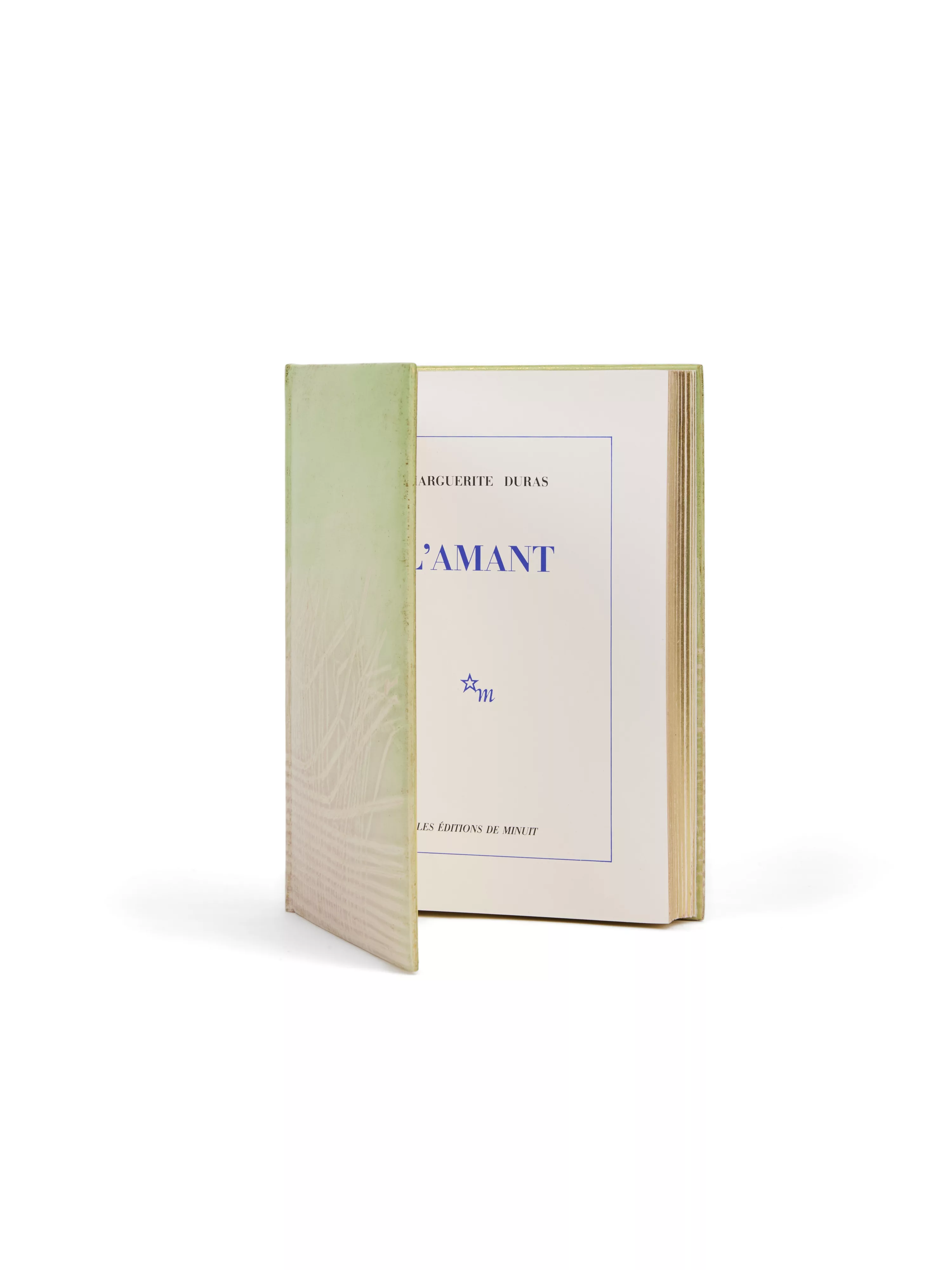
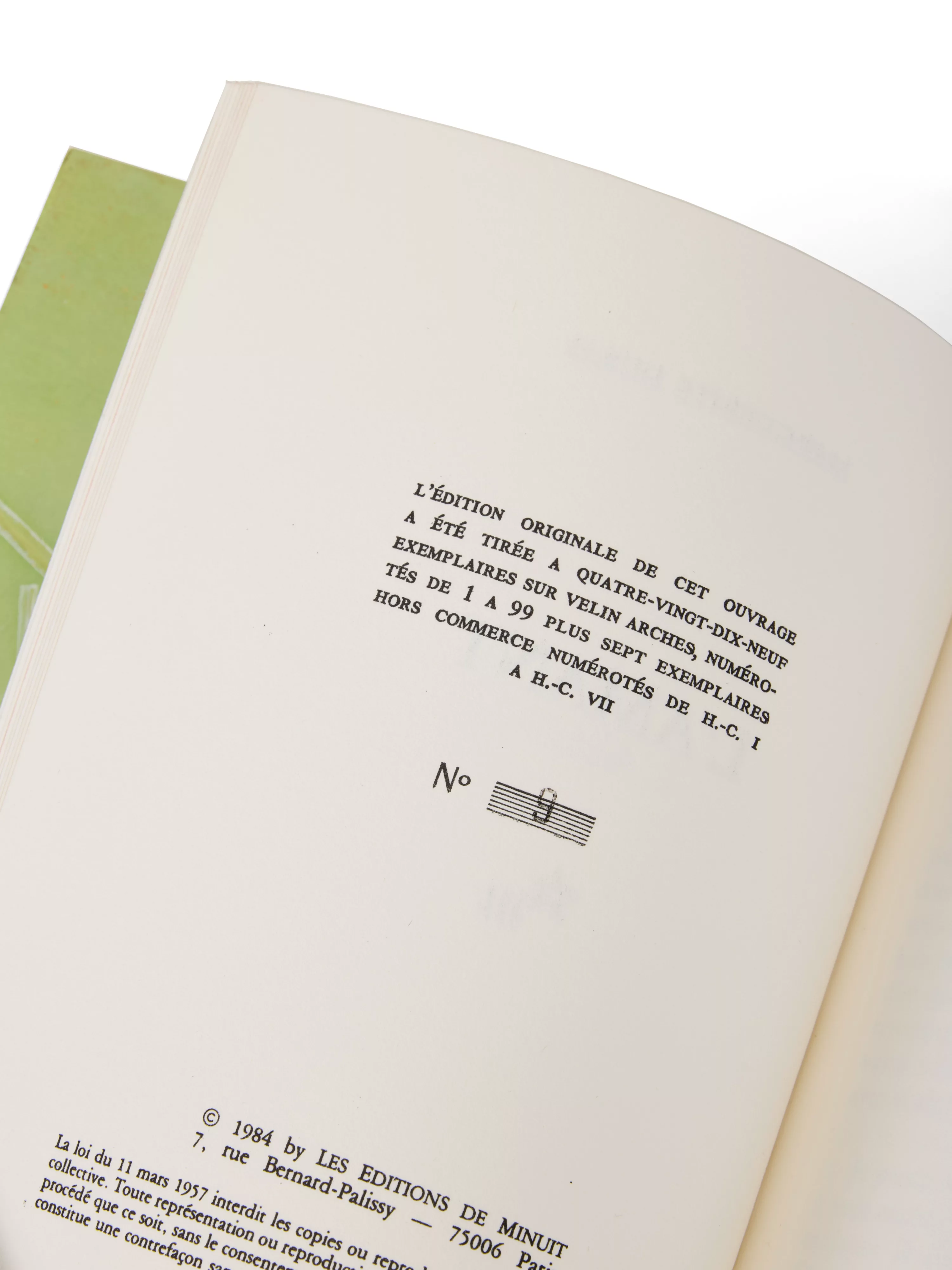
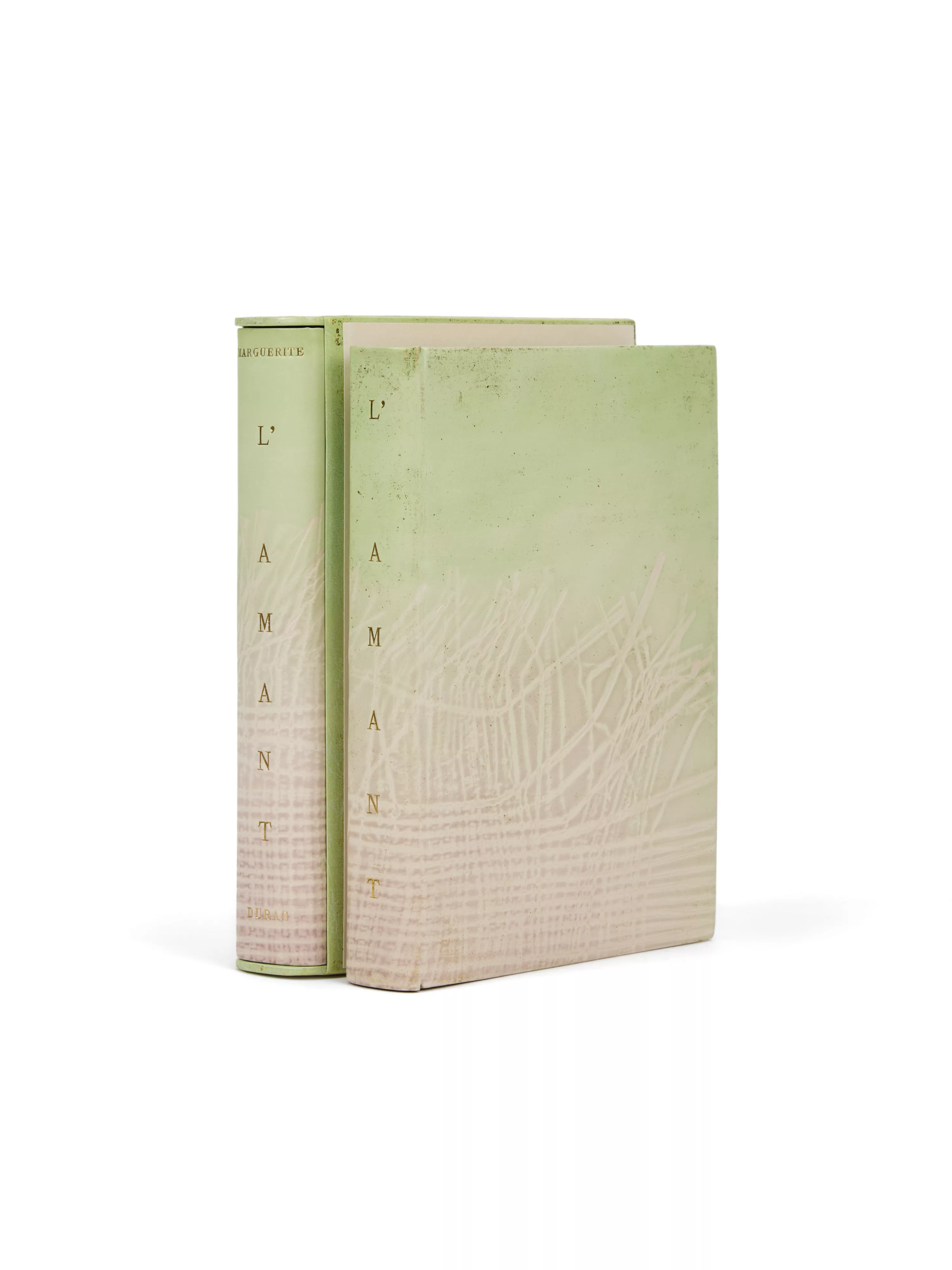
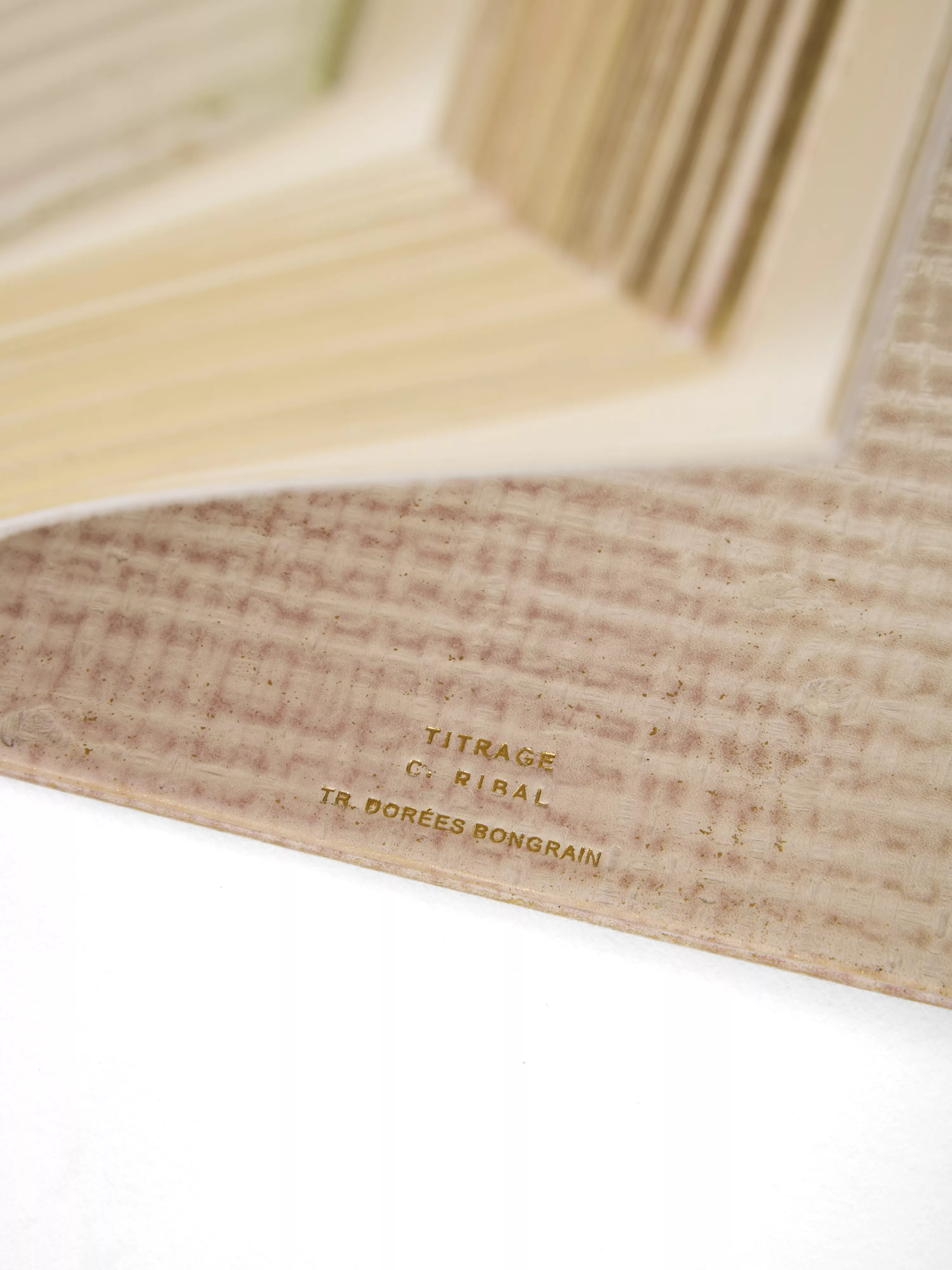
One of 106 copies from the deluxe issue on Arches paper, this copy no. 9.
Prix Goncourt 1984. “At last,” Marguerite Duras would say, thirty-four years after the failure of Un barrage contre le Pacifique (1950). L’Amant is the novel of a revelation: in colonial Indochina in the 1930s, a poor fifteen-and-a-half-year-old girl begins a relationship with a wealthy Chinese heir. The story, drawn from Duras’s own youth, transcends autobiography through a style both neutral and vibrant, swift and insistent, a text she said should be “read aloud.” François Nourissier, praising the book in Le Figaro littéraire, noted that “from the very first lines, Duras’s art and craft burst forth, her freedoms, her defiances, the achievements of thirty years spent learning to write this stripped-down language, capable of moving at the exact speed of thought and image.”
The day after the Goncourt was announced, Marianne Alphant, reporting for Libération, went to Les Roches noires in Trouville, where Duras lived. Asked, “How do you explain the Goncourt jury giving you a prize that seems completely at odds with their habits?”, Duras answered at once: “It’s a political fact. The Goncourt gave me this prize because they believed it was possible to give it to me. Because they found no reason to refuse it to me. Because they did not stop themselves from giving me the prize.” But the novel’s immediate success also carried the decision: the initial printing of 25,000 copies sold out in five days, followed by 100,000 copies in under three weeks, well before the book even entered the Goncourt selections. Reprints followed one after another, while four American publishers were already competing for the translation rights. The novel would soon reach a million copies, be translated into dozens of languages, and be adapted for film by Jean-Jacques Annaud (1992), with Jeanne Moreau’s voice-over capturing Duras’s distinctive “song.”
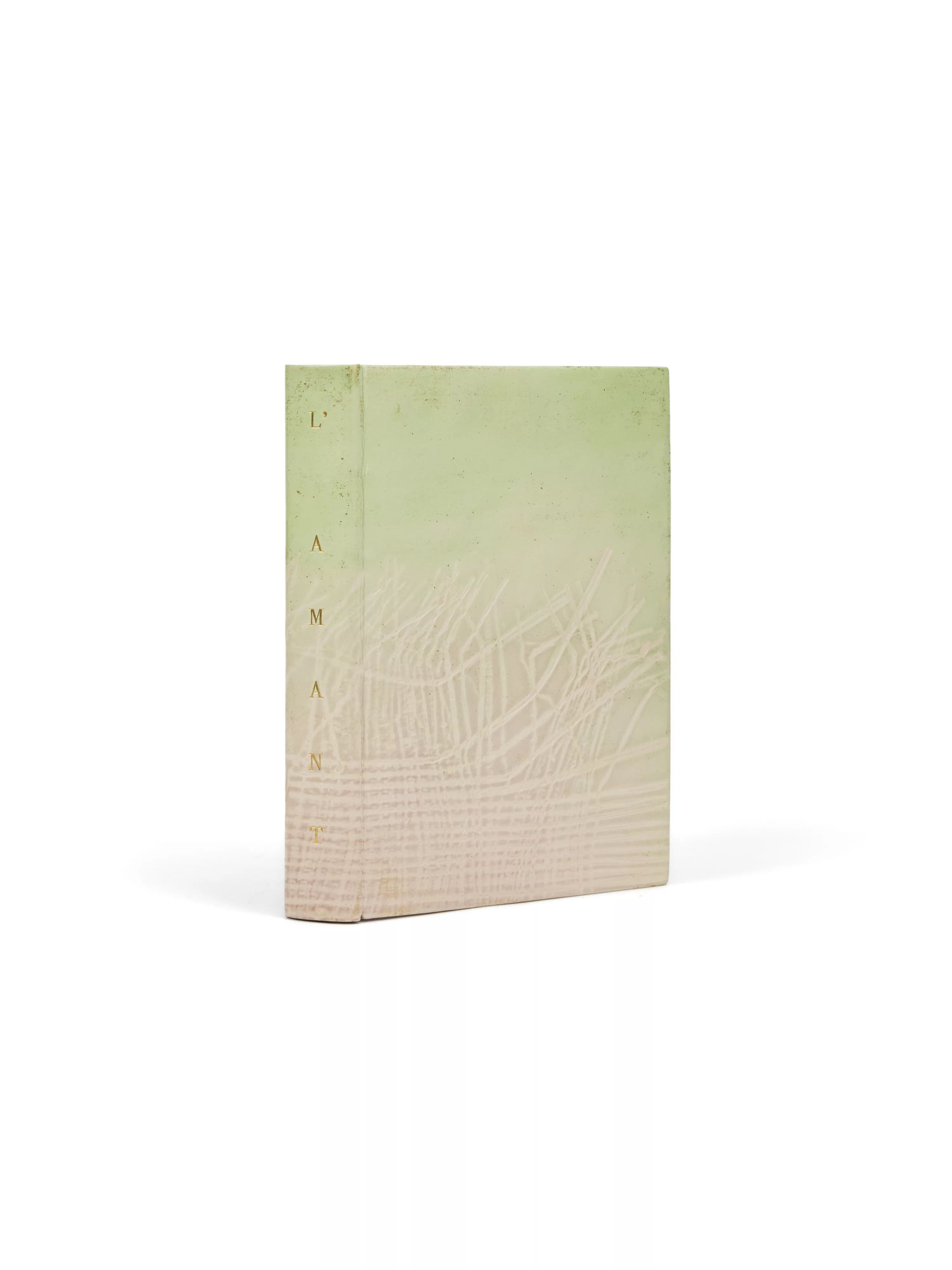
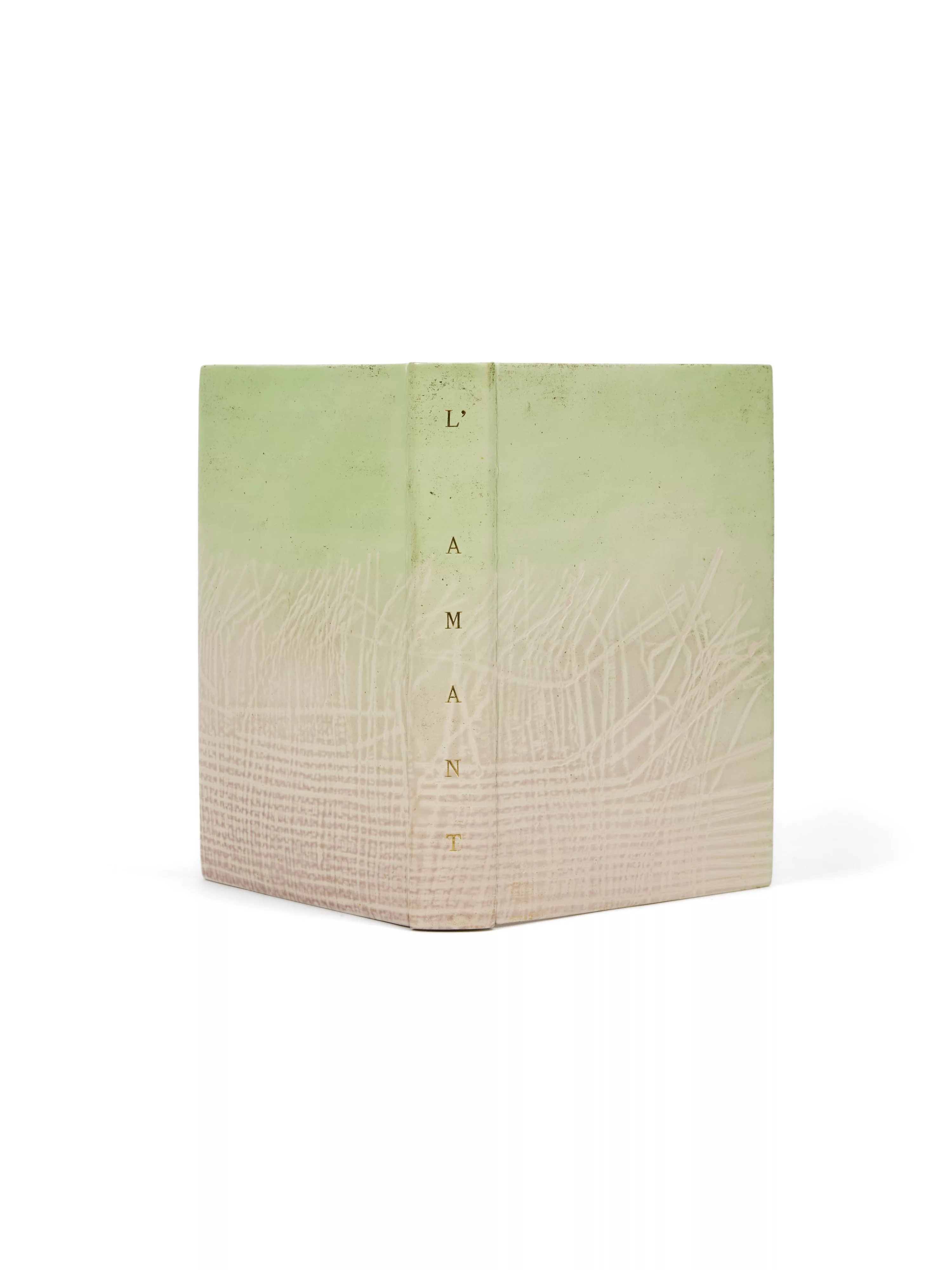
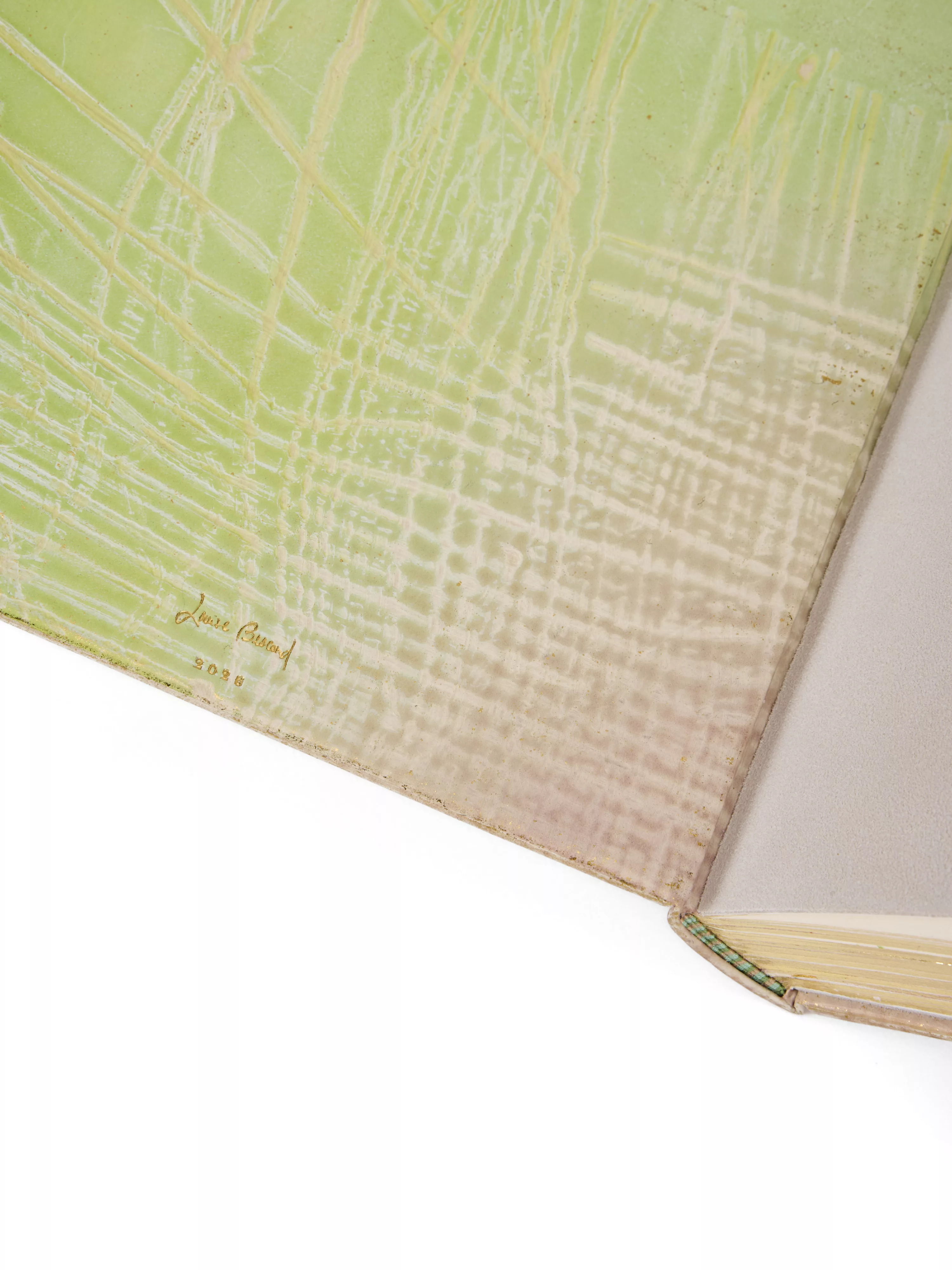
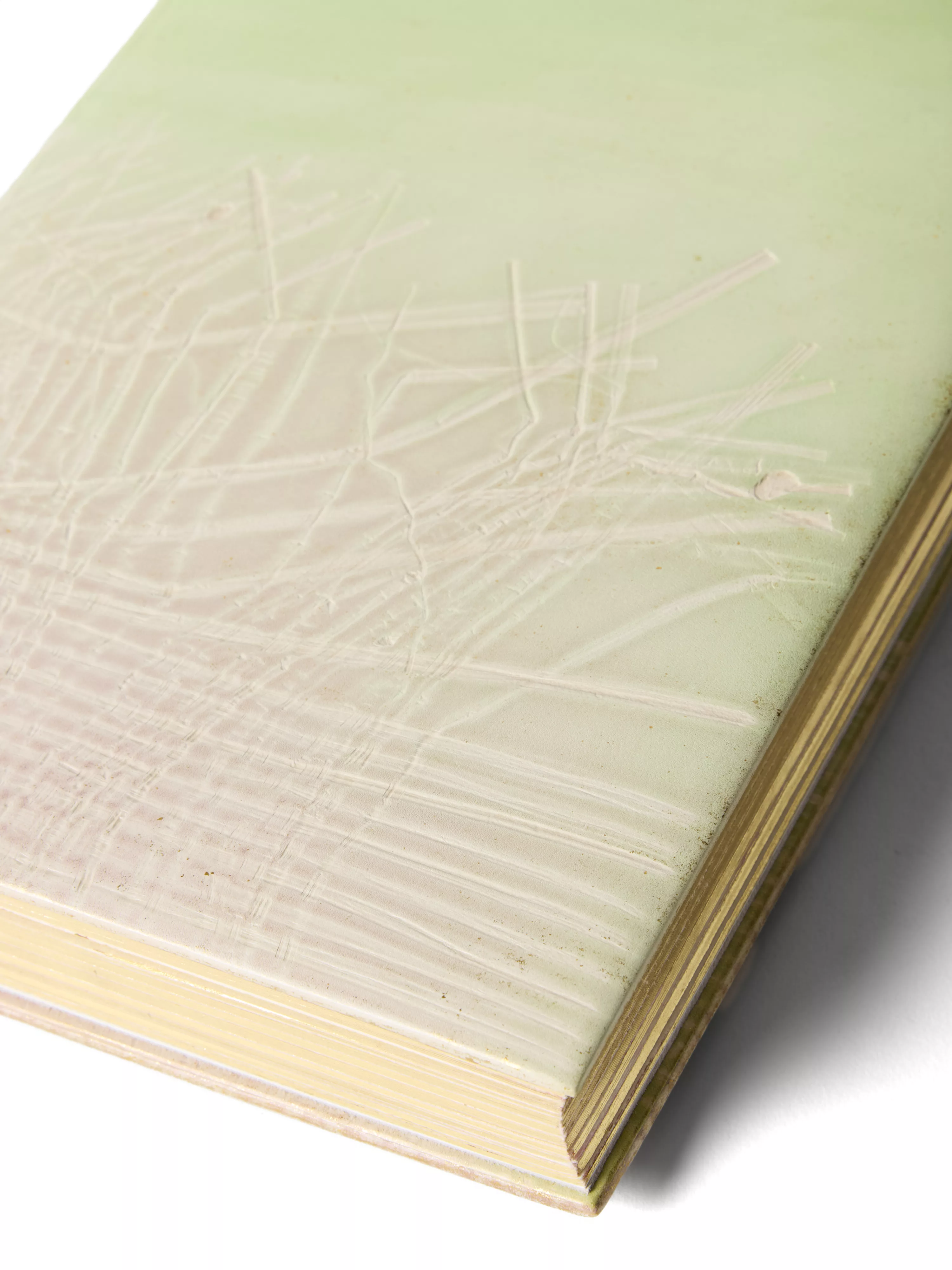
The first binding by Louise Bescond on this text, magnificently conceived: an abstract landscape of reeds and water, in tones of jade green and rose-wood, evoking the Indochinese landscape and the banks of the Mekong that run through the novel, whose opening scene — the young girl on the ferry and her meeting with the man — takes place during the crossing of the river.