

“In 1929, Simone de Beauvoir was twenty years old. She had just placed a brilliant second — behind Sartre, who was retaking the exam — in the agrégation in philosophy. Fiercely Cartesian, she made ambitious plans for herself: she intended to live in order to write, and to go her own way, unhindered. ‘Free as air,’ she entered into a sacred pact with Sartre: ‘We would never become strangers to one another, neither would ever call on the other in vain, and nothing would prevail against this alliance.’ An alliance sealed by a further vow: ‘We would tell each other everything.’ […] Simone de Beauvoir’s life, as revealed in her four autobiographical books and two novels, has served as a genuine education in female freedom for several generations of women. Although no single life can stand as a universal model, the fact remains that by turning her back on age-old patriarchal norms, by refusing the imposed destiny of wife and mother, and by becoming one of the most celebrated philosophers of her time, she showed her readers that they too could try to open the cage of prejudice that confined them. Our children may no longer read Nausea or The Second Sex, nor any work by either of them, but their names are now inscribed in the history of ideas and in that of romantic mythology. This was perhaps not Sartre’s original design. But it is thanks to the Castor, who built this mythical couple with him against all odds, that Sartre will survive to posterity. Beauvoir’s sweet revenge: it is with her that he will achieve eternity.” (Elisabeth Badinter, Simone de Beauvoir ou les chemins de la liberté, BnF Conférences, 2002).
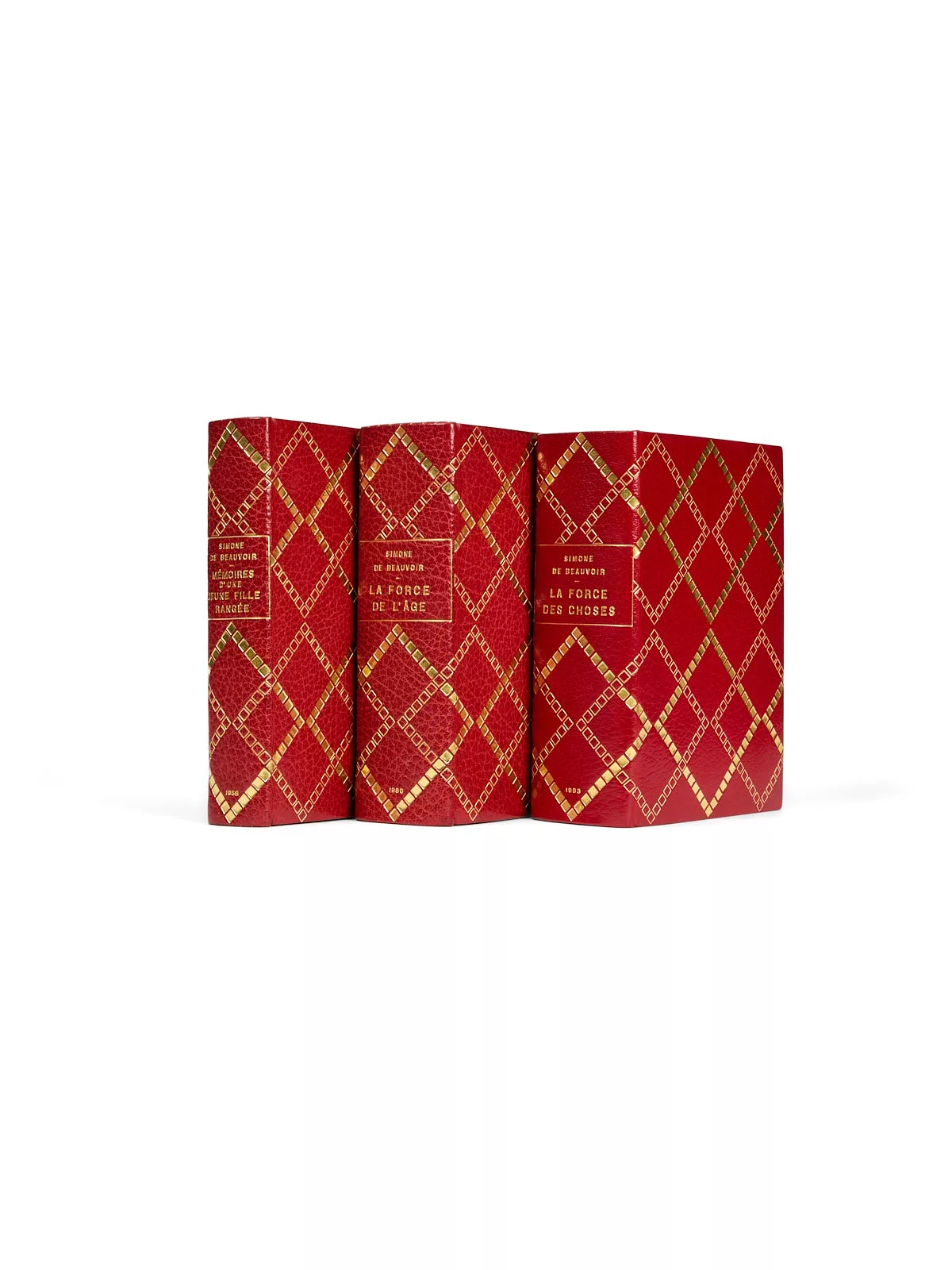
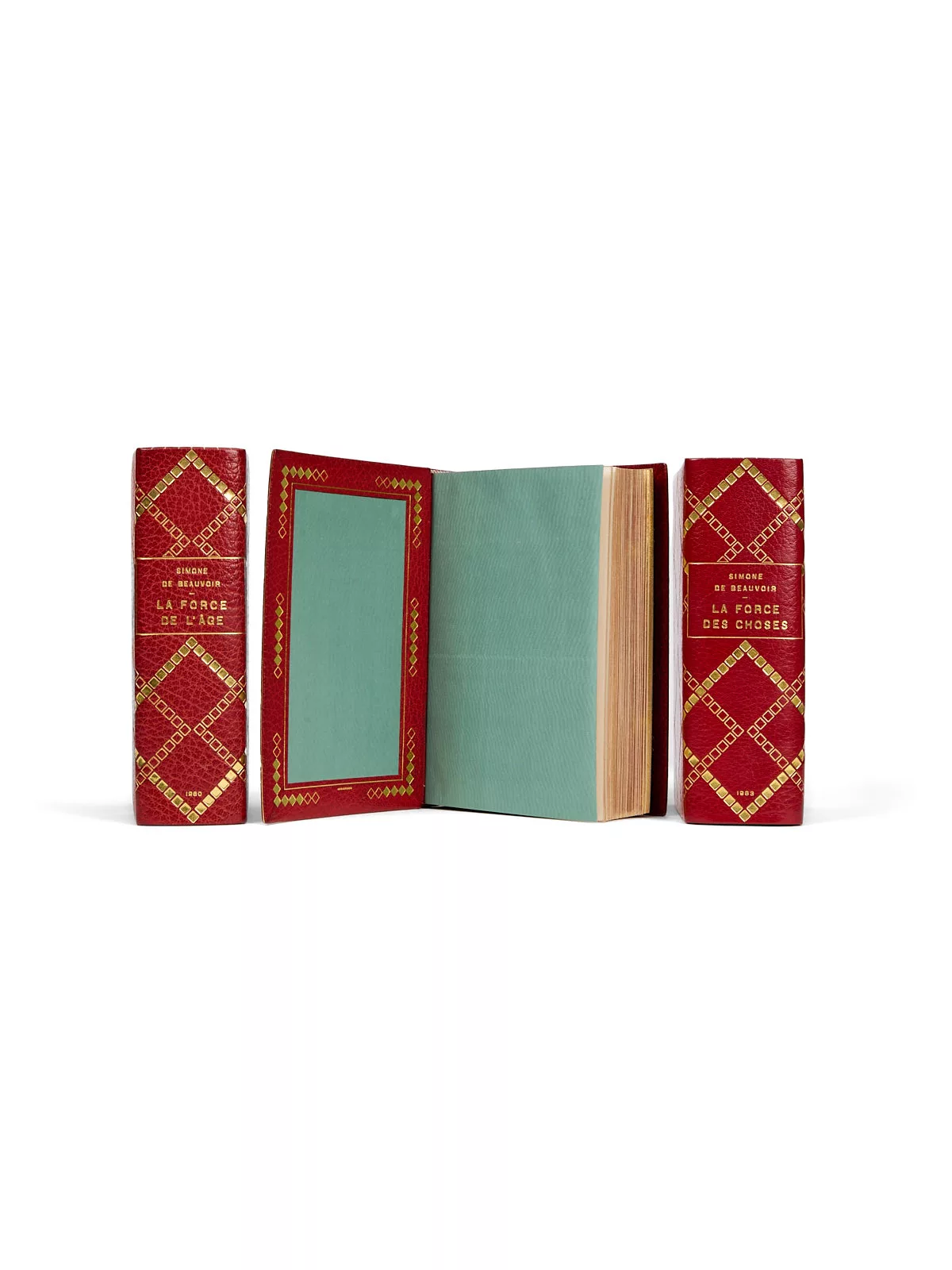
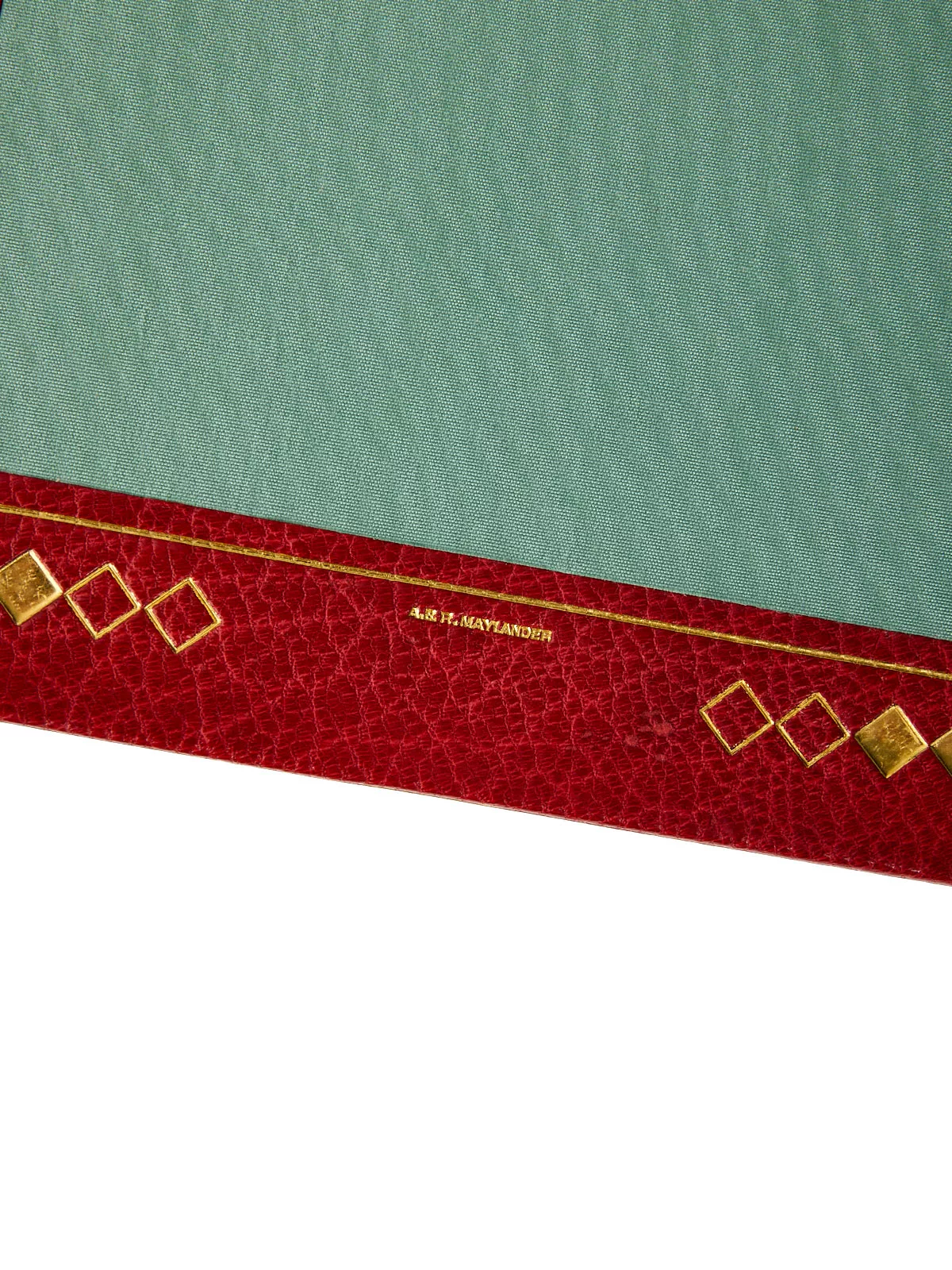
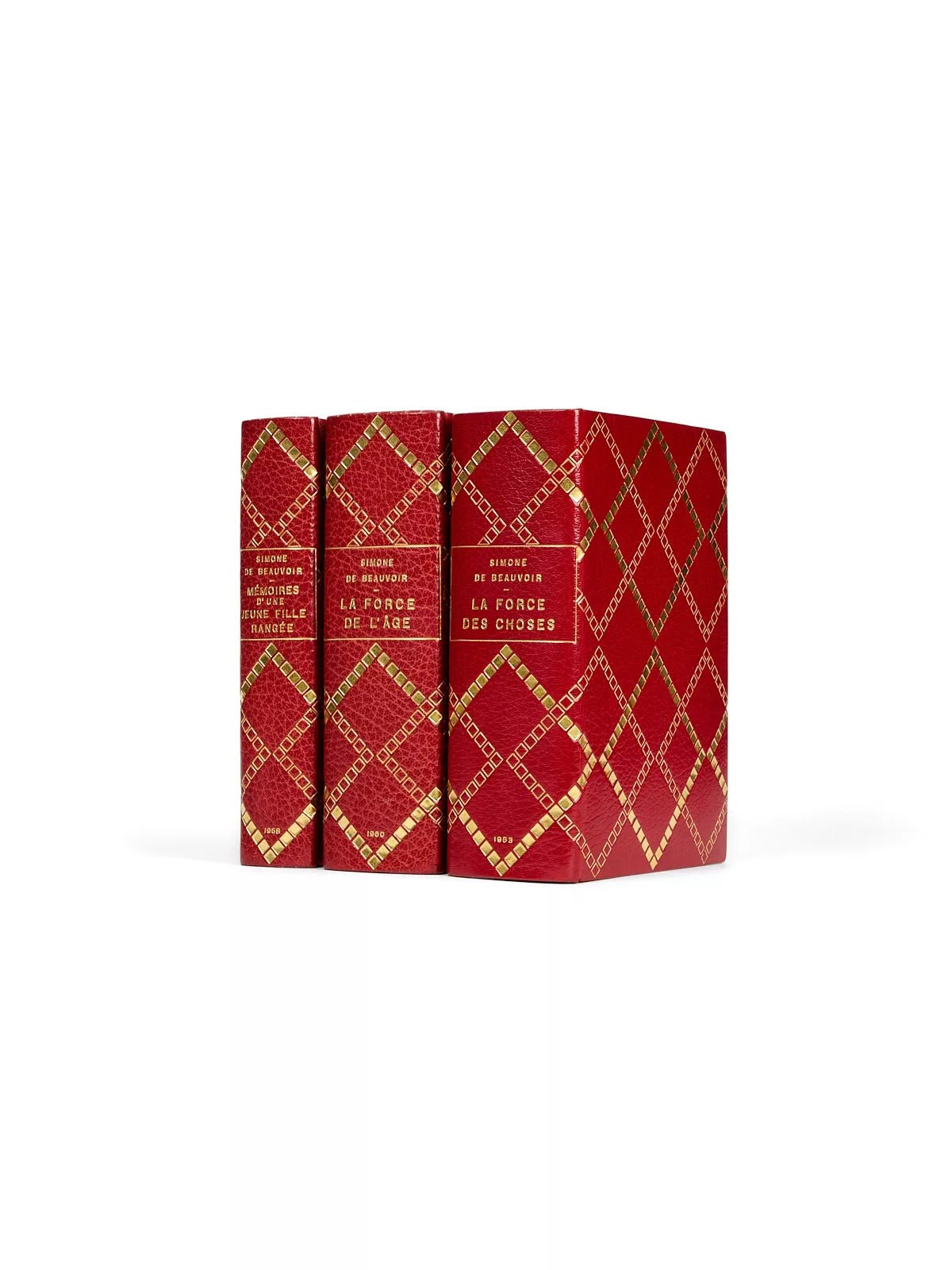
A superb binding by the Maylander brothers.
From the library of Raoul Simonson, with bookplate.