

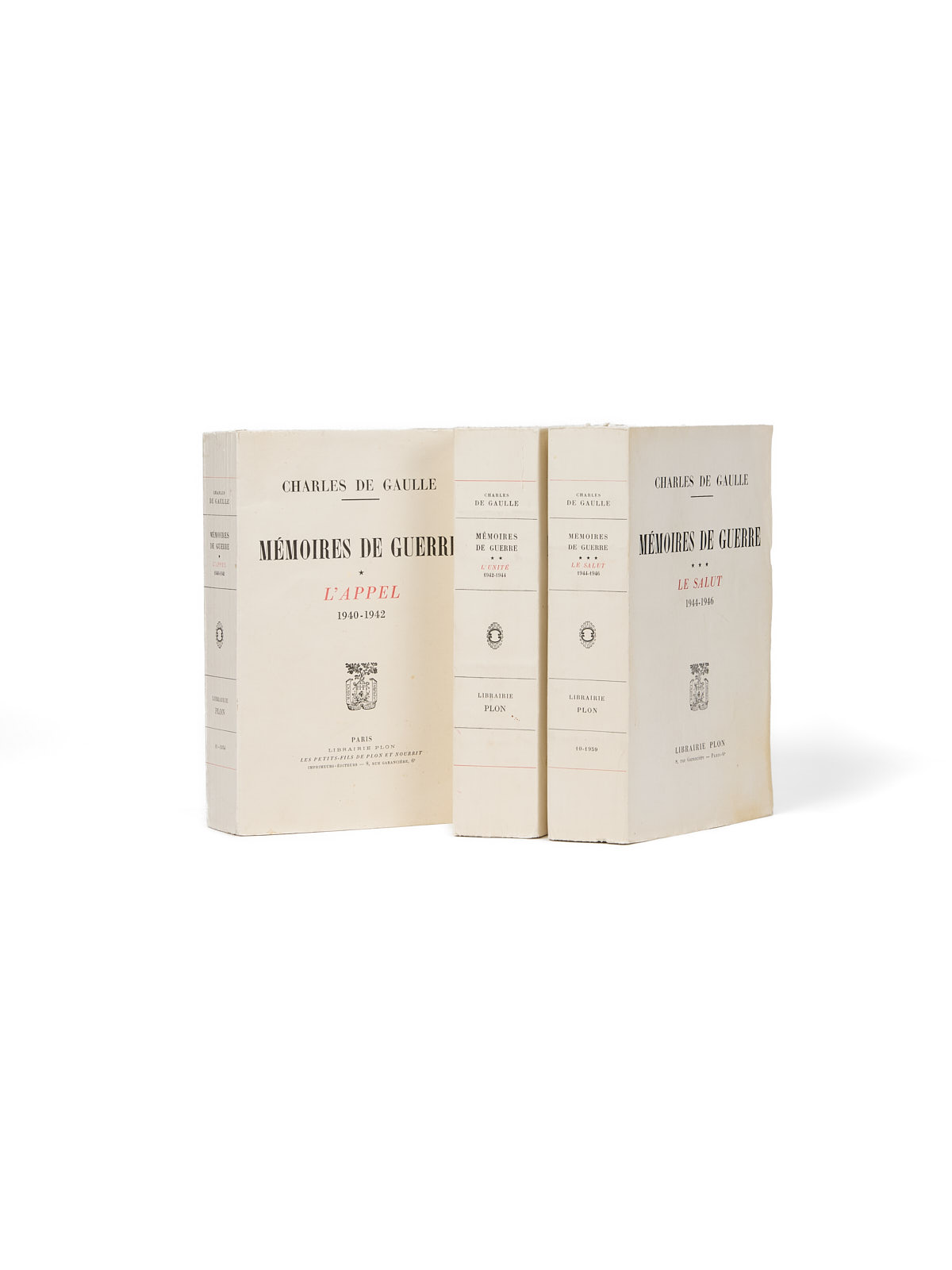
Mémoires de guerre
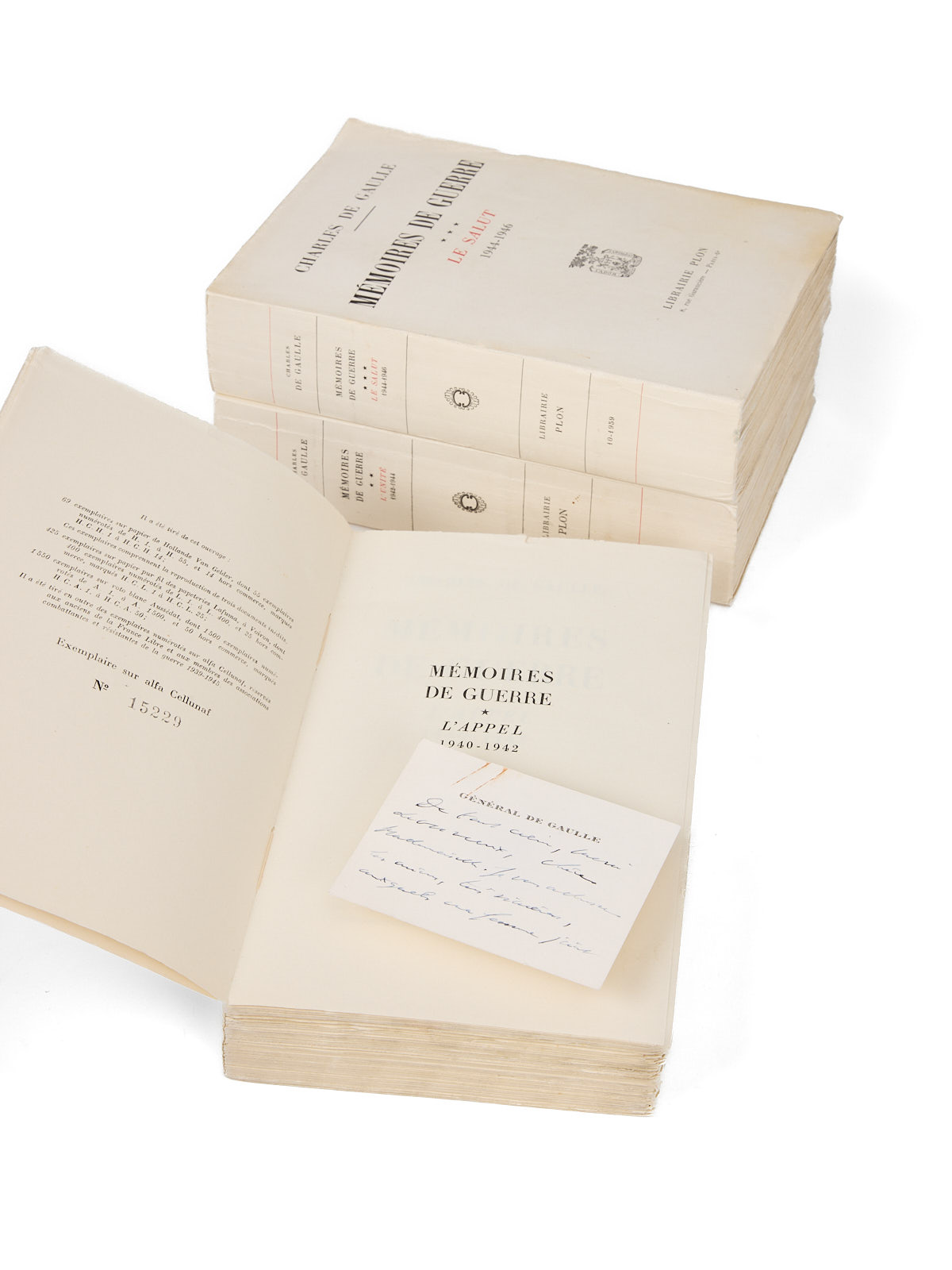
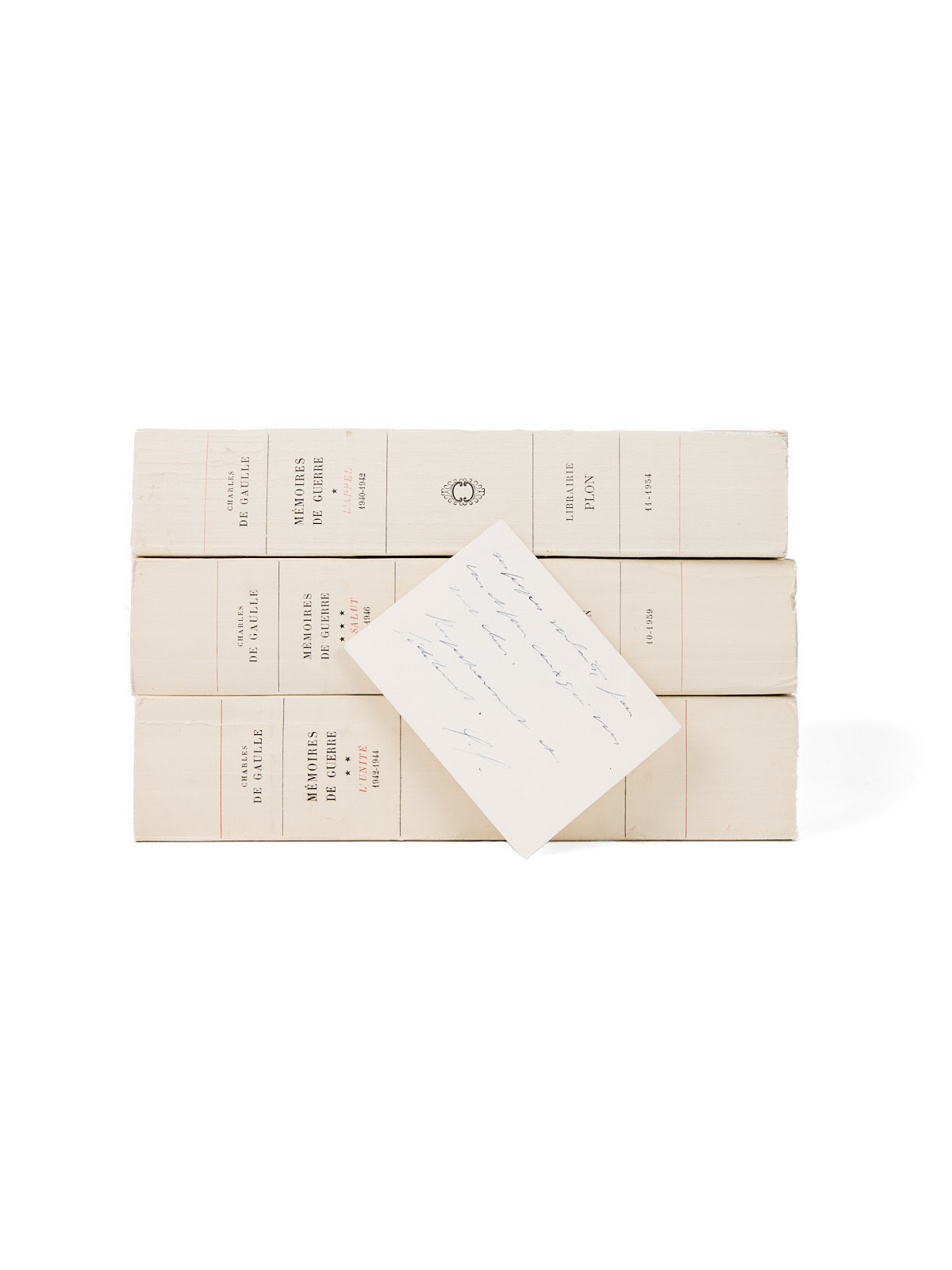
Accompanied by an autograph card signed: “De tout cœur, merci de vos vœux, chère Mademoiselle. Je vous adresse les miens, très sincères, auxquels ma femme joint ses propres souhaits pour vous et pour ceux qui vous sont chers. Respectueusement et fidèlement, Ch. G.”
Charles de Gaulle’s figure took shape during the years 1939–1945. From his efforts to convince military and political leaders of his views at the outbreak of the conflict to the glorious hours of Free France — from L’Appel to Le Salut — he traces a portrait of what he feels himself becoming: “an old man, worn down by trials, detached from undertakings, feeling the eternal cold approach, but never weary of watching in the darkness for the gleam of hope!”
Charles de Gaulle recounts the history of Free France in great detail, supporting his account with numerous documents in the appendices. It was thanks to Charles Orengo, and out of loyalty to the house that had published him just before the war, that de Gaulle turned to Éditions Plon for the publication of these volumes, against the advice of Malraux, who had recommended Gallimard. He remained loyal to Plon for the rest of his memoirs (Mémoires d’espoir, Discours et Messages, then Lettres, notes et carnets).
The text was at the center of a controversy a few years ago: should it, or should it not, be included in the terminale L syllabus, for the “Literature and Debates of Ideas” section? It now seems clear that it should, and definitively so, especially since de Gaulle’s Mémoires entered the “Bibliothèque de la Pléiade” in 2020.