

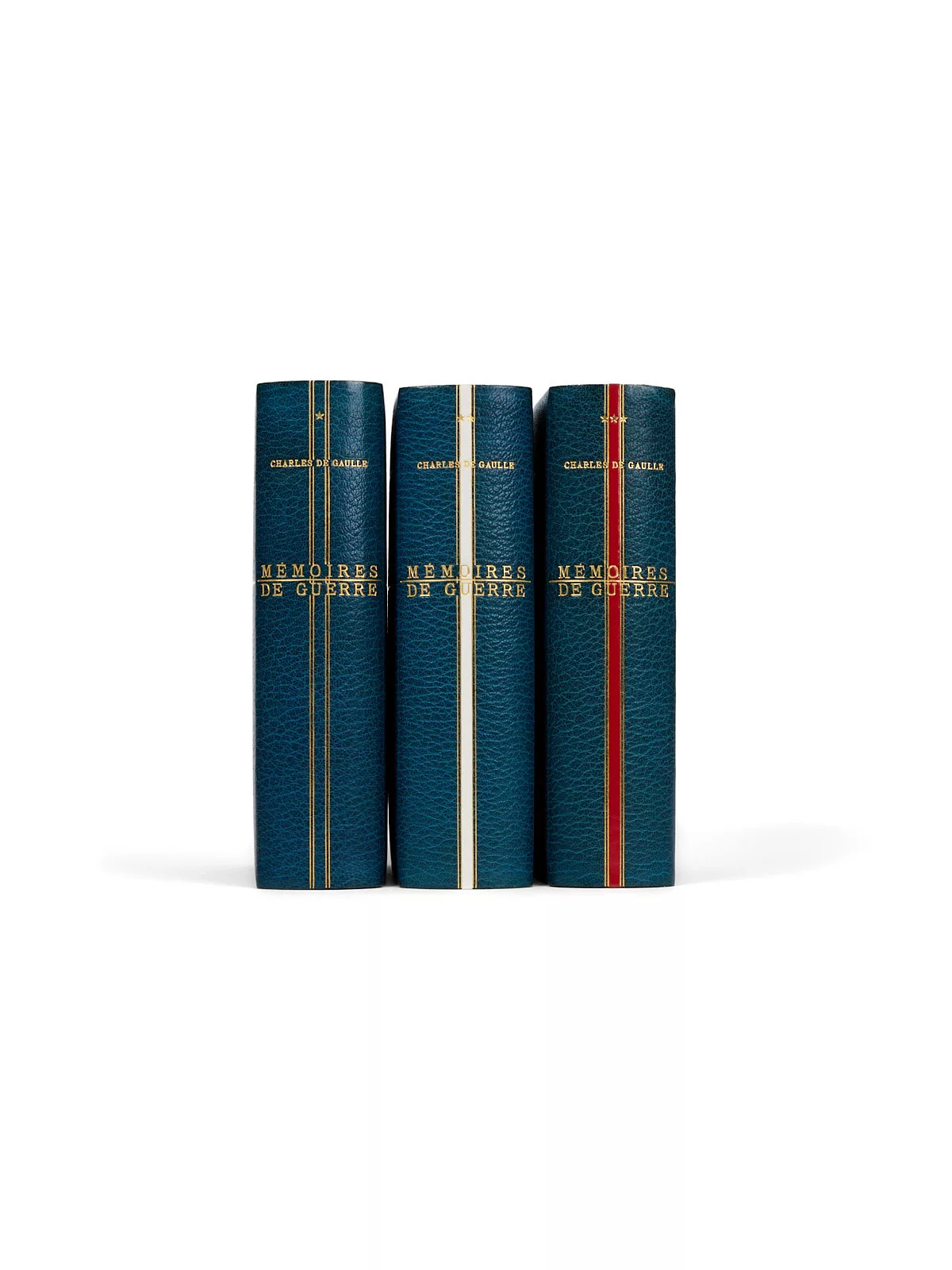
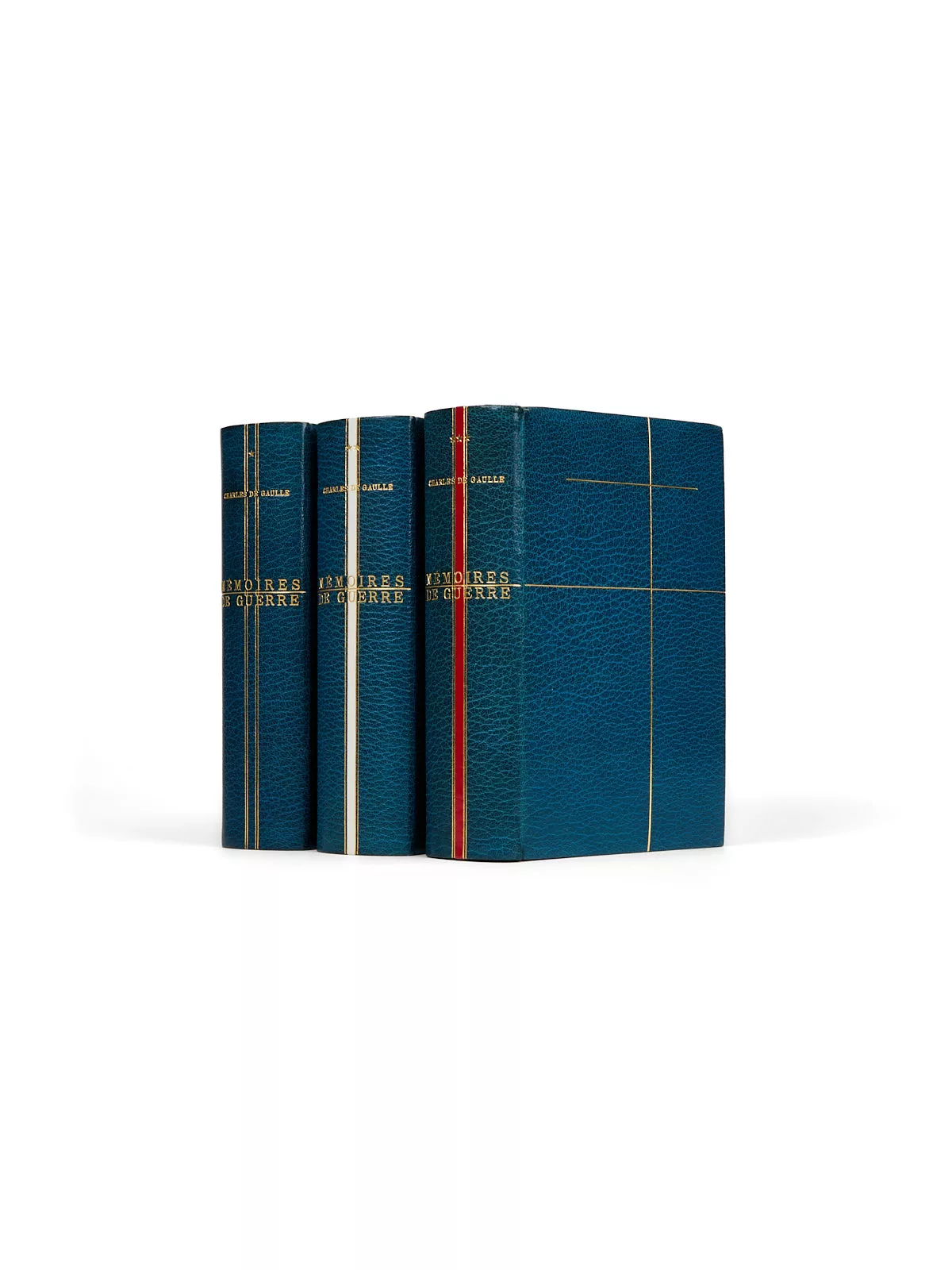
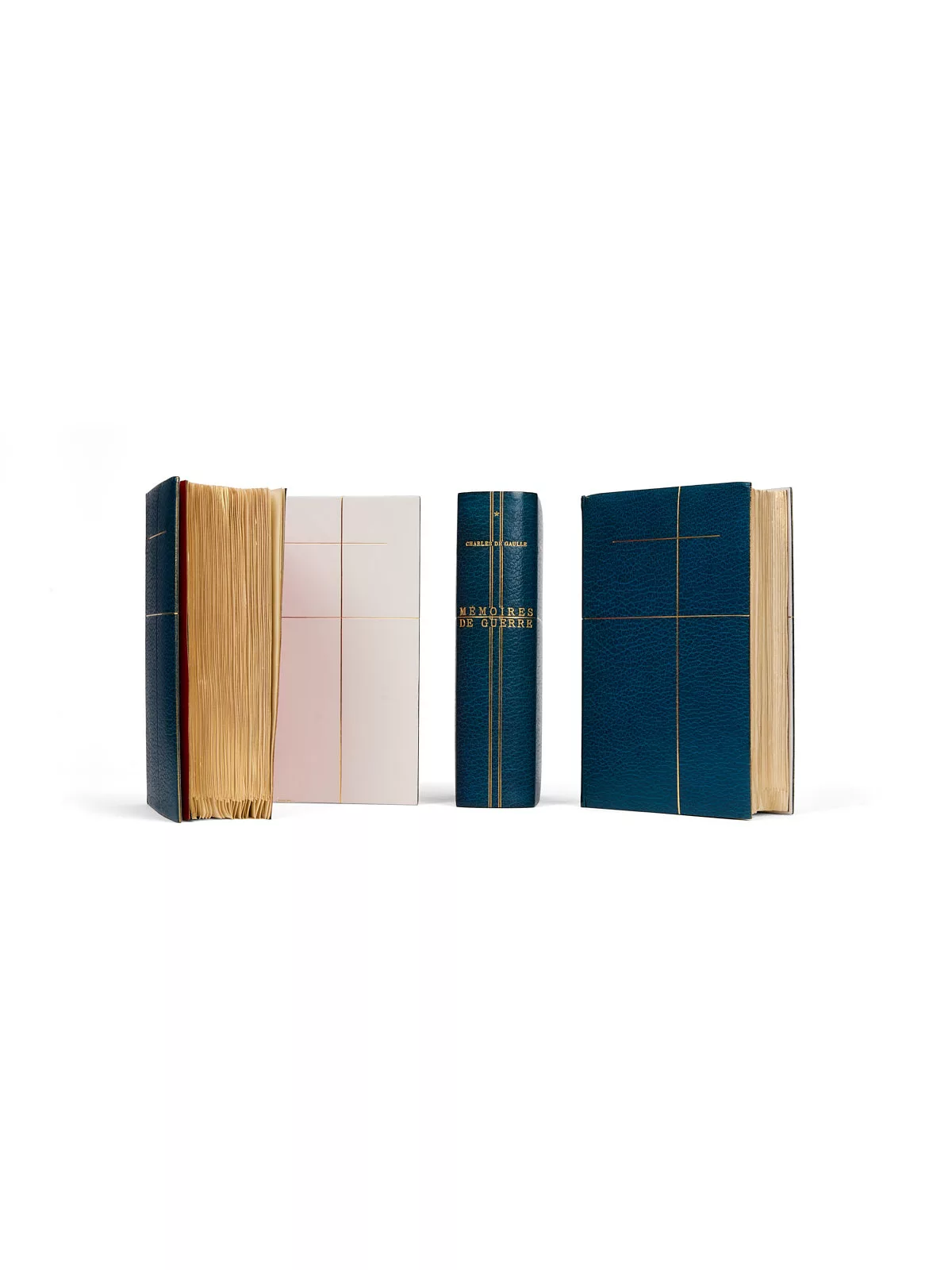
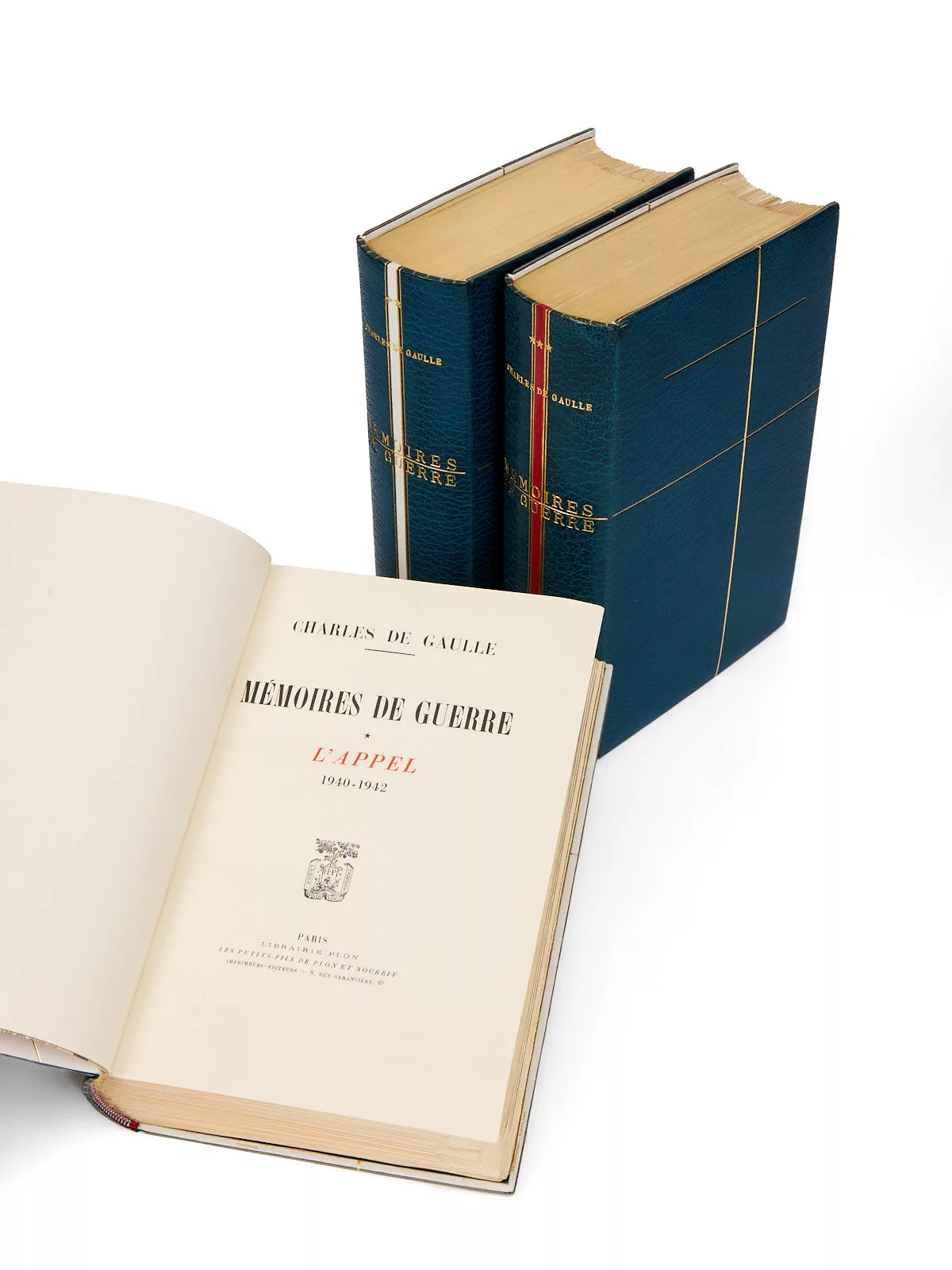
Mémoires de guerre
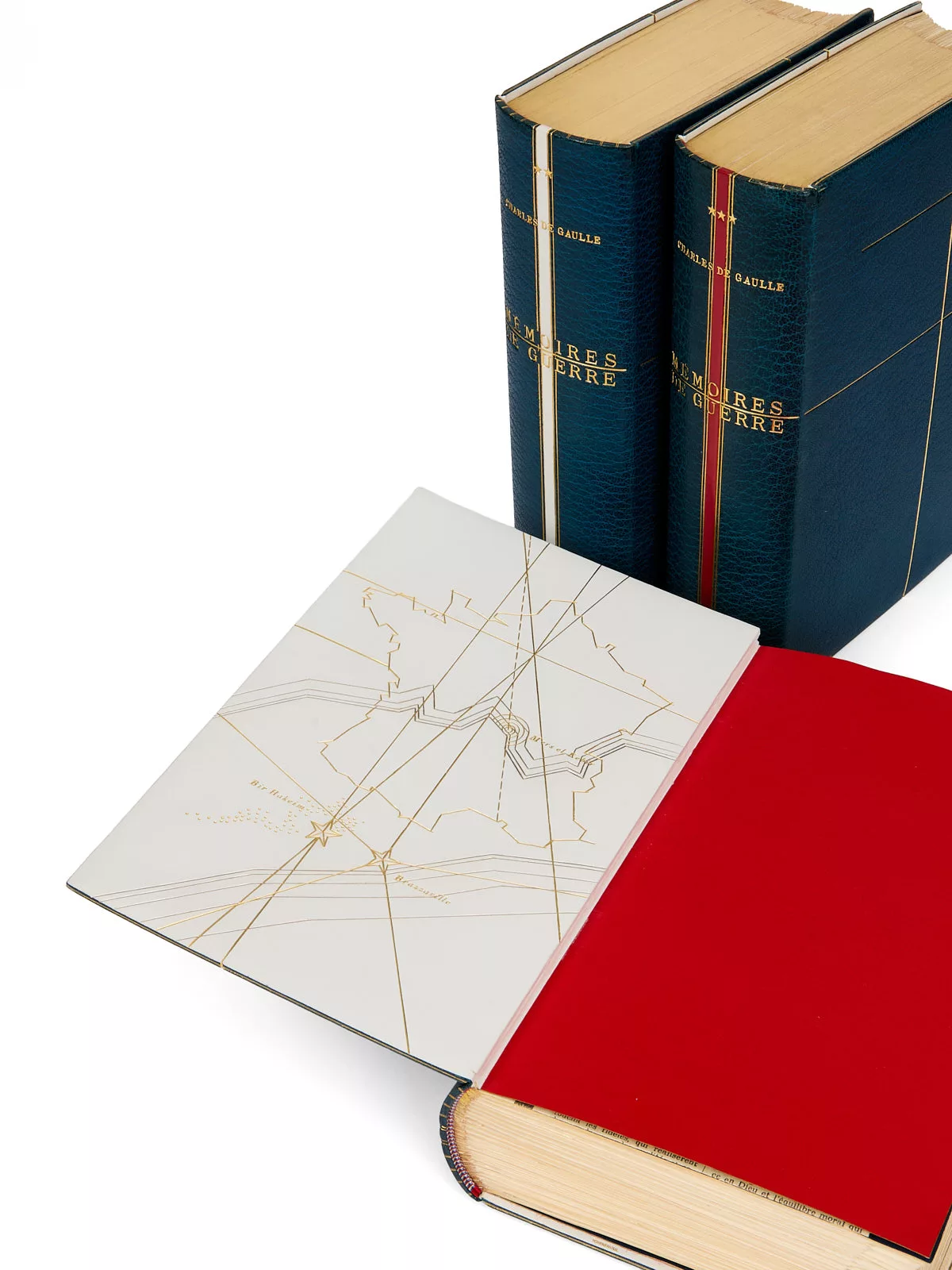
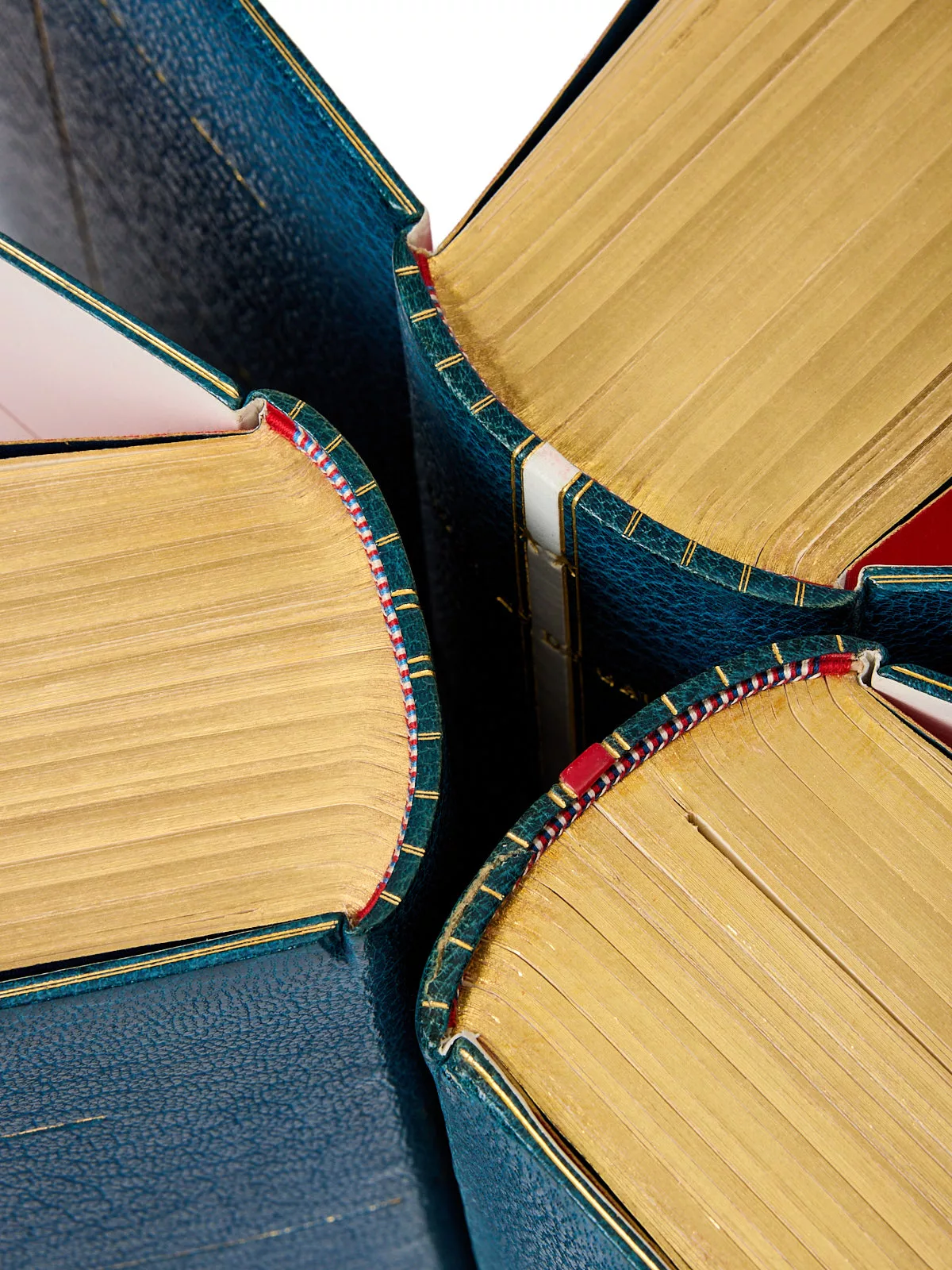
One of 69 copies from the deluxe issue on Hollande paper.
At the front, an autograph letter signed by Charles de Gaulle to Joseph Kessel, congratulating him on the publication of the volumes of Le Tour du malheur.
Copies on Hollande paper are the only ones to contain the three unpublished facsimiles.
It was during the years 1939–1945 that the figure of Charles de Gaulle took shape: from his efforts to make the military and political leadership accept his views at the outbreak of the conflict, to the glorious hours of Free France — from L’Appel to Le Salut — he draws a portrait of what he felt himself becoming: “an old man, worn out by trials, detached from undertakings, sensing the eternal cold approaching, yet never weary of watching in the shadows for the gleam of hope!” The text was recently at the center of controversy over whether it could be included in the French terminale L syllabus, for the “Literature and debates of ideas” section. It seems evident that it could.
After commanding a tank unit, victorious in one of the rare counter-offensives of the Battle of France, de Gaulle was appointed Under-Secretary of State for National Defense in Paul Reynaud’s cabinet, one of the few at the time to support him. When the regime fell, de Gaulle went to London — the rest is well known. Among the many interests of this trilogy, the reader better appreciates how difficult and heroic it was for the future general to make the entire world accept that official France was in London.
Written between his resignation from the government on 20 January 1946 and his return to power in 1958, the Mémoires allowed Charles de Gaulle to set out the historical facts associated with the struggle for the liberation of France; he recounted in detail the epic of Free France, presenting himself as a patriot defending the greatness of his country: “All my life I have had a certain idea of France. This is inspired by sentiment as well as by reason […] Only vast undertakings are capable of counterbalancing the ferments of dispersion that its people carry within themselves; our country, as it is, among the others, as they are, must, on pain of mortal danger, aim high and hold itself upright. In short, in my view, France cannot be France without greatness.”
He recounts here the history of Free France in great detail, supporting his account with numerous appended documents. It was thanks to Charles Orengo, and out of loyalty to the house that had published him just before the conflict, that de Gaulle turned to Éditions Plon for the publication of these volumes, against the advice of Malraux, who had recommended Gallimard. He remained loyal to Plon for the rest of his memoirs (Mémoires d’espoir, Discours et Messages, then Lettres, notes et carnets).
Unlike so many statesmen, de Gaulle, the son of a teacher of letters, wrote all his own speeches and books himself. Examination of his manuscripts reveals his extraordinary concern for composition and style. These Mémoires de guerre sold a combined total of some two and a half million copies in France, were published in nearly twenty-five foreign languages, received an enthusiastic reception from press and public alike upon publication, and were later established as a reference edition in the Bibliothèque de la Pléiade. In the same genre, only Churchill’s Mémoires sur la Deuxième Guerre mondiale surpassed this success.