

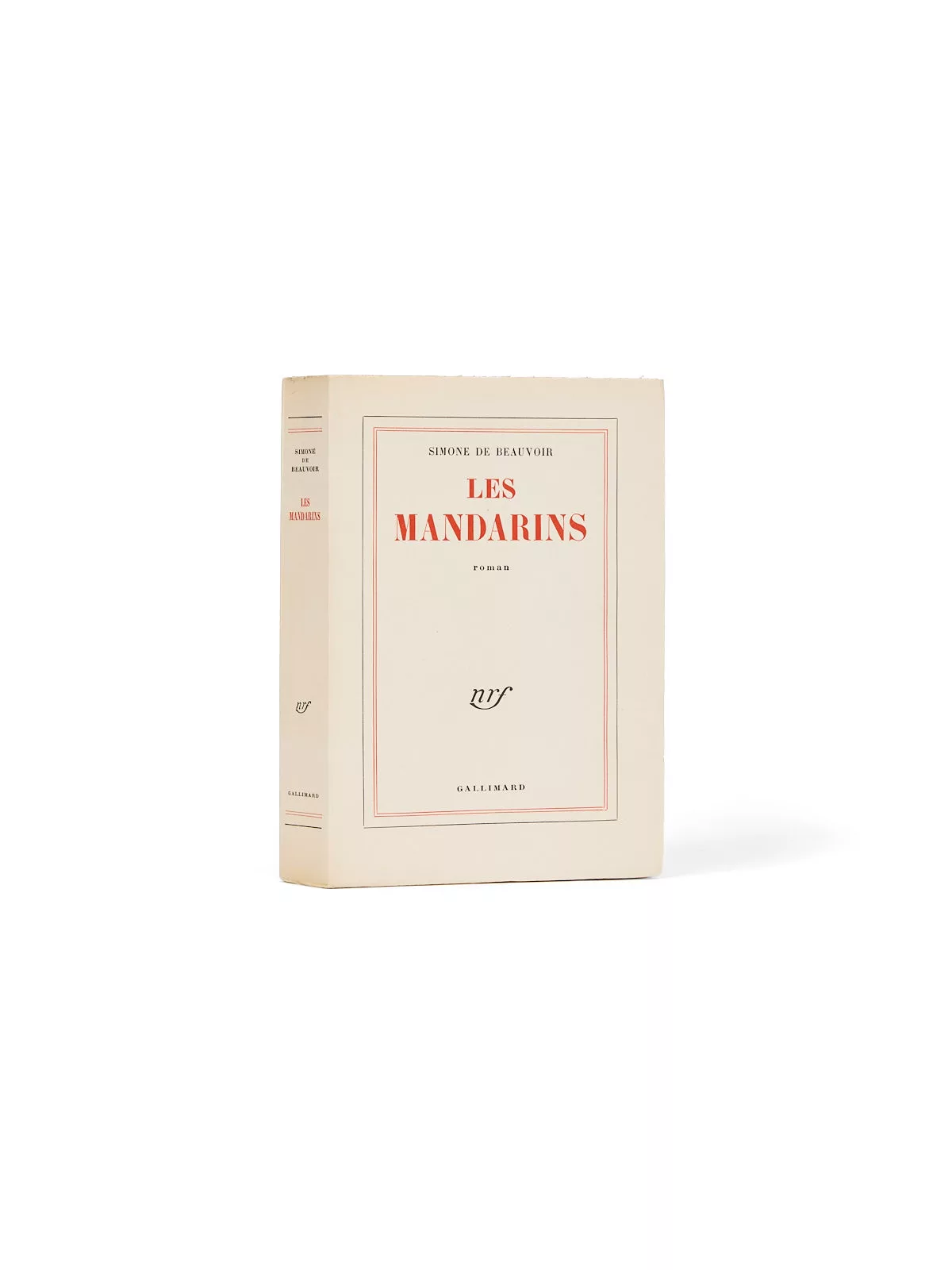
Les Mandarins
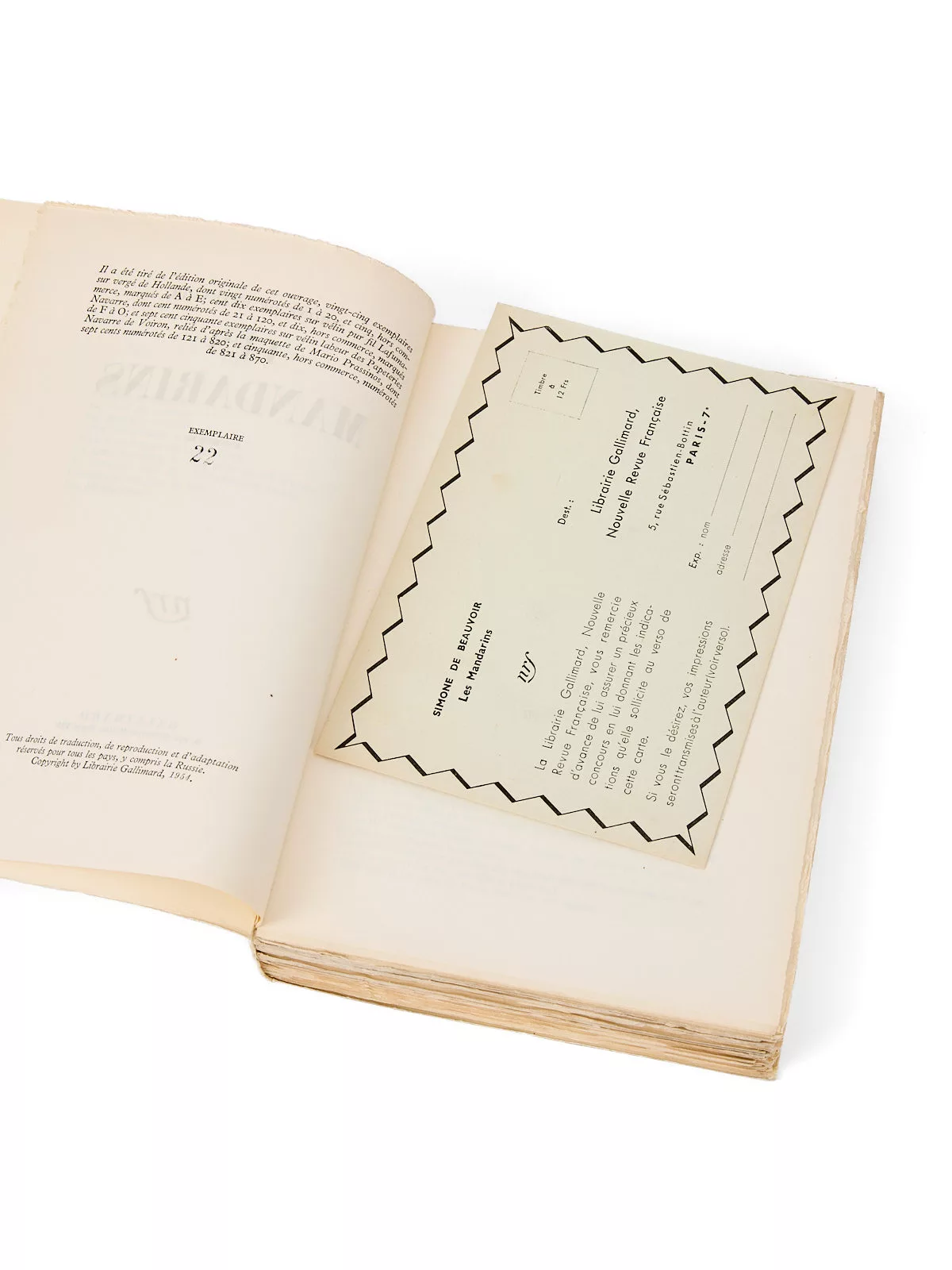
One of 110 copies on vélin pur fil (no. 22).
Following the impact of Le Deuxième Sexe (1949), Simone de Beauvoir turned to fiction with Les Mandarins, a sweeping novel exploring the existential and political dilemmas of the postwar years. The book portrays left-wing intellectuals confronting the Cold War, Stalinism, political commitment and the passage of time. Through characters largely inspired by Sartre, Camus and Nelson Algren, Beauvoir produced a work at once political and intimate.
On its publication, Sartre himself judged the project harshly, and Beauvoir reworked it extensively. Far from autobiography or reportage, Les Mandarins aimed, in her own words, to be “an evocation.” The book was an immense popular success: from an initial printing of 11,000 copies in the fall of 1954, sales rose to more than 200,000 within a year, bringing Beauvoir worldwide recognition.
The third woman to win the Prix Goncourt, after Elsa Triolet (1944) and Béatrix Beck (1952), Beauvoir inscribed her name into a still largely male literary history, confirming the growing role of women writers in postwar literature.
Publisher’s questionnaire concerning the book preserved.