

La Vie devant soi
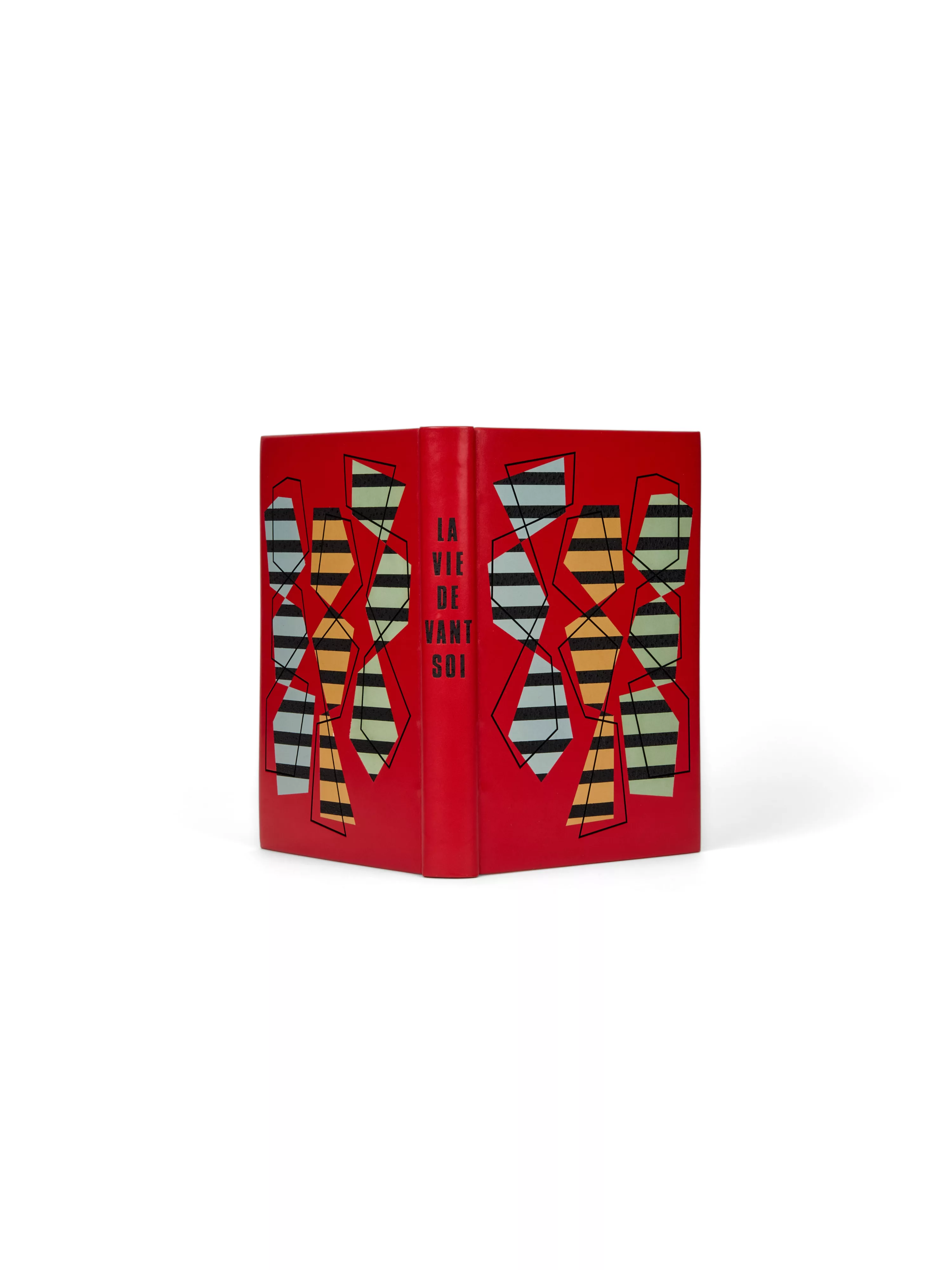
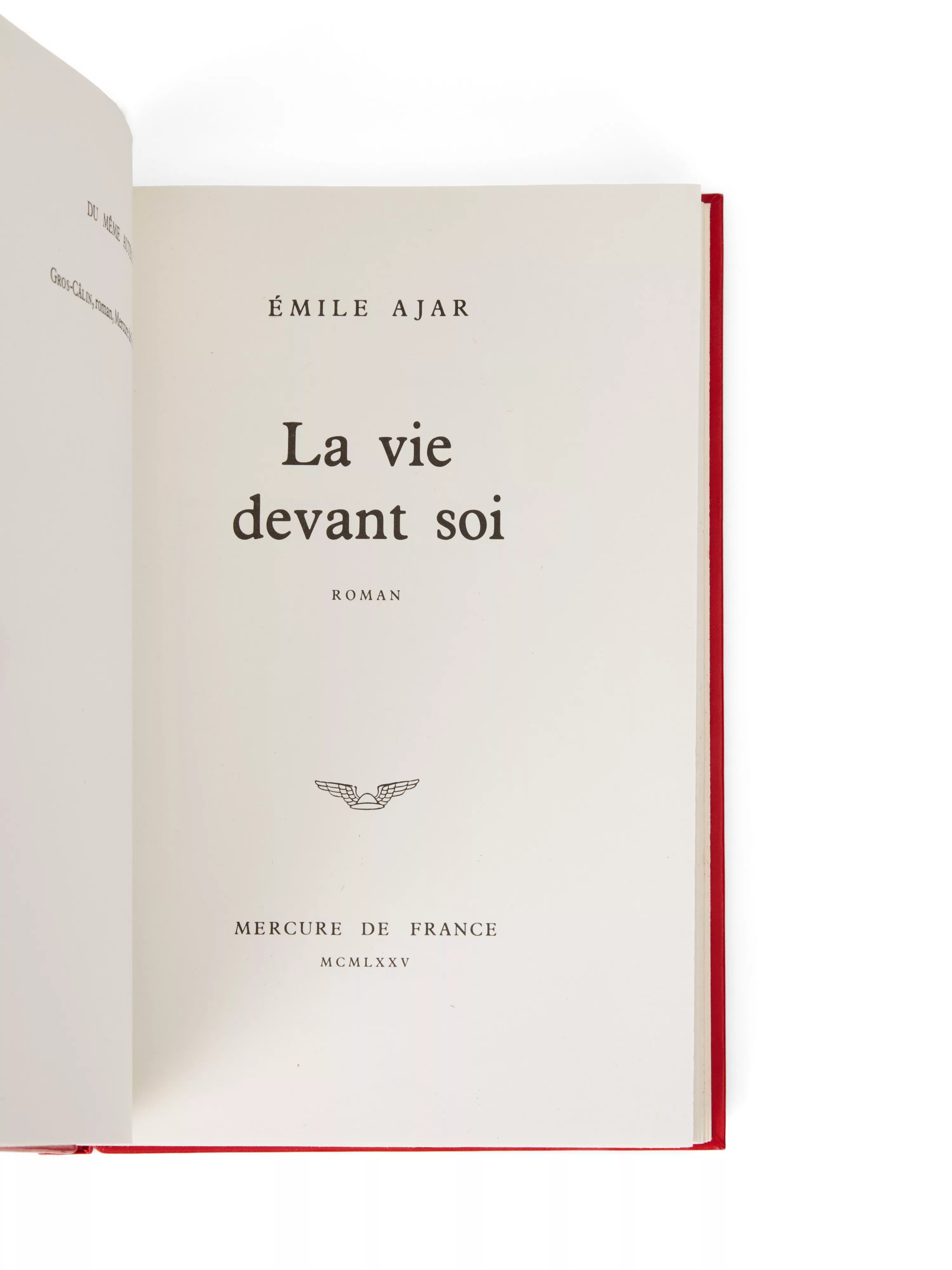
One of the first 40 copies on vélin de Ruysscher.
It was in the winter of 1974 that Romain Gary decided to give his pseudonym a public face, persuading his young cousin Paul Pavlowitch to embody Émile Ajar. An avid reader well versed in Gary’s work, Pavlowitch played the part to perfection, even creating false papers and meeting the publisher Michel Cournot at Mercure de France. The hoax took shape at Pavlowitch’s house in the Lot, where in July the novel was prepared for printing under its originally chosen title, La Tendresse des pierres. A late-night rereading revealed that this title had already been used in Adieu Gary Cooper. In the scramble that followed, the title pages were hastily remade and a new title found. The novel finally appeared in August under the title we know, drawn from a passage in the book: “Tu as toute la vie devant toi.”
The reception was overwhelming. Jacqueline Piatier announced in Le Monde “The second feat of Émile Ajar,” while Max-Pol Fouchet hailed a modern “Voyage au bout de la nuit.” On 17 November, La Vie devant soi was awarded the Prix Goncourt — Gary’s second, after Les Racines du ciel (1956), an unprecedented feat made possible only by the Ajar fiction. When asked about it, Gary replied with feigned detachment: “I haven’t read La Vie devant soi yet…” The deception held until the writer’s death in 1980, revealed only by his posthumous literary testament, Vie et mort d’Émile Ajar, which he closed with: “Je me suis bien amusé. Au revoir et merci.”
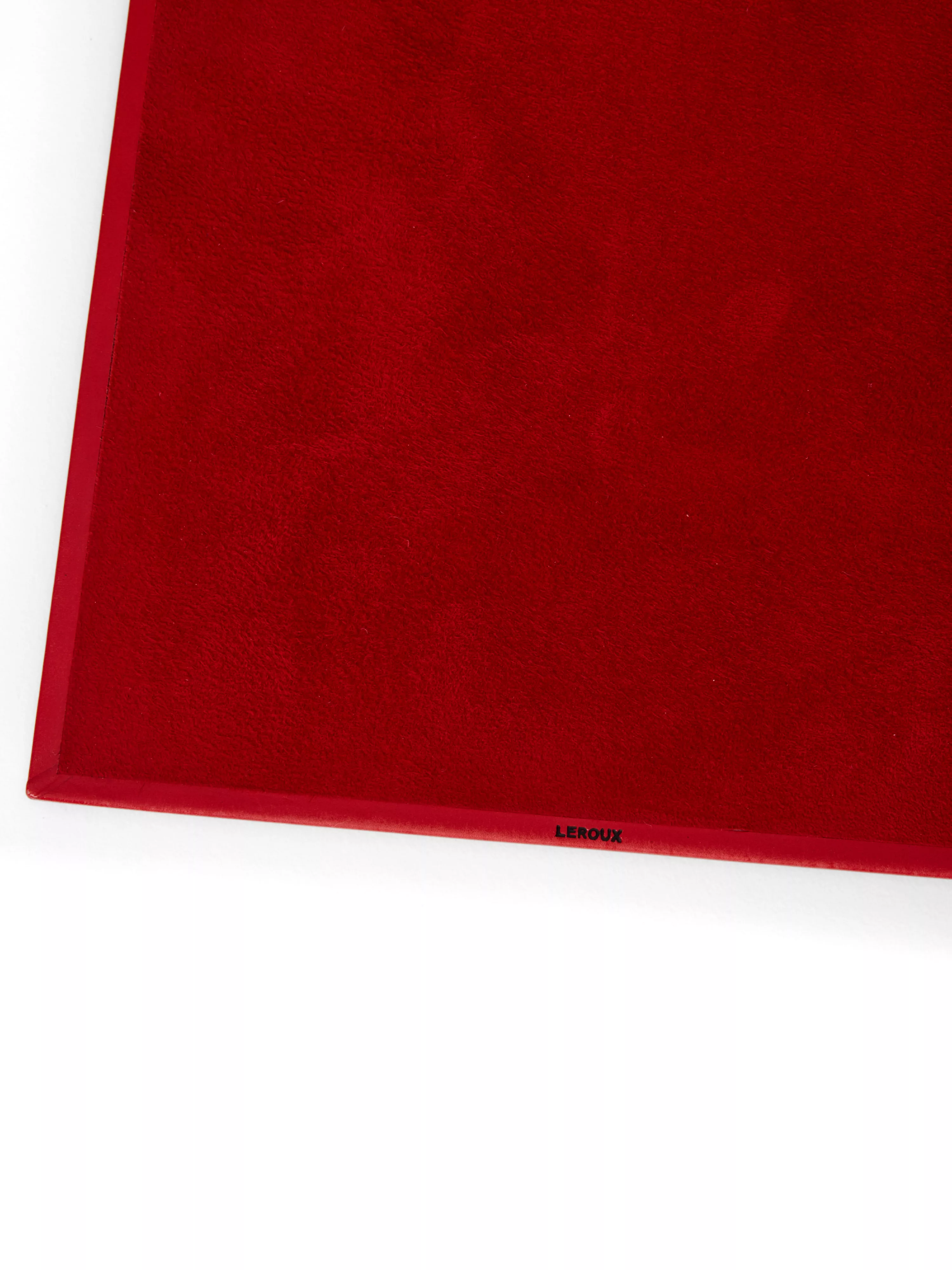
A fine copy, bound by Georges Leroux in 1991.
A particularly desirable copy.