

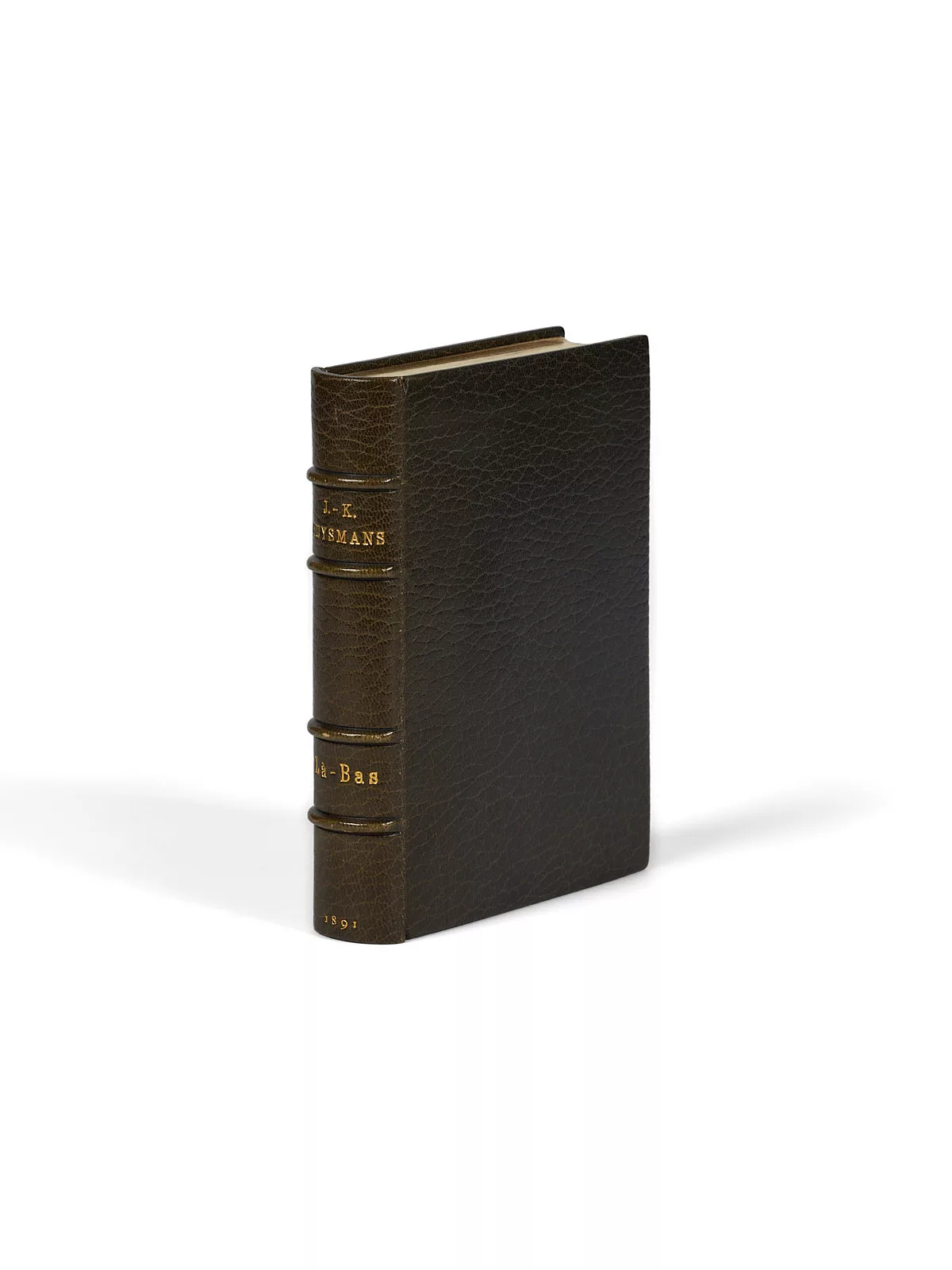
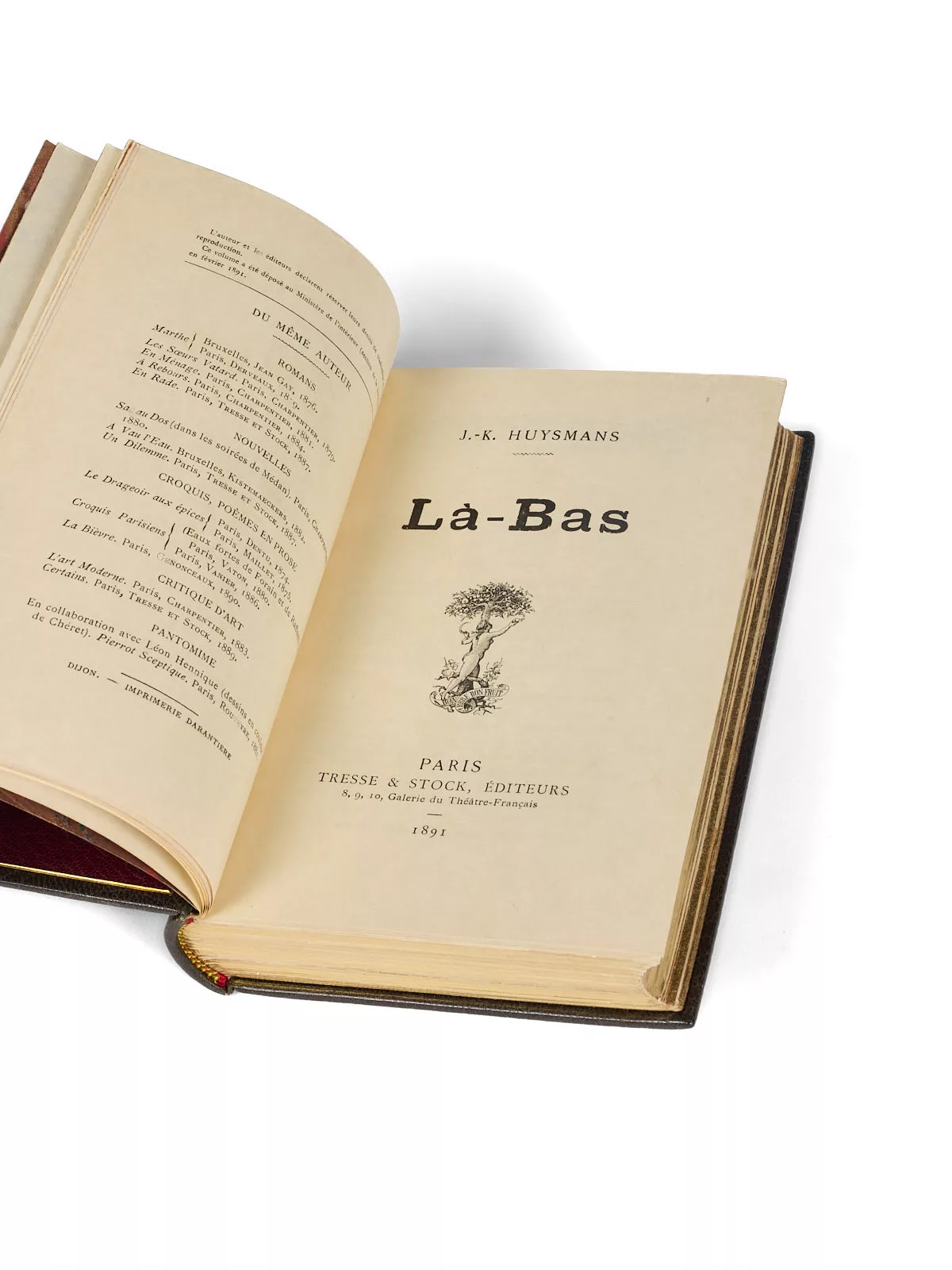
Là-Bas
Published in 1891, Là-bas marks a turning point in Huysmans’s work: after À rebours (1884), which broke with naturalism, Là-bas undertakes a descent into the darkness of the soul and of the age. Huysmans revives the figure of Gilles de Rais, the mystical criminal of the fifteenth century, in order to probe modern forms of evil embodied in fin-de-siècle Paris. The novel was banned from all railway station bookstalls by the Bibliothèque des Chemins de Fer, owing to Durtal, whose troubled evolution leads Huysmans to recount in detail his initiations into adultery with the hysterical wife of a Catholic writer, black masses celebrated by an excommunicated canon who feeds hosts to his white mice, and more generally an explicit, barely disguised evocation of contemporary satanism. This program led to the suspension of the novel’s serialization in L’Écho de Paris after readers’ outrage.
The book edition, however, was an immense success and established Là-bas as the first great occult novel of modern French literature.
The deluxe printing comprised only these ten copies on Japanese paper, followed by ten more on Hollande. Along with À rebours, it is the author’s most sought-after title — deservedly so.
From the library of Antonio Zuloaga (bookplate).