

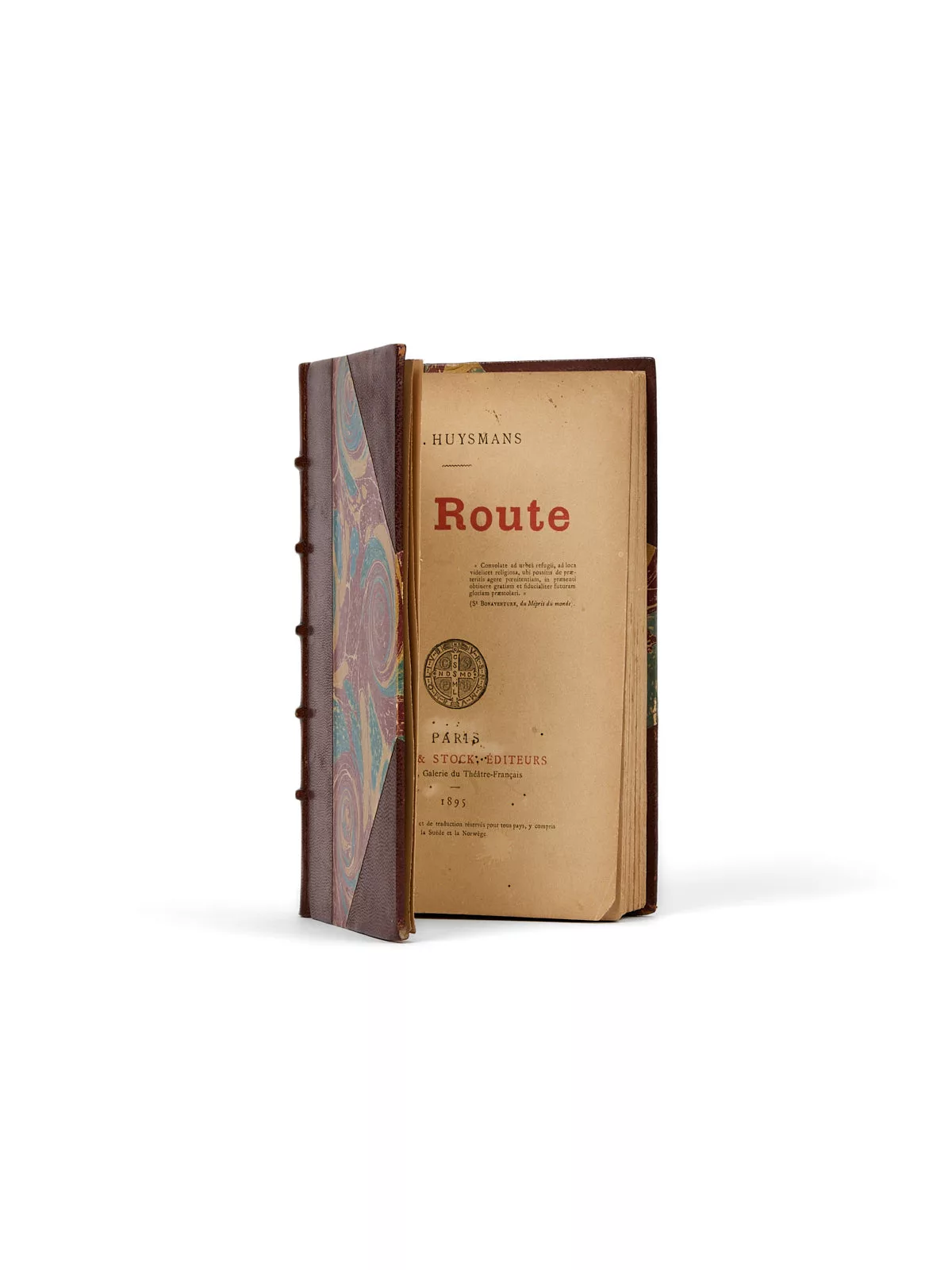
En route
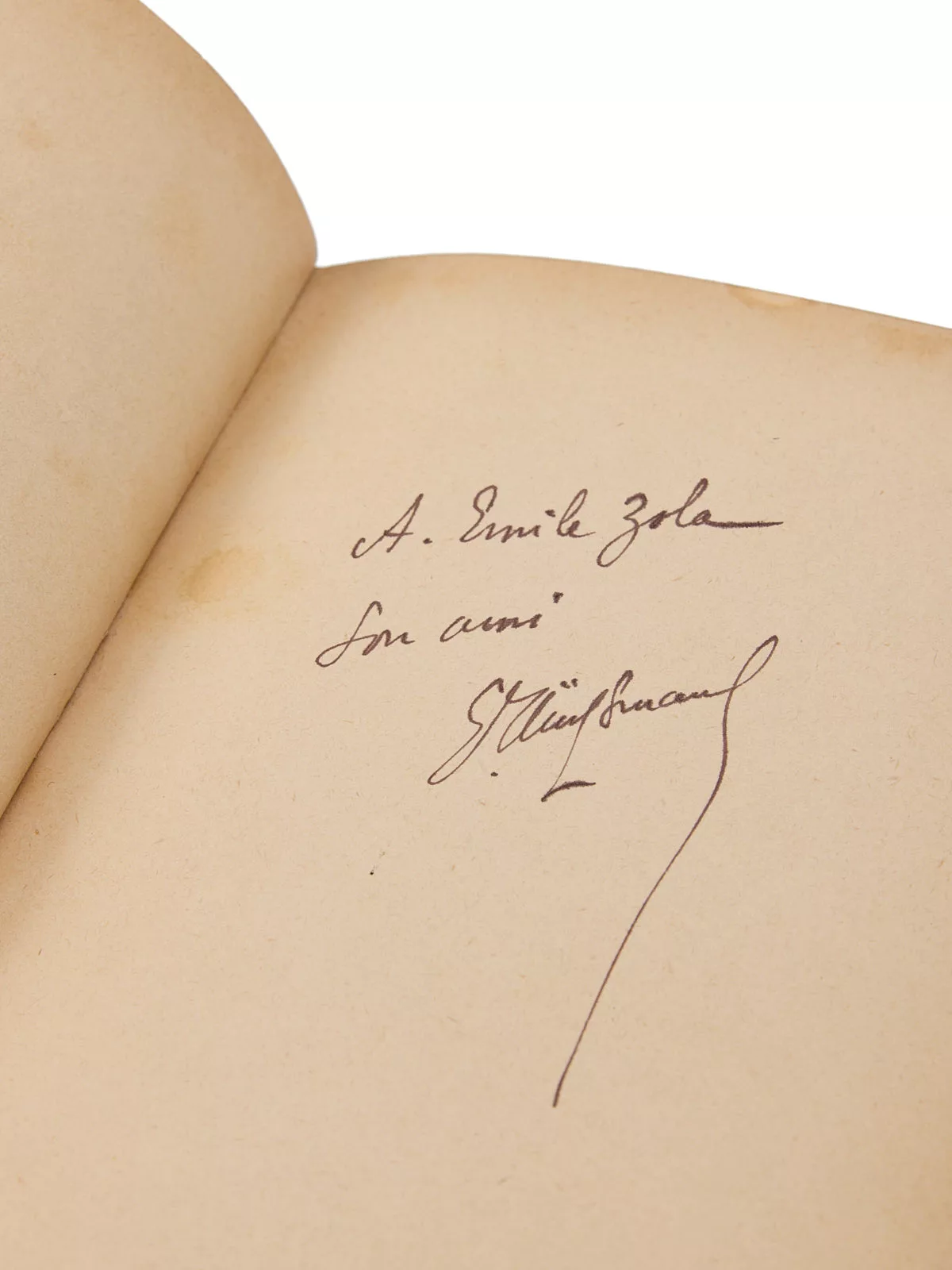
Signed presentation inscription: “À Émile Zola, son ami, J.-K. Huysmans.”
Huysmans published En route in 1895, the first volume of his mystical trilogy. After a period devoted to occultism, this new cycle belonged to autobiography and study rather than to the novel: “I took up the main character of Là-bas, Durtal, whom I had converted and sent to a Trappist monastery” (Jules Huret, “Le Prochain Livre,” Le Figaro, literary supplement, 5 January 1895).
Huysmans had himself made a retreat in 1892 at the small Trappist monastery of Notre-Dame d’Igny, an episode understood to mark the beginning of his own conversion: “One fine morning, in spite of myself, I may say, alone, without spiritual or human help, I set off for a Trappist monastery where I washed my life clean, after terrible crises of despair, in that cloister; I have tried to put all of this, sincerely, without any embellishment, into my book En route, which will appear at the end of January” (letter to Pol Demande, late 1894 or early 1895).
A regular at the Médan gatherings, Huysmans grew apart from Zola after the publication of À rebours in 1884, and even more so after Là-bas appeared in 1891 — though without a definitive break, as this inscribed copy attests. On receiving the book, however, Zola’s verdict was unambiguous: “He’s gone mad,” the master of Naturalism declared.
It is not known whether Huysmans sent Zola the other two volumes of his mystical trilogy, La Cathédrale and L’Oblat — and the answer is probably no: no inscribed copy of either is known.
A precious copy and a rare point of contact between the two great novelists.
Carteret I, 442; Clouzot, 156.