

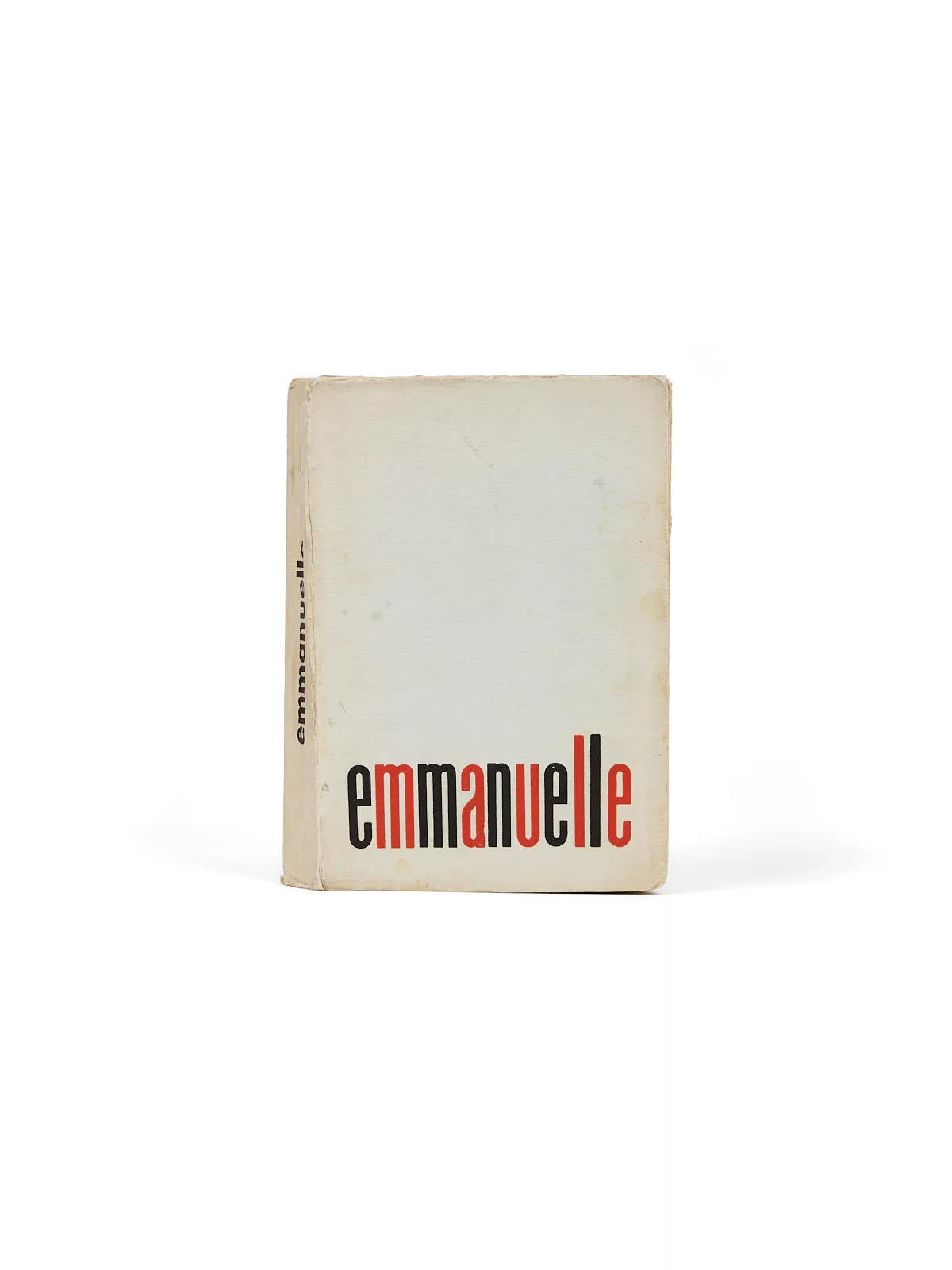
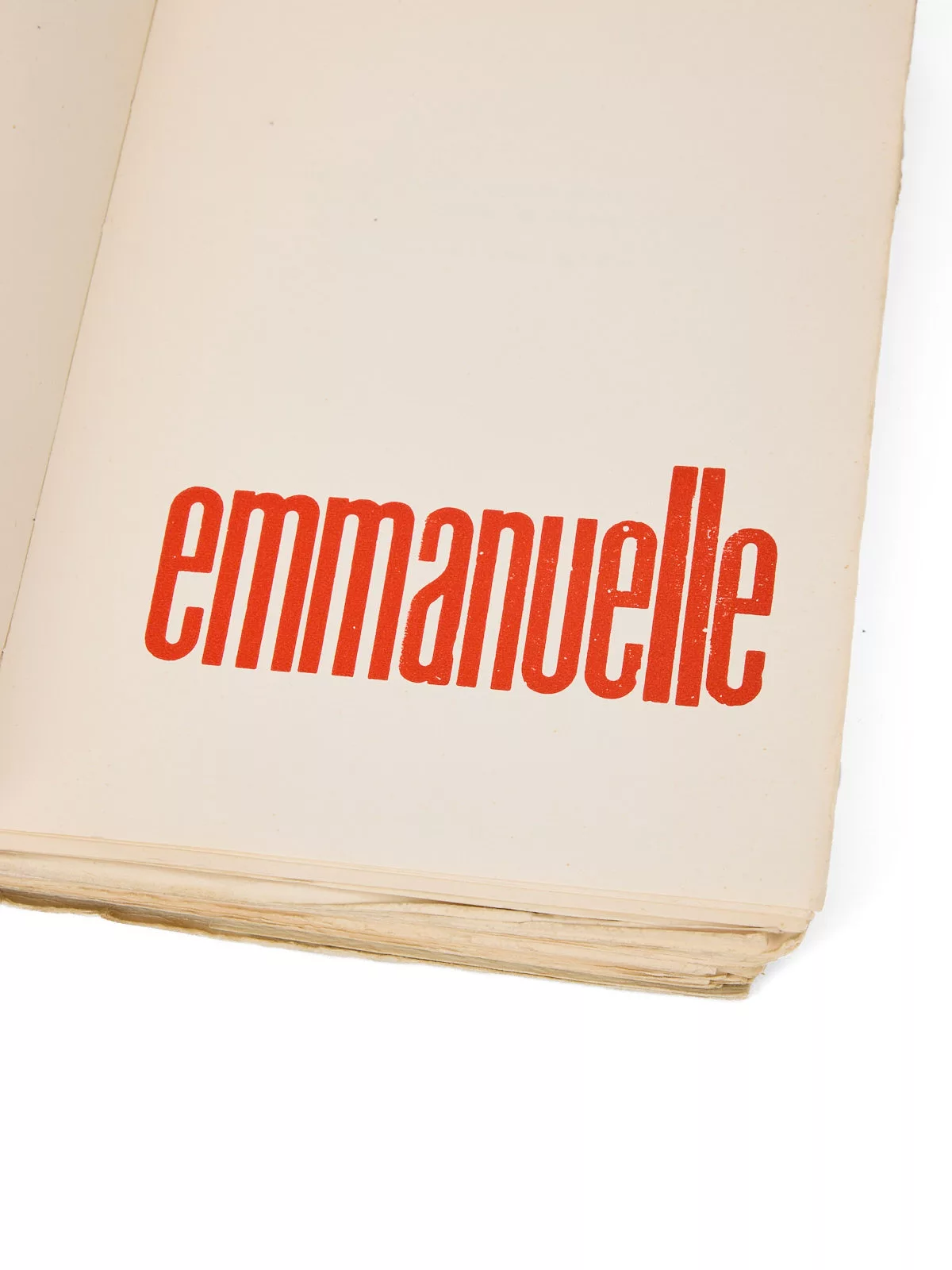
Emmanuelle
The lengthy novel — a single volume, before being split into two by its future publisher — arrived by post in Paris at the end of 1956: a package from Bangkok, carefully typed on luxurious rice paper, landed on the desk of Éric Losfeld. A devotee of Surrealism and eroticism, and the eclectic publisher of Sade, André Breton, Georges Bataille, Benjamin Péret and Roland Topor, the founder of Éditions Le Terrain Vague found the manuscript “astonishing.”
“The first publication of Emmanuelle was clandestine. The book had a considerable impact. I received — which was very rare for a clandestine book — an enormous number of articles, all favorable. The critics did not play the little Parisian game of ‘being in the know’ or pretending to be. Everyone said: ‘a book with no publisher’s name on it’ — even though it was I who had sent it to them, specifically asking them not to mention my name, since at that time it meant an unforgiving trip to the police court” (Éric Losfeld, Endetté comme une mule, ou la passion d’éditer, Paris, Belfond, 1979, p. 162).
Even with a ban on advertising, the success was phenomenal. “Losfeld had both the luck and the misfortune of being the publisher of Emmanuelle. Luck, because when a diplomat wished to recount the story of his rather free relations with his Eurasian wife, he had the charming idea [indeed!!!] of attributing the account to his wife under the pseudonym Emmanuelle Arsan. This magnificent and deeply disturbing love story was immediately banned, and Losfeld was once again sentenced to prison and a heavy fine. Nevertheless, the book sold, under the counter, in the thousands, even tens of thousands of copies. Since its sale was banned, it could only be sold illegally and in cash.” (Francis Leroi, 70, années érotiques, La Musardine, 1999).
Covers stained.