

Description historique et pittoresque du Chateau de Chambord,
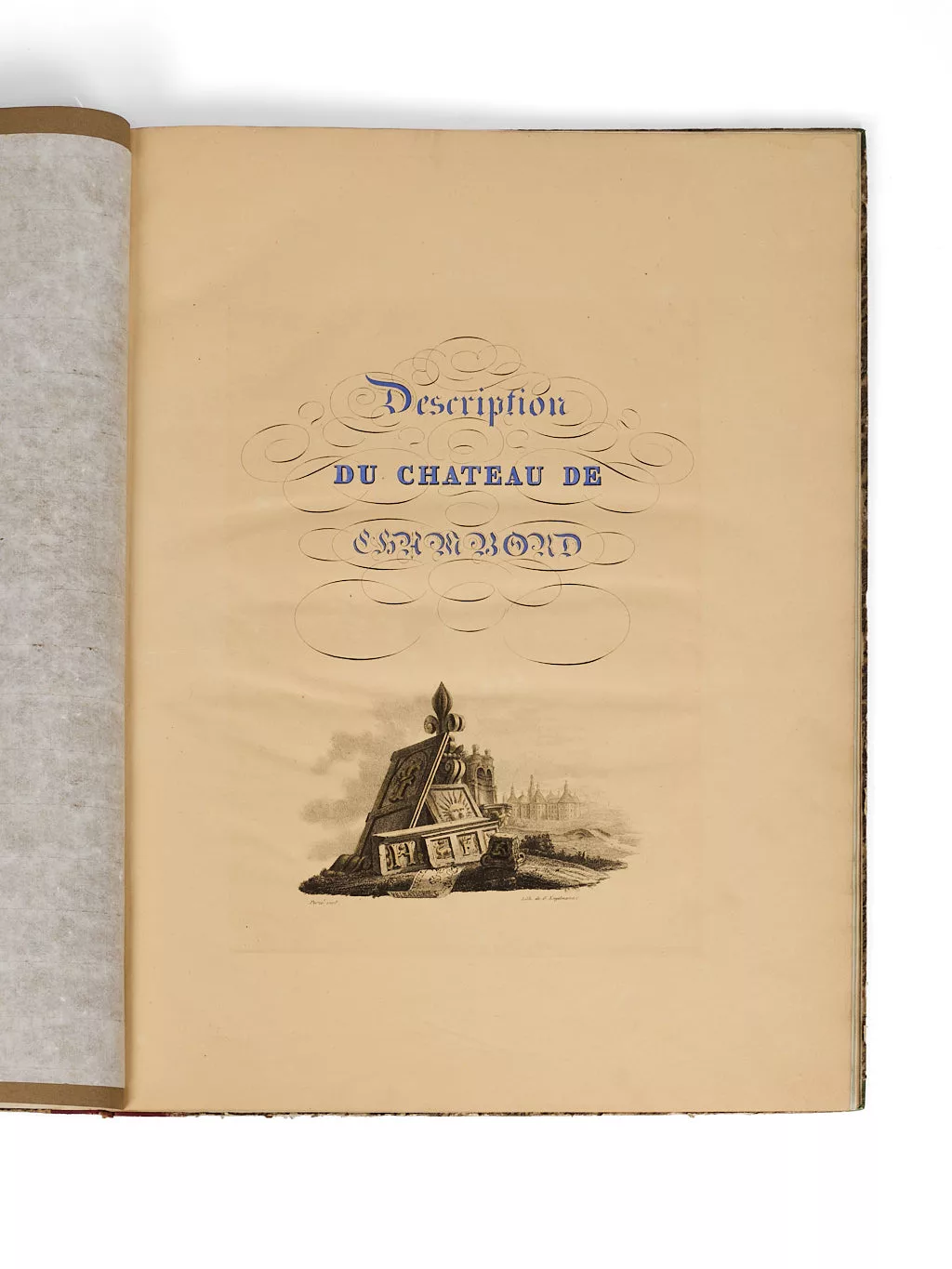
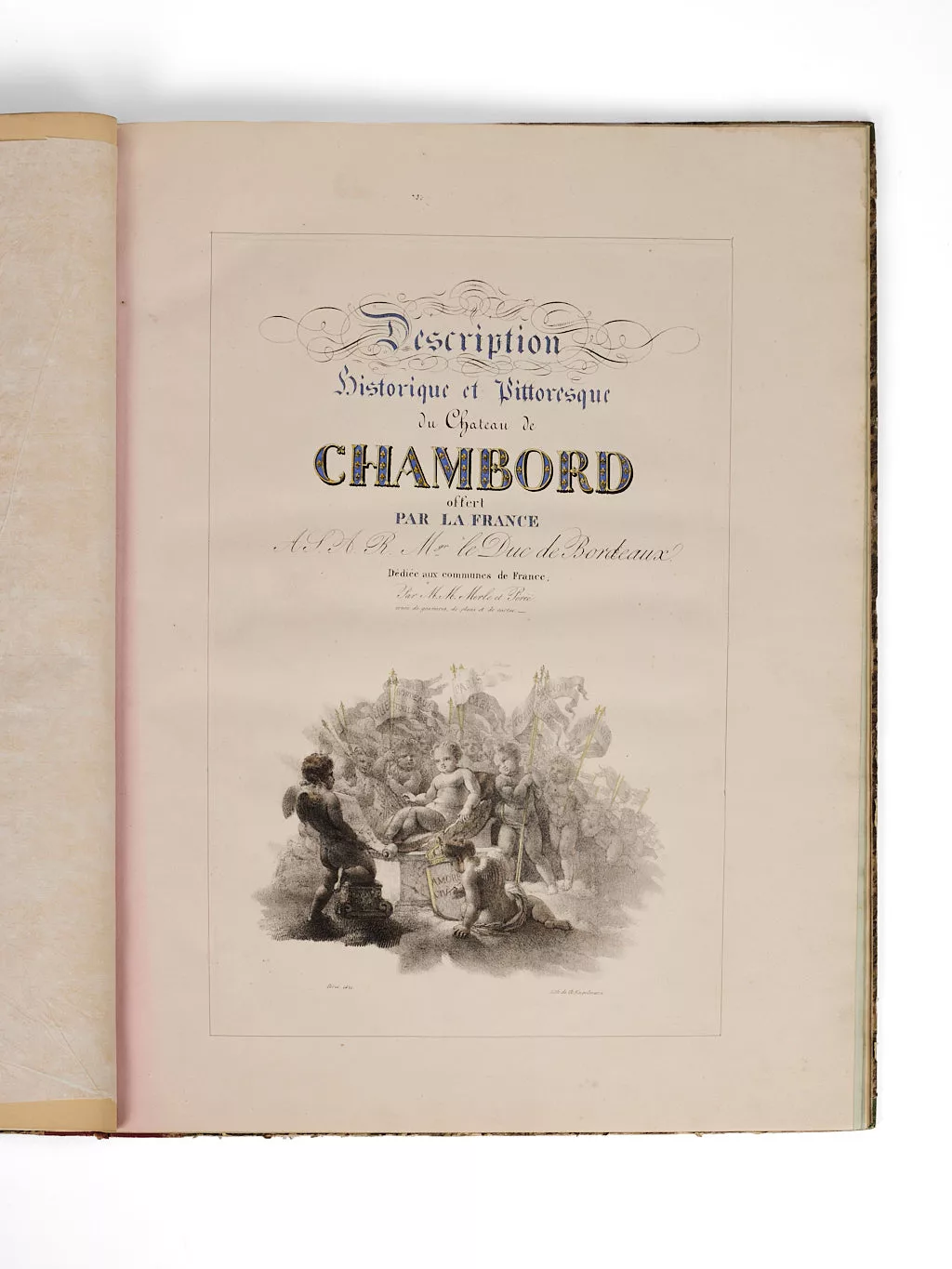
An extremely rare, possibly unique copy printed on colored papers: the various sections of the text are printed on green, cream, pink and blue paper, as are the engraved plates, all hand-heightened in color. The titles and chapter headings are likewise illuminated in brilliant colors, making this copy altogether exceptional: no other copy on colored paper with heightening is recorded.
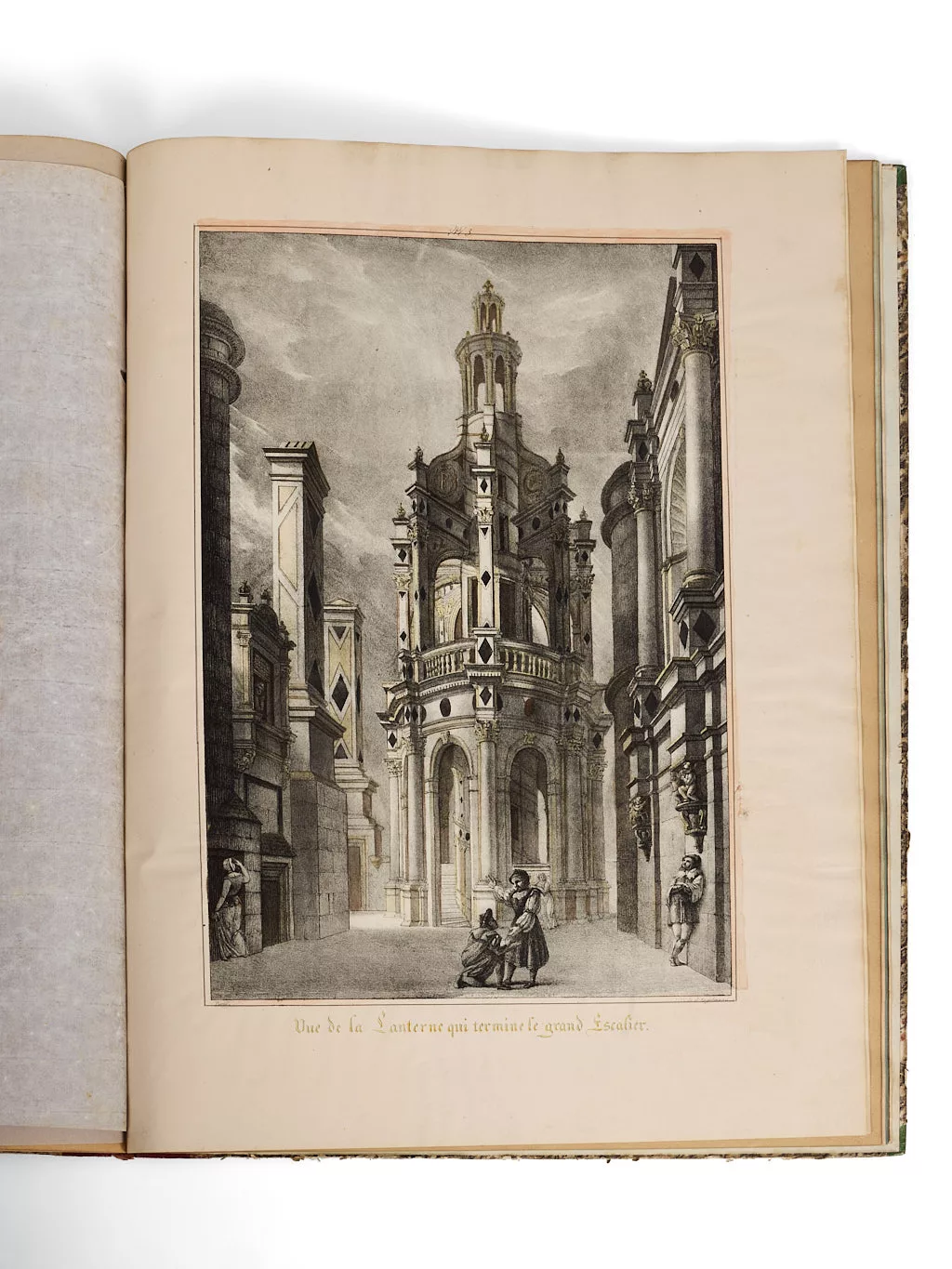
Eleven engraved plates and plans, drawn by Fragonard, Périé, Villeneuve, Dupré and Desmadryl.
A symbol of royal power and the might of France: this is how François I, its builder, envisioned Chambord, a palace rising from the marshlands of Sologne. The vast wooded estate of Chambord was originally purchased in 1392 from the counts of Blois by the House of Orléans; when the Duke of Orléans became King of France in 1498 as Louis XII, the Chambord estate became Crown property. On his return from Italy in 1516, François I decided to build the edifice, and construction began in 1519 on the site of a former fortified castle. From 1526, 1,800 workers labored on the construction of the château, which required some 220,000 tons of tuffeau stone. After numerous extensions, the project was completed in 1547, at the king’s death, with the wing housing the royal apartments. Chambord was not designed as a permanent residence: François I spent only a few weeks there, for hunting parties and to demonstrate his power and authority to sovereigns and ambassadors, in rivalry with Charles V.
The château’s plan and decoration were conceived around a central axis: the famous double-helix staircase leading to the vast upper terrace and its dazzling profusion of sculpted chimneys and capitals. In 1639, Louis XIII gave Chambord to his brother Gaston d’Orléans, but it was not until the reign of Louis XIV that the building was finally completed: the king had the chapel roofed and linked the four apartments of the north vestibule on the first floor to create his own lodgings, adding a theater — an interior arrangement later echoed at Versailles. Molière gave the first performance of Le Bourgeois gentilhomme there on 14 October 1670.
Chambord was relatively spared by the Revolution: the château was looted and its furniture sold off by the revolutionary government in 1792, but the building itself escaped destruction. It then entered a long period of neglect before Napoleon gave it in 1809 to Marshal Berthier, Prince of Neuchâtel and Wagram, in recognition of his services. Berthier stayed there only briefly, and his widow, Elisabeth of Bavaria, requested permission as early as 1821 to sell the great house, then in poor repair. Through a widely publicized national subscription, the estate was given to the young Henri d’Artois, Duke of Bordeaux — grandson of King Charles X —, born the previous year, seven months after the assassination of his father, the Duke of Berry, and for this reason nicknamed “the miracle child.”
It was on this occasion that the present work was produced: it was printed by the leading master printer of the day, Pierre Didot, son of François-Ambroise Didot and elder brother of Firmin Didot, who engraved the type used for the volume.
The volume comprises a foreword (2 p.), an introduction (4 p.), the Origine et description du Château de Chambord (10 p.) and finally the Anecdotes historiques sur le Château de Chambord (17 p.): texts that gather, for the first time, a wealth of fascinating first-hand information on the history of the estate and the building of the château.
Its author, Jean-Toussaint Merle, writing at the dawn of the Romantic period, indulged in “the legend of the fairy builders”: nineteenth-century historians fell under the spell of Chambord as the embodiment of a dream, invoking supernatural powers to explain its construction. Few monuments have so powerfully struck the imagination of those who beheld them. The Romantics, beginning with the château’s own historians, Merle and La Saussaye, exulted in it as the dwelling of fairies, an “enchanted palace,” a “magic castle,” attributing it — against all likelihood, especially for the first two — to Vignola, Primaticcio and Leonardo da Vinci. Yet the marvel of the achievement is undeniable: Merle and his illustrator Périé, fascinated by the sculpted profusion of the terraces, expressed their admiration by imagining that only some secret enchantment could have allowed the sculptors to complete so beautiful a work: a single niche, a single chimney, a single window pediment, they suggested, must have cost a year’s work for the most skilled chisel — and the total number of such prodigious ornaments defies calculation.
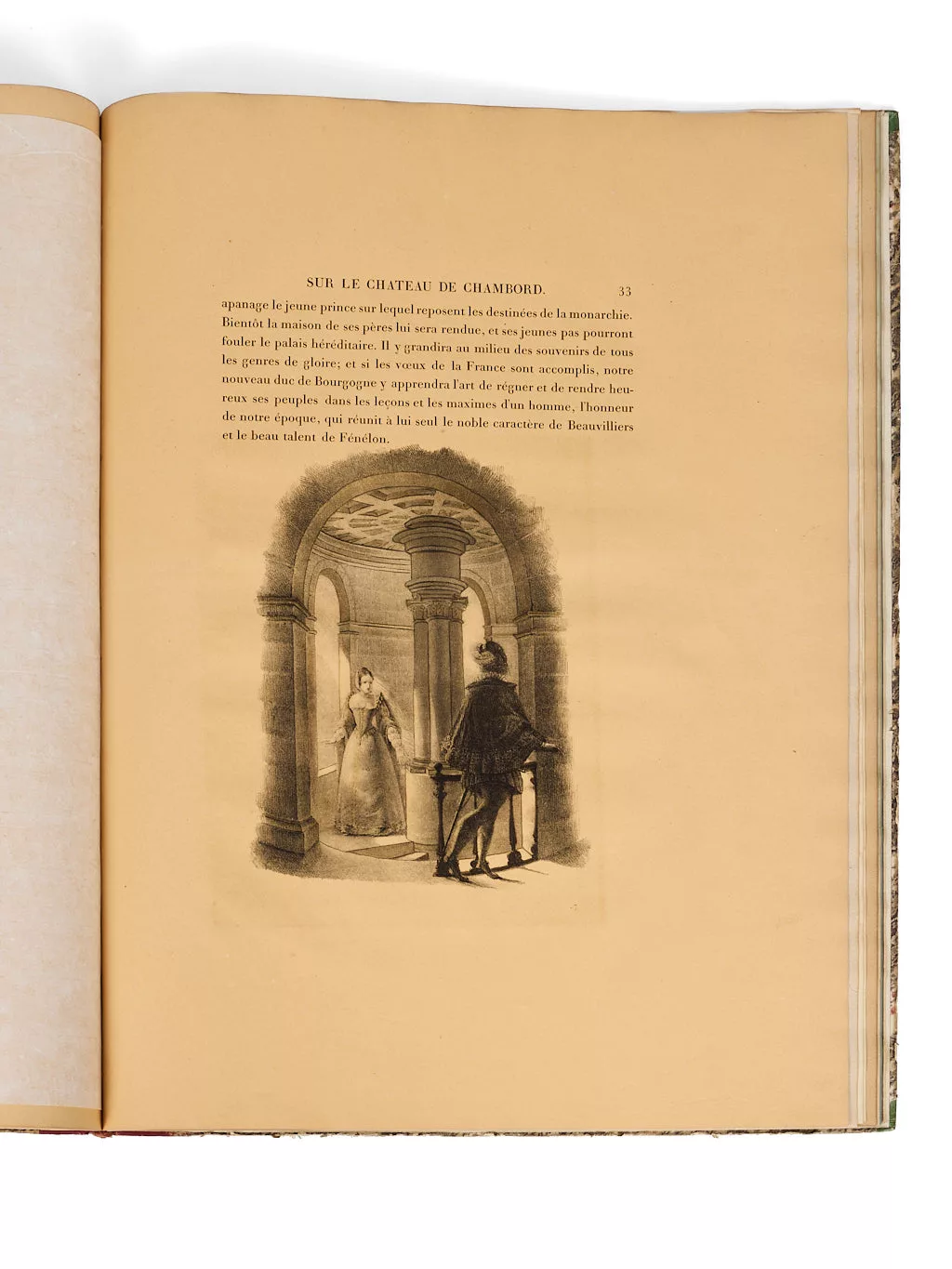
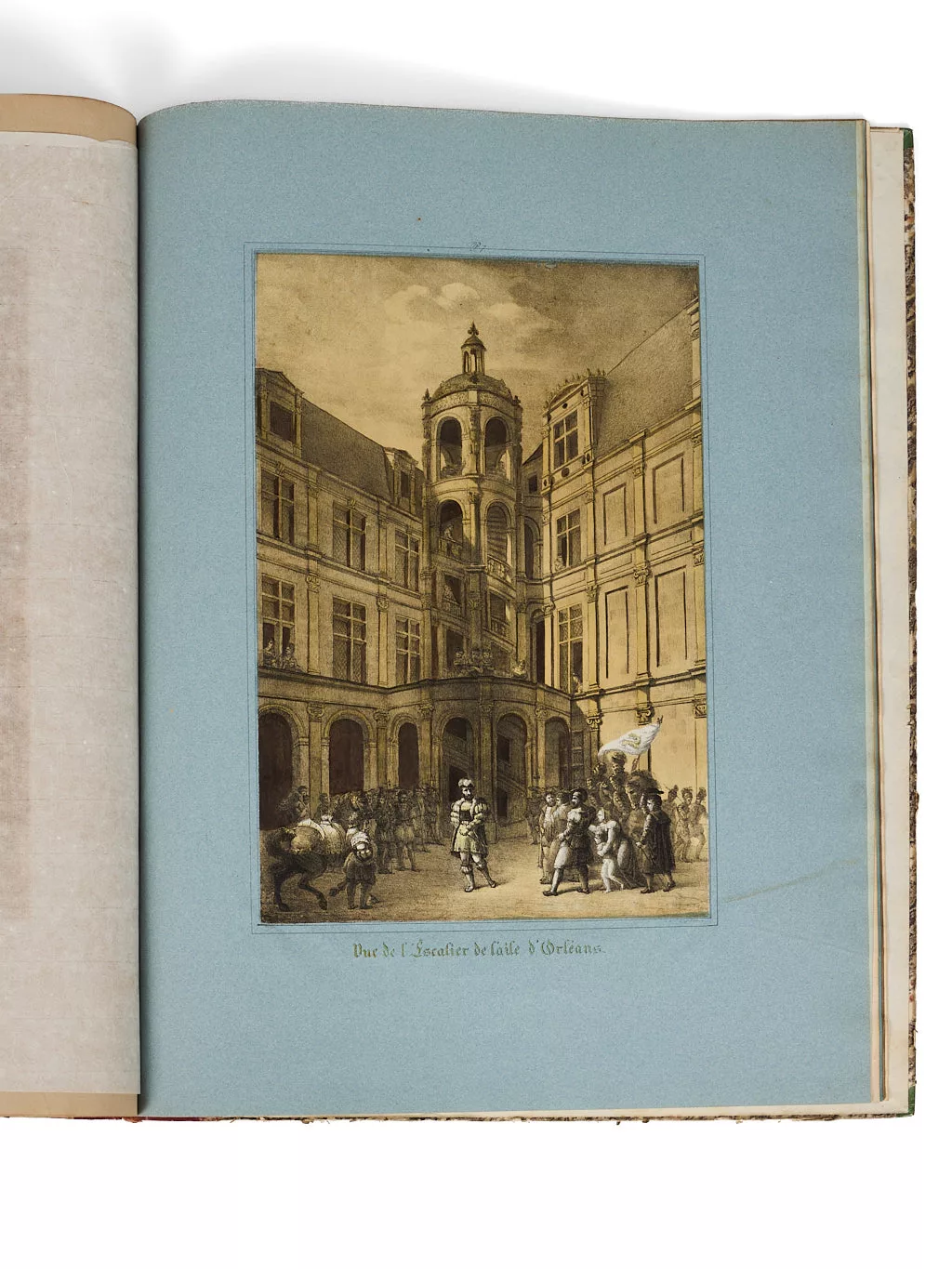
Eleven plates illustrate the work, the creation of Antoine-Hilaire-Henri Périé de Senovert, better known as Hilaire Périé, a former pupil of David who from 1831 served as curator of the Musée des Beaux-Arts in Nîmes. He provided the in-text drawings, including the celebrated Deux personnages de la cour se rencontrant en haut de l’escalier menant à la lanterne and François Ier écrivant son célèbre distique sur une vitre, accompagné de sa sœur Marguerite de Valois, as well as several of the full-page plates: the Vue de la lanterne qui termine le grand escalier, the Vue de l’escalier de l’aile d’Orléans, the Chapiteaux and the Fragments d’architecture.
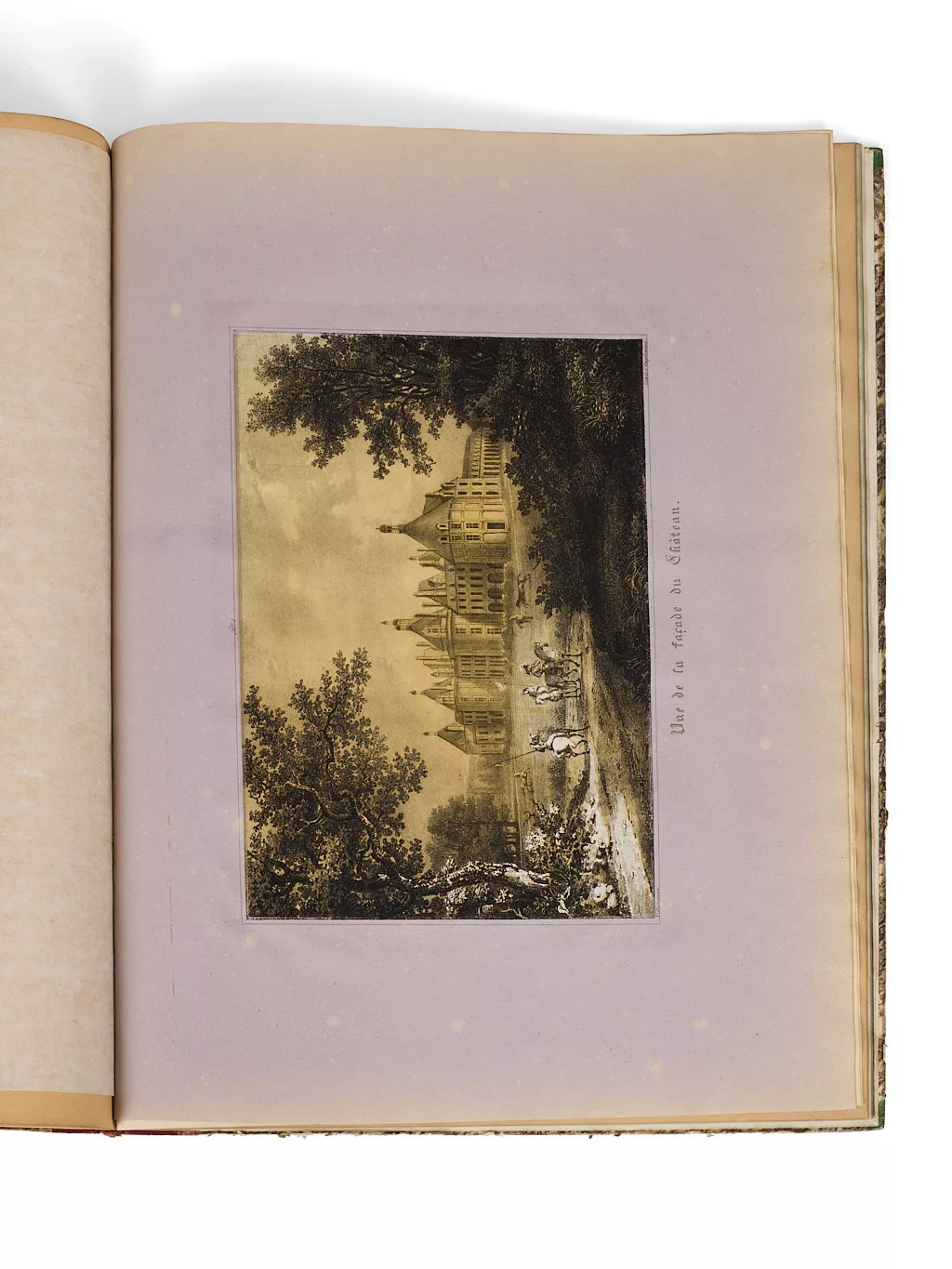
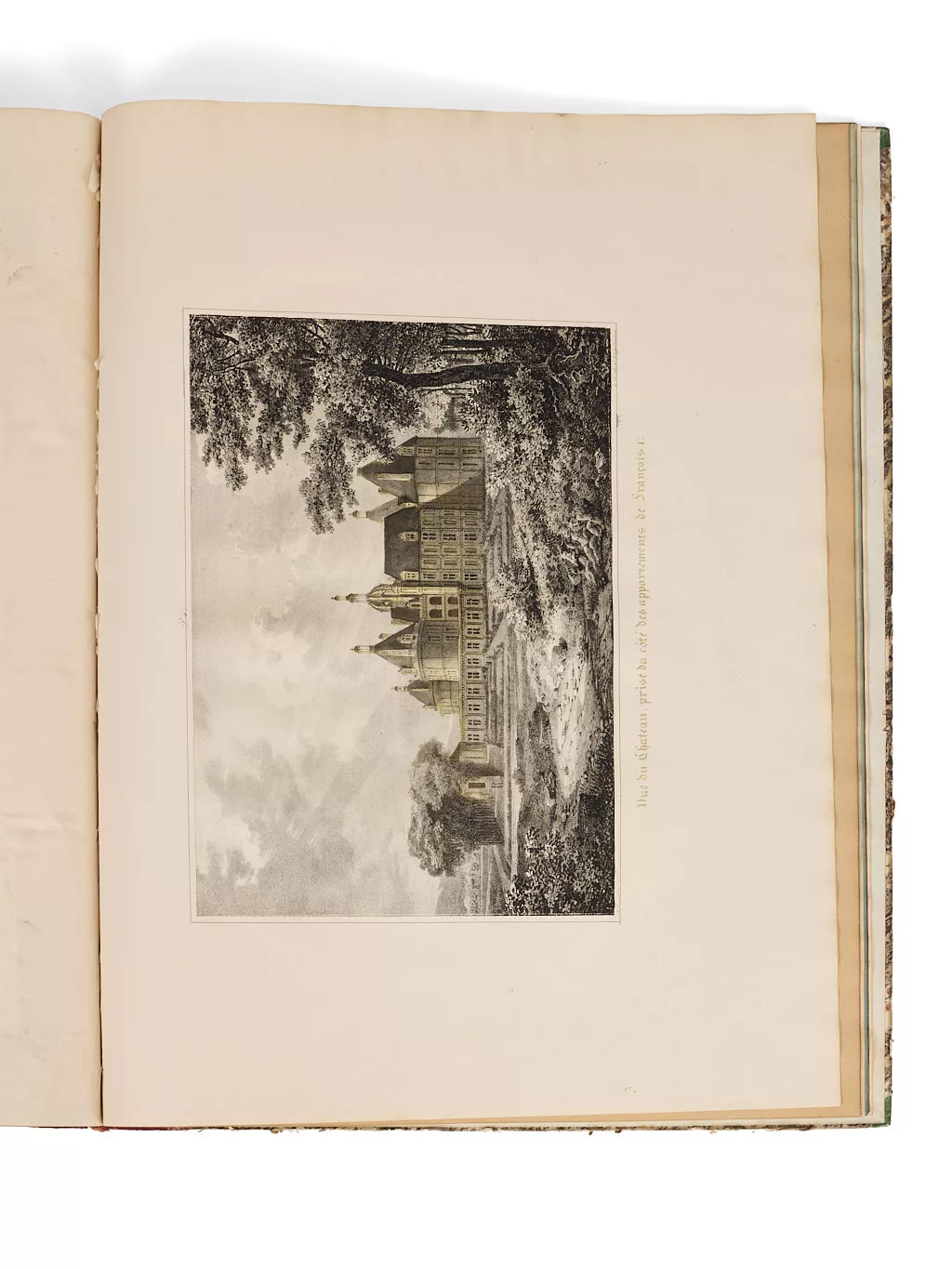
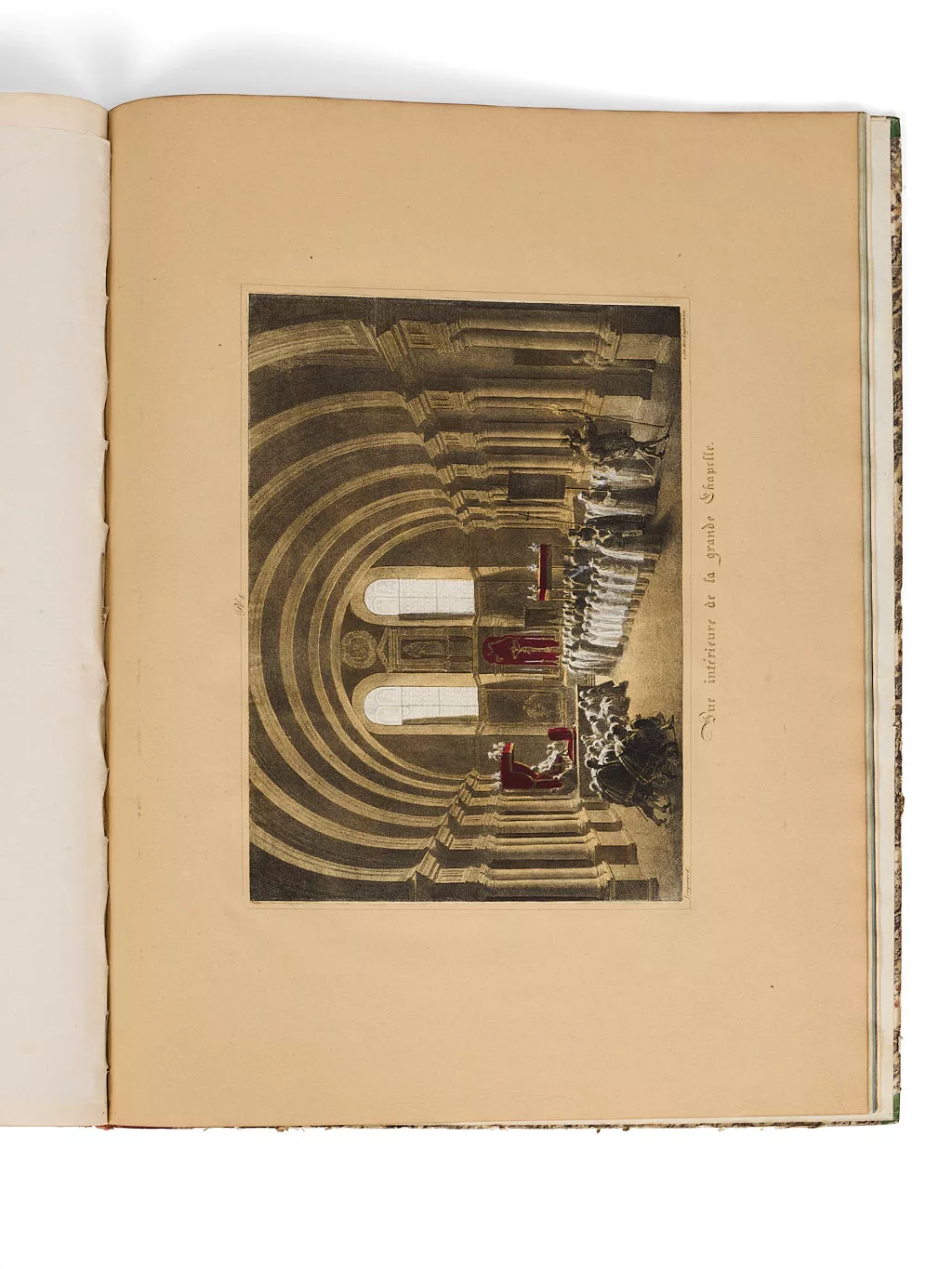
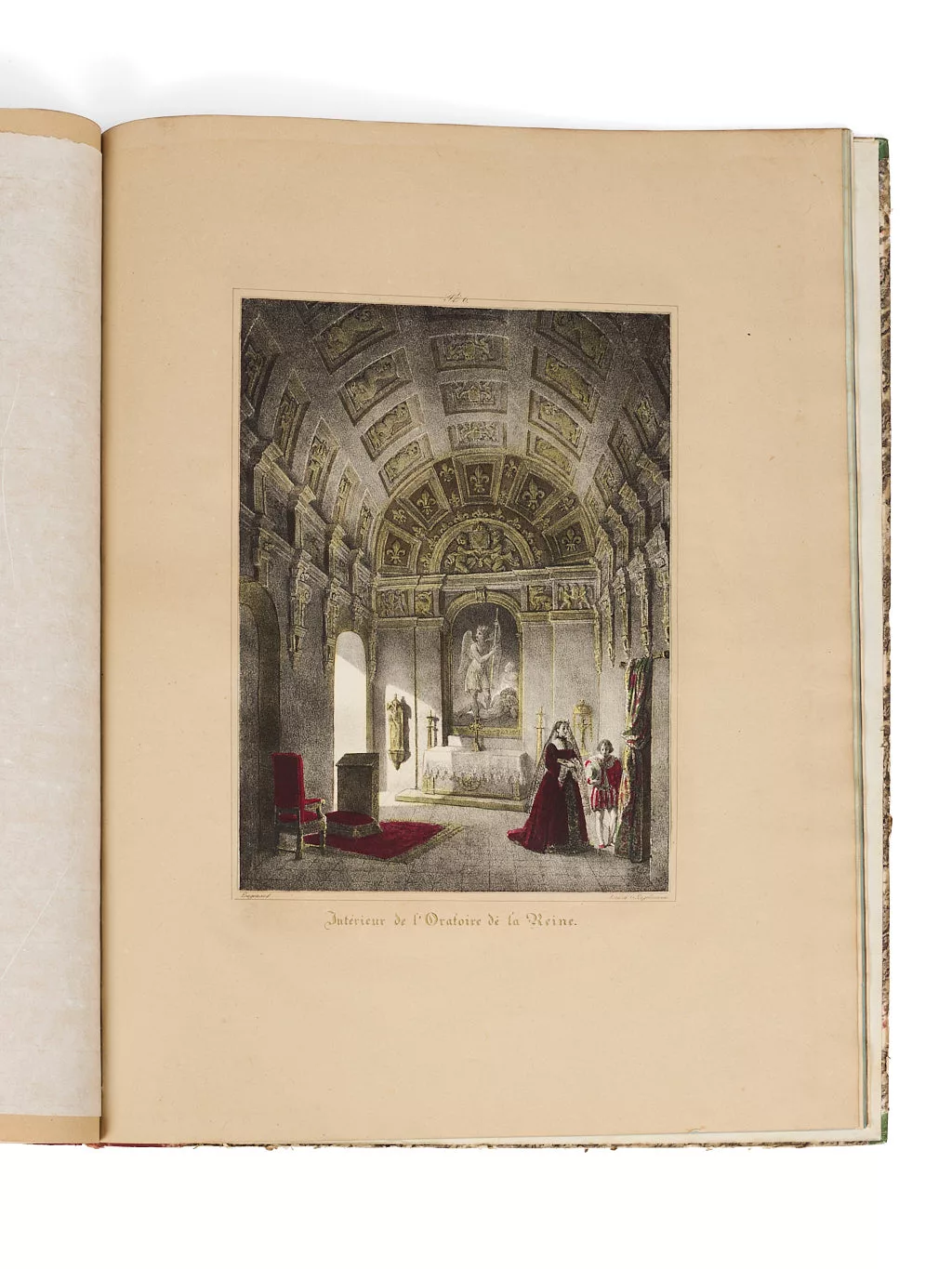
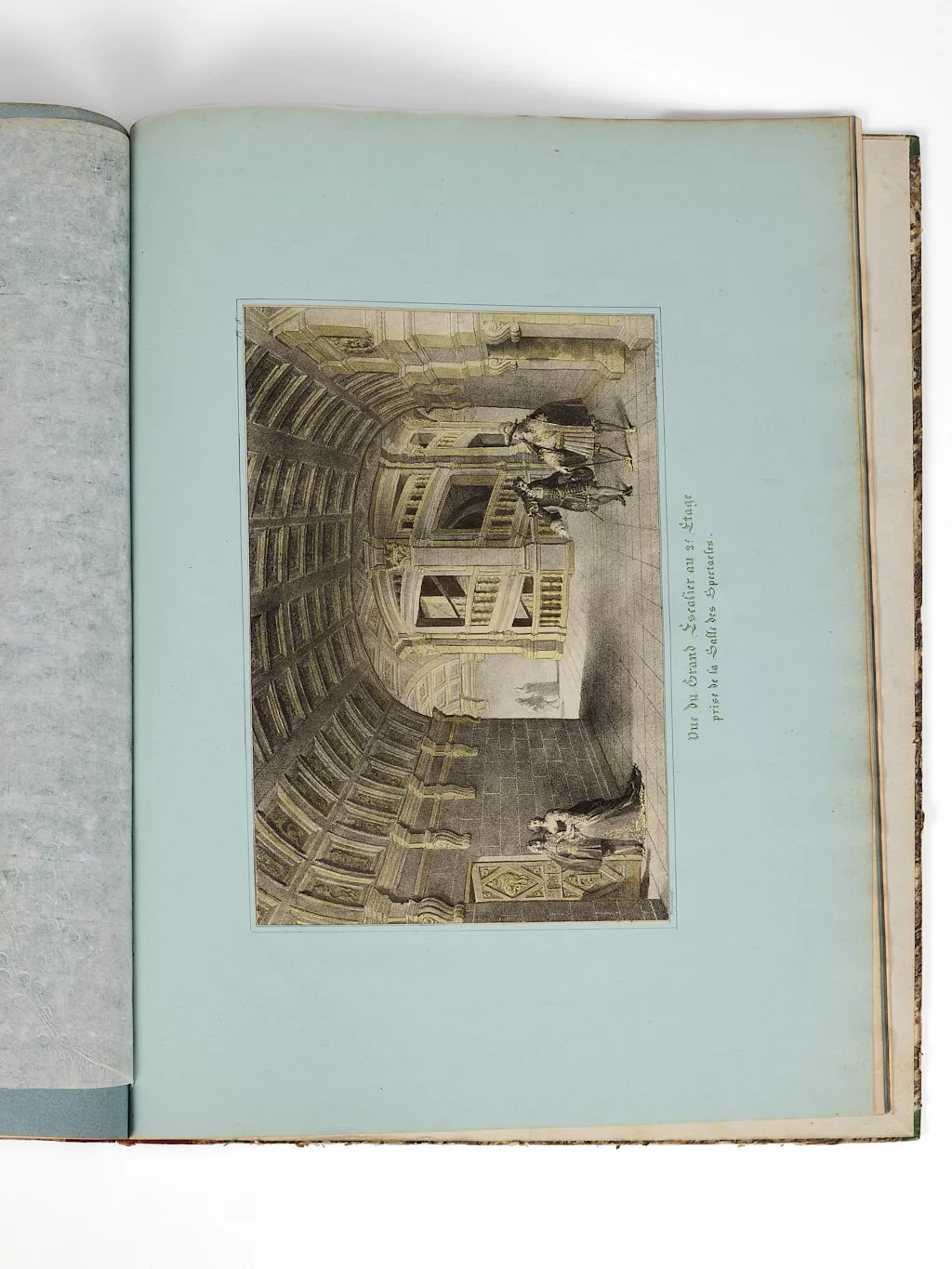
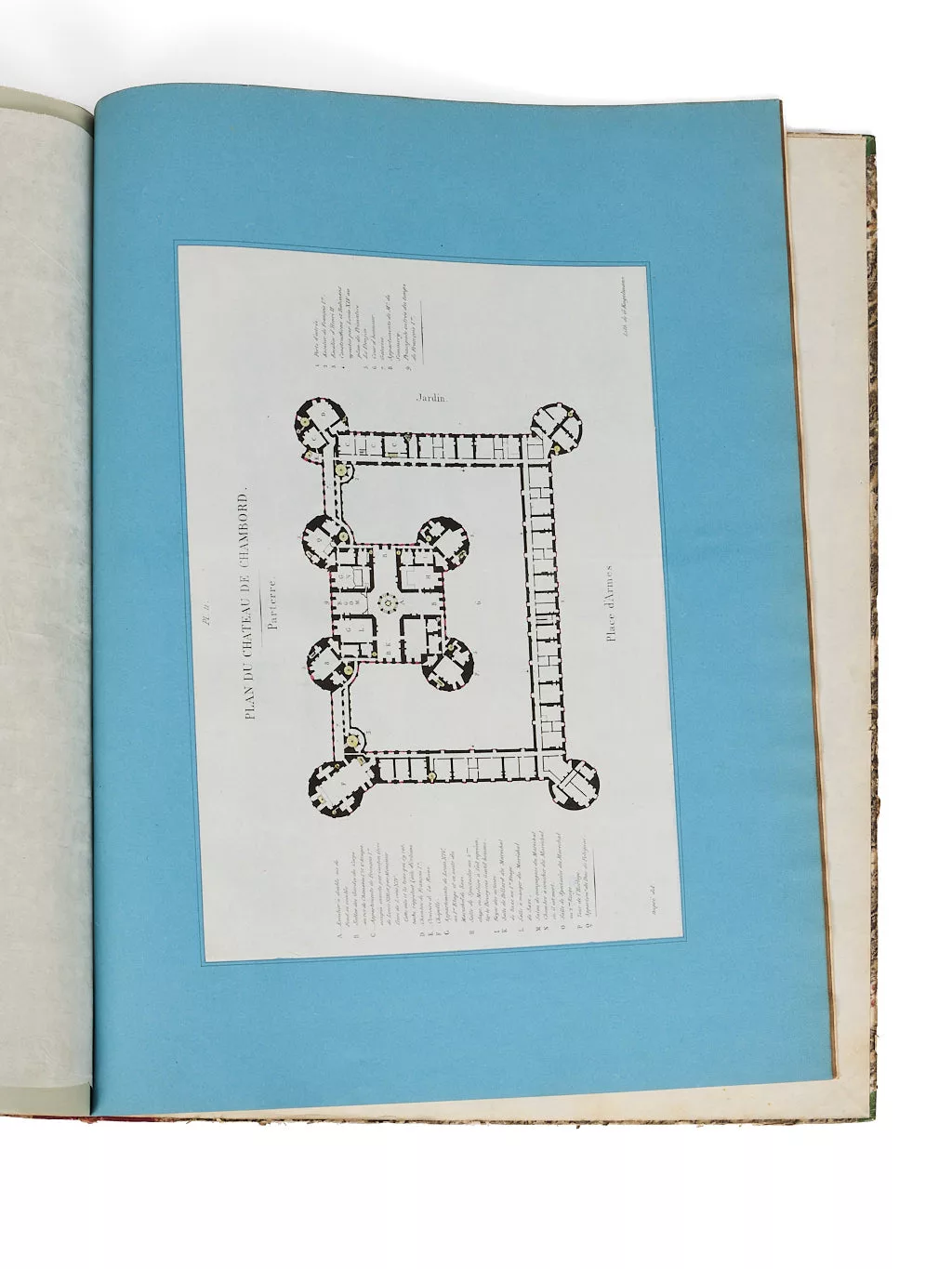
Three drawings by Jean-Honoré Fragonard are also included: the Vue intérieure de la grande chapelle, that of the Oratoire de la Reine, and that of the Grand escalier. Two views, of the château from the side of François I’s apartments and the Vue de la façade du château, are by Villeneuve; the plan of the château is by Dupré, and the plan of the Chambord park closing the volume was executed by the cartographer Narcisse Desmadryl.
All the plates were engraved by Godefroy Engelmann, later the lithographer of Delacroix’s illustrated Faust by Goethe. Engelmann had settled in Paris in 1816 with his brother-in-law Pierre Thierry to establish their printing house at 18, rue Cassette. Their first major undertaking, in 1820, was the Portefeuille géographique et ethnographique, bringing together maps, landscapes, costumes and scientific drawings, which brought them early renown, confirmed by the Chambord publication. The following year they were associated with the Voyages romantiques et pittoresques dans l’ancienne France, whose first volume, devoted to Normandy, appeared in 1822. From then on, under the Restoration and the July Monarchy, Engelmann was one of the great printers of prestigious lithographic ventures.
The entire Chambord estate was then given in 1821, through a national subscription, to the Duke of Bordeaux. Political events that led him into exile prevented him from ever residing in his château. He first saw it in 1871, during a brief stay in the course of which he drafted his famous “Manifesto of the White Flag,” by which he refused the tricolor flag — and with it the throne. Even from afar, however, the Comte de Chambord took great care of the château and its park, appointing a steward to administer the estate, undertaking major restoration campaigns and officially opening the château to the public. After his death in 1883, the estate passed by inheritance to the princes of Bourbon-Parma, his nephews. The château and park have been state property since 1930: the château is the largest of the Loire châteaux, and the park is the largest enclosed forest park in Europe (5,441 hectares).
Several separate proofs of the engravings are preserved in the Cabinet des Estampes of the Bibliothèque nationale de France — all on white vellum paper — along with a copy, on the same ordinary vellum paper as the edition, heavily foxed as in all known copies. The copy preserved in the Archives départementales du Loir-et-Cher is in the same condition, and the work is missing from the BnF.
No copy with the plates on colored and/or heightened paper is otherwise recorded.
Aurore Montesi, Iconographie du château de Chambord: imaginaire et réalité, Art et histoire de l’art, Université de Lorraine, 2013; Dominique Lerch, Pour une histoire de la lithographie en France: Engelmann, un passage obligé, Le Vieux Papier, 2017.