

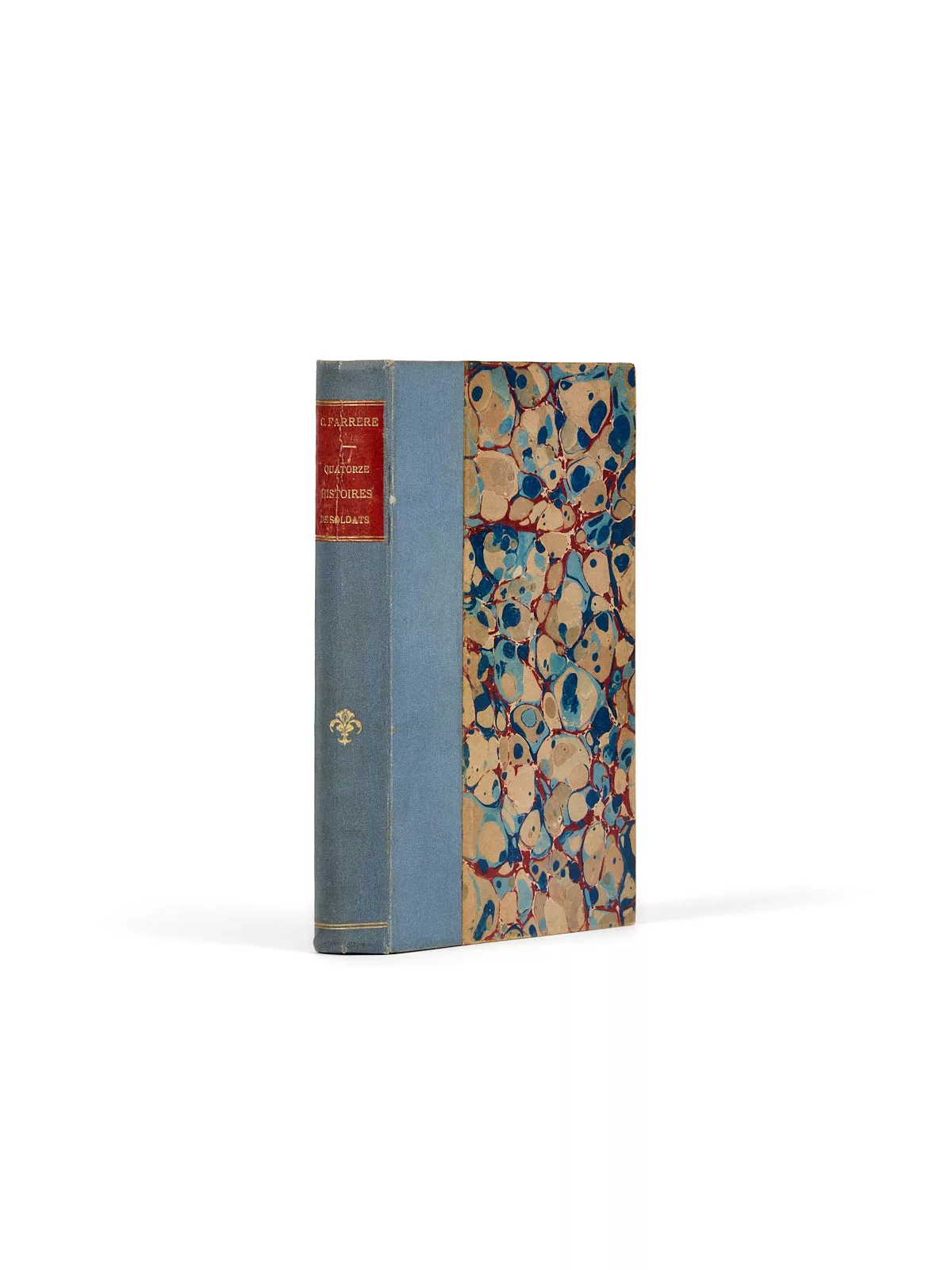
Quatorze histoires de soldats
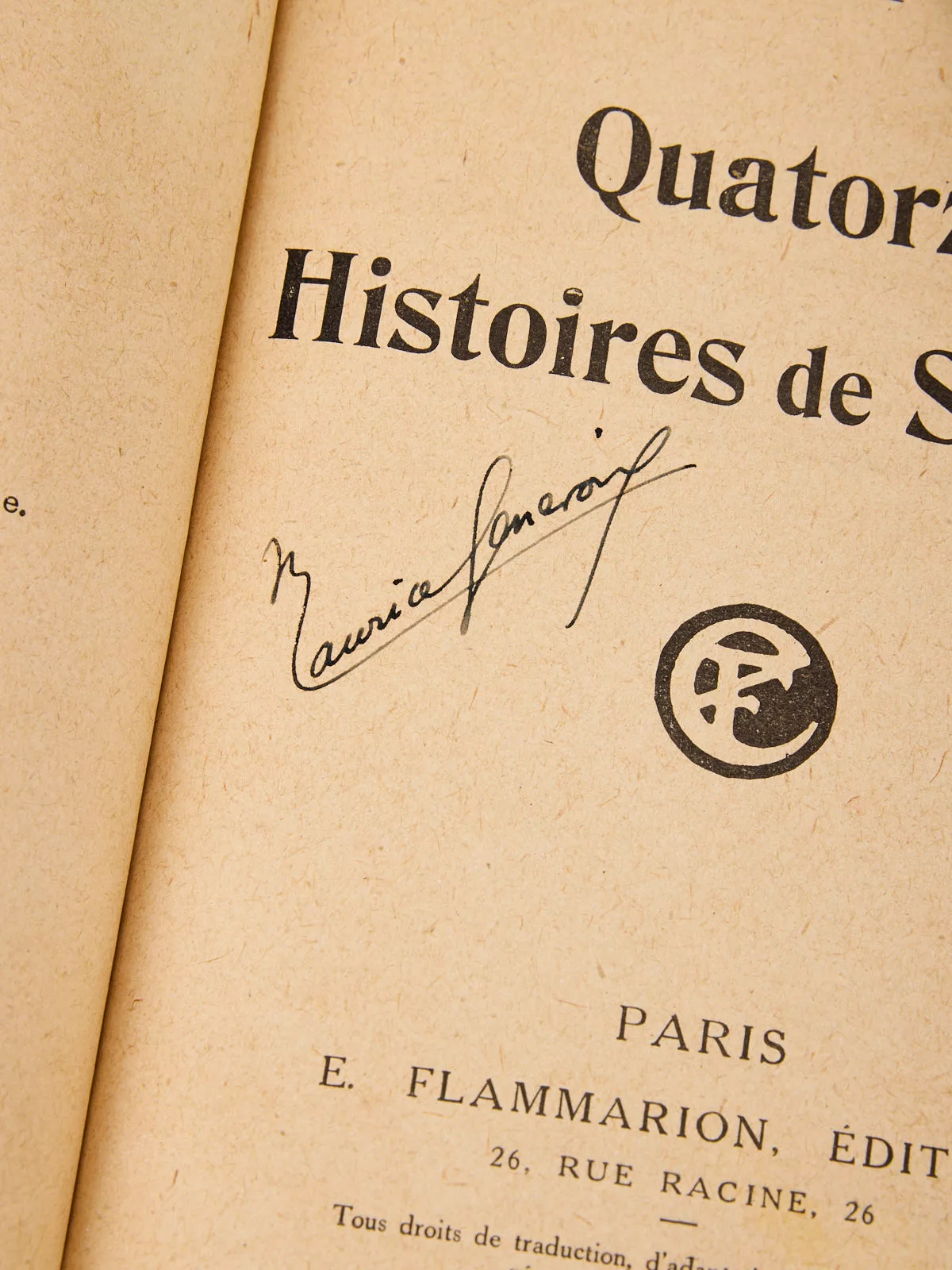
Maurice Genevoix's copy, with his manuscript ownership inscription.
Published while the First World War was still unrolling its long carpet of atrocities, Quatorze histoires de soldats is a collection of short stories in which Claude Farrère, already celebrated for his exotic novels and naval tales, turned his talent to depicting the conflict. In contrasting vignettes, he portrays the diversity of the French soldier — metropolitan or colonial — confronted with quiet heroism, ordinary camaraderie or the absurdity of command, within the mundane theater that was the daily tragedy of the front.
The book is absent from Norton Cru’s study, no doubt because Farrère was a combatant of the seas, a subject Norton Cru deliberately excluded from his field of study. A corvette captain in 1914, Farrère was assigned to the staff of the Eastern Fleet, then to missions in the Mediterranean and the Dardanelles. In 1917 he joined the assault artillery and took part in the Battle of Malmaison: a lightning offensive on the Chemin des Dames, where 1,800 French artillery pieces poured more than three million shells over three days onto a twelve-kilometer front. Farrère commanded one of General Estienne’s tanks there. His bravery earned him the Croix de guerre with citation.
Less committed than Barbusse, more realistic than Benjamin, Claude Farrère adopts the stance of a lucid and respectful witness. This unjustly neglected collection constitutes a valuable document on the earliest literary representations of the conflict — both in its combat reality and in its repercussions beyond the front.