

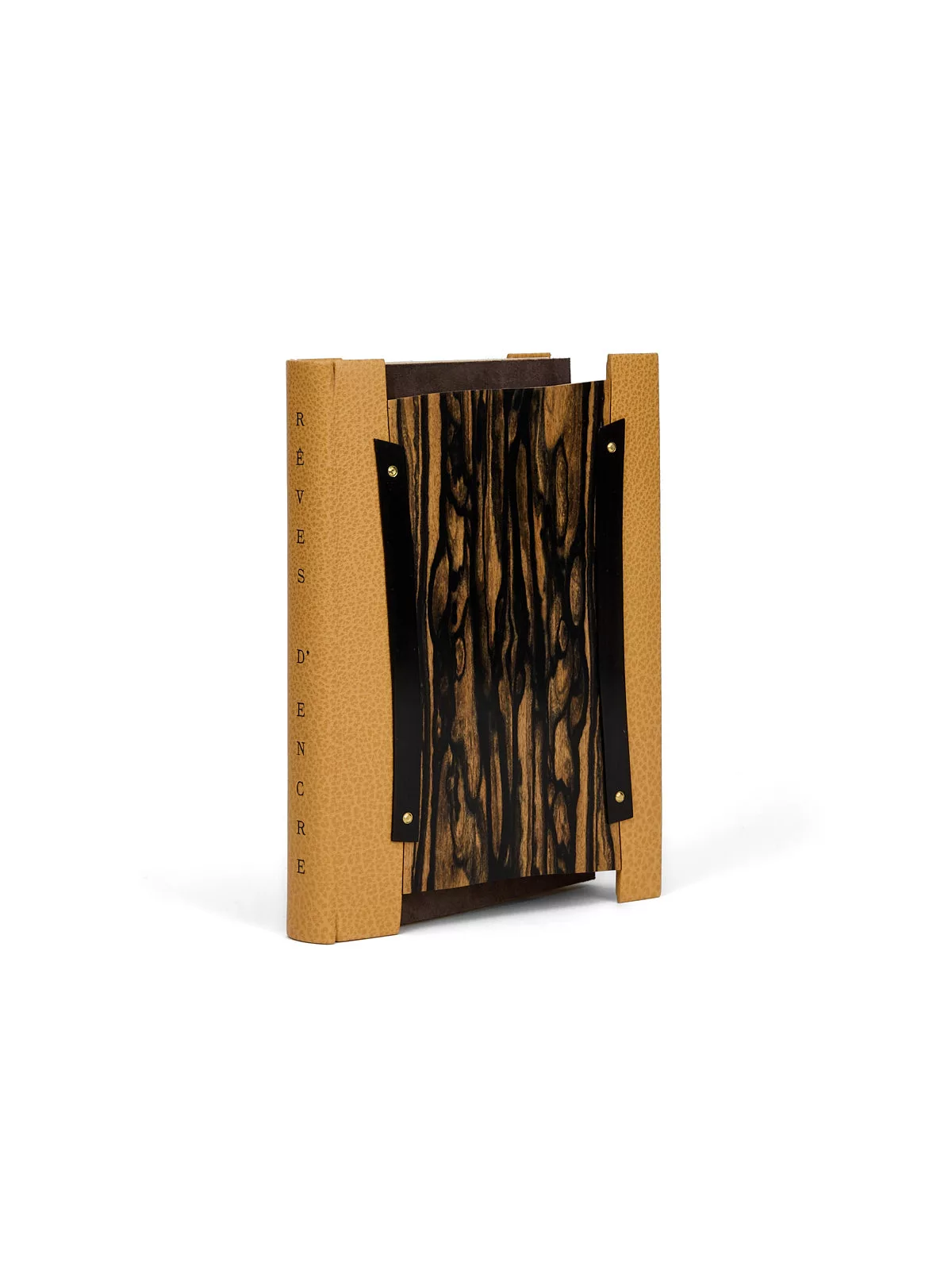
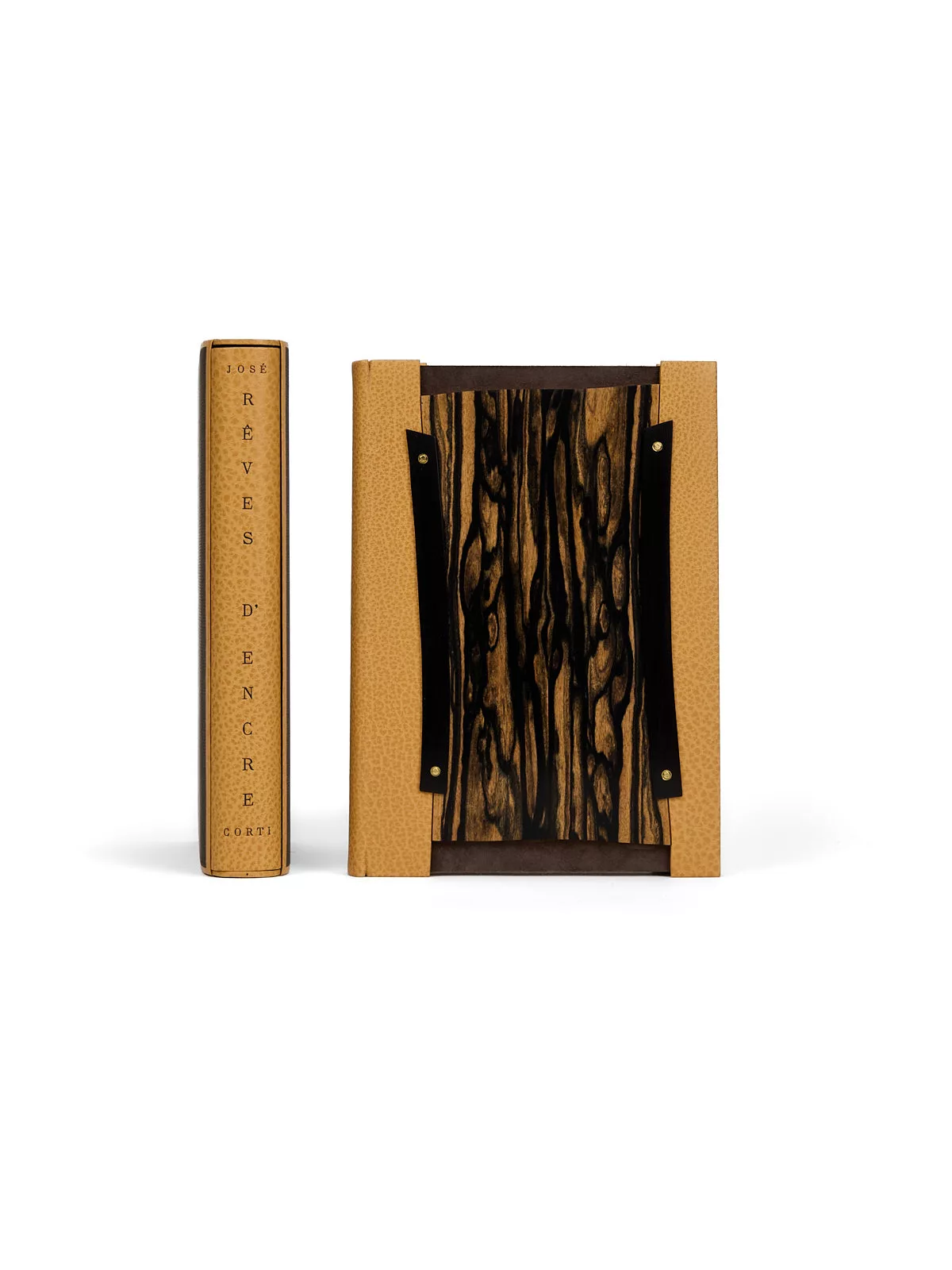
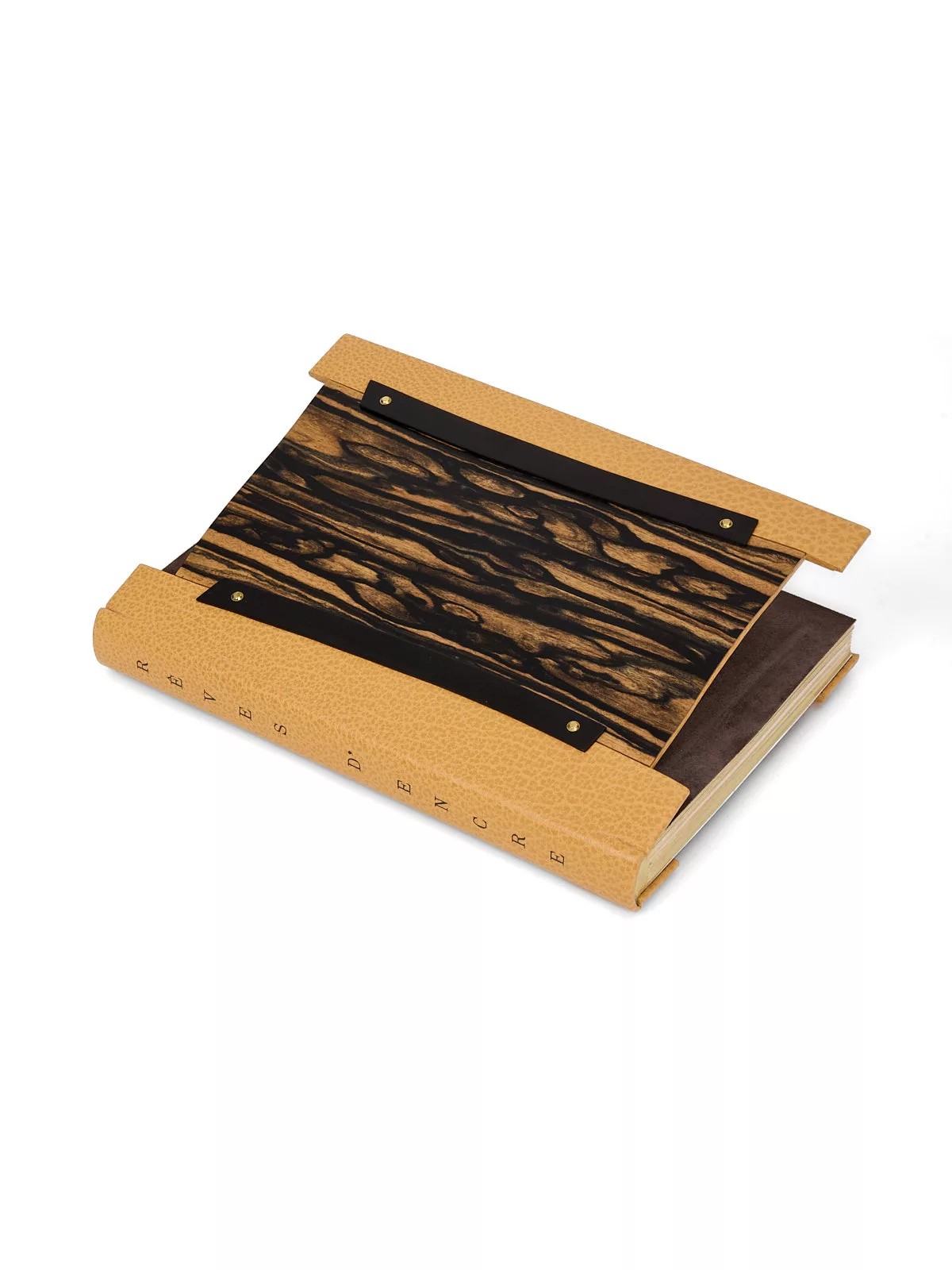
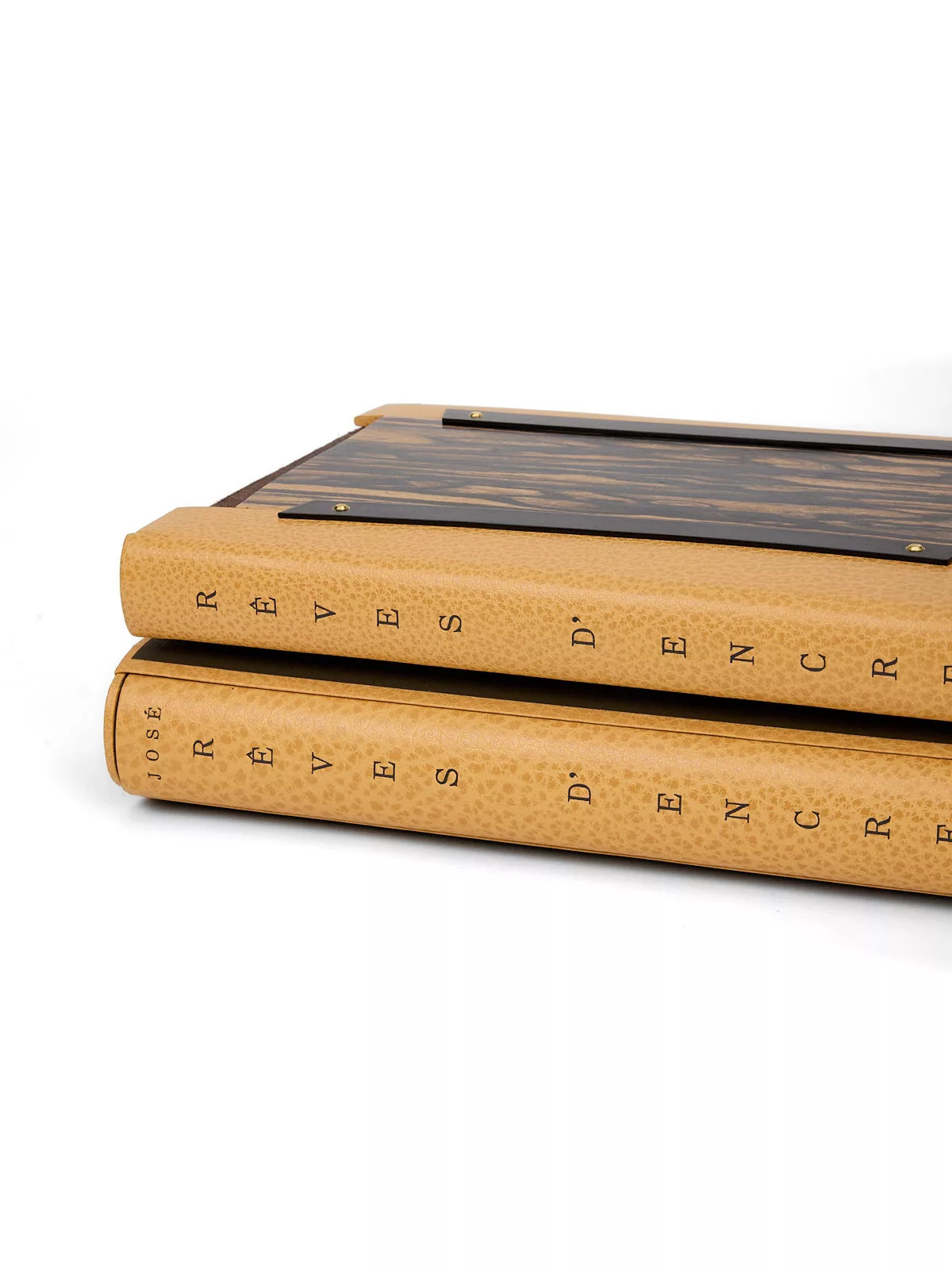
Rêves d’encre
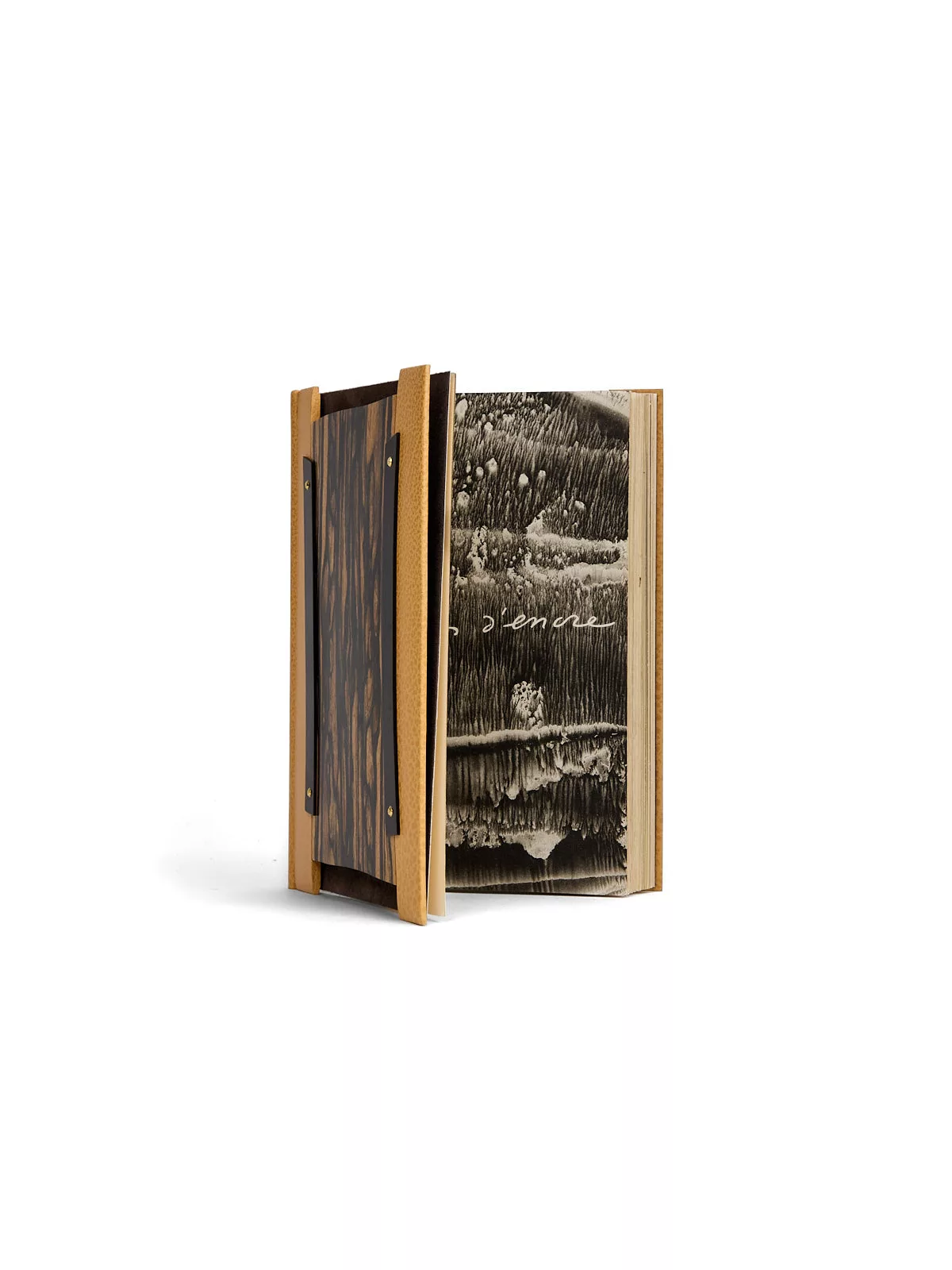
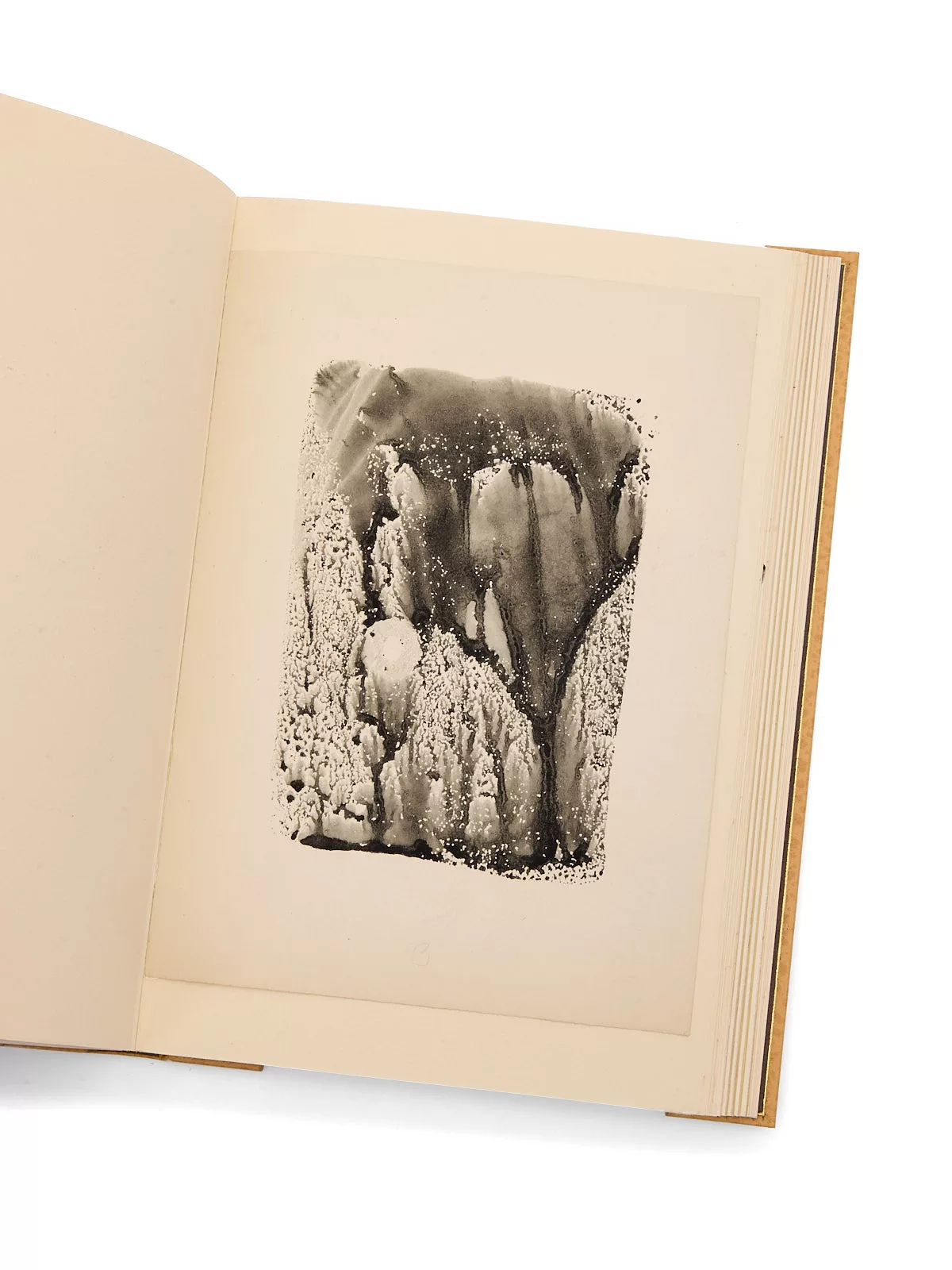
24 compositions by José Corti, plus one used for the cover.
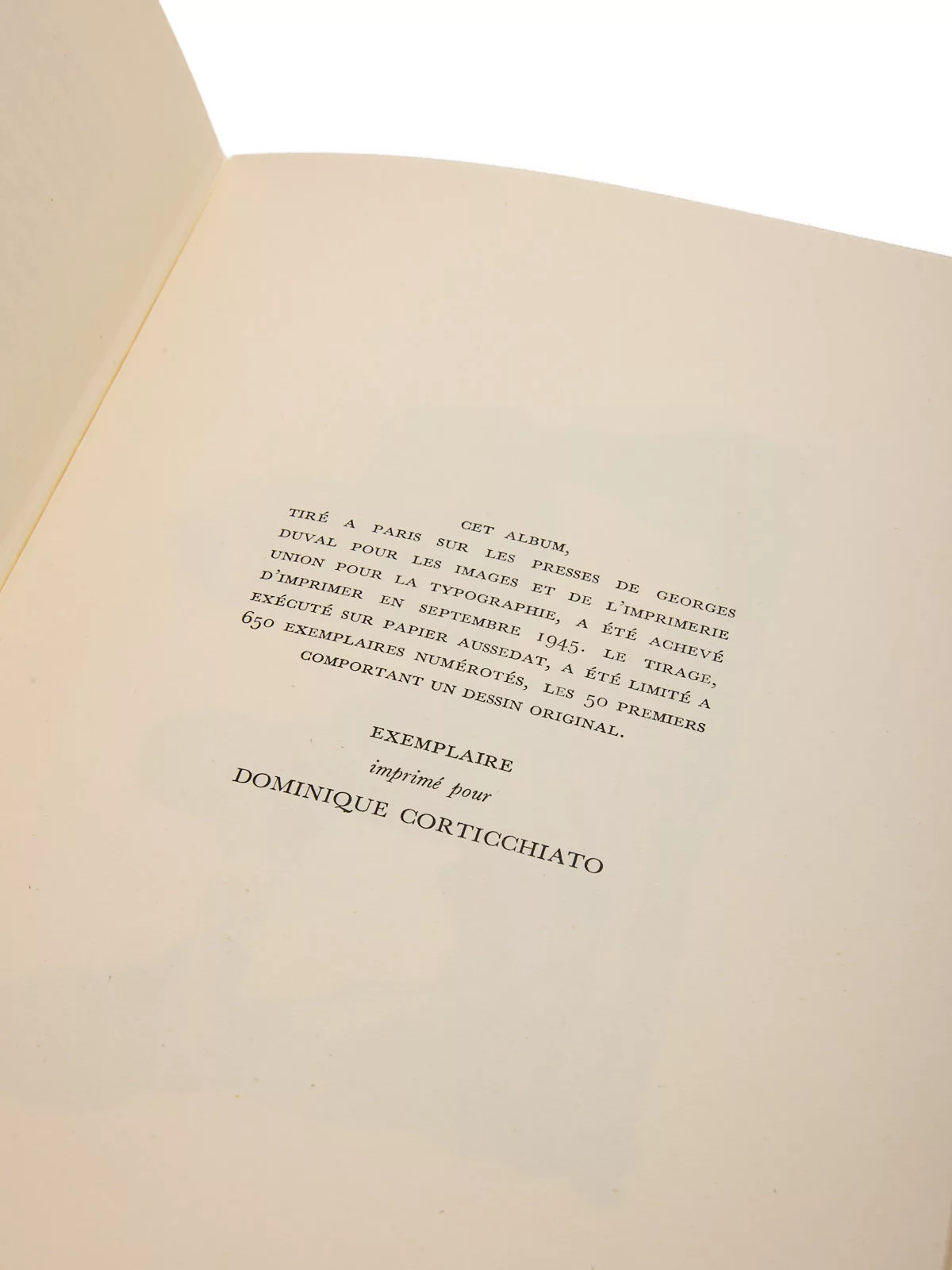
A unique copy, kept by José Corti, printed nominatively for his son with the note: “Exemplaire imprimé pour Dominique Corticchiato.”
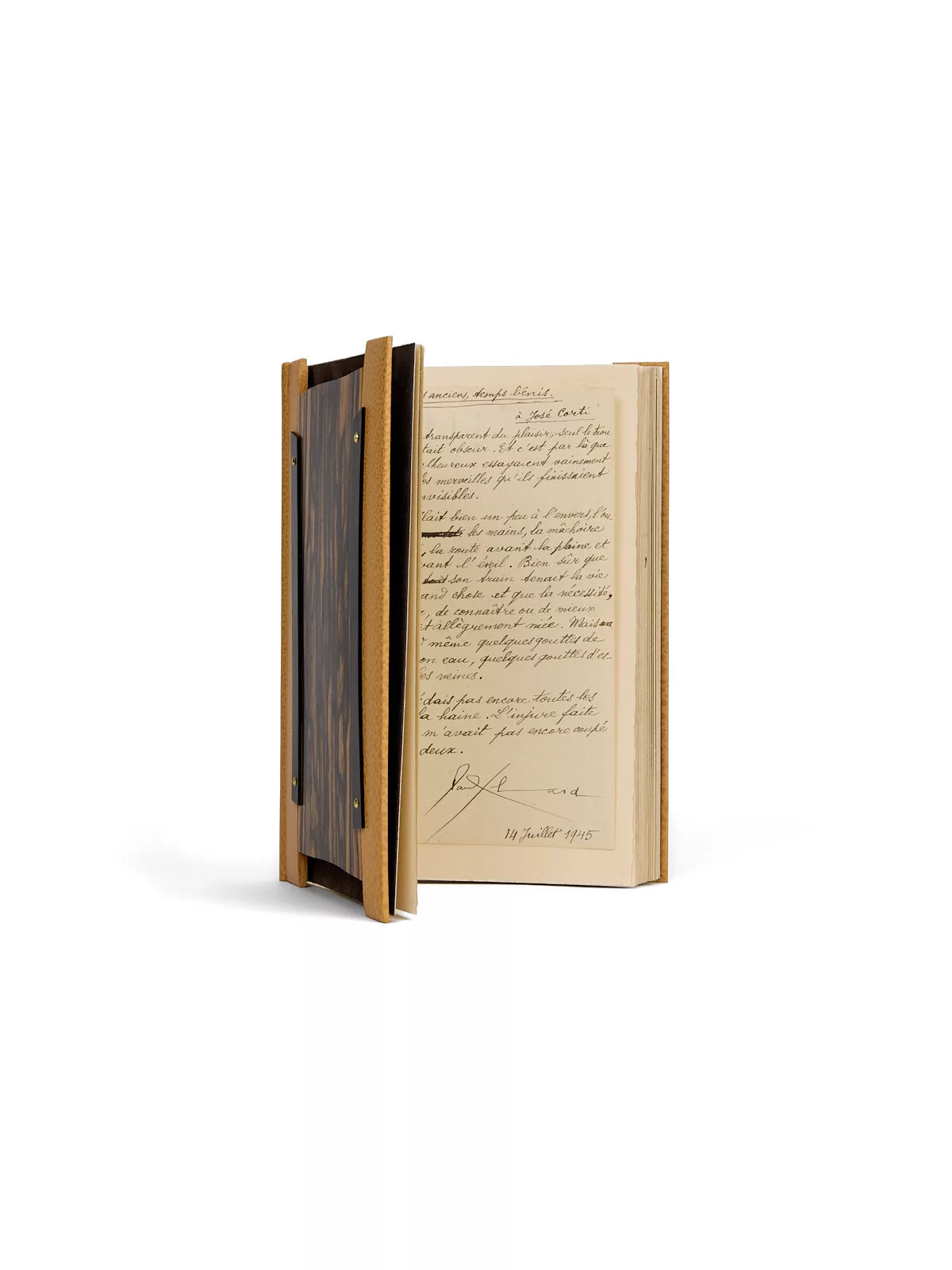
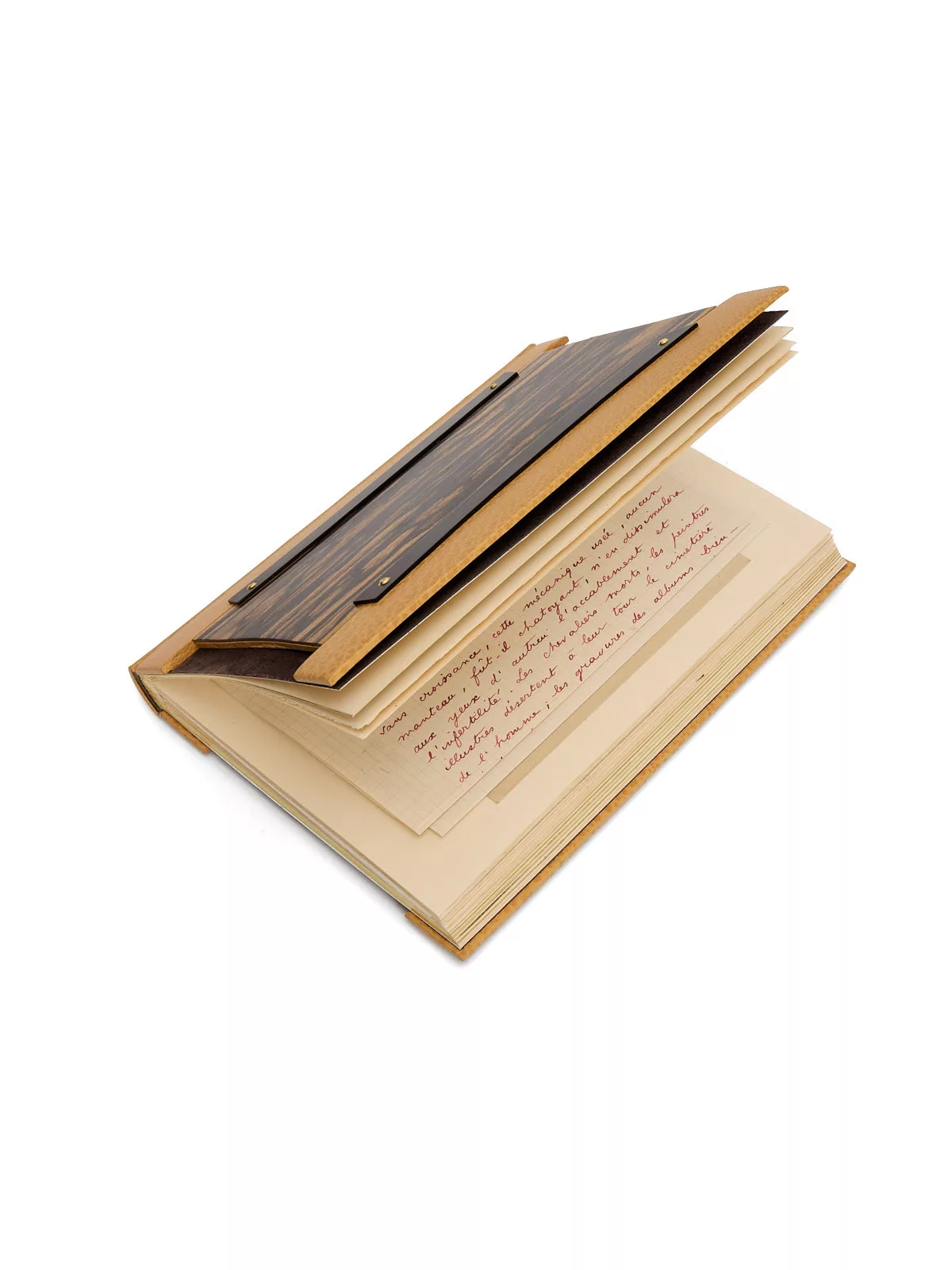
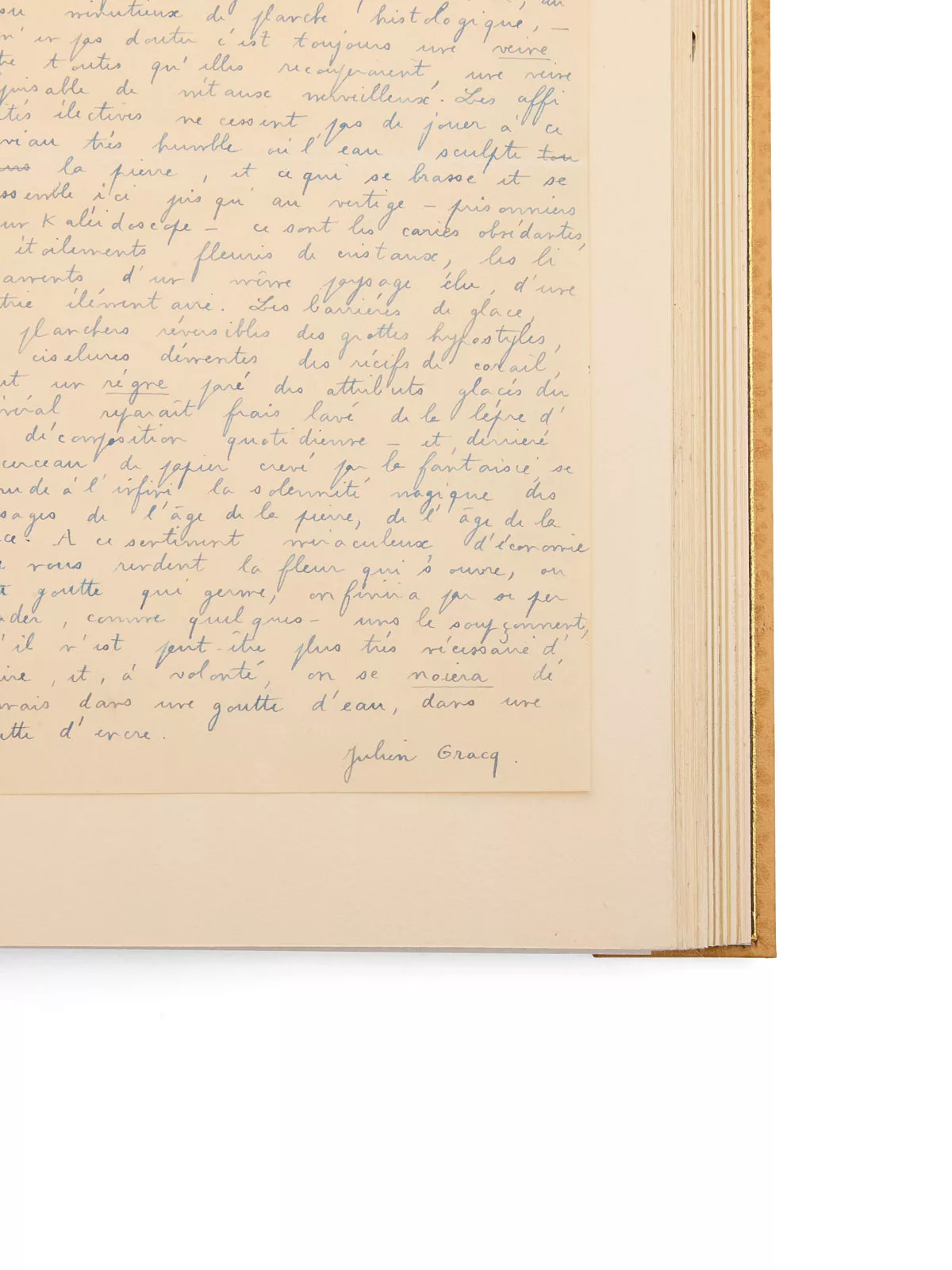
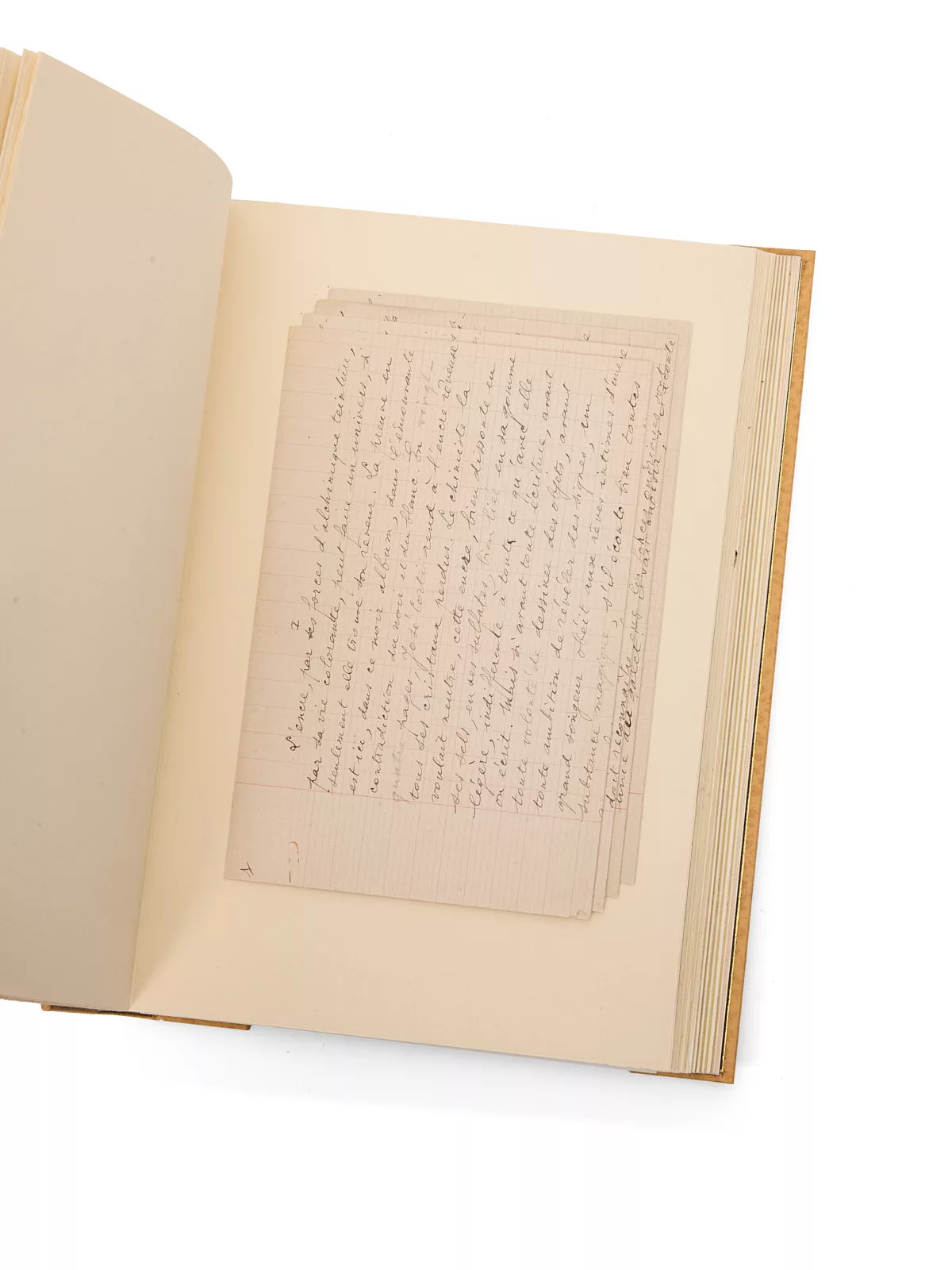
Bound in at front are all the original signed manuscripts by the authors used for the edition, together with José Corti's original compositions in ink and trial prints annotated in his own hand.
The copy notably contains: the autograph manuscript signed by Paul Éluard, Temps anciens, temps bénis (1 leaf), with the autograph letter signed by José Corti to Éluard, dated May 15, 1945; the autograph manuscript signed by René Char, La Lune rouge et le géranium noir (2 leaves), with two autograph letters signed by Char to Corti, dated August 8 and 24, 1945; the autograph manuscript signed by Julien Gracq, Éclosion de la pierre (1 leaf); the autograph manuscript signed by Gaston Bachelard, Une rêverie de la matière (4 leaves); and finally, 20 original drawings by José Corti and trial prints annotated on the verso. Constituted in this way, the copy is not merely an enriched copy: it is the almost complete genetic dossier of the book, preserved in the publisher’s own archives.
Printed specially for his son, this copy was kept by Corti in his archives, together with all the manuscripts of the texts in the book, his own preparatory drawings and trial prints, and two letters from René Char concerning the editorial project. Among these papers Corti also kept the draft of the letter he sent to Paul Éluard, the first writer he thought of to introduce his Rêves d’encre.
This letter to Éluard is of central importance, for it allows us to reconstruct the very genesis of the book: Corti initially envisaged a simple presentation of his images by Éluard, before Bachelard suggested broadening the project, leading to the involvement of René Char and Julien Gracq.
Above all, the letter closes with words whose subsequent history gives the copy its tragic as well as moving character: “Votre acceptation de mon projet me ferait très plaisir à moi – et aussi à mon fils, lorsqu’il reviendra. Il aime autant Bachelard et Gracq qu’il voyait souvent qu’il a d’admiration pour vous. Et Char a été si gentil pour lui… cette réunion aurait à mes yeux l’air d’une manifestation d’amitié, suis tout vôtre, José Corti, 15. 5. 45.”
The book was thus being prepared while Corti awaited the return of his son Dominique Corticchiato, arrested by the Gestapo on May 2, 1944, deported on the last convoy of August 15, 1944, and who never returned. Several sources, beginning with the author’s own Souvenirs désordonnés, recount what happened on that fateful day of May 2. These accounts have since been supplemented by the biographical research of Olivier Salon, who published François le Lionnais, le disparate (Othello) in 2016: the story of Dominique Corticchiato emerges in sharper detail, and his links with the Resistance — particularly with François Le Lionnais — allow us to take some distance from José Corti’s own account.
Accused by Corti of carelessness, even grave irresponsibility, François Le Lionnais was said by the publisher to bear full responsibility for his son’s arrest. Yet, as Salon points out, “the Le Lionnais/Corti affair will never be fully elucidated.” Two facts, however, are established: Le Lionnais, active in the Resistance after his demobilization, used the Corti bookshop “which served as the Paris headquarters of his Resistance activity, giving him use of the telephone in the back room (while keeping José Corti entirely unaware of this activity)”; and the network in which Le Lionnais operated, Marco Polo, was also the one that Dominique Corti joined at an early stage.
Finally, the arrest dates of each man allow us to reconstruct the chronology of the twelve months, between April and May 1945, during which Corti relentlessly hoped to find his son again: François Le Lionnais was arrested by the Gestapo on April 29, 1944, three days before Dominique Corti and his mother, Nicole Corti.
Let us once more give the floor to Olivier Salon, whose factual account is enough to convey the unbearable grief of José Corti and his wife:
“François Le Lionnais, Dominique Corti and Mme Corti were sent to Fresnes for three months, until August 15, 1944. Le Lionnais was tortured but did not talk (according to his own account, we have no other source). He was deported on the last convoy, that of August 15, 1944, together with Dominique Corticchiato […].”
Mme Corti, for her part, was freed and rejoined her husband on August 17, 1944. “François Le Lionnais survived until the liberation of the camps and returned to Paris on May 3, 1945,” two days before the letter Corti sent to Éluard, in which he still held out hope. He did not yet know that Dominique Corti would never return.
Éluard paid tribute to José Corti’s son: his name appears among the litany of poets who died during the war whom Éluard mourns in “Éternité de ceux que je n’ai pas revus,” a poem published in Les Lettres françaises (September 8, 1945) before appearing in the collection Au rendez-vous allemand. Éluard had also signed, in 1943, a preface to Horace Walpole’s Le Château d’Otrante, translated by Dominique Corticchiato.
The volume also preserves, in an almost pure state, the trace of a very particular moment in French literary life: the immediate postwar period, when old friendships, formed well before 1940 and tested by the Occupation, gathered once again around Corti. The coming together of Éluard, Char, Gracq and Bachelard around a book of images is quite exceptional, and speaks to José Corti’s singular place within this constellation. That the publisher wished to give this book to his son, who admired precisely all of these writers, lends the gathering an added intensity.
Although Éluard and Corti came together in 1945 to publish Rêves d’encre, the drawing up of successive “blacklists” of writers accused of collaboration by the Comité national des écrivains — on which Éluard and Aragon showed themselves among the most uncompromising — would lead to their eventual break. Following a request from Maurice Chapelan, who had been placed on these lists and then removed by Aragon, to publish in an anthology a text by Éluard issued by Corti, Corti sent the poet this mischievous note: “Je ne savais pas qu’Aragon tenait boutique de blanchisserie.” This flash of temper proved fatal to their friendship: “I telephoned three or four days later,” Corti would recount. “‘I am just writing to you,’ Éluard told me, ‘for you have caused me a great deal, really a great deal of pain: to attack Aragon is to attack me.’ I fell, as they say, from a great height. His letter reached me. I read in it the substance of what he had told me on the telephone. It was only later, much later, that I understood that this was, in fact, without anything having suggested it, a letter that would be the last, marking the end of our friendship” (ibid., p. 102).
Much later, Corti would acquire one of the autograph versions of Poésie et Vérité 1942, purchased from the bookseller Lucien Scheler: a final act of amends as much as a tribute to a companion of the Surrealist years and the war years.
The preservation of Rêves d’encre in his library, the most tangible memento of his son’s presence, gives this copy an almost heartrending significance, one that transcends its status as the finest possible copy of Rêves d’encre: a private memorial, assembled at the very moment when the publisher still hoped, and then kept close to him as what should have welcomed his lost son.