

Praxinoscope
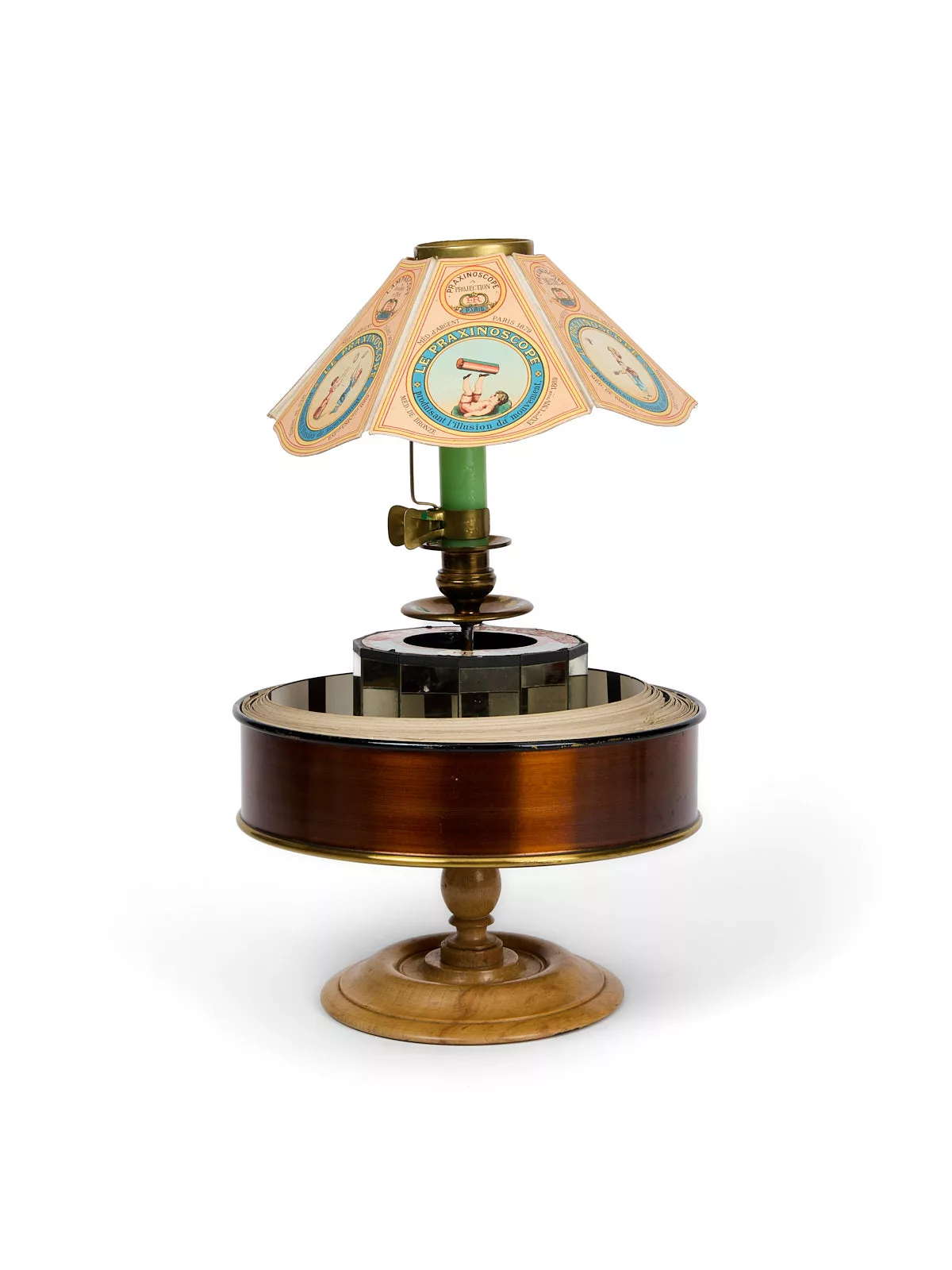
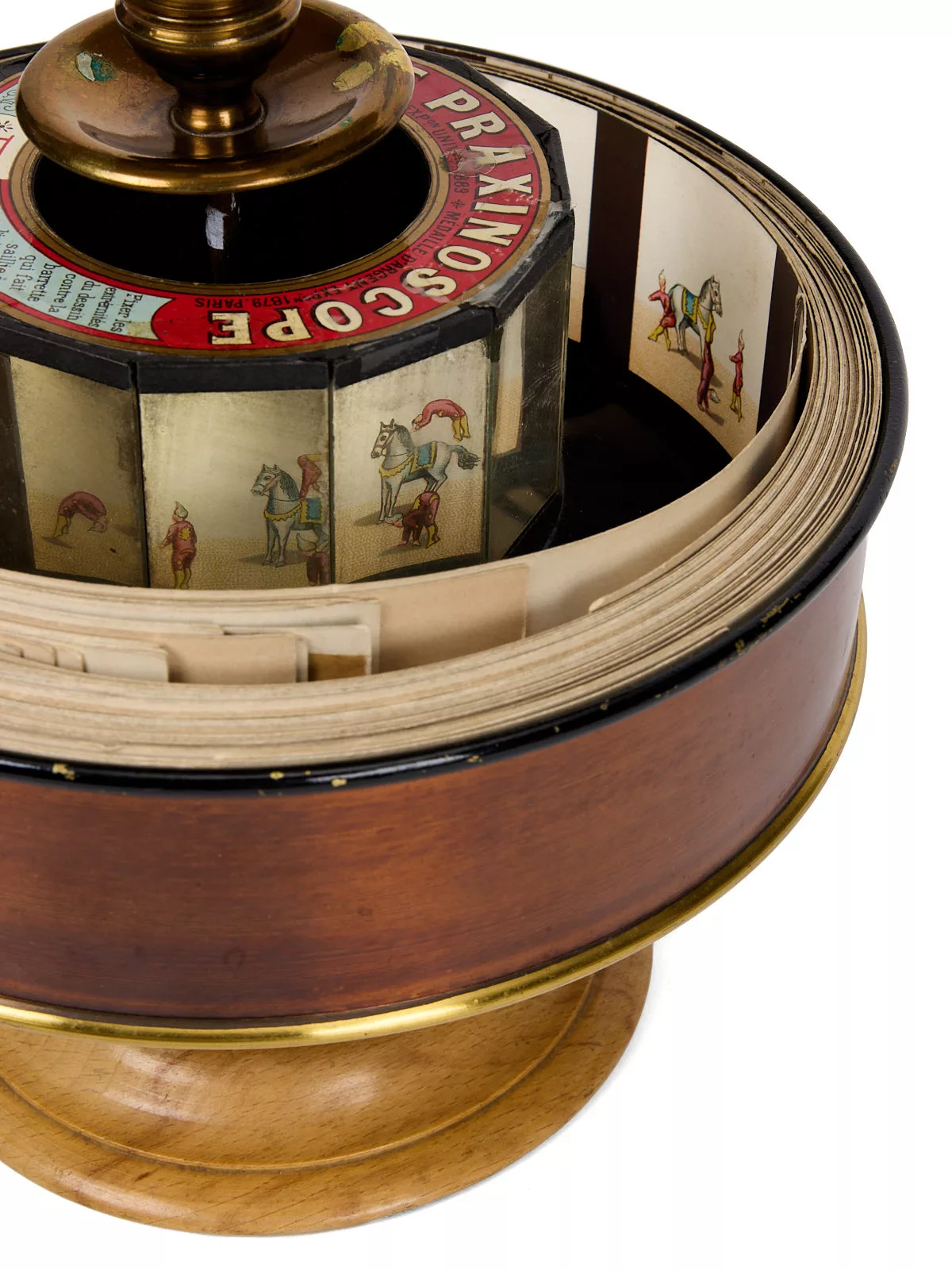
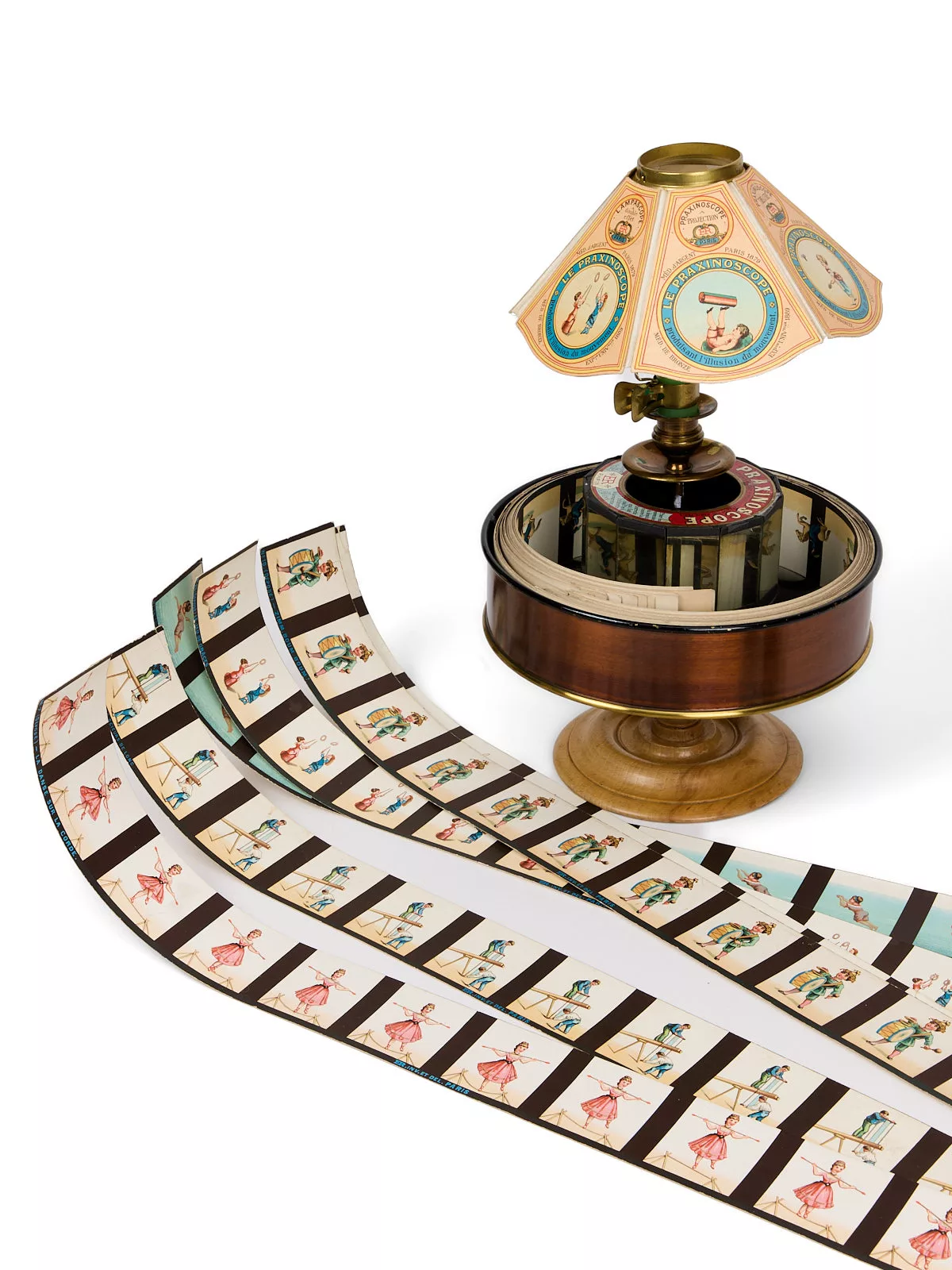
Devised in 1876 by Émile Reynaud, who patented it the following year for its presentation at the Paris Exposition Universelle, the praxinoscope was designed to create the illusion of movement from a sequence of still images. It works on the principle of twelve small mirrors arranged at the center of a rotating cylinder, inside which is placed a cardboard strip on which Reynaud himself drew twelve poses of a single subject or moving scene.
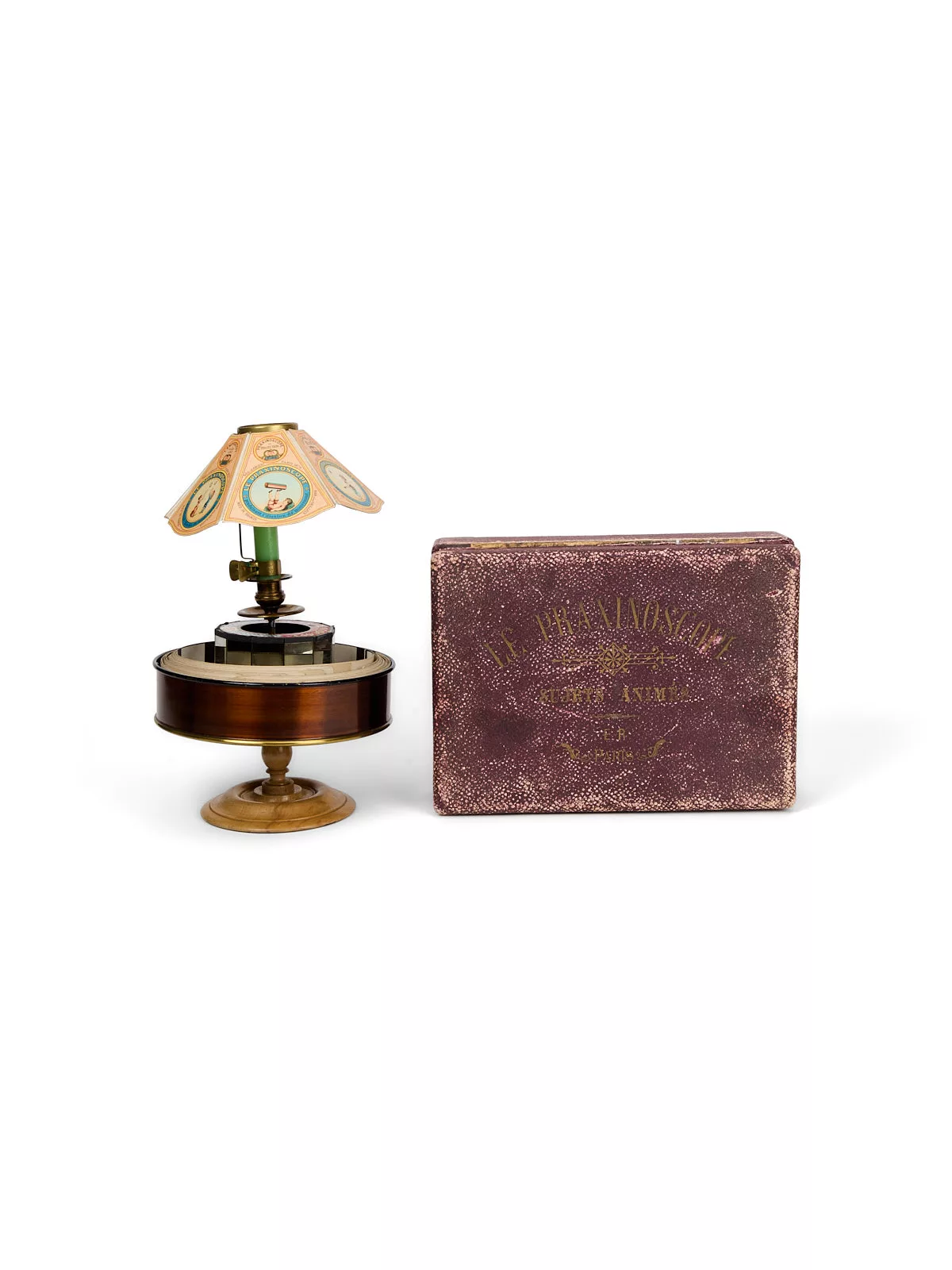
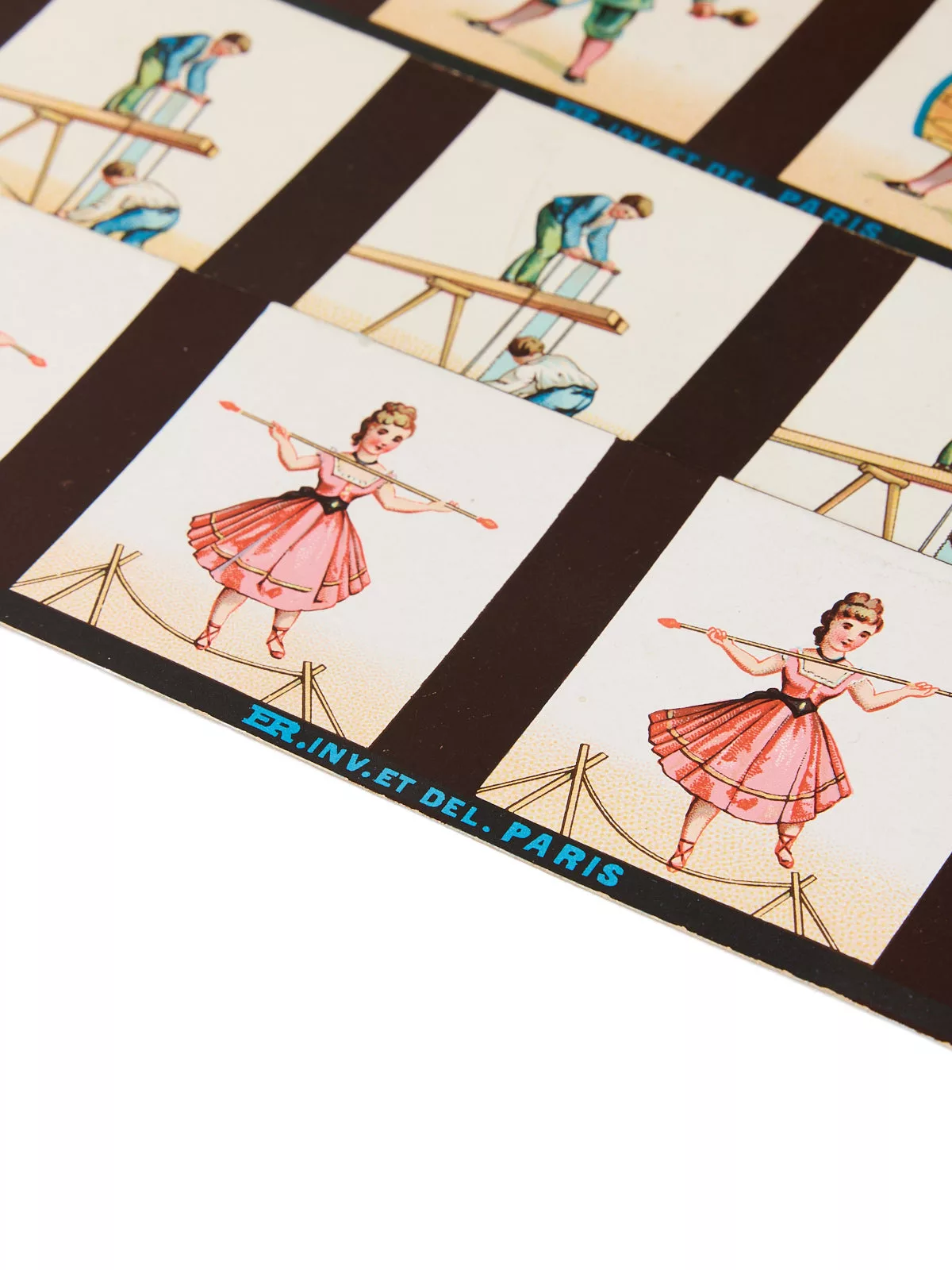
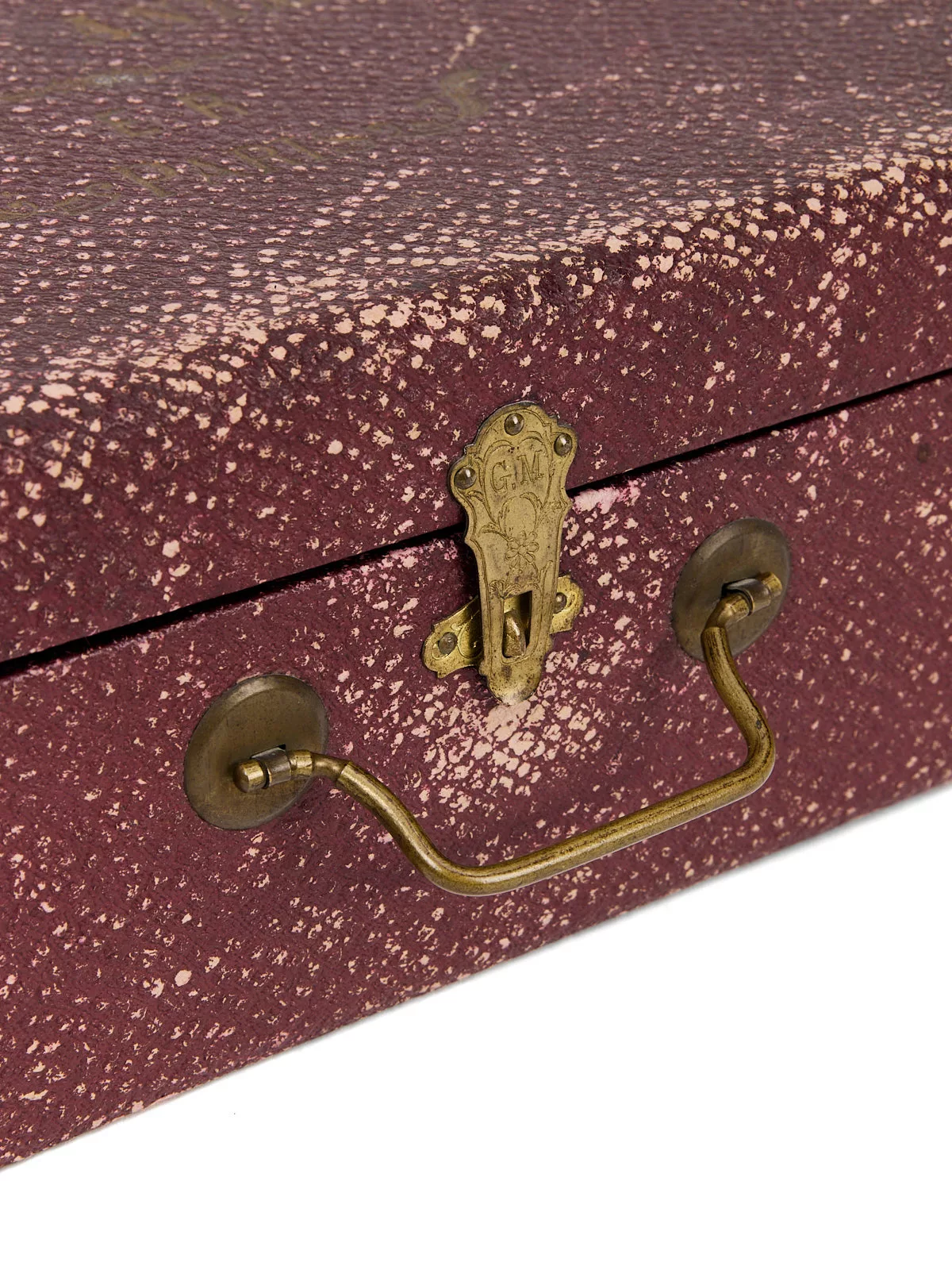
As the cylinder turns, the scene animates smoothly, without flicker — a major advantage over the zoetrope, brighter and more stable, and a decisive step forward in the history of the animated image. This example is fitted with an illustrated lampshade with chromolithographed vignettes, decorated with figures and marked “Le Praxinoscope – Jouet d’optique – Donnant l’illusion du mouvement – É. Reynaud, Paris.” In its original box, covered in embossed paper, with a brass handle and lock stamped “G.M.” (probably Gustave Marion, a manufacturer of scientific instruments and optical toys). The device is preserved with 35 period animation strips, chromolithographed and signed “ER. [Emile Reynaud] inv. et del. Paris,” all complete: acrobats, clowns, dancers, tightrope walkers…
A remarkably unified ensemble, very rare in this condition.
Musée des Arts et Métiers, inv. 28025; Bibliothèque nationale de France, Cabinet des estampes, fonds Reynaud; Sadoul, Histoire générale du cinéma, I, p. 21.