

Les Civilisés
Only five deluxe copies were printed, on Hollande paper.
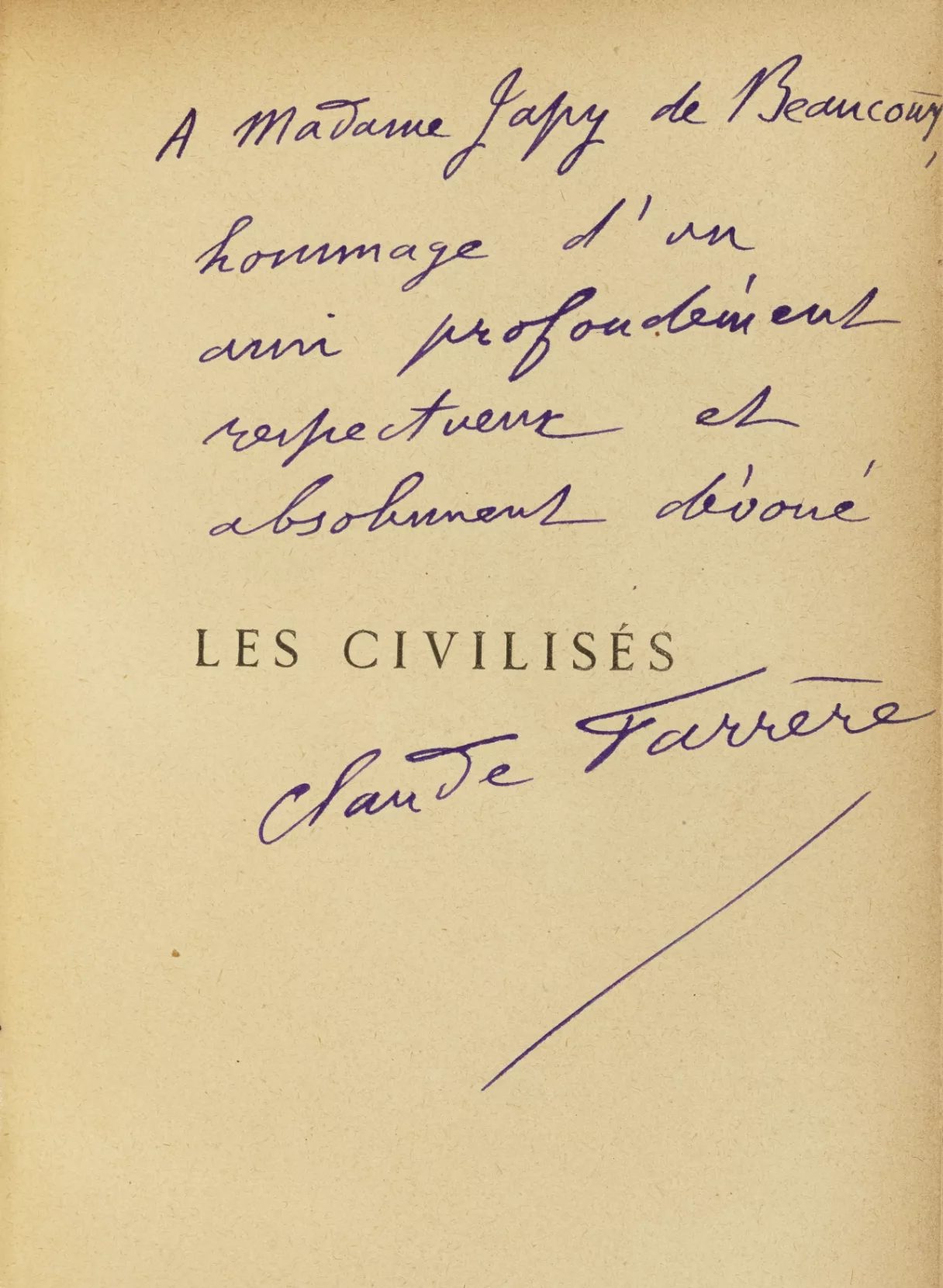
Signed presentation inscription: “à Madame Japy de Beaucourt, hommage d'un ami profondément respectueux et absolument dévoué, Claude Farrère.”
A naval officer, Claude Farrère first achieved success, like Pierre Loti a few years before him, with his exotic and colonial novels. The Prix Goncourt awarded for Les Civilisés marked an early stage in a long career that culminated in his election to the Académie française in 1935. Like John-Antoine Nau (Goncourt, 1903), Farrère — real name Charles Bargone — had an unusual trajectory that appealed to journalists: he was still a very young novelist, Les Civilisés being only his third publication, and he was just twenty-nine. Better still, at the moment he received the Goncourt he was aboard the Saint-Louis, the battleship on which he served as ensign (he would be promoted lieutenant the following year). He had left France in October, just after correcting the final proofs of the text — corrected from the Saint-Denis printing house between April and September — with publication in December, bearing the date 1906. This was just in time for copies to reach the Goncourt jurors, who were captivated by this exotic epic and its anti-colonialist indictment. They thus dropped Romain Rolland and his Jean-Christophe (who would nonetheless win the Prix Femina) from the list, retaining only Marius Ary-Leblond, Jules Huret, André Chevilly and Claude Farrère, who was proclaimed winner, without much deliberation, for Les Civilisés, “a novel of strange craftsmanship, [which] fully justifies the rare distinction the Ten have just made” (Le Temps, 9 December 1905). The novel is set mainly in Saigon and revolves around three characters — Mévil, a doctor, Torral, an engineer, and Fierce, a naval officer — embodying a decaying colonial order, prey to the vices and temptations of Asian lands.
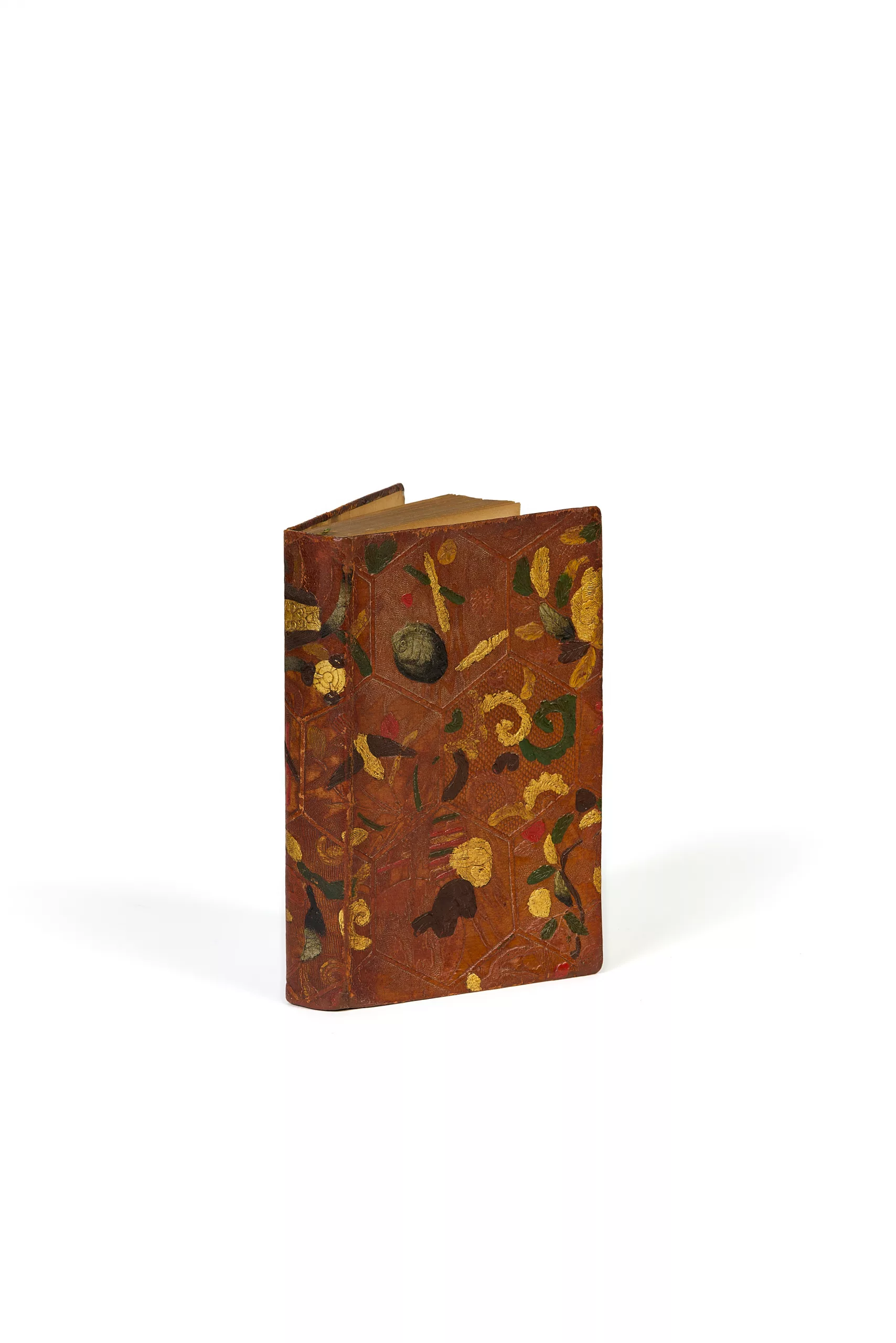
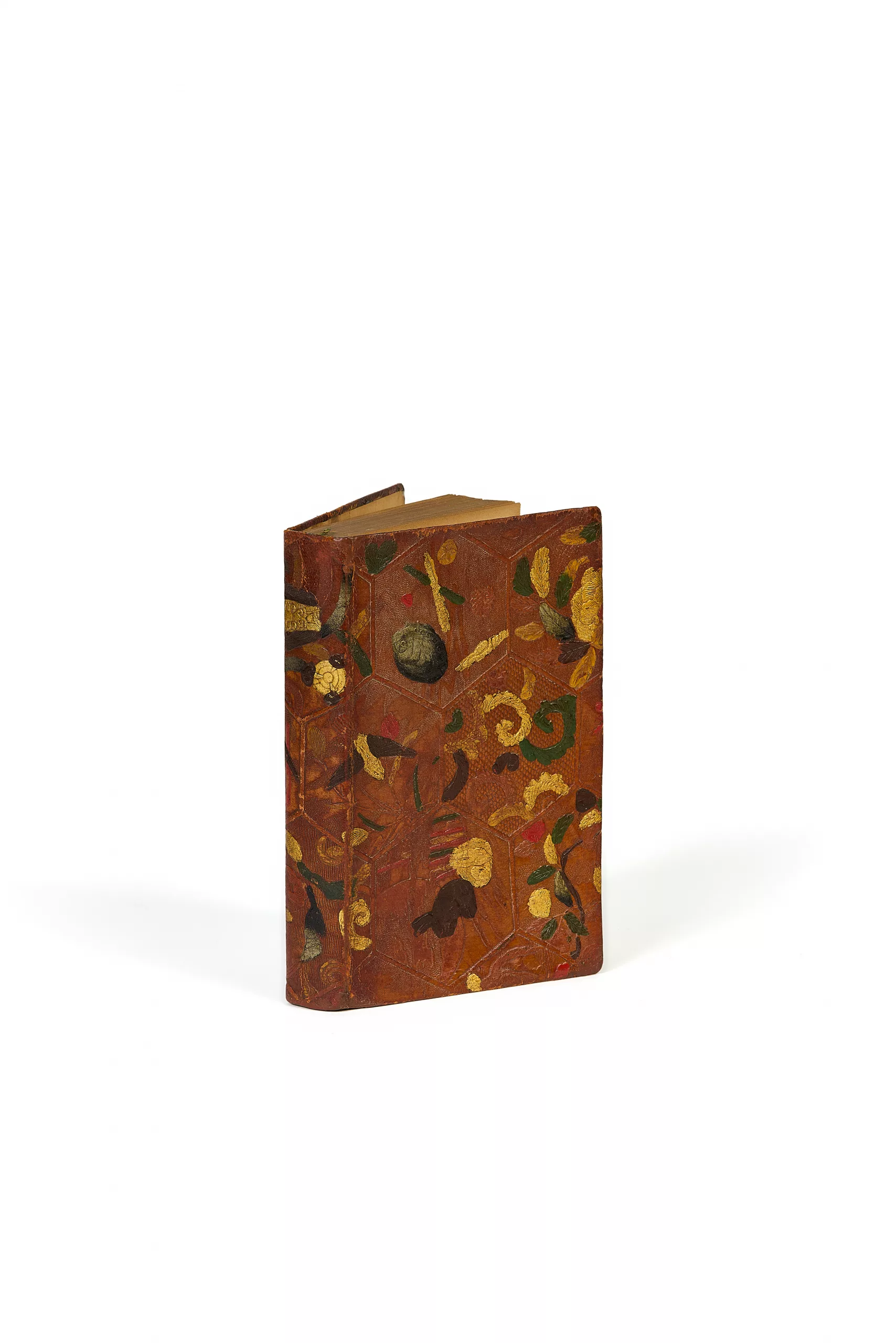
A fine and precious soft Japanese-style binding.
This copy was presented to Marguerite Jeanne Japy, a celebrated salonnière and wife of the academic painter Adolphe Steinheil until 1908. She is remembered for her affair with President Félix Faure — who died in her arms, at the very least — at the Élysée Palace, which earned his mistress the nickname “la pompe funèbre” (the death pump/undertaker). Among the other witticisms occasioned by this colorful affair, Clémenceau remarked, “He wanted to be Caesar, but was only Pompey,” while an exchange between Félix Faure’s butler and the priest hastily summoned to the Élysée to administer the last rites ran: “Has the President regained consciousness? — No, Father, she left by the service stairs.”