

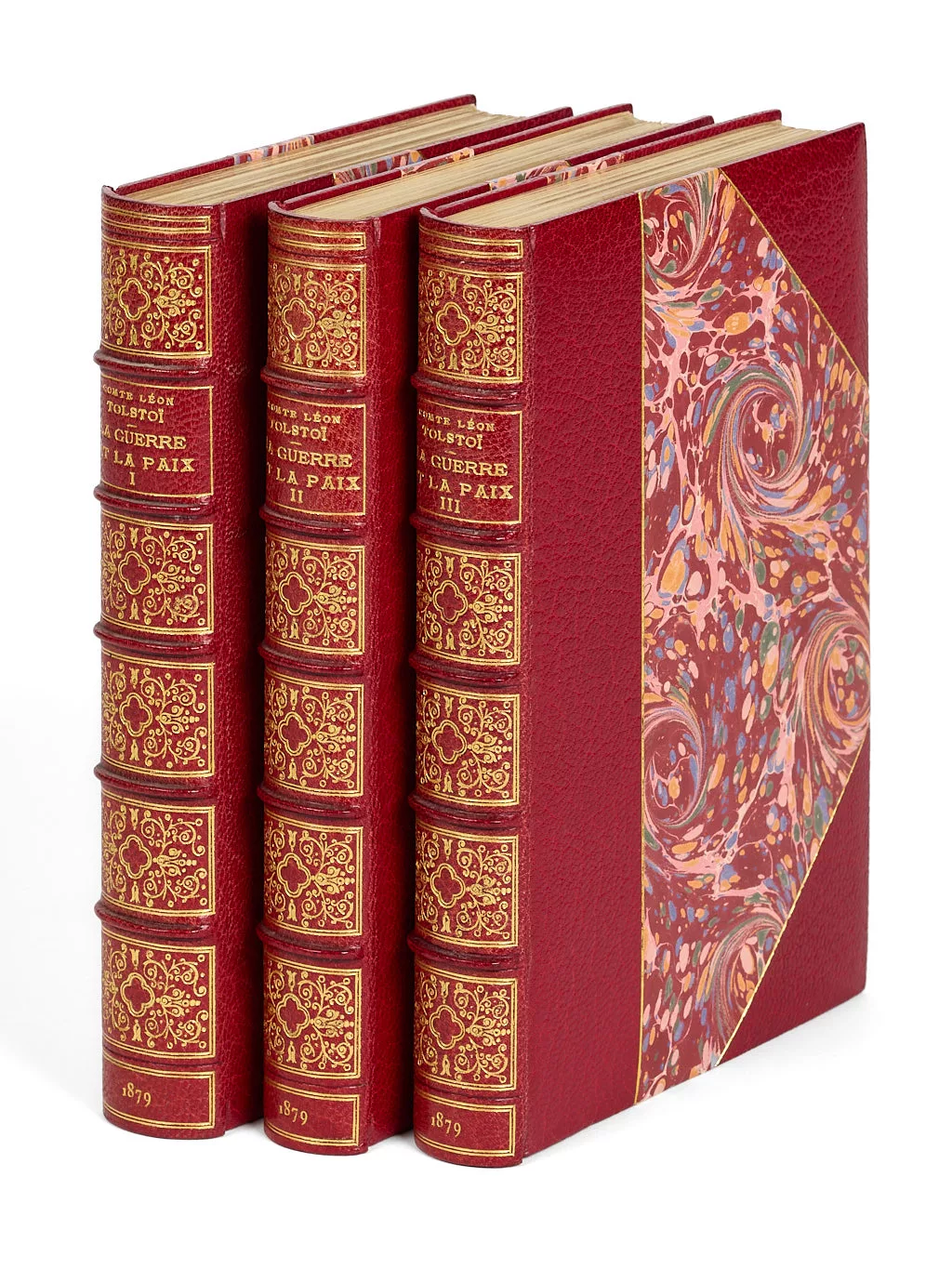
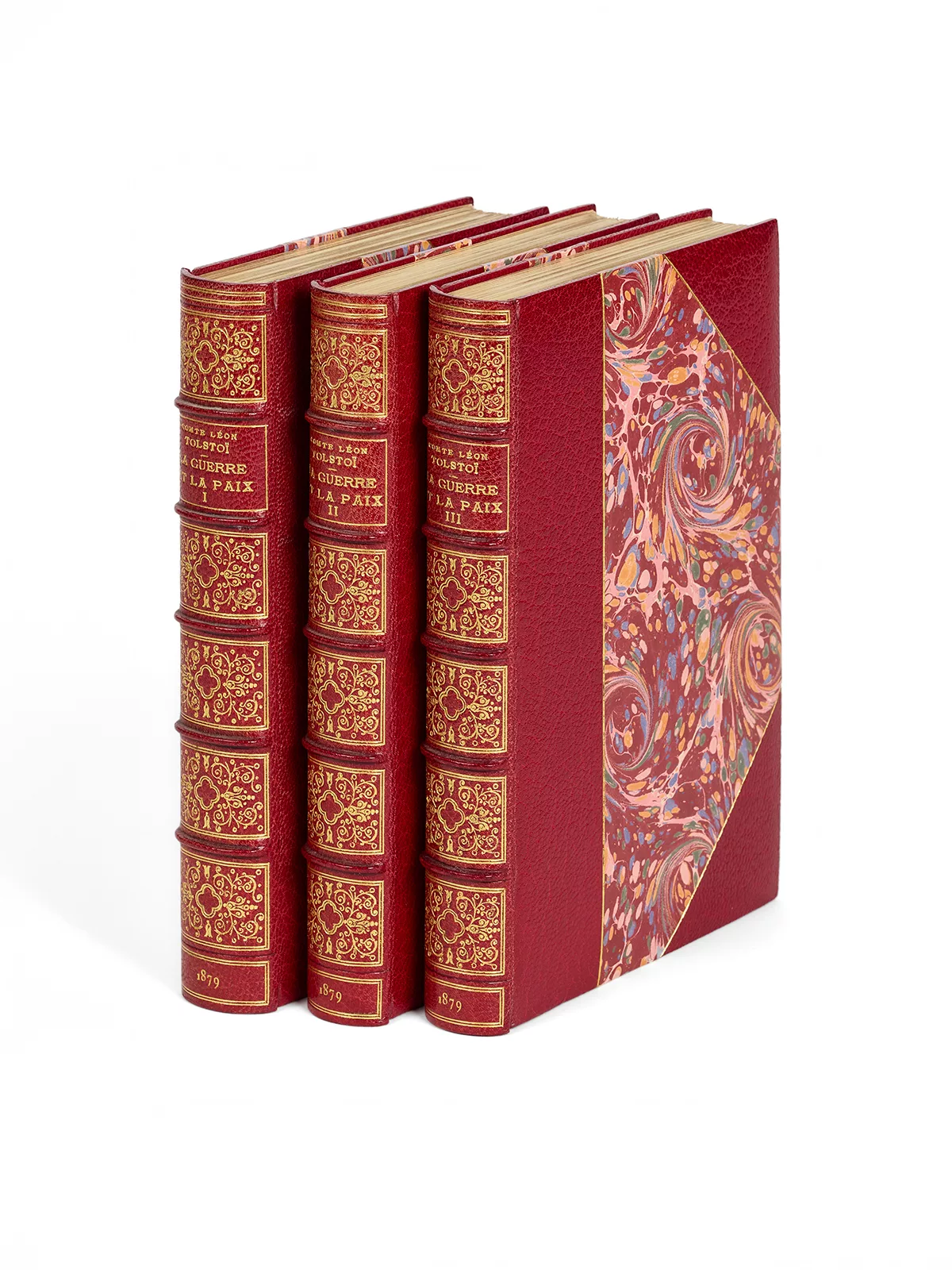
La Guerre et la Paix
It precedes the edition printed in Russian and was printed in only 500 copies, intended for the French market.
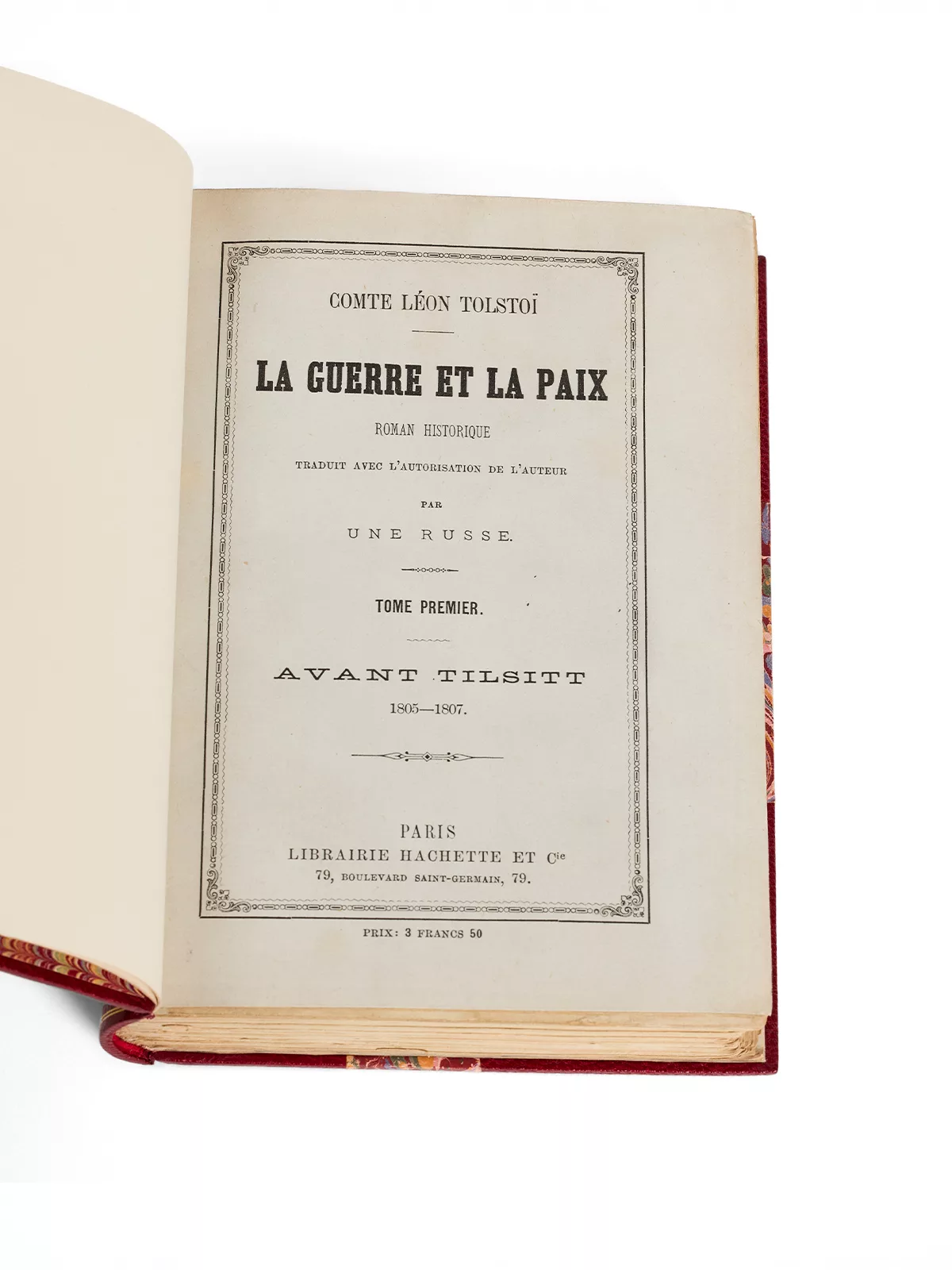
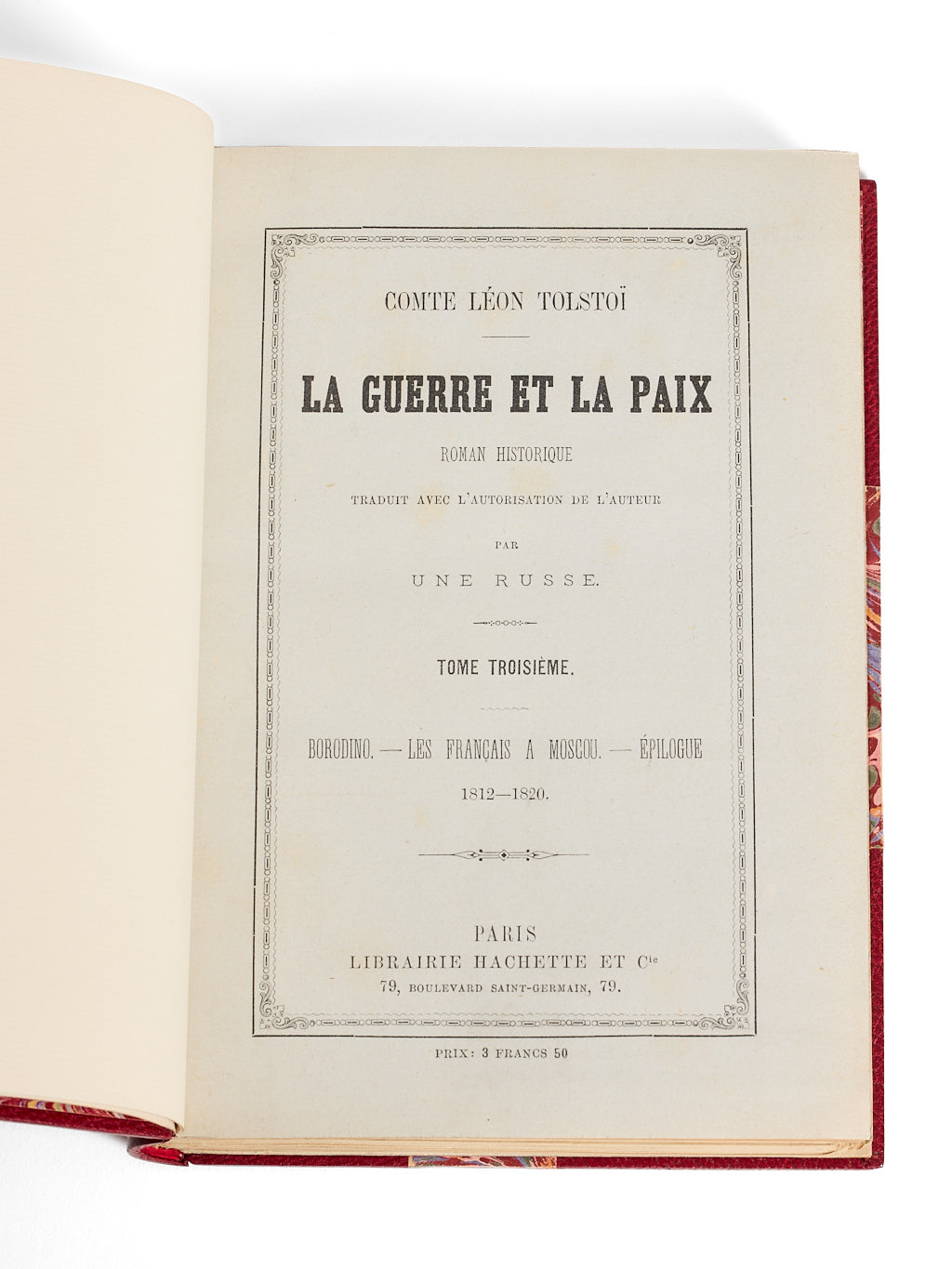
The novel was printed in Saint Petersburg, in a translation by Princess Irène Ivanovna Paskevitch, in three parts: Avant Tilsitt, 1805–1807; L’invasion, 1807–1812; and Borodino, Les Français à Moscou, Épilogue, 1812–1820. The title page identifies the translator only by the modest phrase “par une Russe.”
A letter from Turgenev to Tolstoy, dated 12 January 1880, confirms that the 500 copies were duly received for distribution in France by Hachette. Turgenev, a tireless promoter of Russian literature abroad, remained confident of eventual success: “Its whole character is far from what the French like and look for in books; but truth always prevails in the end. I hope, if not for a brilliant victory, at least for a slow but lasting conquest.”
The first French edition would not appear until 1884, after Hachette, initially only the distributor of this first edition, acquired the rights. The Russian-printed text nonetheless contains variants and passages not reproduced in the edition printed in France. Alphonse Daudet was fortunate enough to read it in this original French text: “You must read Leo Tolstoy’s La Guerre et la Paix. It is one of my bedside books; I return to it every year during the holidays, in the country. I tried to obtain this rare book. It had long been out of print, and publishers were reluctant to bear the cost of a new three-volume translation.” (Letter to the critic Hugues Le Roux, 1882.)
The English edition, published in 1886 by Clara Bell, was based on the French text of the Saint Petersburg edition.
“The importance of La Guerre et la Paix lies not only in the grandeur of its scope and the breadth of the artist’s vision, but also in what some have called its ‘moral element’ and others its ‘philosophical element.’ The universal element is Tolstoy’s own philosophy of history. According to him, it is neither the insight of generals and leaders nor the tactics of general staffs that should be regarded as the decisive factors in great historical events, but the spirit of the common people, the willpower of pure souls united in common effort. Tolstoy was further convinced that this philosophy finds its finest expression in the Russian popular soul. La Guerre et la Paix ranks among the great epic works, closer to the Iliad than to any work of modern European literature.” (Dictionnaire des Œuvres)
An in-text map depicting the battles of Shevardino and Borodino, printed on page 5 of the third volume.
A magnificent copy, from the library of Georges Degryse.
Carefully bound, it retains its rare original wrappers, its blank preliminary leaves and its six pages of Errata et Variantes.
Vicaire, VII-850 (giving the 1885 edition as the first); Boutchik, Bibliographie des œuvres littéraires russes traduites en français, p. 133.