

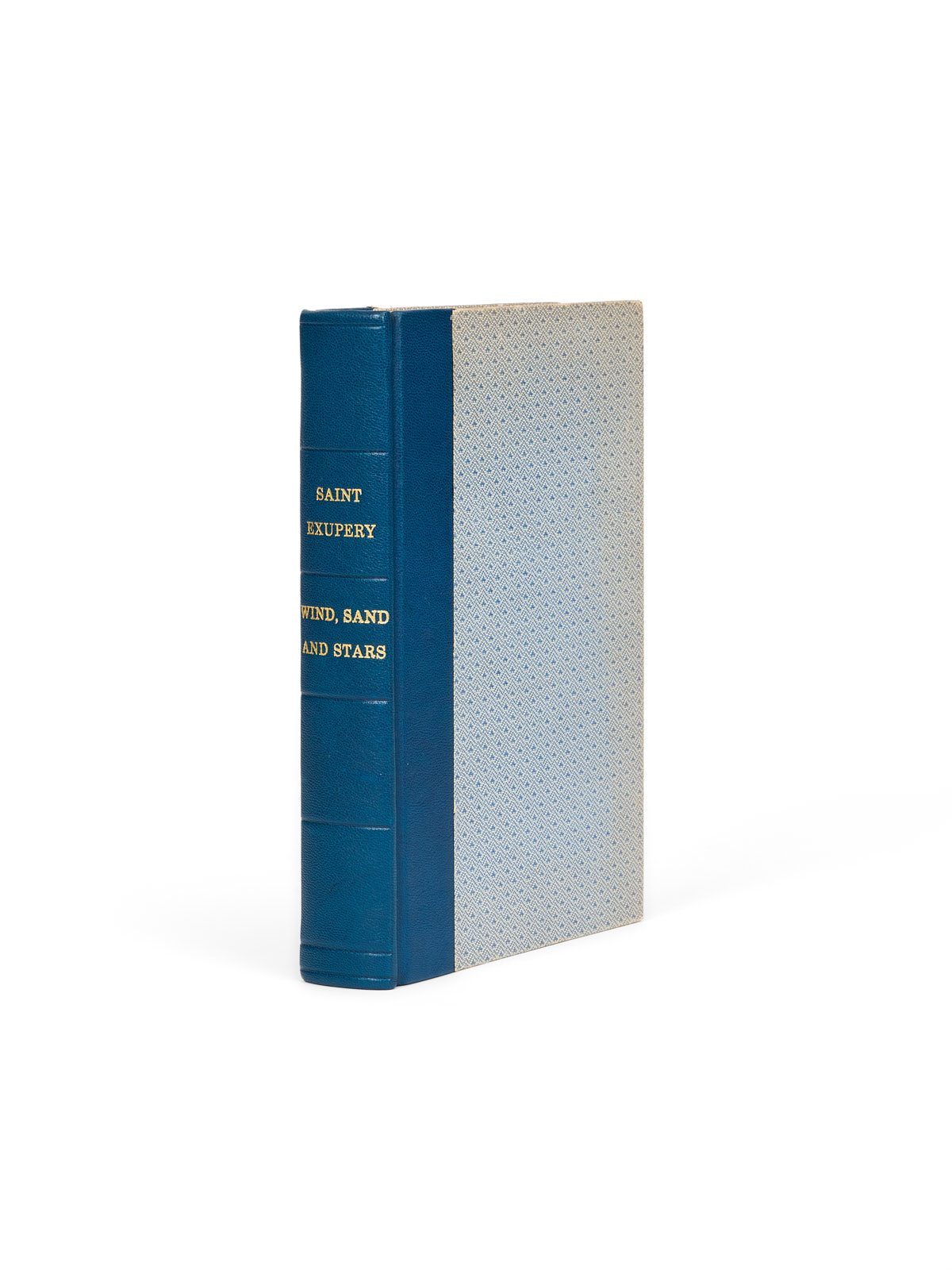
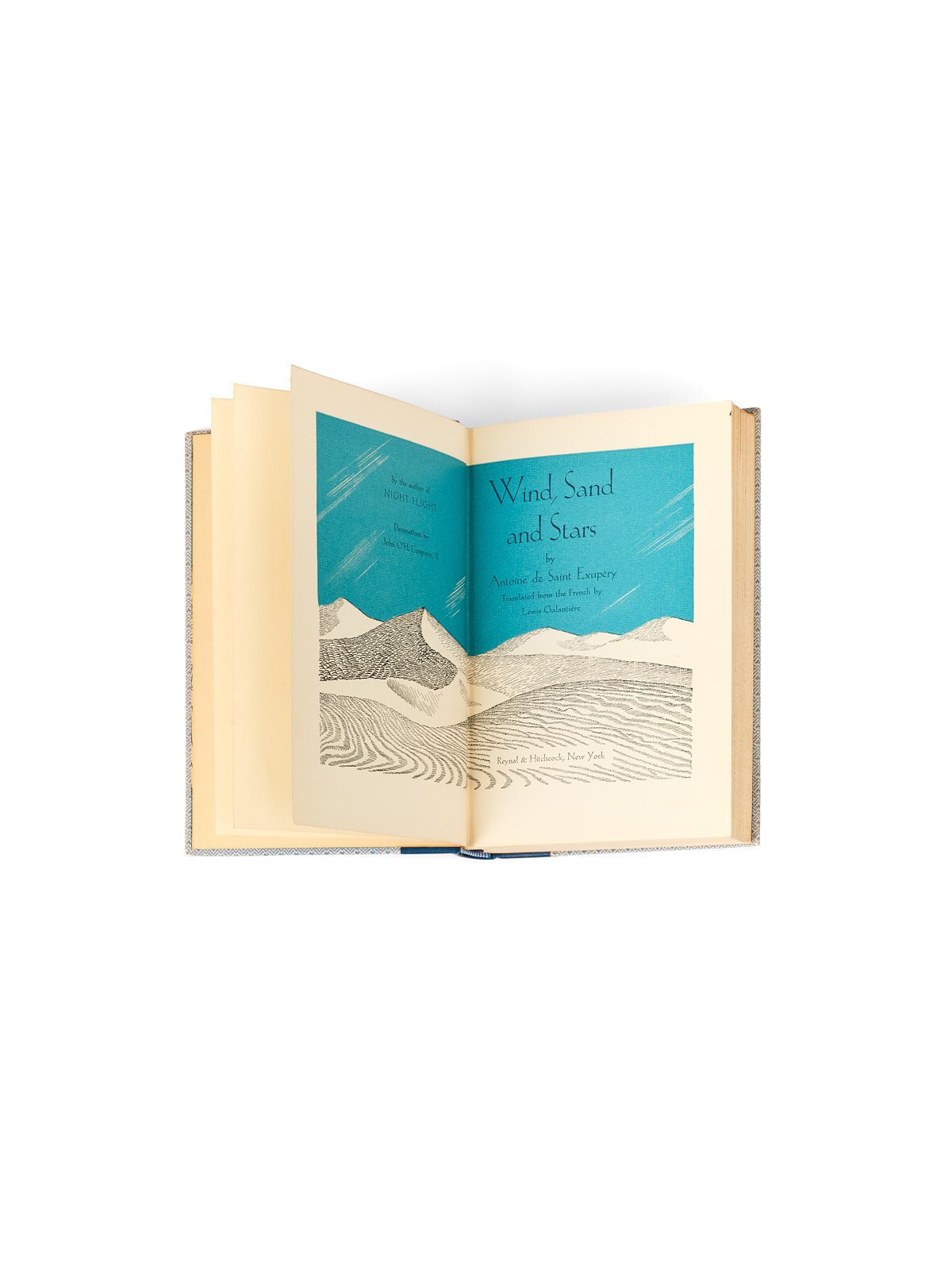
Wind, Sand & Stars
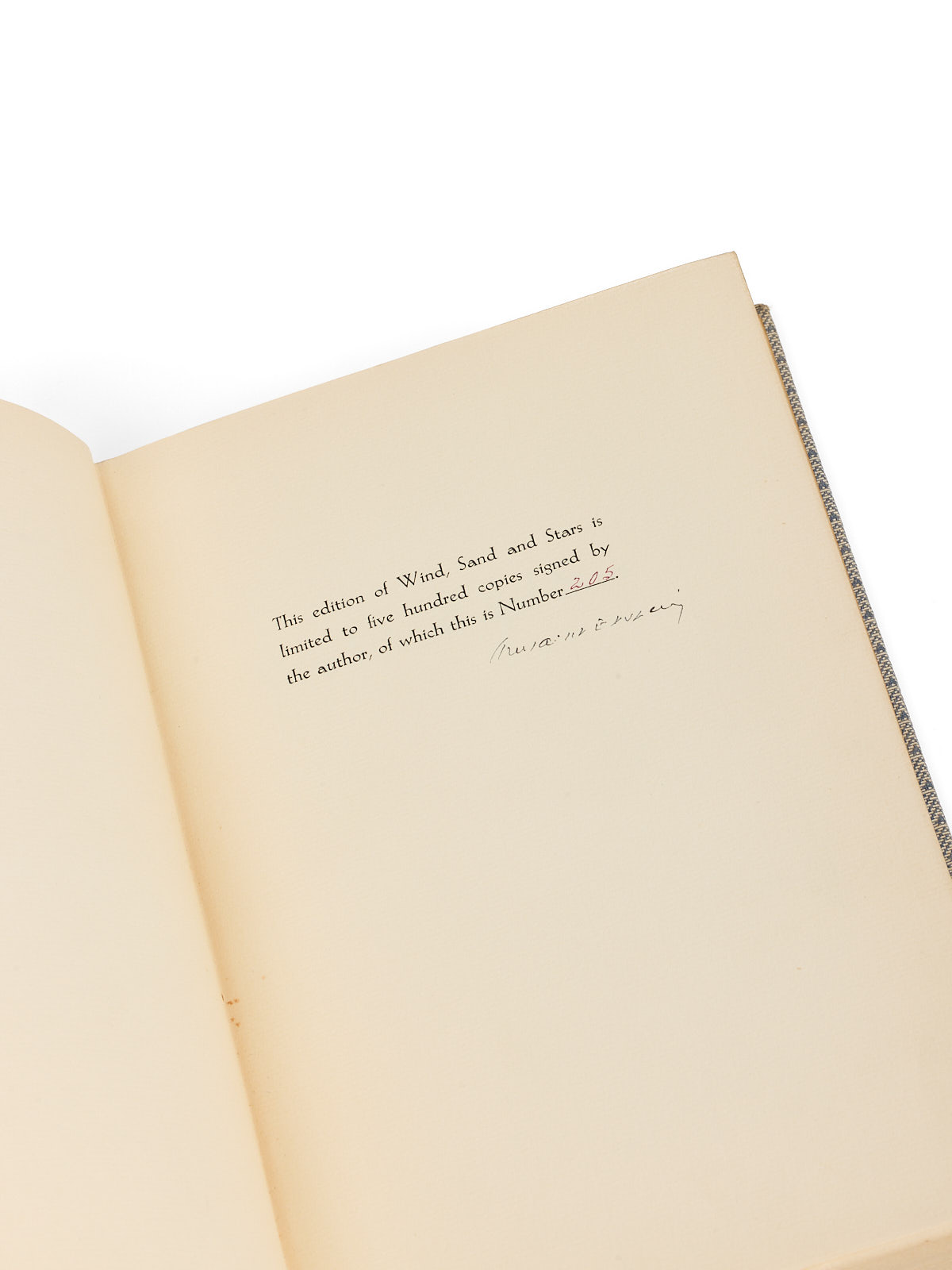
One of 500 deluxe copies on laid paper, signed by the author, this copy no. 205.
In January 1938, Saint-Exupéry landed in the United States for the first time, intending to attempt the New York–Tierra del Fuego raid. He already enjoyed a solid reputation there thanks to the translations of Night Flight (Vol de nuit) in 1932 and Southern Mail (Courrier Sud) in 1933. Maximilian Becker became his literary agent and had him sign a contract with the publishers Eugene Reynal and Curtice Hitchcock, to whom Saint-Exupéry presented a handful of scribbled pages said to be the opening chapters of his next book — in reality little more than fragments. He returned to France in April, after meeting Lewis Galantière, whom his American publishers had engaged to translate the book. A lengthy correspondence then developed between the two men as Terre des hommes and Wind, Sand and Stars were composed almost simultaneously.
At Galantière’s insistence, Saint-Exupéry added an extra chapter, “Les Éléments,” to the American edition, along with a few pages of contextual explanation. Neither text appears in the French edition, published by Gallimard in February 1939. The American edition appeared in June: Saint-Exupéry left the choice of title to his publishers, suggesting to them the titles he had abandoned for Terre des hommes, “Étoiles par grand vent” and “Grand vent sous les étoiles.” Galantière ultimately chose Wind, Sand and Stars, drawn from a passage in the book — the three words also appear in an earlier manuscript of preparatory notes for the work.
To promote the book, celebrated on both sides of the Atlantic, Saint-Exupéry made two trips to the United States, where it was selected as a Book of the Month. In December 1939 it received the Grand Prix du roman de l’Académie française, and on January 15, 1941 (a year late, owing to the outbreak of war) the National Book Award, one of the highest distinctions of the time, while selling 250,000 copies.