

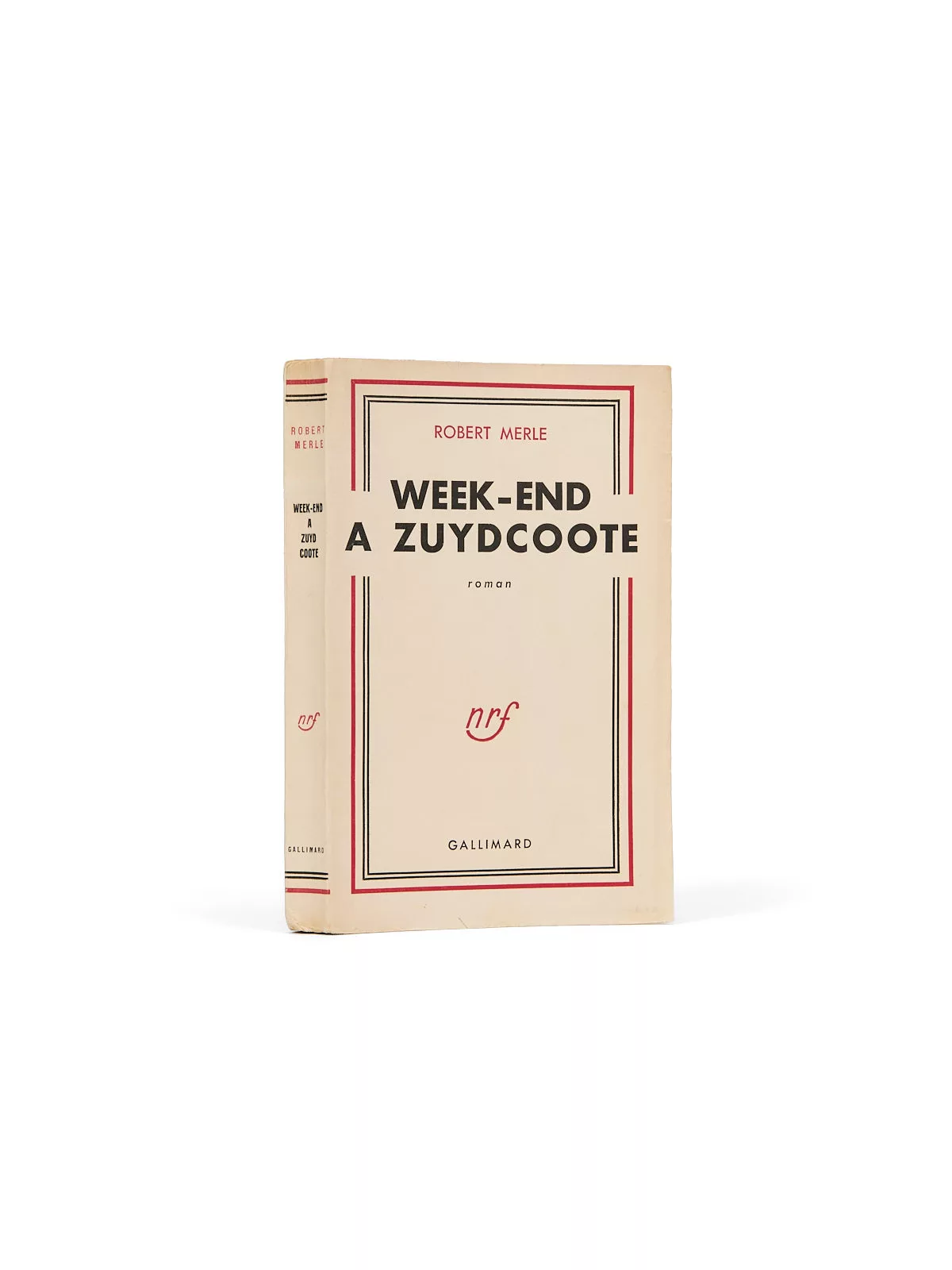
Week-end à Zuydcoote
One of the printed review copies.
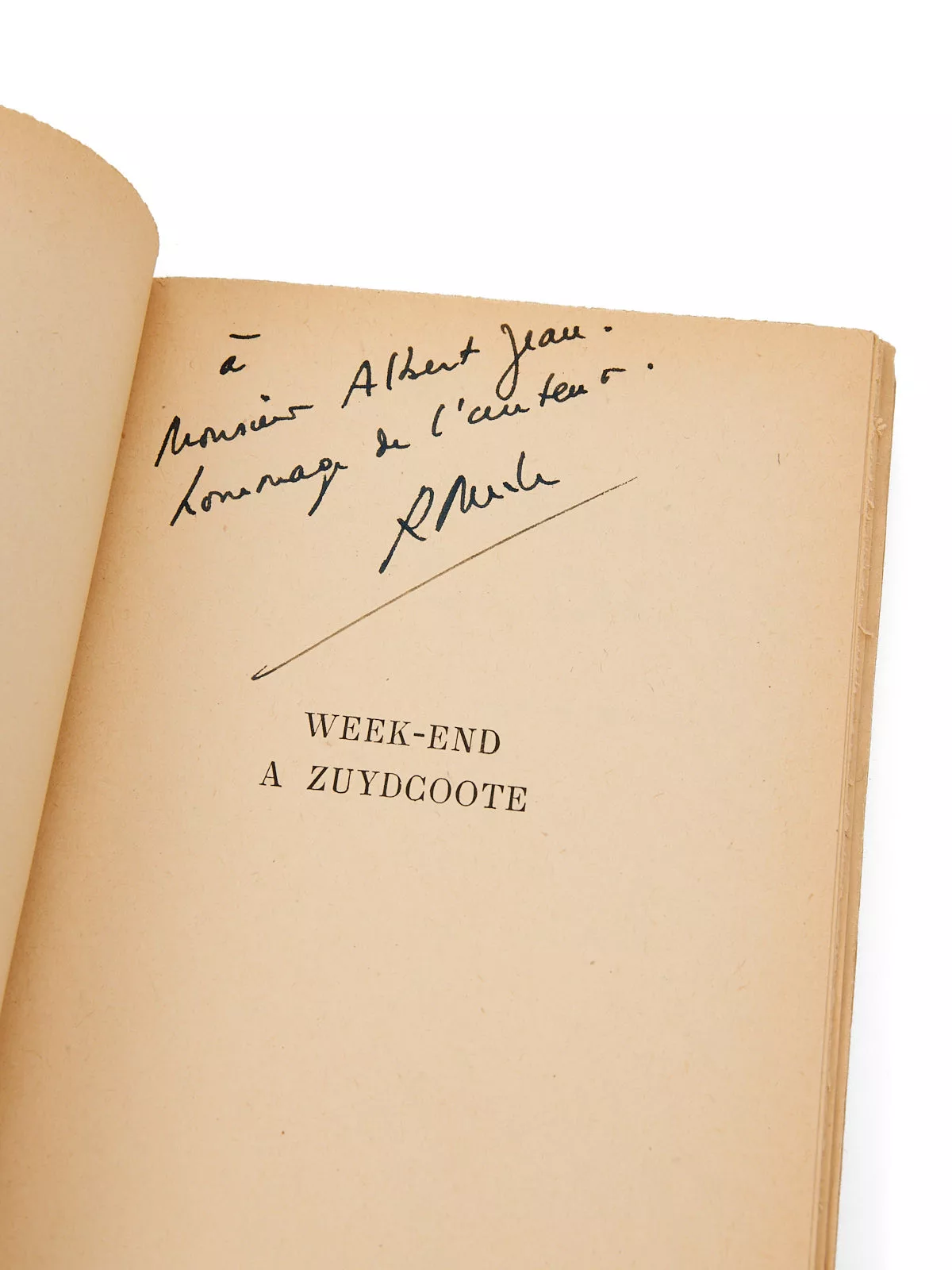
Signed presentation inscription: “à Monsieur Albert Jean, hommage de l'auteur. Robert Merle.”
This first novel launched Robert Merle’s career with immediate acclaim. Its cold, tense realism struck critics and readers alike, drawn from Merle’s own experience as a liaison officer with British forces. He witnessed firsthand the collapse of the French army and the British troops, trapped and encircled near Dunkirk. The only way out was by sea: the retreat to Britain was organized as Operation Dynamo.
Unlike heroic or patriotic accounts of the war, Week-end à Zuydcoote depicts the absurdity of the conflict, the isolation of the individual, and the fragility of moral and emotional bearings in modern warfare. Merle centers the novel on the soldier Julien Maillat, an embodiment of the ordinary man caught in chaos. The book was an immediate success and remains one of the major postwar accounts of the Second World War.
The novel was adapted for the screen in 1964 by Henri Verneuil, with Jean-Paul Belmondo in the lead role, confirming its status as a reference work on the Second World War. A different perspective would be brought to the screen thirty years later in Christopher Nolan’s Dunkirk, which celebrates English patriotism through the bravery of the civilian flotilla that came to rescue the stranded boys under fire. Week-end à Zuydcoote, by contrast, offers no glory and little heroism: antimilitarist and caustic, it shows values and morality as collateral casualties of the debacle, embodied by two soldiers more inclined to rape than to fight. Ironically, the only “enemies” killed by Sergeant Maillat are… French.
A fine press copy. Only 13 deluxe-paper copies were printed, and these are extremely rare.