

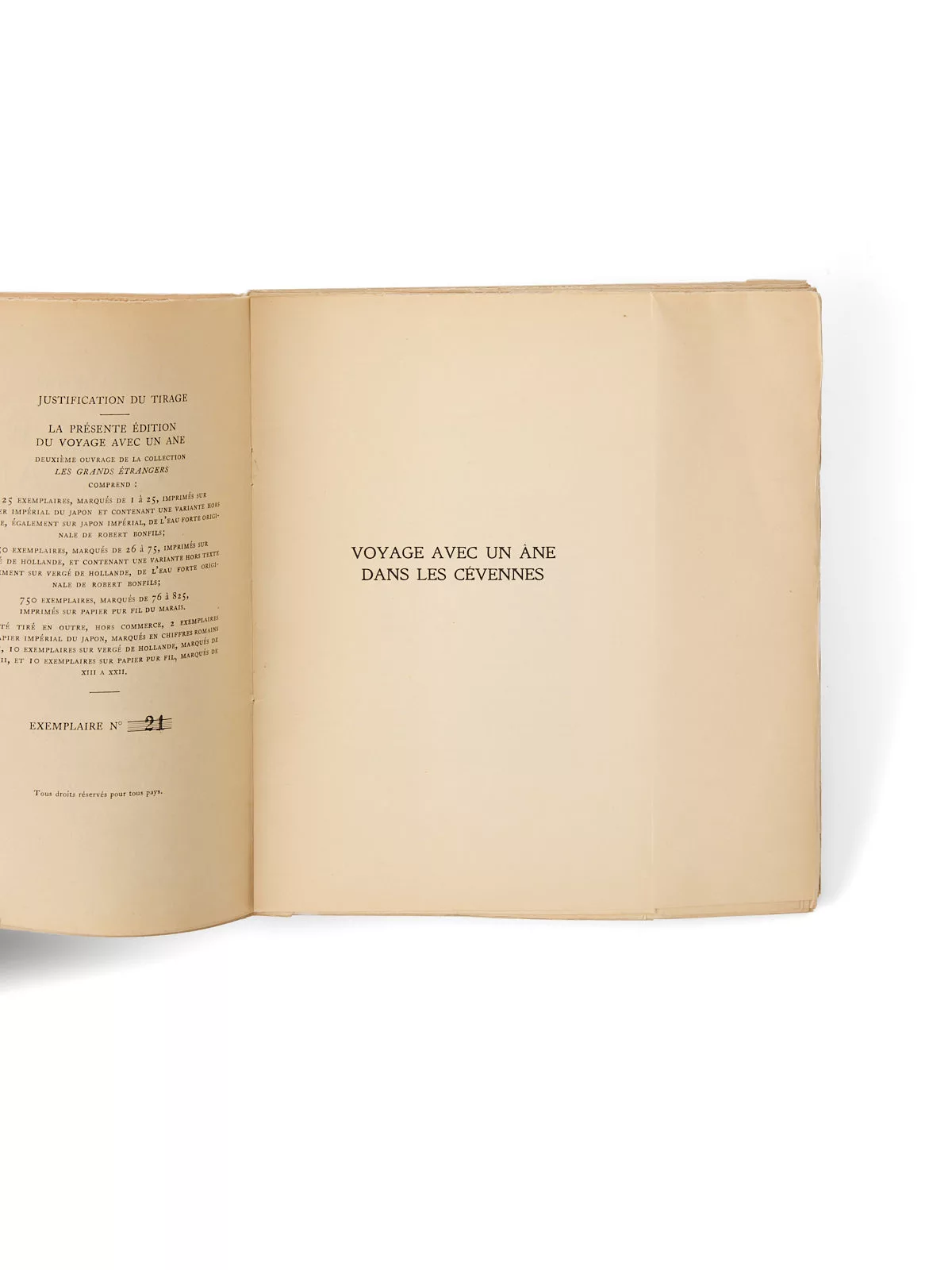
Voyage avec un âne dans les Cévennes
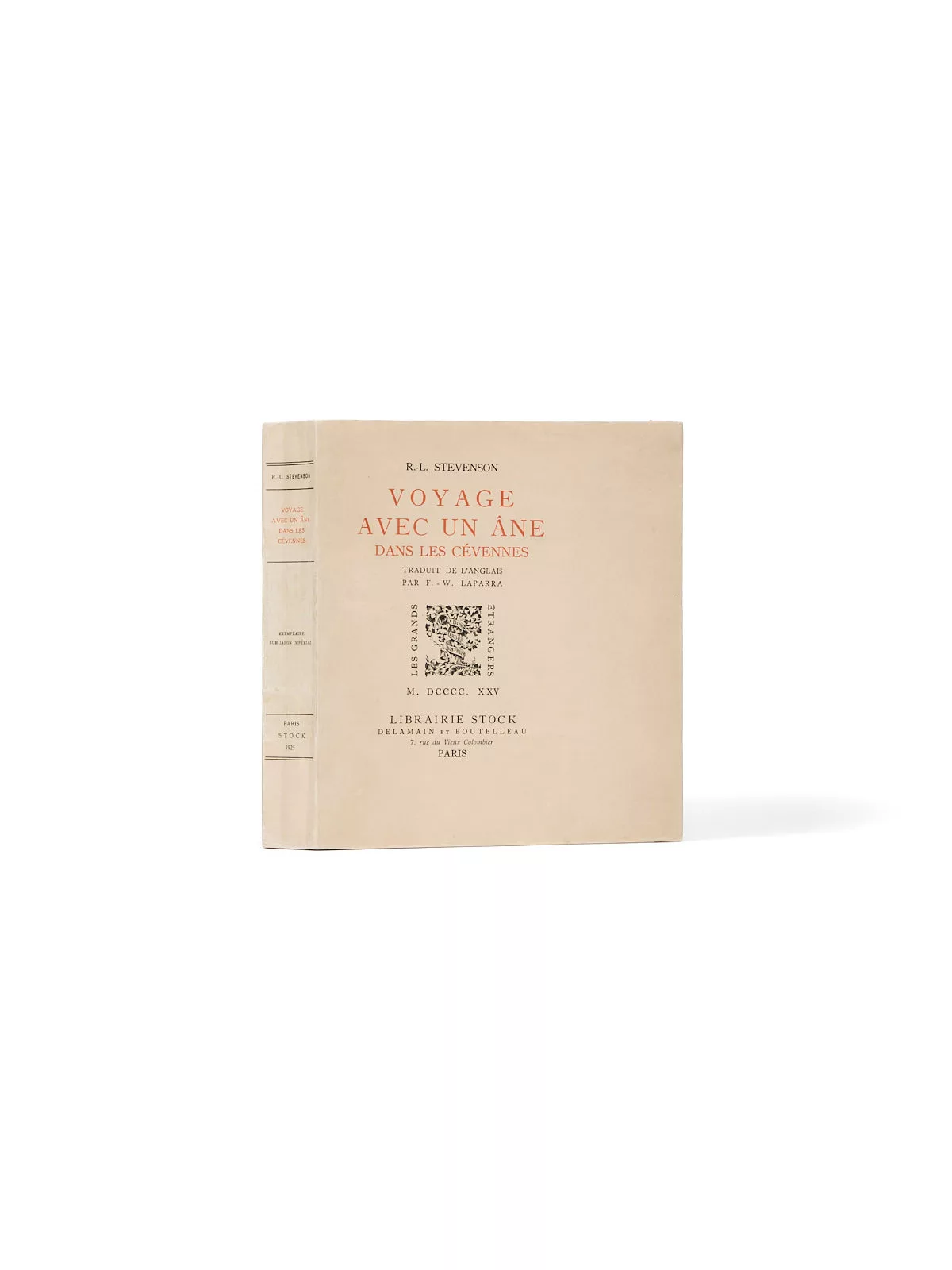
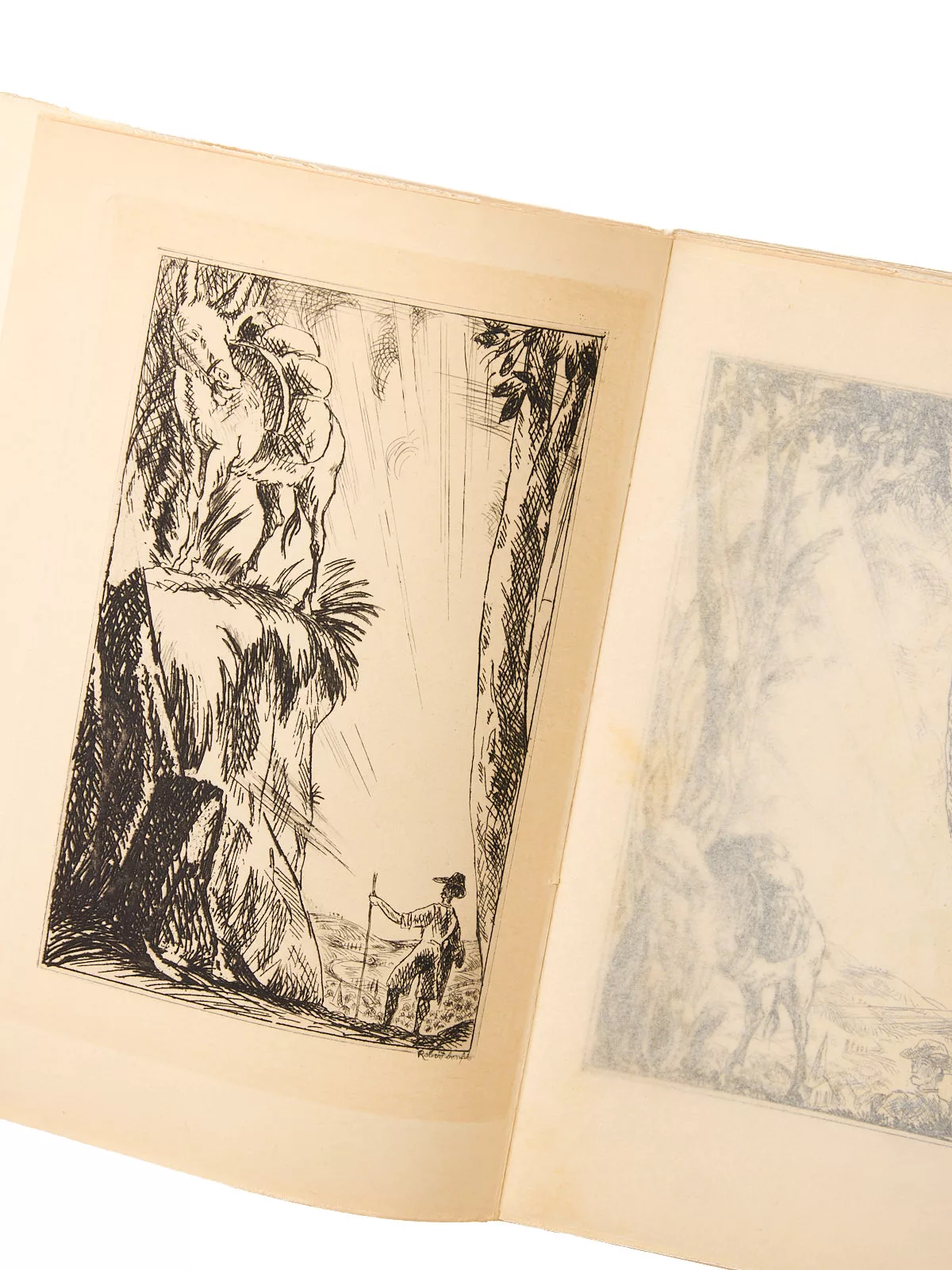
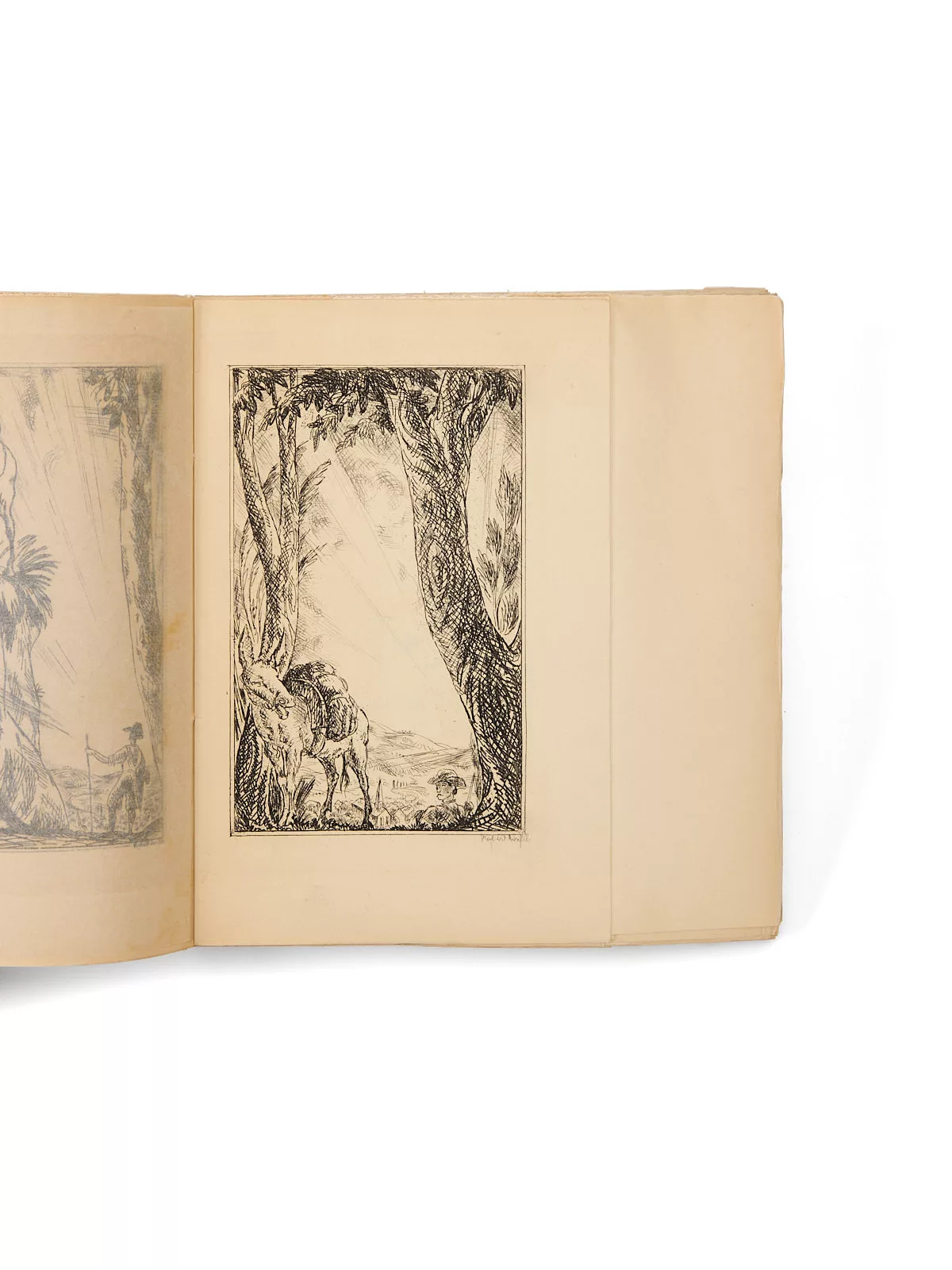
One of 25 deluxe copies on Japanese paper, with a variant of Robert Bonfils's original etching (no. 21).
The reasons that led the young Stevenson — not yet twenty-eight years old — to undertake this solitary journey through the Cévennes seem deeply personal. At the end of summer 1878, Fanny Osbourne, the American artist with whom he had been living for two years, was forced to return to the United States, to a husband she had not yet left.
Wounded by this separation, Stevenson first withdrew to the village of Le Monastier, in Auvergne, the very place where George Sand had gone to nourish the writing of Le Marquis de Villemer, a novel Stevenson particularly admired. But solitude was not enough to ease his grief. On 17 September, he decided to leave: for sixty-five francs and a glass of liqueur, he bought “a diminutive she-ass, not much bigger than a dog, the color of a mouse, with a kindly eye and a determined under-jaw. There was something neat and high-bred about her.”
Told in a light and playful manner, the narrative gradually becomes an initiation — into slowness, into the roughness of the world, into freedom, and into writing itself. Stevenson’s humor, his self-deprecation, and his gift for both topography and introspection shine on every page. Crossing the Cévenol moorland to Saint-Jean-du-Gard, the author encounters the turbulent history of the Camisards, to which he pays vivid tribute throughout what is today called the “chemin Stevenson,” now the GR 70, followed each year by thousands of hikers.
This modern “counter-narrative,” a wandering nourished by erudition, sensitivity and silences, makes Stevenson one of the great precursors of the introspective travel narrative, of which this text is a landmark. The following year he rejoined Fanny, by then divorced, and married her in May 1880, before beginning, the year after, to write Treasure Island.
In French, the text first appeared in a partial publication in 1901 in the Bulletin illustré du Club cévenol, under the title Randonnée dans les Cévennes, followed by a complete translation by Jane Adams Mulholland published by Stock in 1910 — without any deluxe-paper copies.
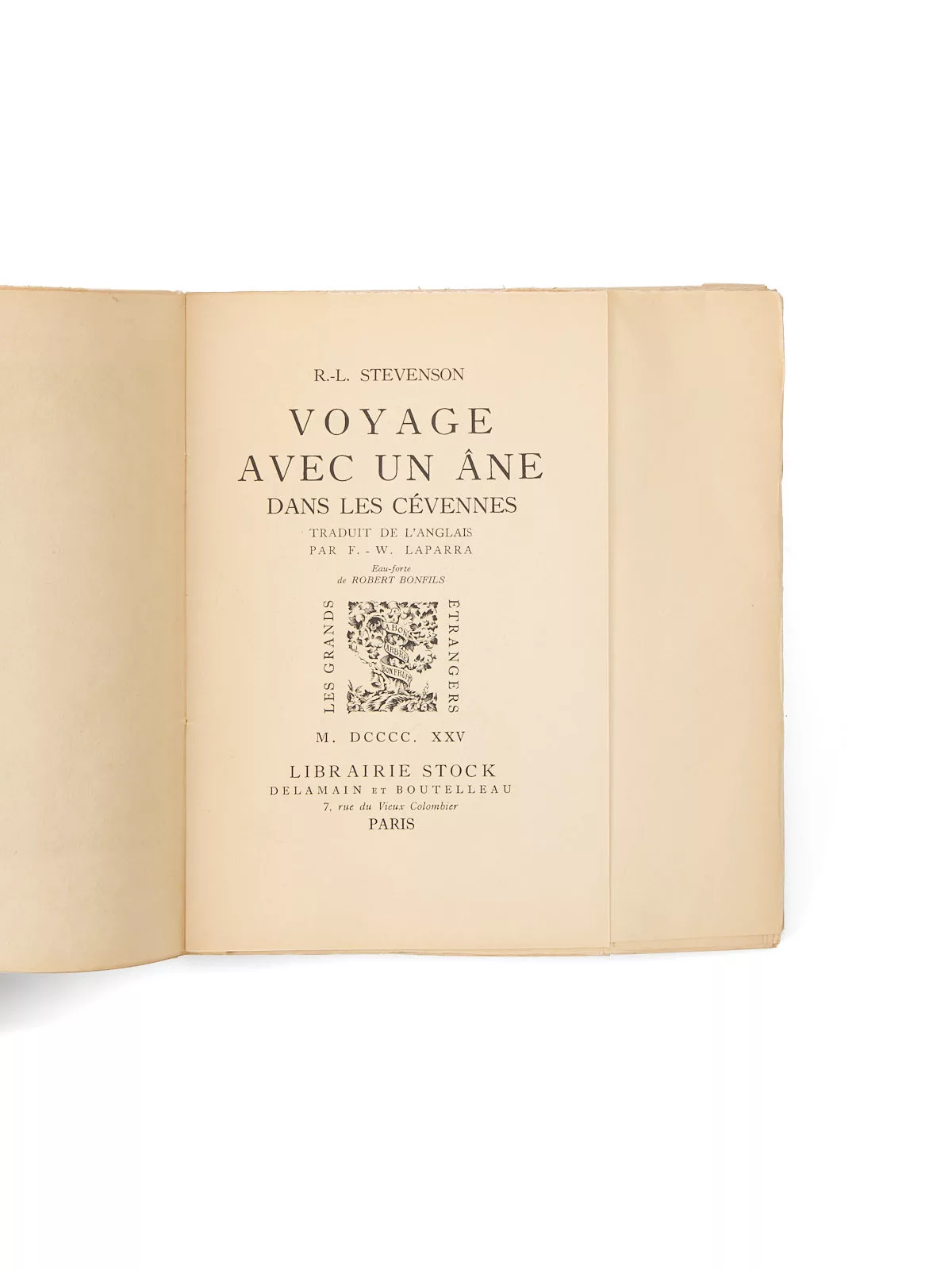
It was not until 1925, on the occasion of its reissue in the fine collection “Les Grands Étrangers,” that the text found new life, with a new translation, more fluent and more faithful, by F.-W. Laparra, which would remain authoritative for decades.
Fine original etching by Robert Bonfils as a frontispiece, printed separately in two variants. The avant-garde illustrator and decorator was then at the height of his renown. In 1946 he would become one of the six founders of the Société de la reliure originale, together with Rose Adler, Jacques Anthoine-Legrain, Paul Bonet, Georges Cretté and Henri Creuzevault.