

Victor Hugo raconté par un témoin de sa vie
Published anonymously, this account of the poet was written by his wife, Adèle Foucher, who had conceived the project some years earlier. In Guernsey, then in Jersey, where she followed Hugo into his forced exile, she carried out what she had promised him: “I want to work during my exile. I want to write the intimate history of your political and literary career. I will add a kind of foreword in which I shall recount your childhood.” Hugo himself had approved and encouraged this biography in the form of memoirs: “Your plan to write about me pleases me greatly. […] and I shall do my best to provide you with the material.”
Sainte-Beuve, once a familiar figure to the Hugos and one of the first readers of this account, expressed his interest to her: “I receive, with a word in your hand, the fine volumes: Victor Hugo raconté par un témoin de sa vie. I begin reading with the interest inspired by both the subject and the witness. I find entirely new facts there, and I rediscover facts I already knew, revived by a lively narrative […]” (17 June 1863).
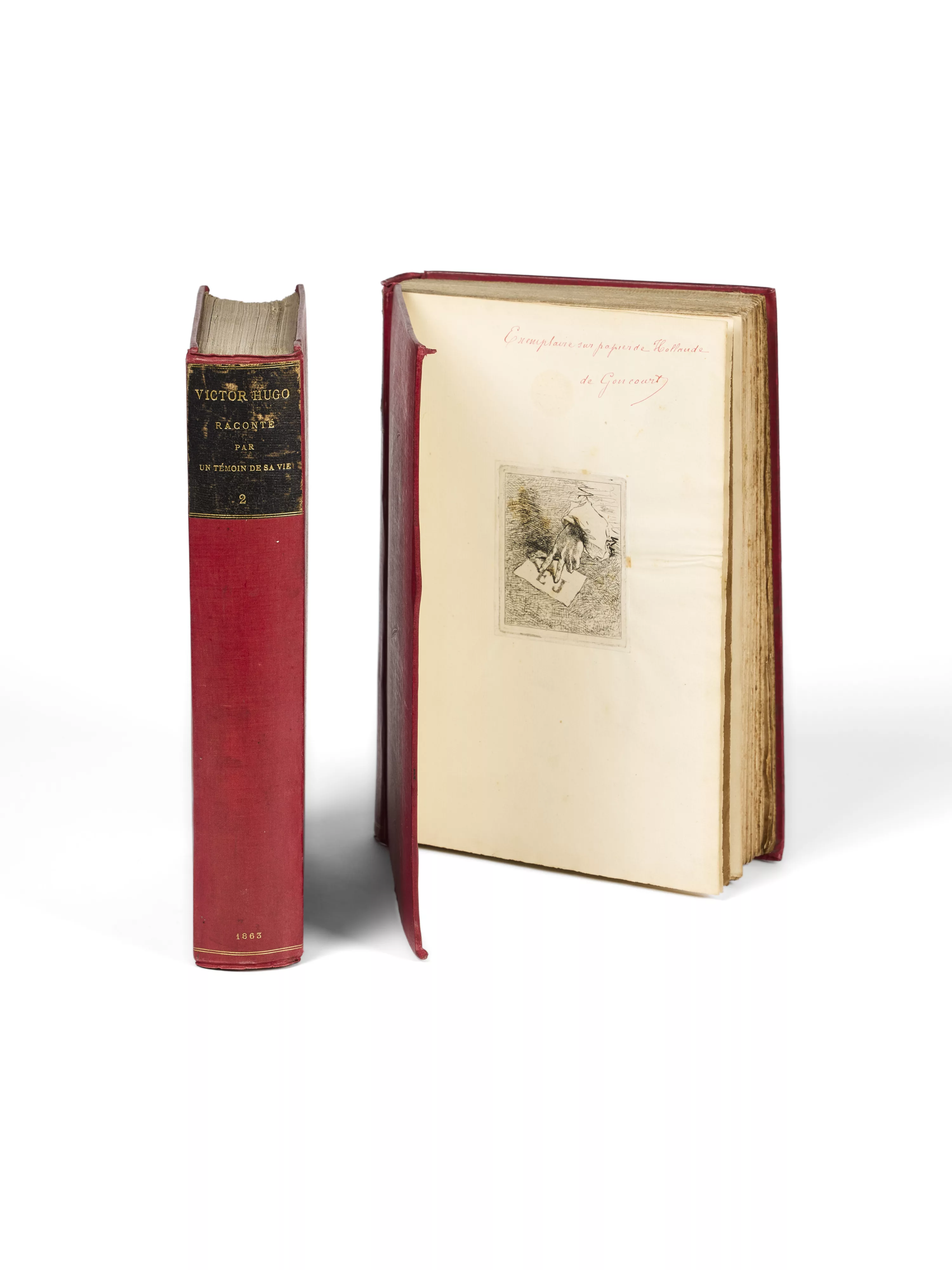
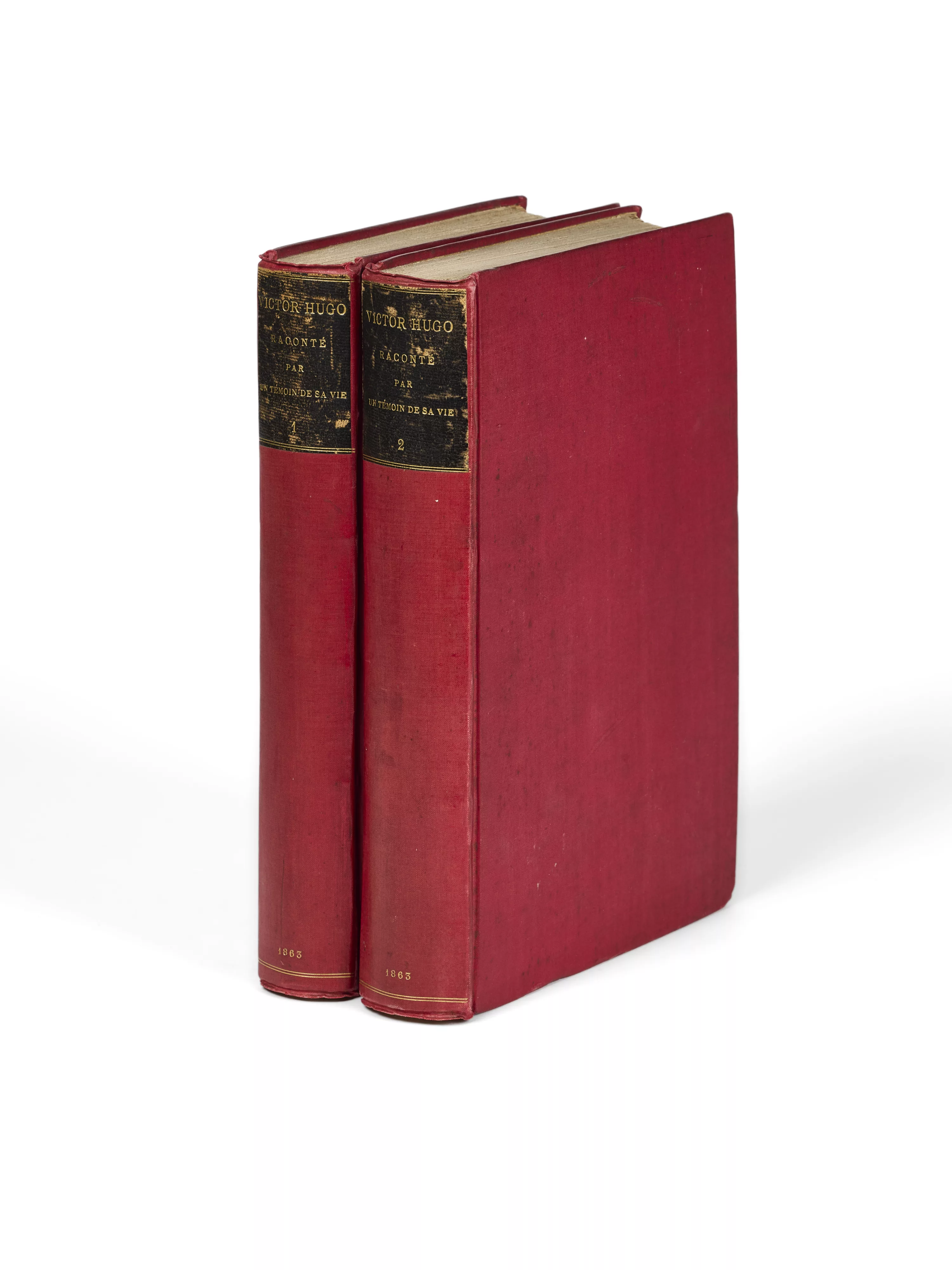
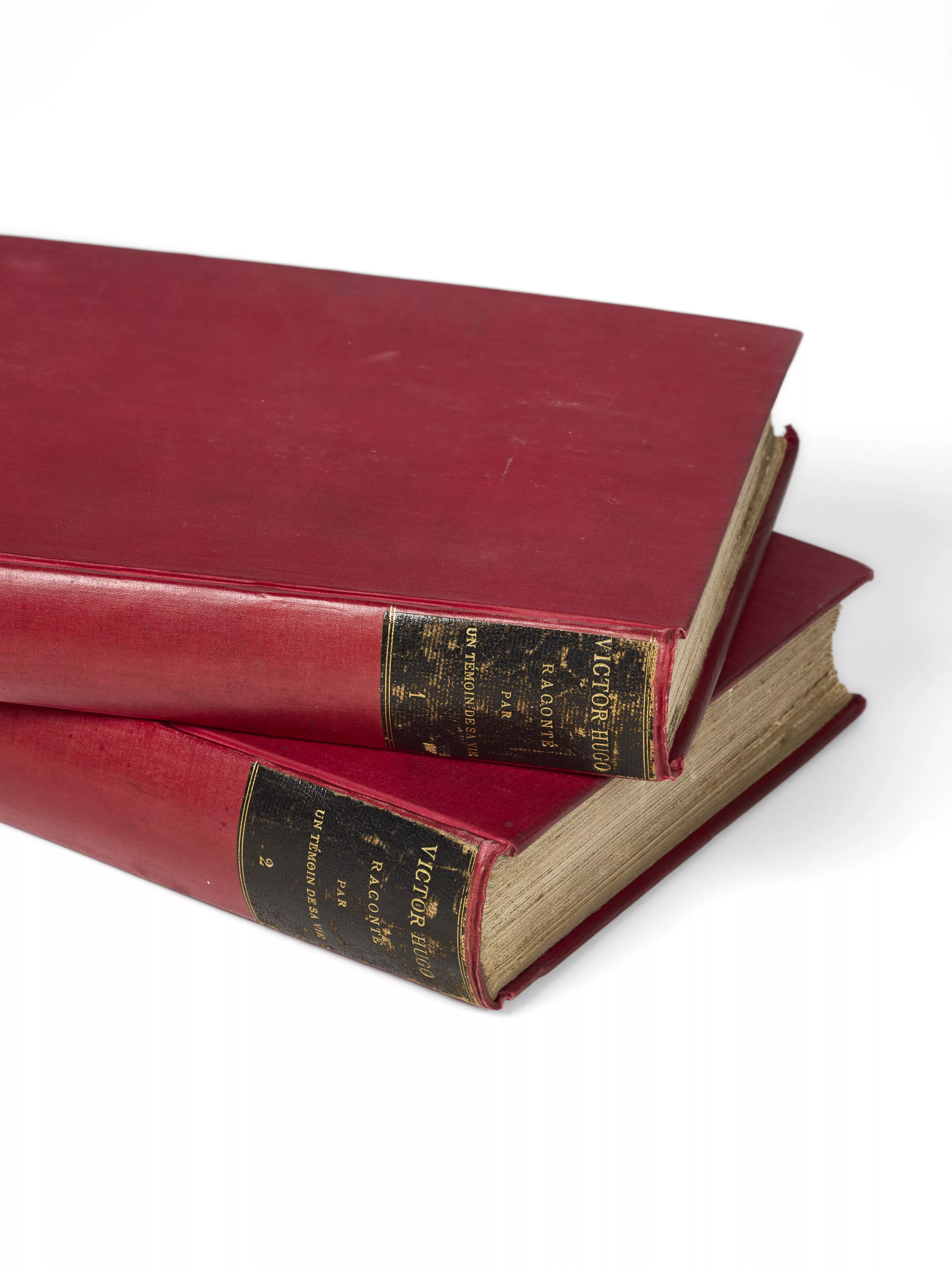
A rare copy on Holland paper, bound by Pierson at the request of the Goncourt brothers. Another copy on this paper is known, the one given by Adèle Hugo to Juliette Drouet (the Barthou copy).