

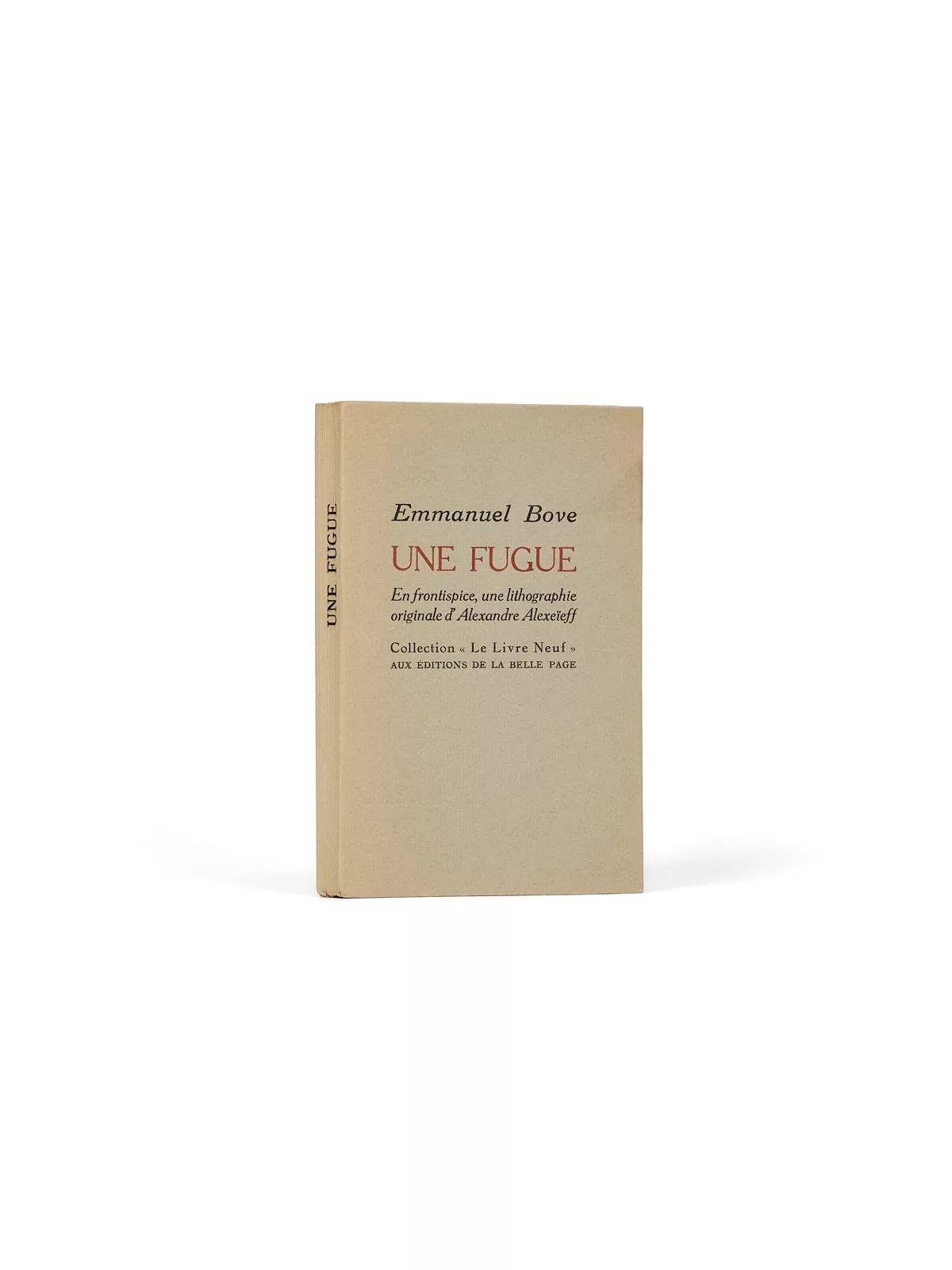
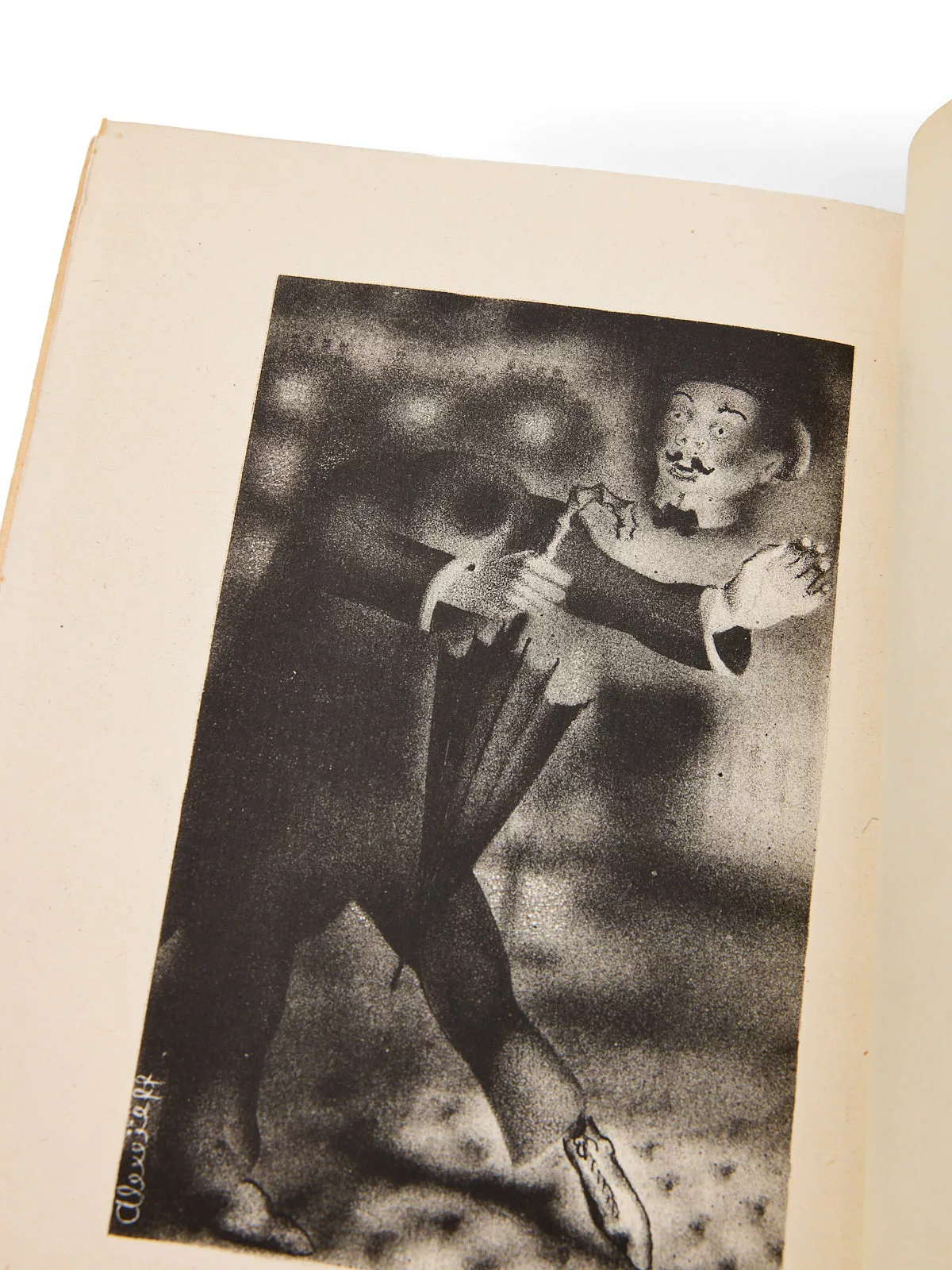
Une fugue
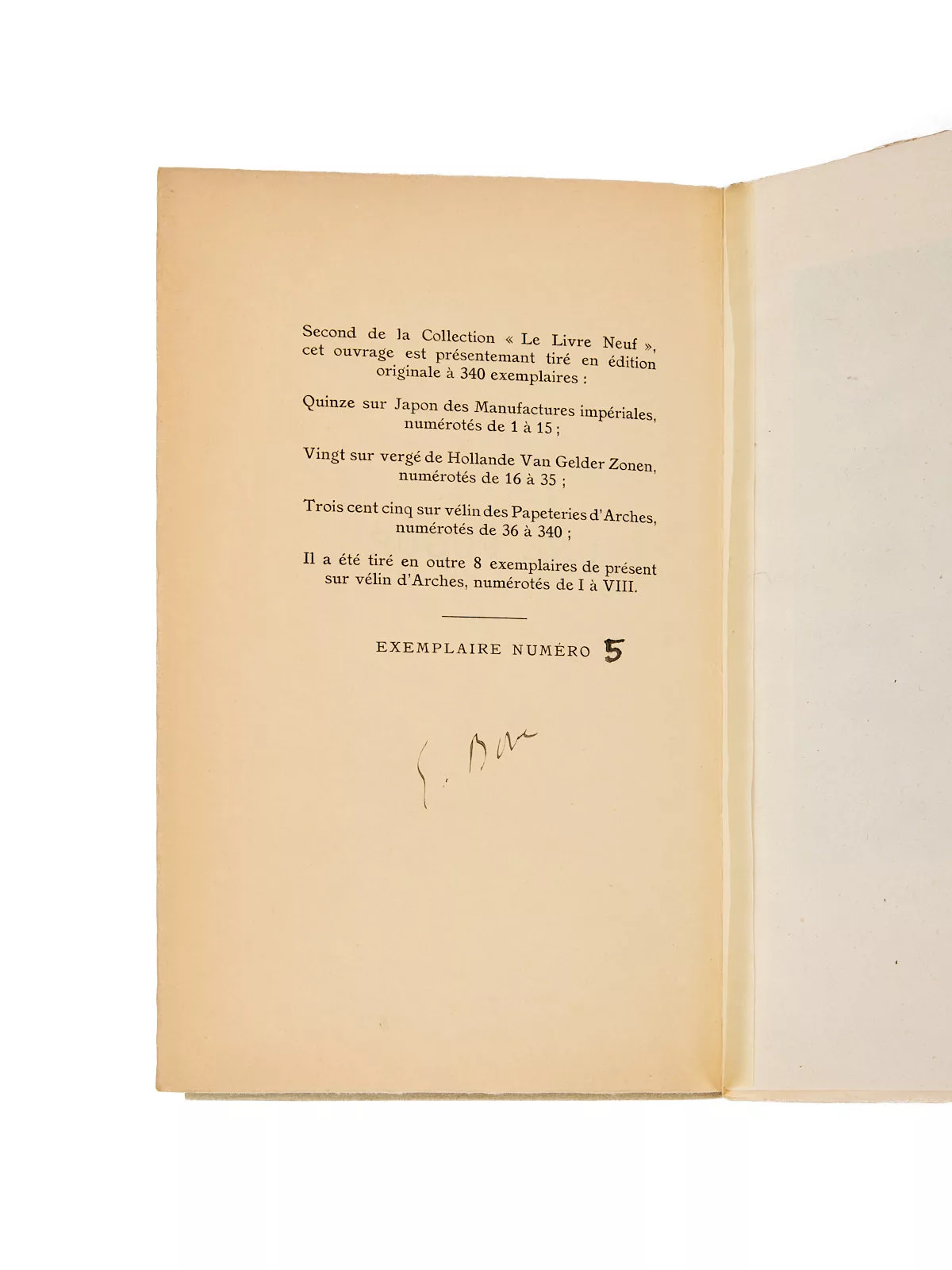
One of 15 copies on Imperial Japan paper, signed by the author, this copy no. 5.
This long short story dates from Emmanuel Bove’s most prolific period, shortly after he met Louise Ottensooser, whom he would marry in 1930. In November he was awarded the Prix Figuière, against 406 (!) other nominees: worth 50,000 francs, it was then one of the most richly endowed literary prizes.
It was thanks to Colette that Emmanuel Bove had returned to literature in 1924, with the publication of Mes Amis. He died at the age of forty-seven, in 1945: “Bove’s world is a sad world, but never a hopeless one, and above all never a ‘base’ one. And why? Because there is, in all of it, a quality of heart that saves everything. He may have chosen mediocre heroes, but he never despised them; perhaps that is the great secret. But heart alone would not be enough. Bove is a marvelous example of what is called intelligence in a novelist: he goes further than the greatest analysts or the greatest stylists. There is something of Proust in this writer so far removed from Proust” (Pierre Bost, in Les Lettres françaises, July 21, 1945).
The website that Jean-Luc Bitton devotes to the man and his work, unjustly neglected, is well worth consulting (www.emmanuel-bove.net).