

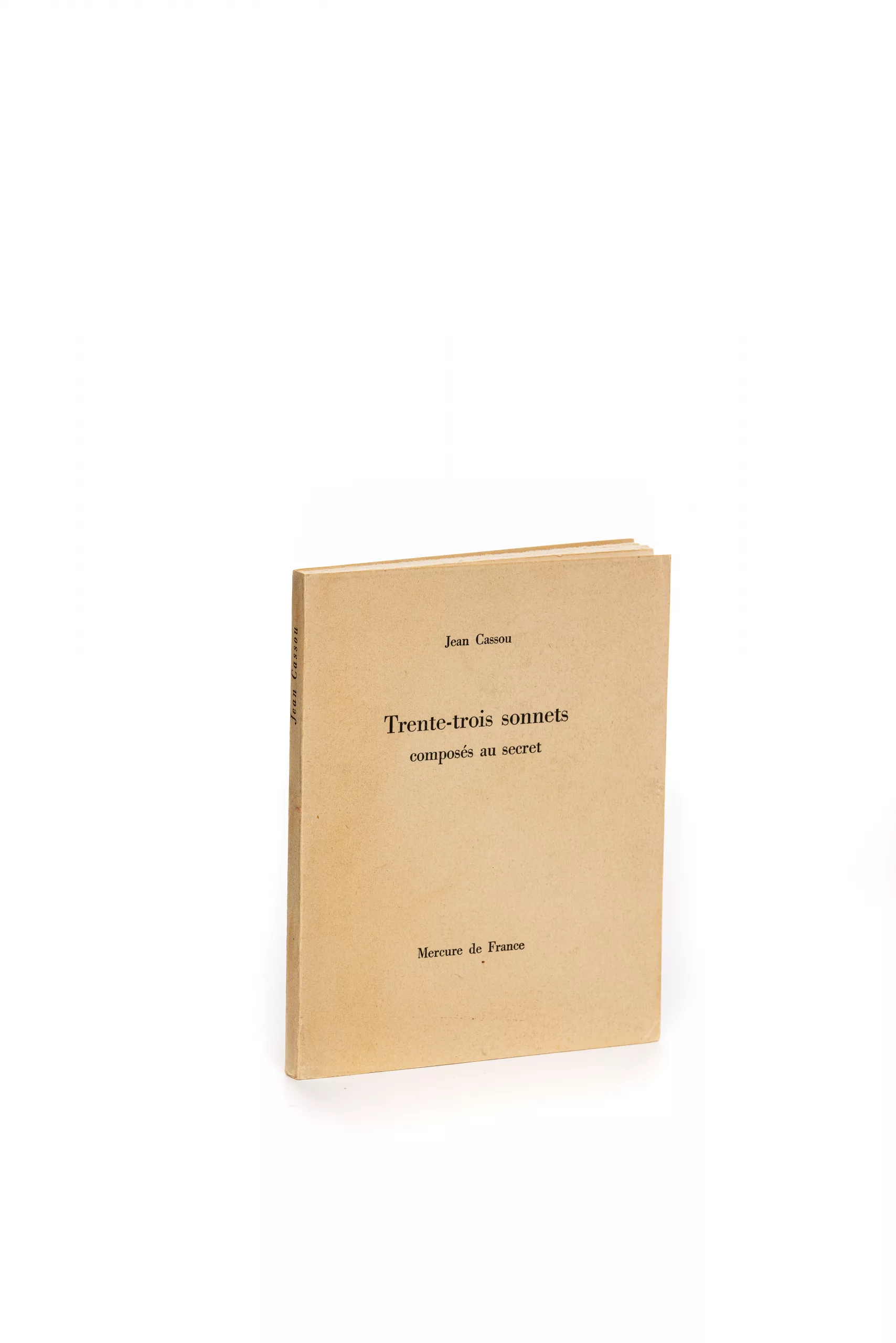
Trente-trois sonnets composés au secret
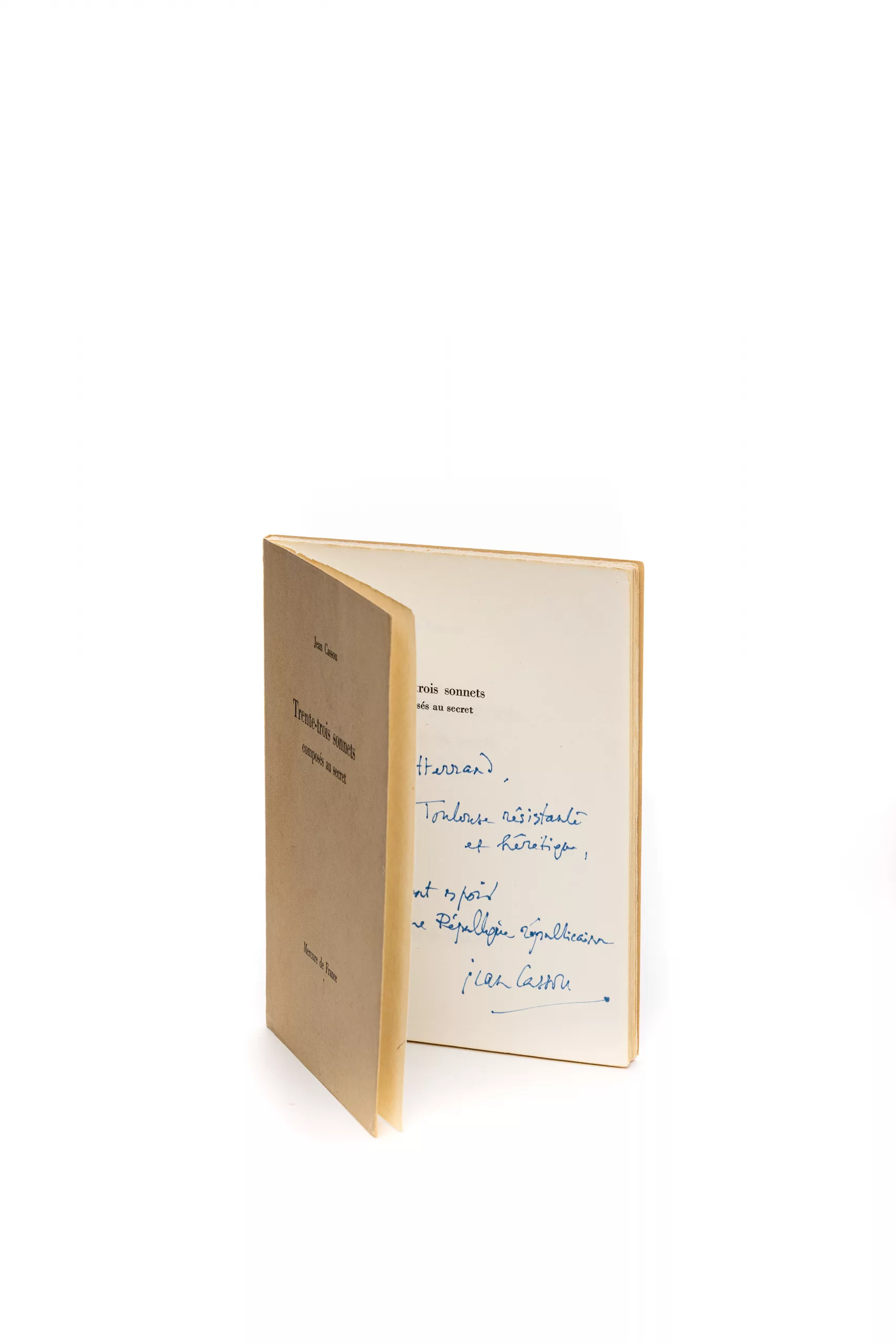
Signed presentation inscription: “à François Mitterrand, en souvenir de Toulouse résistante et hérétique, et dans l'ardent espoir d'une République républicaine, Jean Cassou.”
First edition under the author’s real name of this collection, composed in prison during the winter of 1941–1942, first published clandestinely in 1944 under the pseudonym Jean Noir, by Minuit. The present edition is the first to appear under the name of Jean Cassou, writer, art historian and Resistance figure, one of the principal architects of the intellectual Resistance in the Midi.
The collection opens with a note by the author, striking in its bareness and lucidity, in which Cassou recalls the circumstances of its composition:
“I was arrested in Toulouse by the Vichy police for ‘undermining the security of the State,’ that is, for patriotic activity, in December 1941, and held in solitary confinement at the military prison. (…) Lying on my straw mattress, in my overcoat, my scarf, my gloves, my shoes, I felt like a passive block, the mummy, the Osiris sent into the night. (…) I slept very little because of the cold: so I occupied myself with poetic exercises, reciting from memory the sonnets already composed, correcting them, completing them. (…) After nearly three months, that made thirty-three sonnets.”
Composed without pencil or paper, the thirty-three sonnets were memorized in darkness before being transcribed at the Liberation. The first edition, published clandestinely in 1944, carried a preface by François la Colère, a pseudonym of Louis Aragon.
In 1962, François Mitterrand was both an experienced parliamentarian and a figure of opposition to Gaullist power, vigorously opposing the referendum on the direct election of the President by universal suffrage. It was in this context that he received this copy from the hands of Jean Cassou, who, though he embodied a different strand of French socialism, here offers words that echo Mitterrand’s own struggle against the concentration of power, the phrase “République républicaine” taking on a distinct political and moral resonance here.