

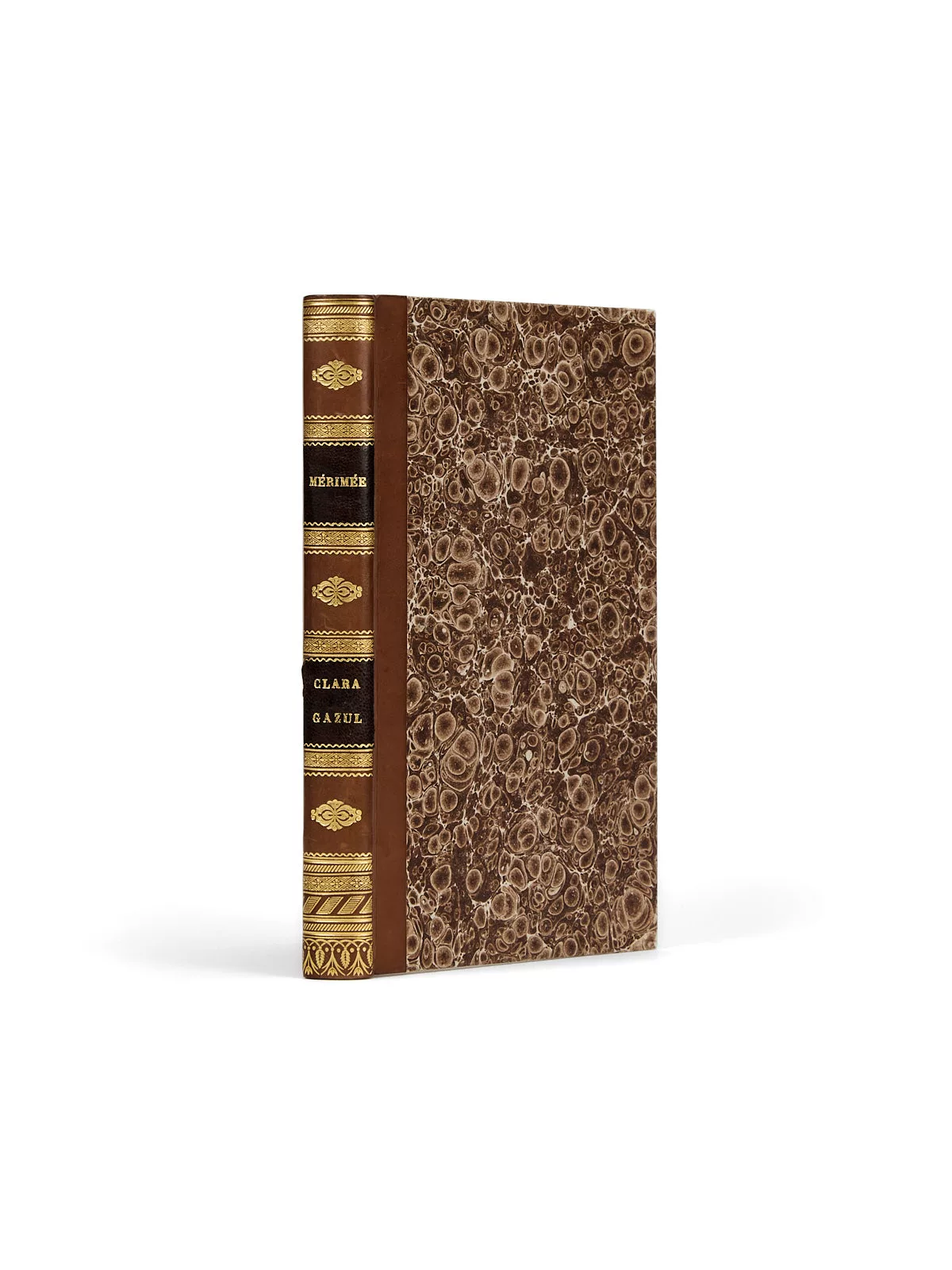
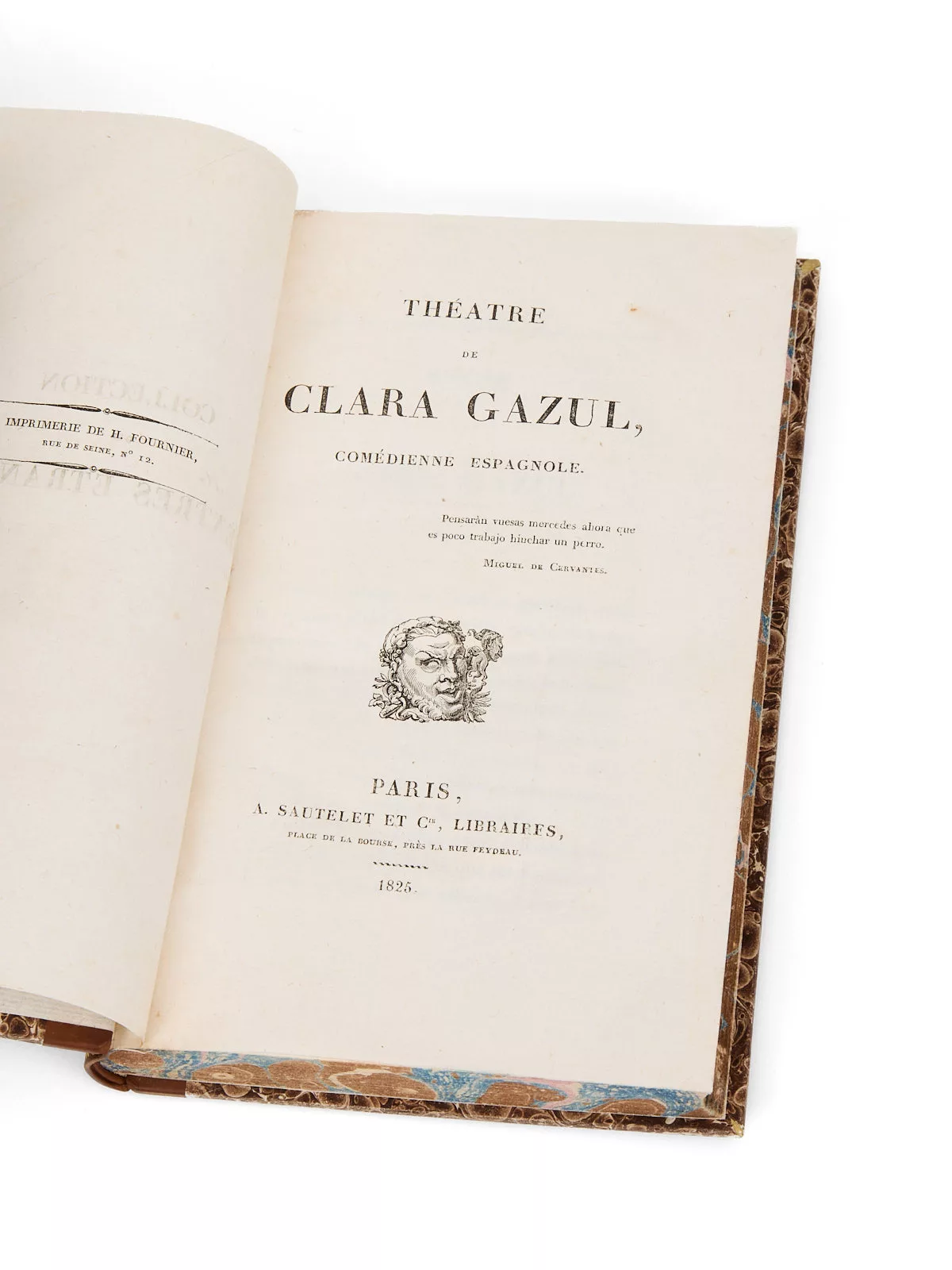
Preface by the author, signed under the pseudonym Joseph Lestrange.
Under the pseudonym Joseph Lestrange, Mérimée presented himself as the translator of plays by a certain Clara Gazul, an actress. This small literary hoax caused a sensation and opened the way to the author’s success.
When this collection of six plays appeared, the future author of Carmen knew Spain only through his reading and his imagination. On 27 June 1830, Mérimée undertook his first journey to Spain, whose precise itinerary is known from his correspondence (Bordeaux, Bayonne, Irún, Astigarraga, Vitoria, Burgos… Córdoba, Seville, Cádiz, Algeciras, Granada). On his return journey he met a figure of lasting importance for his later work, Don Cipriano Guzmán Palafox y Portocarrero, the future Count of Montijo. He was invited to stay with this Spanish family, whose youngest daughter, Eugénie, would later become the wife of Napoleon III. For his later novels set on the Iberian peninsula, Mérimée repeatedly drew on the Countess of Montijo, whose literary and historical knowledge proved invaluable to him. Twenty years after Clara Gazul, Mérimée would write his masterpiece, Carmen.
This copy lacks the frontispiece portrait of Mérimée, of which only about fifty were printed and bound in wrappers with the first 50 copies.