

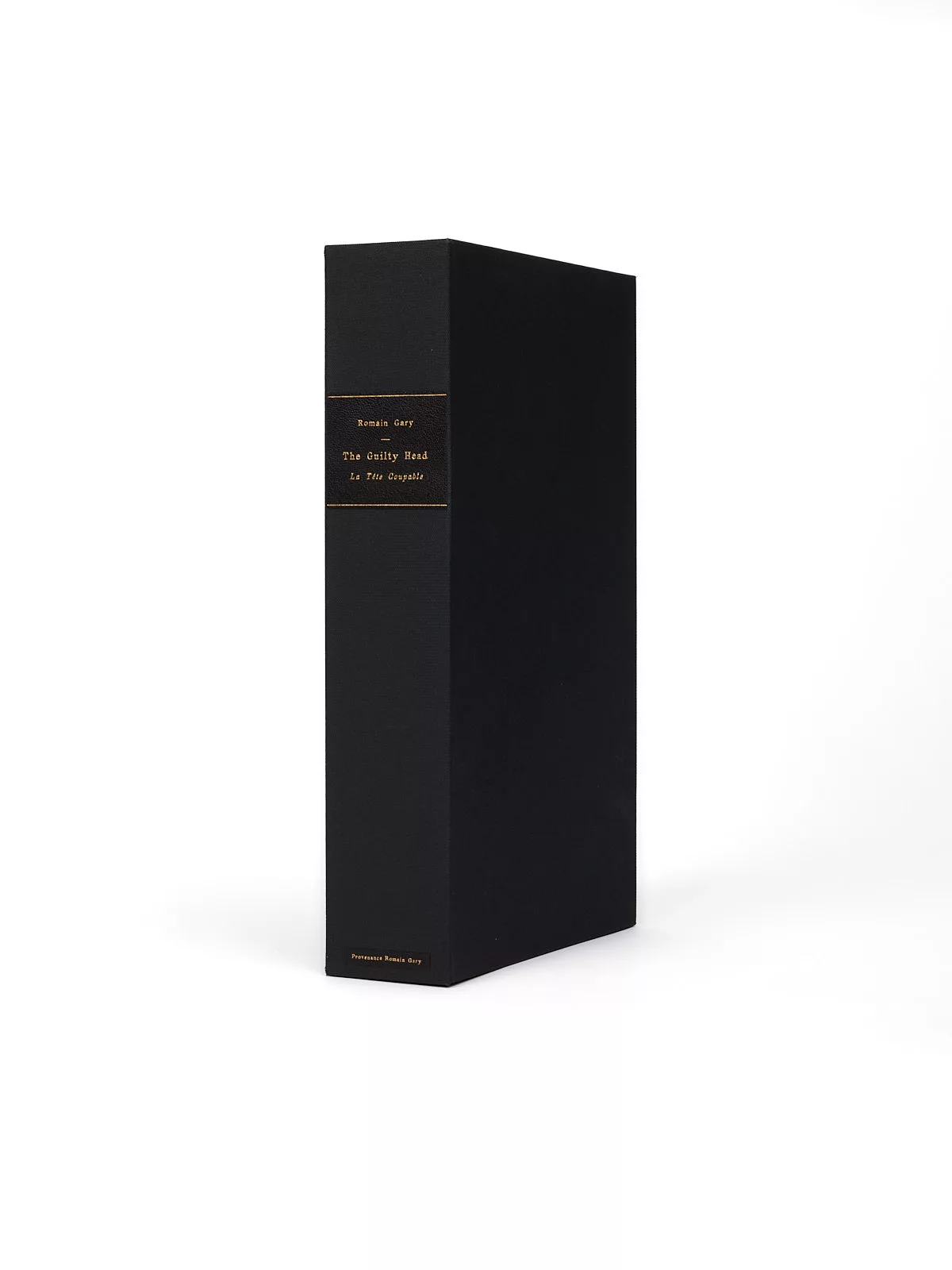
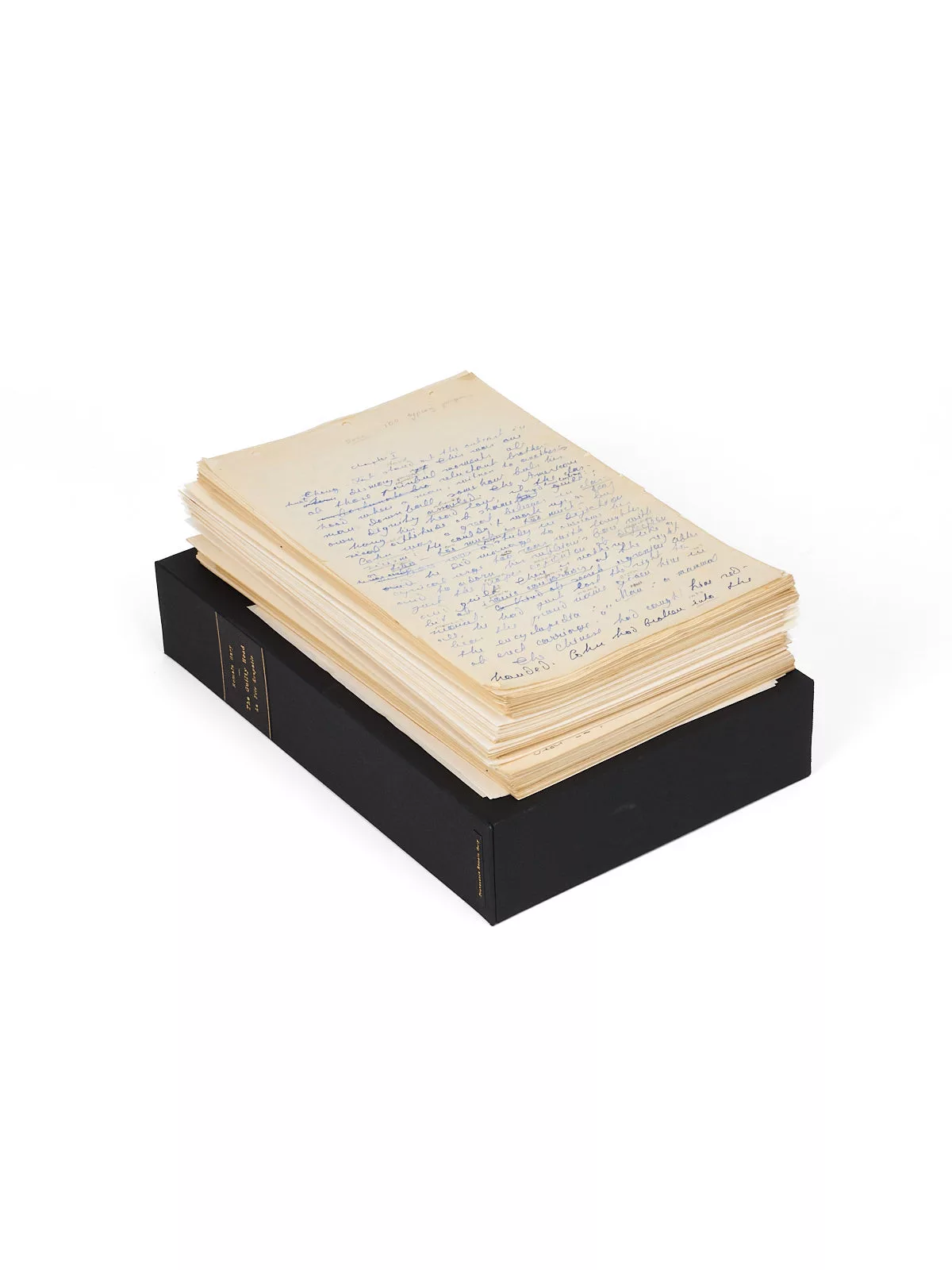
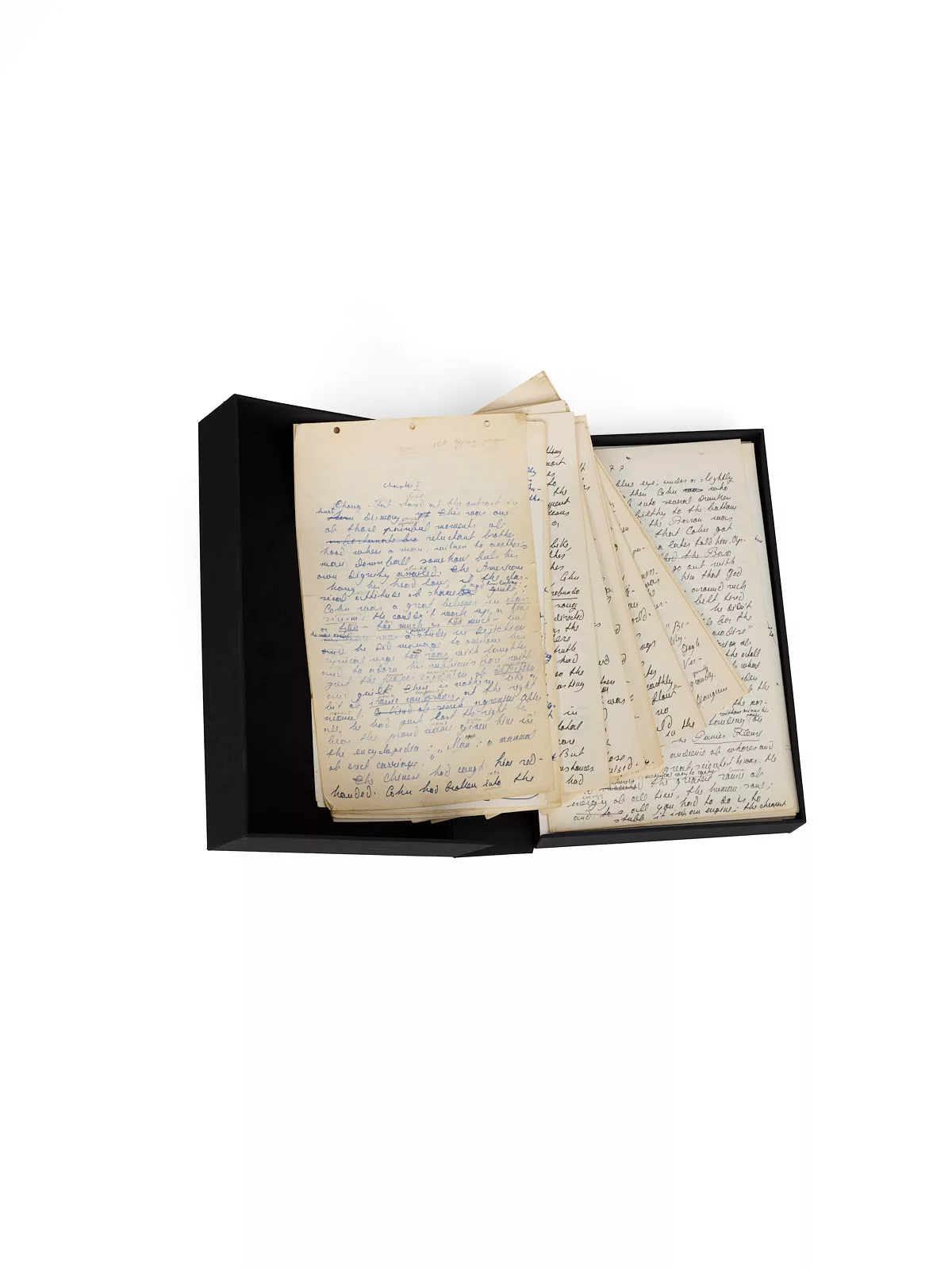
Romain Gary wrote at least part of this novel directly in English; it was not published in the United States until 1969, but the two versions appear to have been worked on concurrently, although the French version was probably completed before the American one.
Accompanied by the American first edition (New York & Cleveland, World Publishing Company, 1969), first printing.
Gary is said to have conceived this book during a trip to Tahiti in September 1958. It follows Marc Mathieu, a French scientist behind France’s H-bomb, who hides in Tahiti under the name Cohn, posing as a painter. He is hunted by every secret service in the world, all seeking to seize or eliminate him.
La Tête coupable allowed Gary to indulge his favorite new game: hidden identities. Cohn is really Mathieu; his companion, the beautiful vahiné Meeva, turns out to be a young German woman named Liebchen (“little love”); and the Dominican priest Tamil is in fact a French secret service agent. Innocence has vanished from the earth: stripped of its identity, the island is no longer the expected paradise but a vast Disneyland exploited by international tourism, even trading on the myth of Paul Gauguin to attract visitors. As Claude Leroy writes, the novel is a perpetual dance of truth and falsehood, populated by swindlers, braggarts, hypocrites, impostors, forgers, charlatans, seducers, tricksters, double and triple agents, and mythomaniacs of every kind: the most typical vahiné turns out to be a German who studied ethnology in Tübingen, the Maoris are of Chinese origin and speak with a Corsican accent, and the boatmen’s songs were composed for a film.
In its French version, La Tête coupable is presented as the third volume of the Frère Océan cycle, begun with Pour Sganarelle and continued in La Danse de Gengis Cohn. In La nuit sera calme, Gary announces his intention to change the book’s title to La Tête coupable, having earlier considered “Les Années lumières,” “Le Remords” or “La Maison du jouir” (the name Gauguin gave his house in Tahiti).