

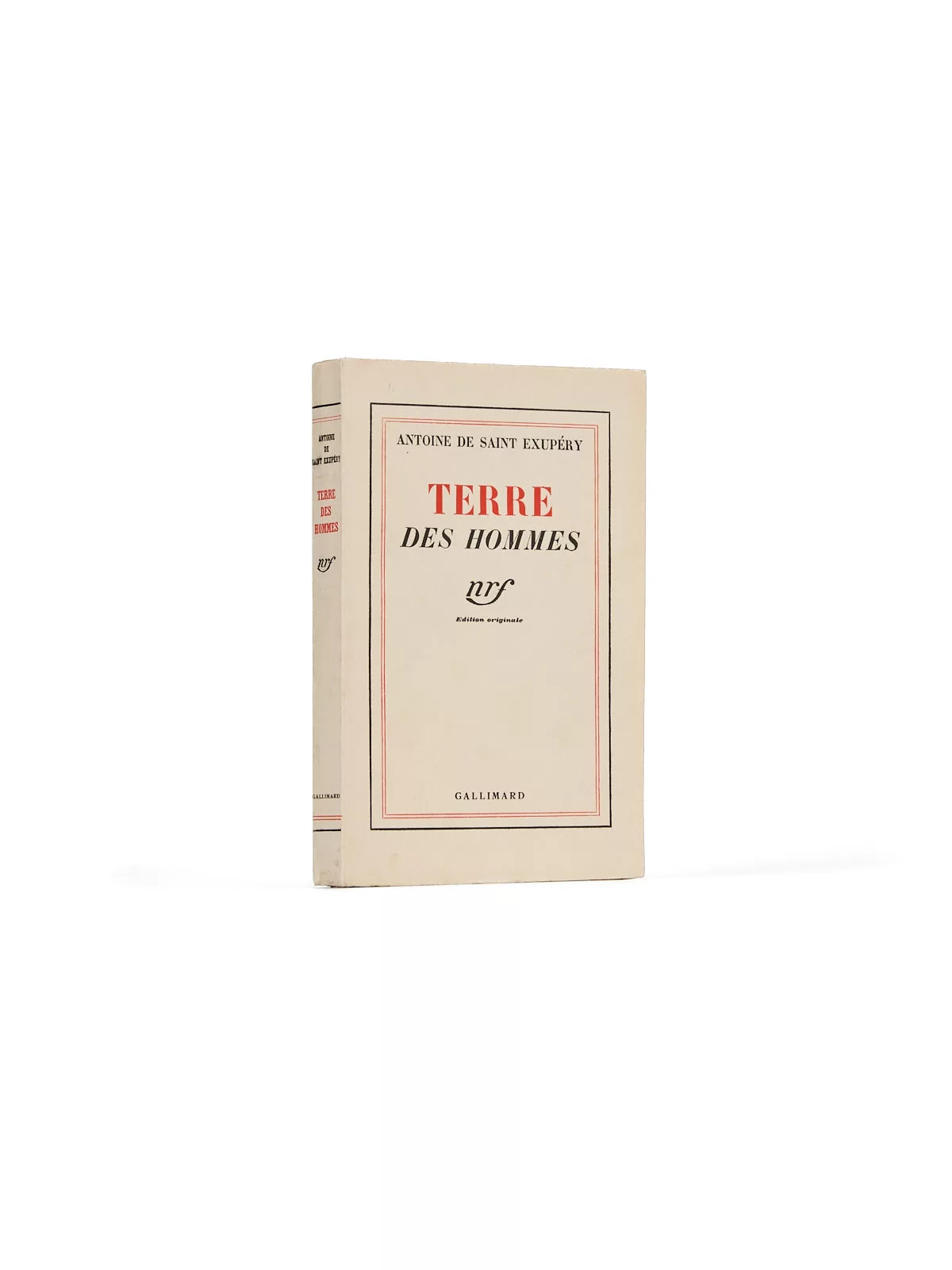
Terre des hommes
One of 130 copies on vélin pur fil (no. 60).
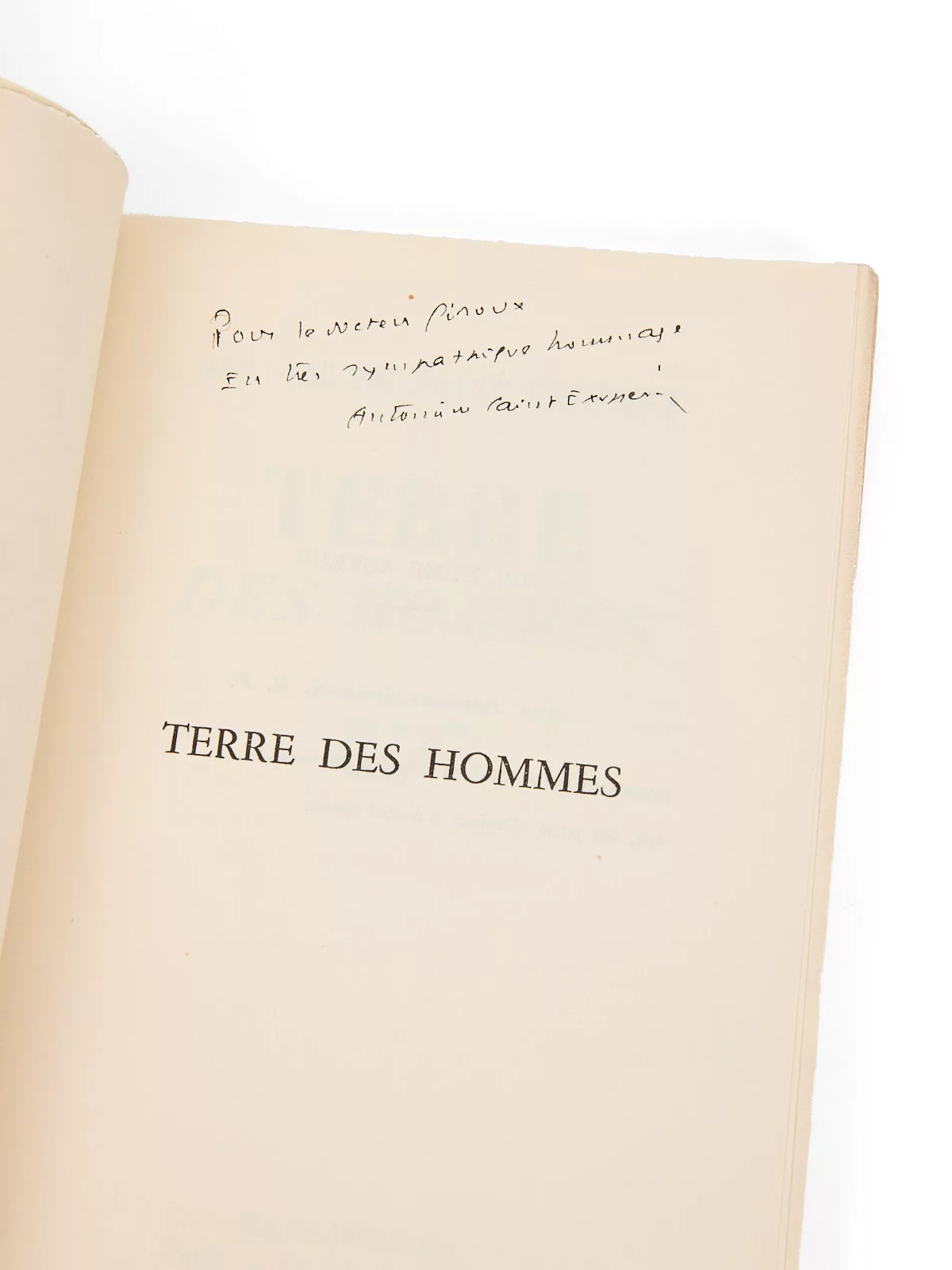
Signed presentation inscription: “pour le docteur Giroux, en très sympathique hommage, Antoine de Saint-Exupéry.”
Saint-Exupéry first arrived in the United States in January 1938, hoping to attempt the New York–Tierra del Fuego flight. He already enjoyed a solid reputation there thanks to the translations of Vol de nuit (Night Flight) in 1932 and Courrier Sud (Southern Mail) in 1933. He already had in mind his next book, then provisionally titled “Étoiles par grand vent,” a collection of scattered pieces previously published in the weekly and daily press, from Marianne (1932–1934), La NRF (1933), Air France Revue (1935), Minotaure (1935), L’Intransigeant (1936–37) and Paris-Soir (1936–1938), all of which he decided to gather in full. This unusual genesis says much about the changing status of the writer between the wars, and about the shifting range of outlets available to bring even reportage to the attention of readers.
Maximilien Becker became his literary agent and had him sign a contract. His American publishers had also engaged Lewis Galantière to translate the forthcoming book: an extensive correspondence developed between the two men during the composition of what would become Terre des hommes / Wind, Sand and Stars, the two versions being written almost simultaneously.
The French edition was published in February 1939, the American edition in June. Saint-Exupéry left the choice of the New York title to his publishers, suggesting two titles he had abandoned for Terre des hommes: “Étoiles par grand vent” and “Grand vent sous les étoiles.” Galantière ultimately chose Wind, Sand and Stars, taken from a passage in the book. The American edition also contains an additional chapter, “Les Éléments.”
Only two typescripts are known: one at the BnF, the other given to the printer and later presented to Jean Artur (Ventes Aristophil, 35, November 2020, no. 426).
Terre des hommes won the Grand Prix du roman of the Académie française and the National Book Award in the United States — a success that has never faded. Yet despite these prestigious honors, Saint-Exupéry considered the finest tribute to be the gift made by the workers of the Lagny-sur-Marne printing house: a unique copy printed on airplane canvas.
A fine copy in wrappers, with an inscription: a rare combination.