

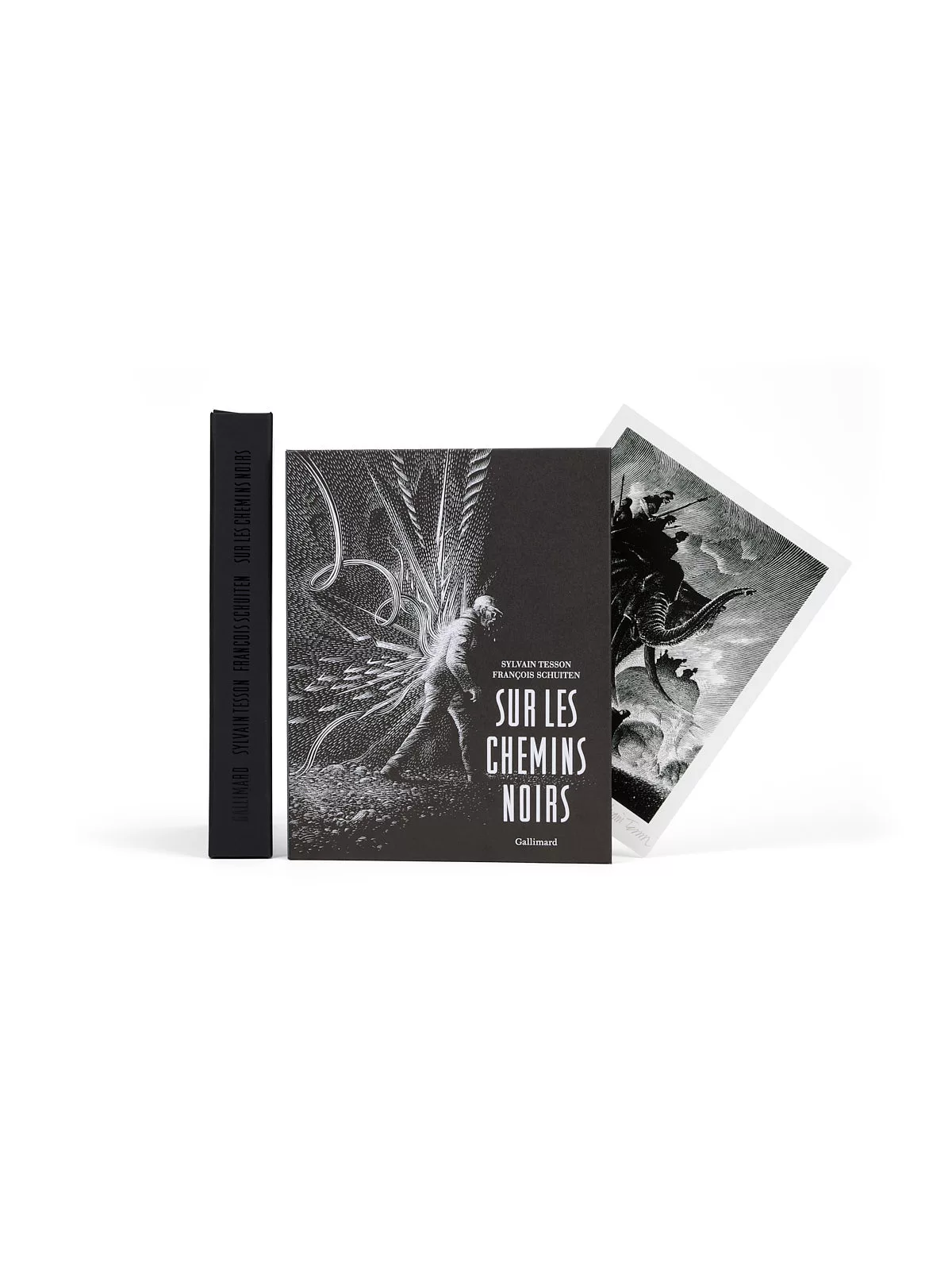
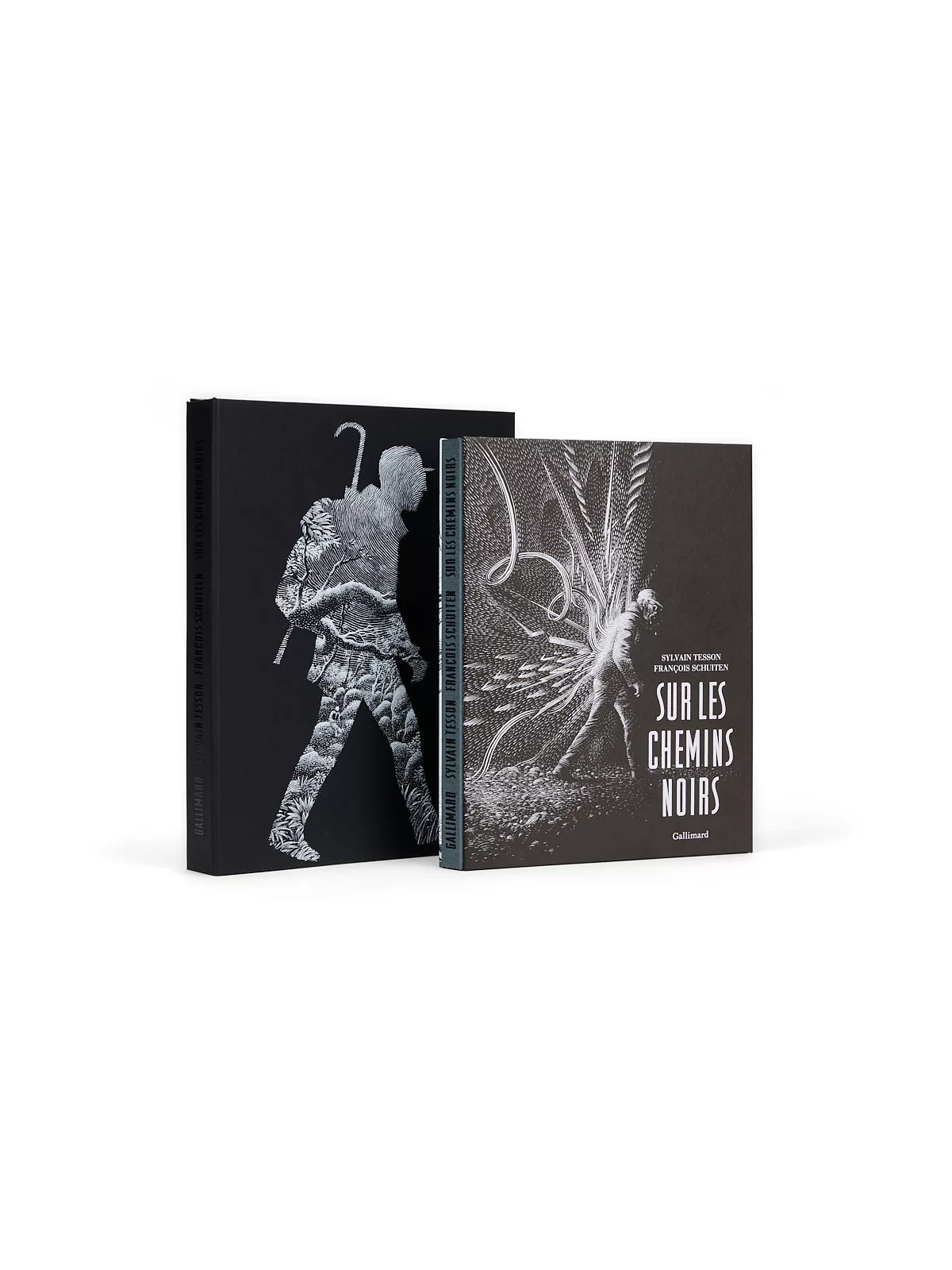
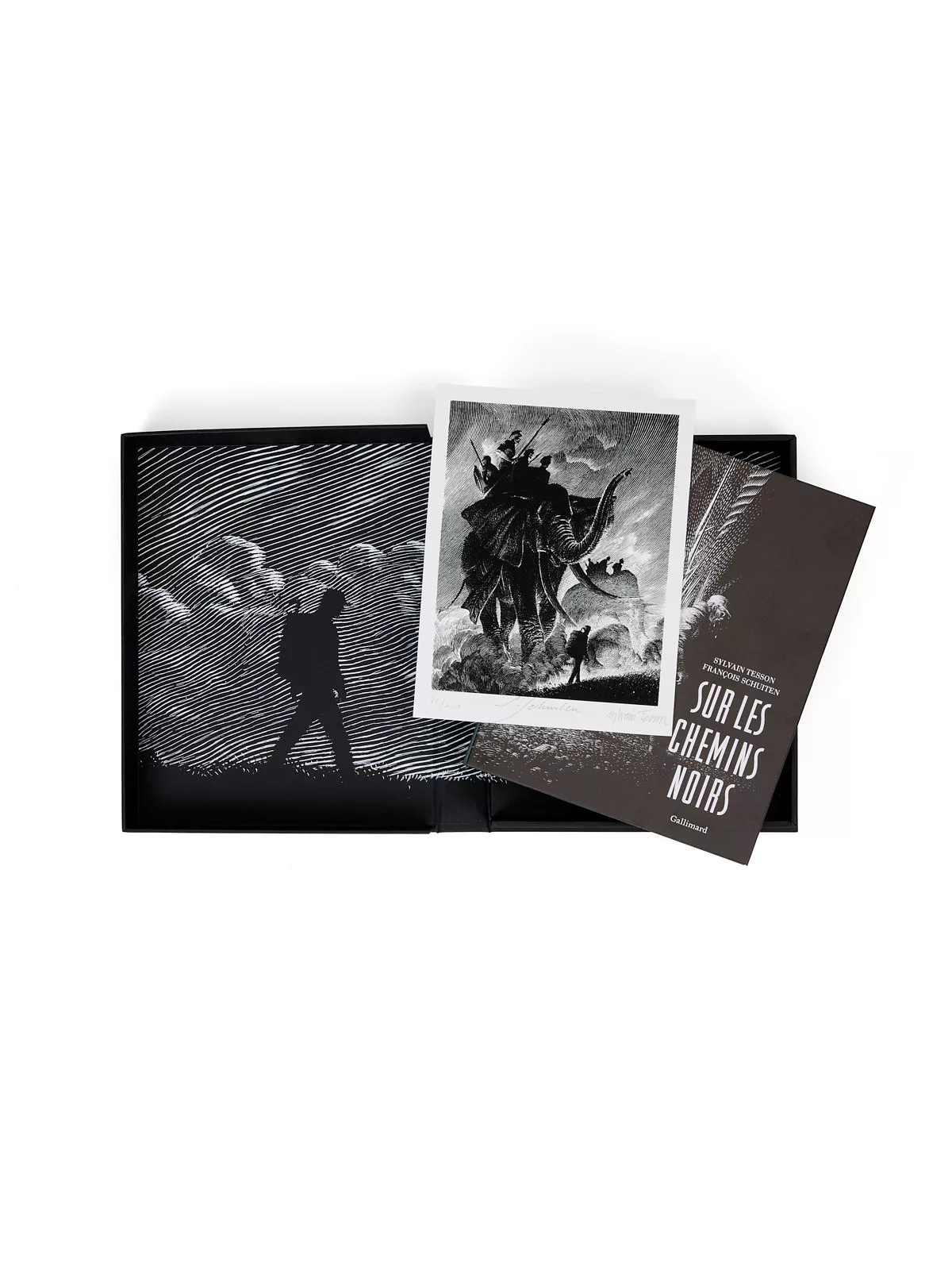
Sur les chemins noirs
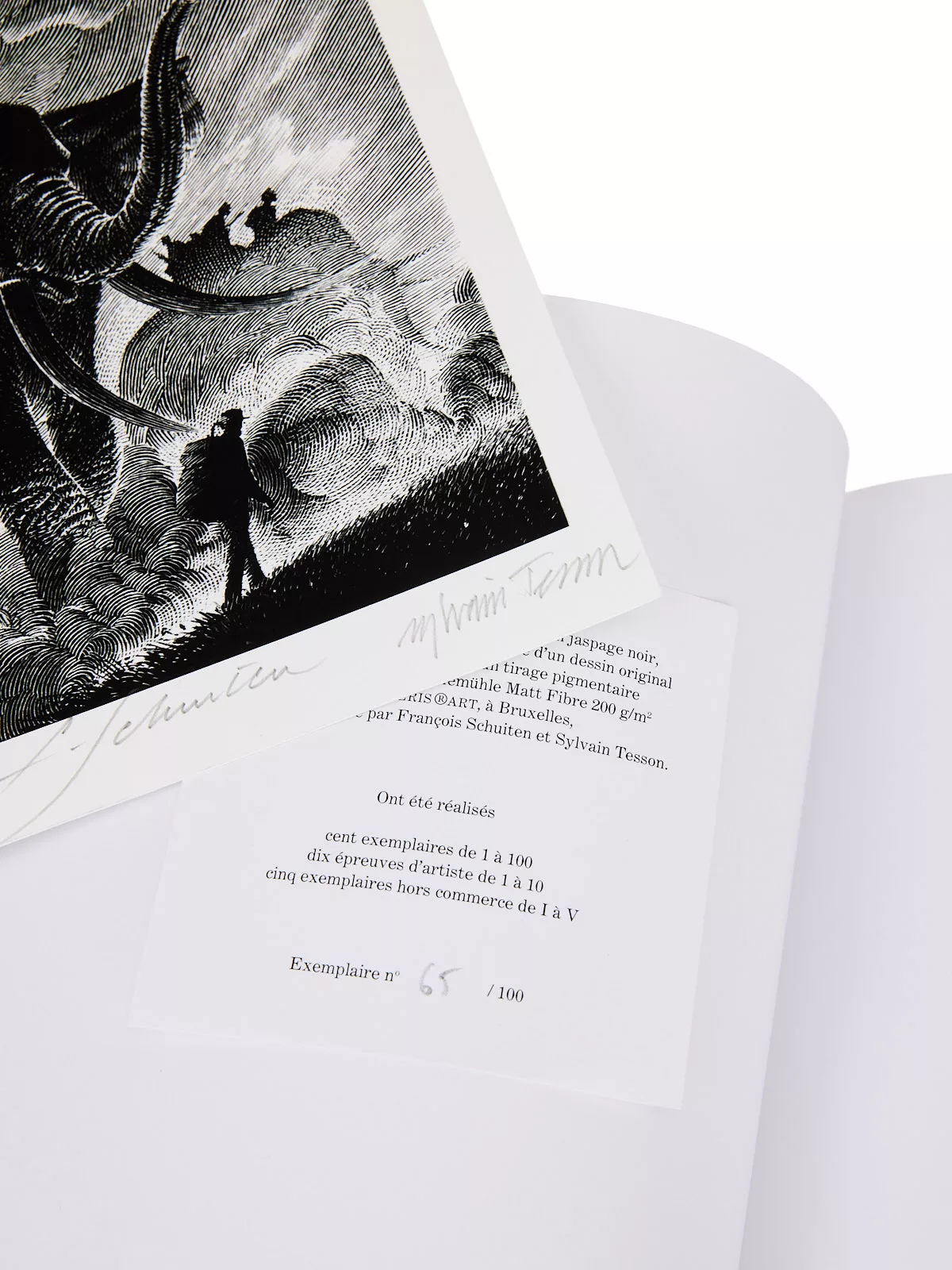
One of the first 100 copies on Gardapat Bianka paper, with a print of one illustration on Hahnemühle paper, justified and signed by the artist (no. 65).
A magnificent celebration of flight and slowness, first published in 2016, Sylvain Tesson’s narrative recounts a walking and literary journey he decided to undertake one morning: “after an accident (a fall from a roof), I had to undergo rehabilitation. That is the word doctors use to describe the recovery of one’s strength. Walking from the Mercantour to the Cotentin seemed a reasonable idea. Besides, I thought it rather absurd to have spent so much time in Siberia and Tibet without knowing the Indre-et-Loire (…). I do not wish to deliver a message or point anything out. I simply want to show that the French countryside still has a network of forgotten paths and silent roads where one can encounter animals, ghosts, traces of a sumptuous past and sublime views. For that, all you need is a 1:25,000 map and a pair of boots.”
A celebration of flight, really? Not quite, according to the author: “to flee is to take paths one has chosen for oneself. And knowing oneself responsible for the direction one takes is proof that the direction is right. It is an old idea, an old inclination, this desire to stand in the wings. Diogenes in his barrel, and Symeon on his pillar, were pursuing the same thing. Sometimes it is vital to stand at the edge of the world. And fleeing becomes an urgent matter. Consider that nearly 70% of the world’s population will live in cities by 2050. Walking in nature gives us the chance to practice one of the finest and most difficult exercises of existence: that of being self-sufficient (…). Knowing exactly what I need and what is necessary for my vitality corrects my inner darkness.”
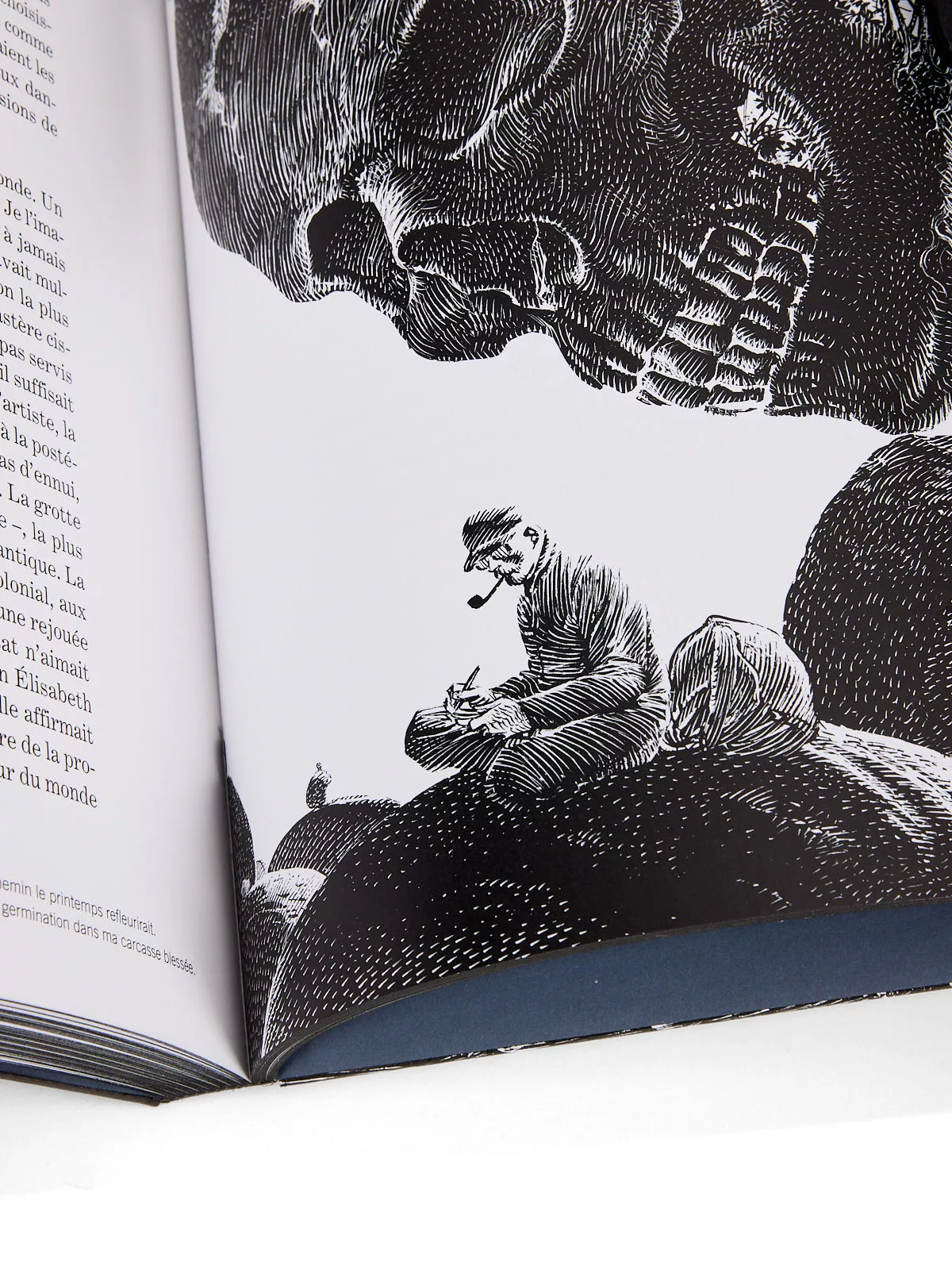
Beautifully illustrated by François Schuiten: the Belgian artist, who gave up comics in 2019, exceptionally agreed to pick up his pencil again and delivers here imagery worthy of his finest plates from Cités obscures, the series that brought him recognition in the 1980s, notably with the two masterworks La Fièvre d’Urbicande and La Tour.