

Sur le Tour de France
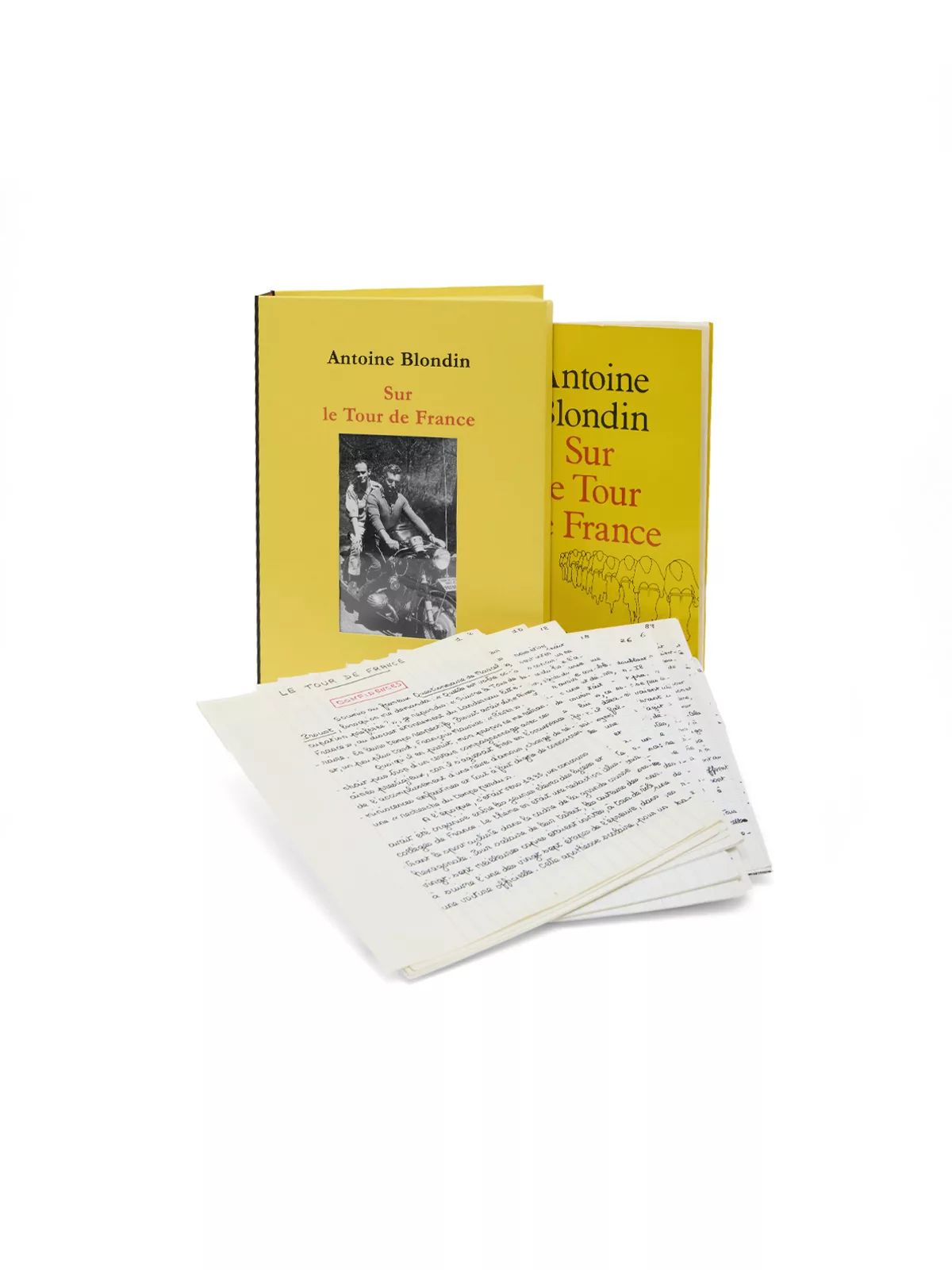
A remarkable, complete manuscript of the first significant text Blondin devoted to his passion for cycling, at a time when he had already been writing as a columnist for L’Équipe for many years.
It was at the request and under the direction of Pierre Salviac that a book entitled Joies de la bicyclette was to appear in 1977. Salviac had been a reporter for the ORTF in 1964, a senior correspondent for France Inter until 1976, and then a sports journalist, deputy to Robert Chapatte, head of sports at Antenne 2. He covered various sports for the young program “Stade 2” — launched in December 1975 — in particular cycling and the Tour de France. It was in this context that the publisher Hachette, wishing to expand its “Joies de…” series, turned to him. Salviac then commissioned several texts from specialists of the genre at the time (Jean-Paul Ollivier, Dominique Grimault, the historian Raymond Huttier), as well as a preface from Robert Chapatte, alongside the main text by Antoine Blondin.
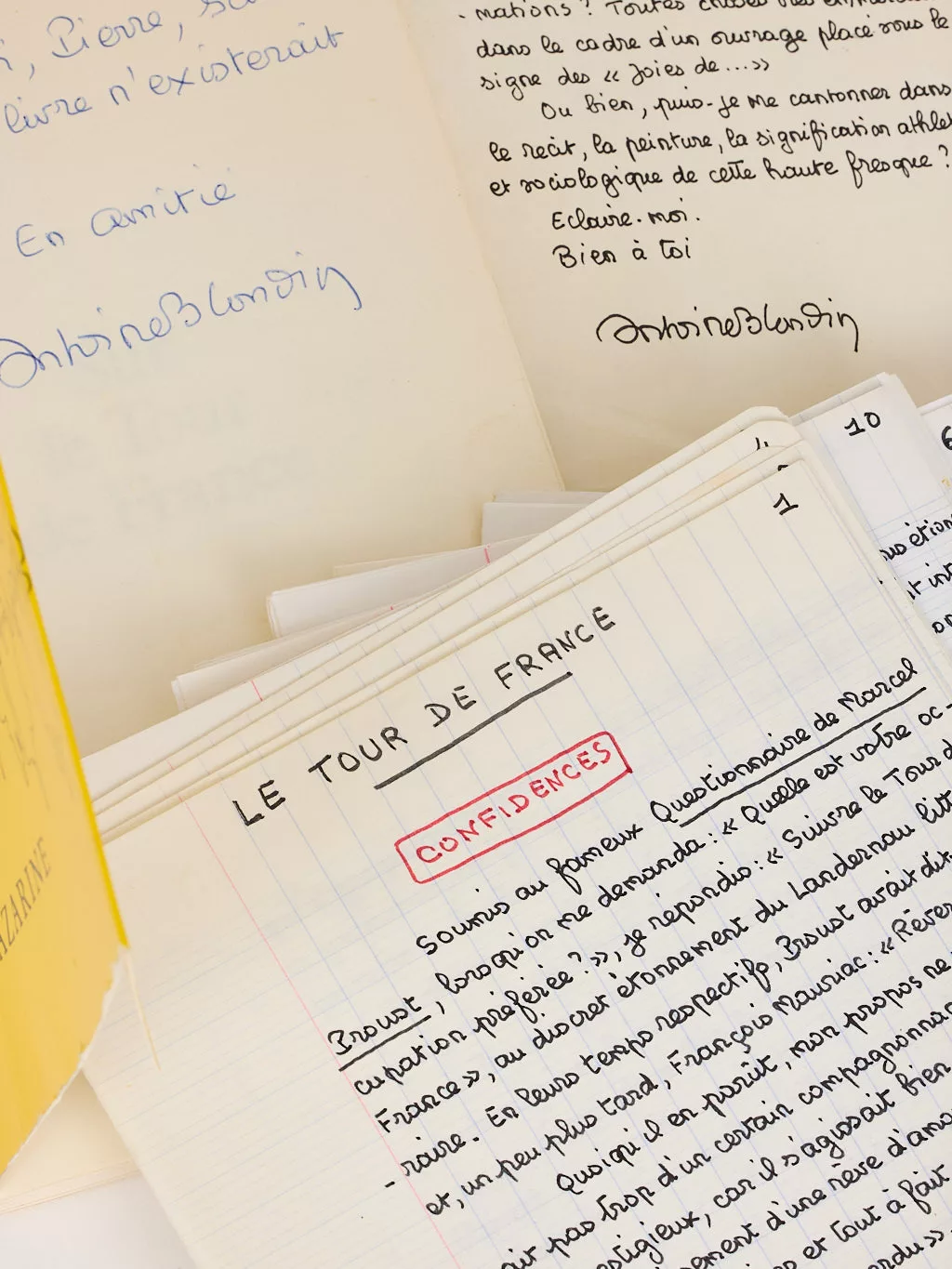
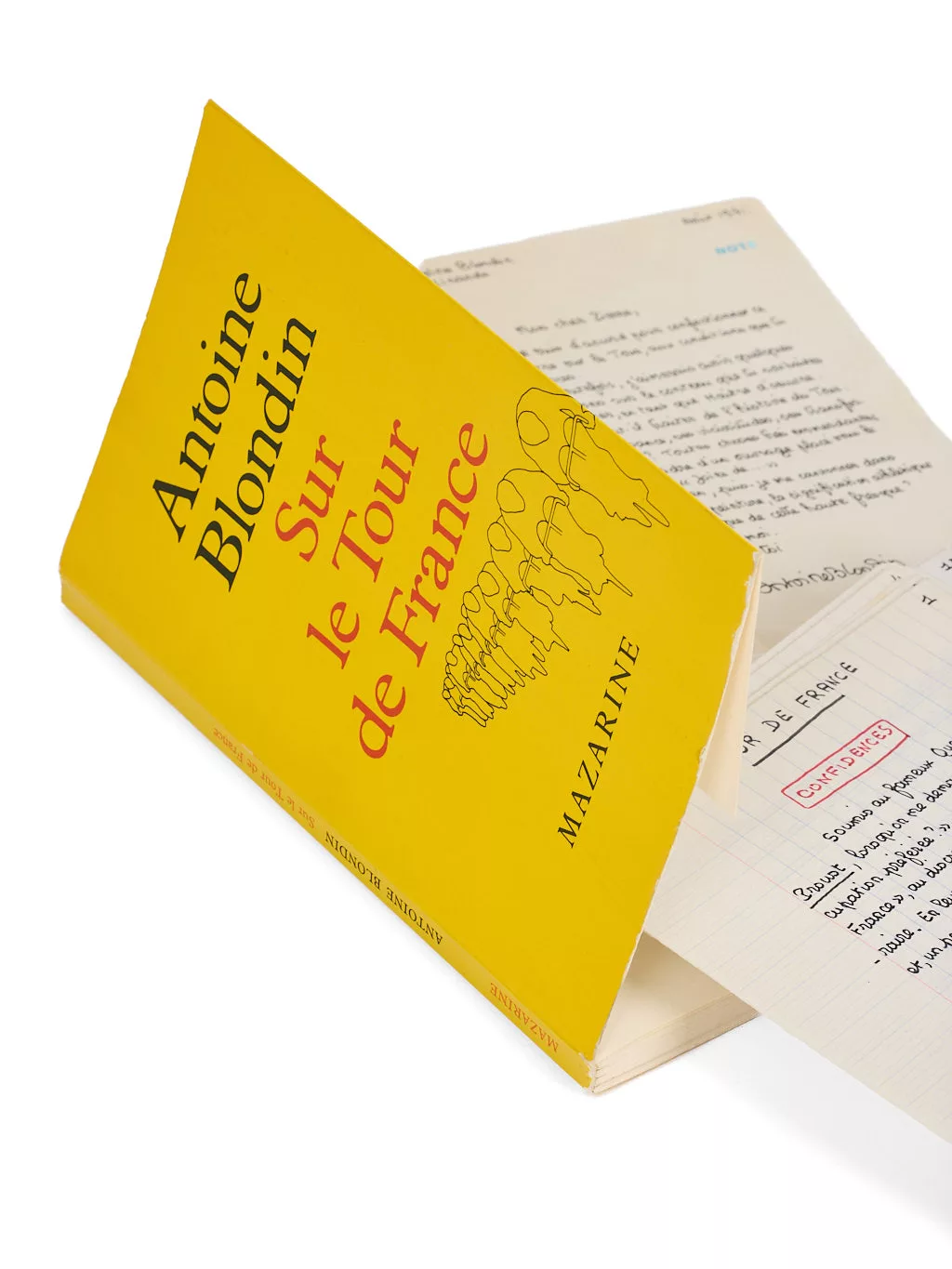
The book would appear in a separate edition two years later, becoming Blondin’s first published “sporting” work: the first-edition copy is included here, inscribed to Pierre Salviac, “without whom this book would not exist, with friendship,” by Antoine Blondin. In his letter, Blondin agrees to the project and asks for clarification about the text expected of him: “I would like some clarification on the content you want, as editor: should I deal with the history of the Tour — its birth, its vicissitudes, its transformations? All rather tiresome things for a book under the banner of ‘joies de…’. Or can I confine myself to the narrative, to the athletic and sociological meaning of this great fresco? Enlighten me.”
The author of Un singe en hiver had followed twenty-eight Tours; aside from being tired of the guinea fowl served every evening at dinner — “if this bird has to do the Tour with us, let’s give it a race number!” — the columnist glorifies a “surface event that sends roots down into great depths” and, as though writing the Iliad and Odyssey of the Tour, deifies its heroes, from Coppi to Gimondi, Anquetil to Merckx, celebrating their victories on the battlefield and applauding the “rural festivities” that the race inspires in every town. He invokes Saint-Exupéry, Victor Hugo, and even the Comtesse de Noailles: “What matters is not to be wise, but to go out to meet the gods.” As Jérôme Garcin recalled on the occasion of the book’s 2016 reissue, “Blondin, a master of the wayward pun and the wandering digression, liked to say that he had more than one Tour up his sleeve. Empty it, and there’s happiness. In velo veritas.” (Le Nouvel Observateur, 30 June 2016). Blondin would go on to write Le Tour de France en quatre et vingt jours in 1984, before all his columns published in L’Équipe were collected in L’Ironie du sport in 1988.