

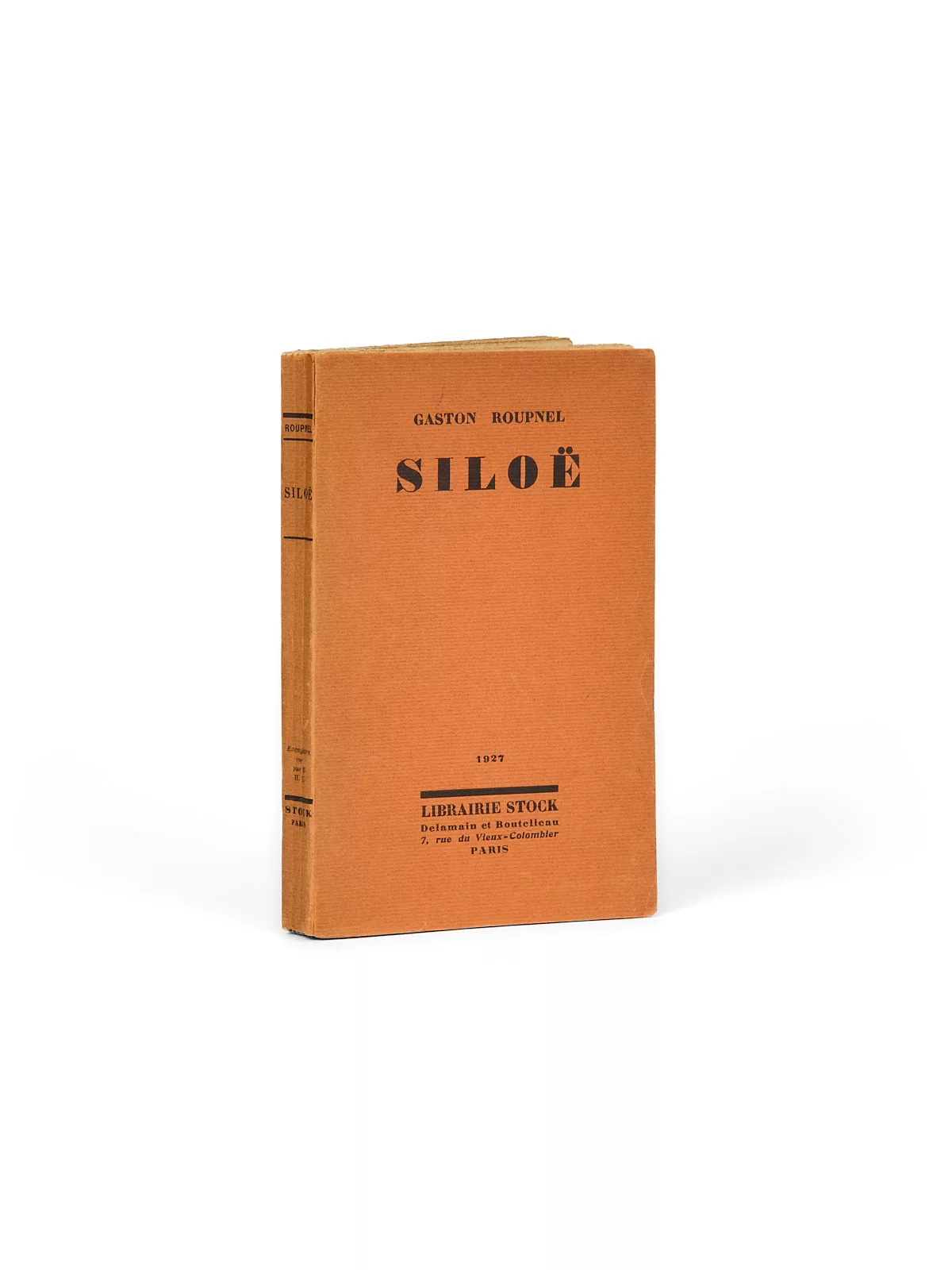
Siloë
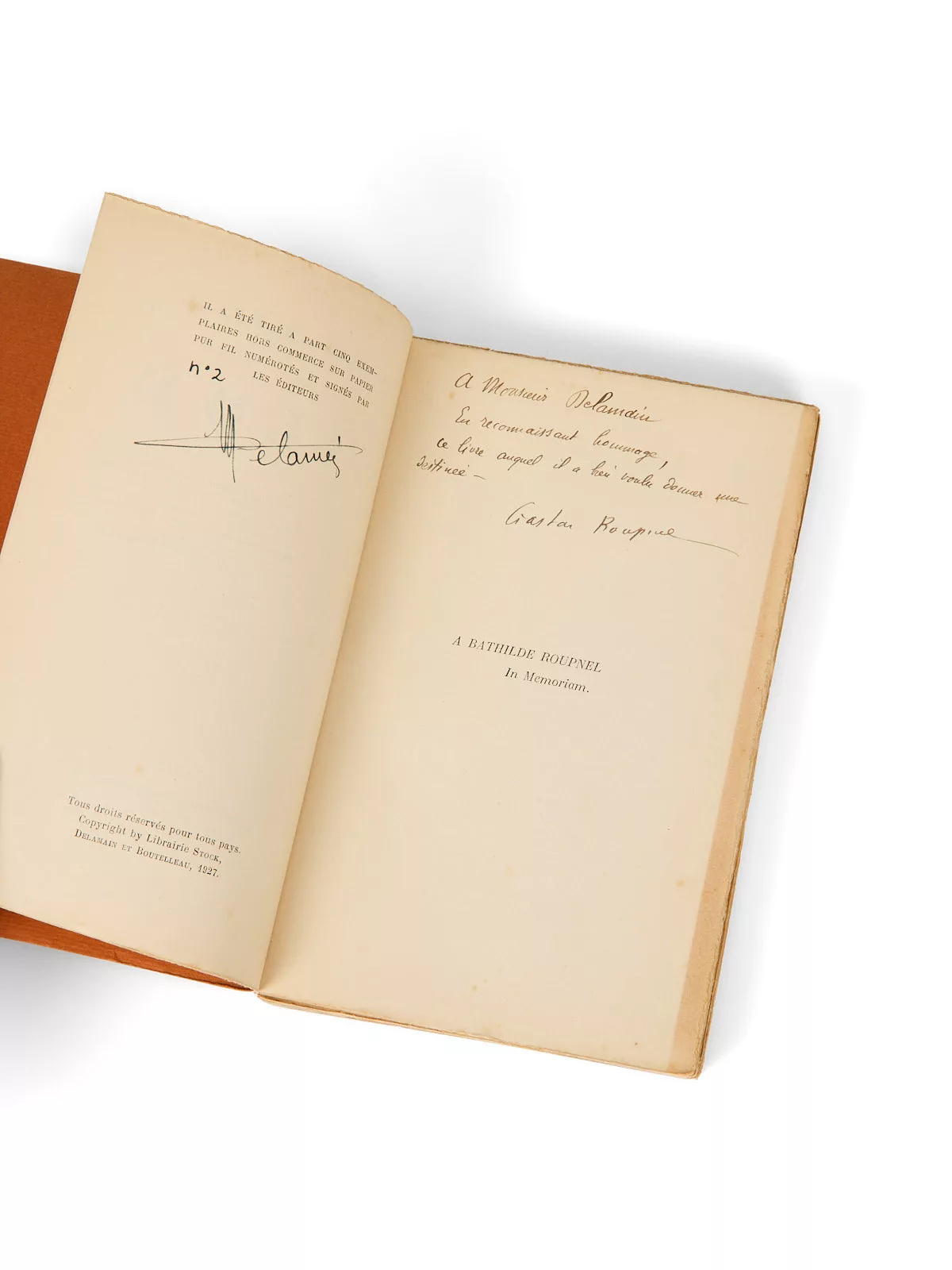
One of 5 copies on vélin pur fil (no. 2), the first copies, numbered and signed by the publisher, hors commerce.
Signed presentation inscription: “à Monsieur Delamain, en reconnaissant hommage, ce livre auquel il a bien voulu donner une destinée. Gaston Roupnel.”
In 1927, Roupnel published his first philosophical work with Grasset, a treatise entitled Siloë, dedicated to his late sister Bathilde, ten years his senior, who died at the age of twenty-one, when he was only twelve. Gaston Bachelard, in L’Intuition de l’instant, originally subtitled “étude sur la ‘Siloë’ de Gaston Roupnel” (Paris, Stock, 1932), wrote of it: “Siloë is a lesson in solitude.”
The son of a modest railway employee, Auguste Roupnel, stationmaster at Gevrey-Chambertin, Gaston Roupnel became a history teacher, holding posts at Saint-Étienne, Épinal, Douai, the Prytanée militaire at La Flèche, Grenoble, and finally Dijon from 1910. That same year, his first novel, Nono, was shortlisted for the Prix Goncourt, in competition with Guillaume Apollinaire and Louis Pergaud. The prize went to Pergaud, for De Goupil à Margot.
Publisher’s copy of Maurice Delamain, who, together with his brother-in-law Jacques Chardonne, had bought the Éditions Stock in 1921.
Roupnel would reissue Siloë in 1945, under the title La Nouvelle Siloë.