

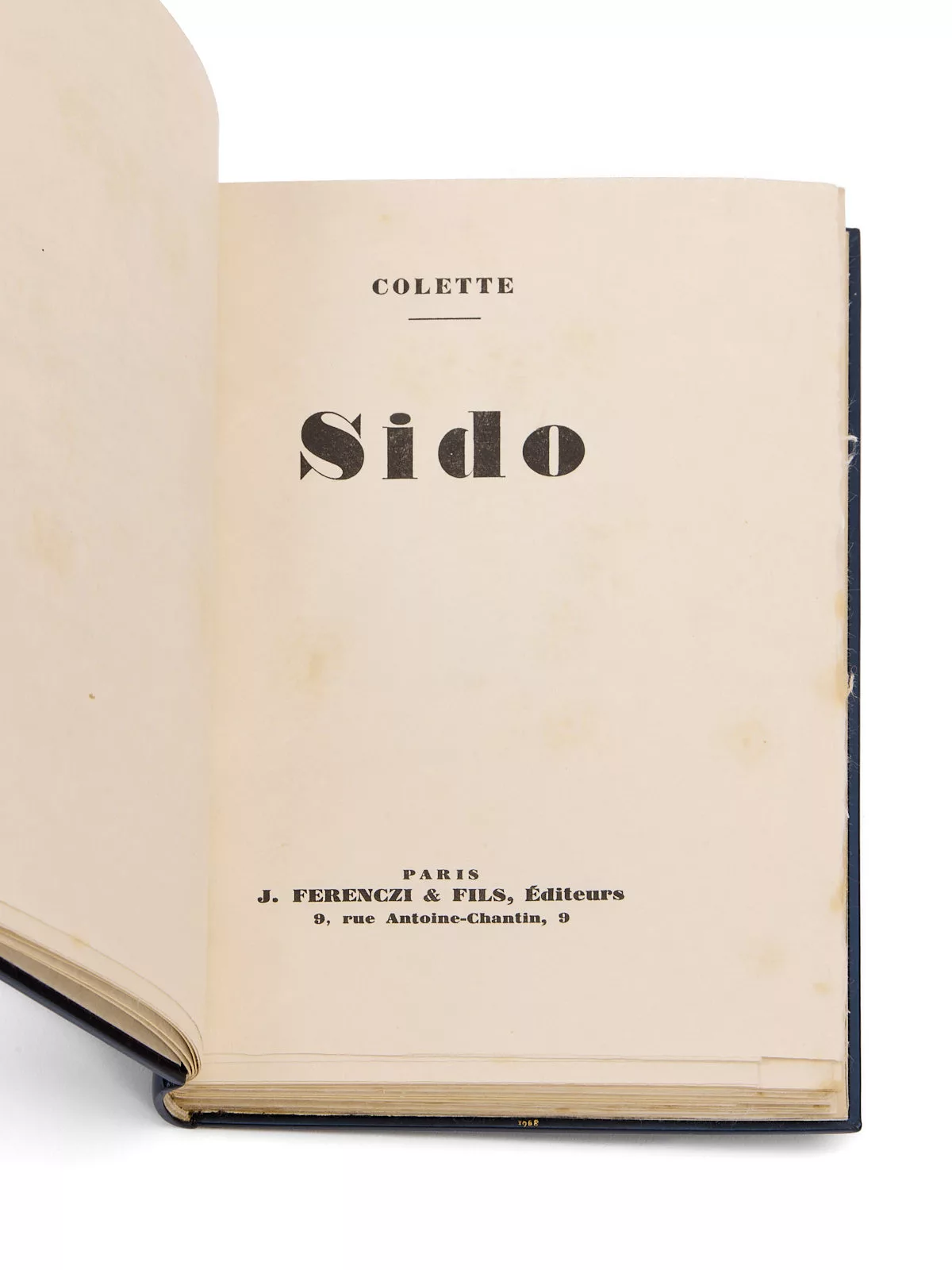
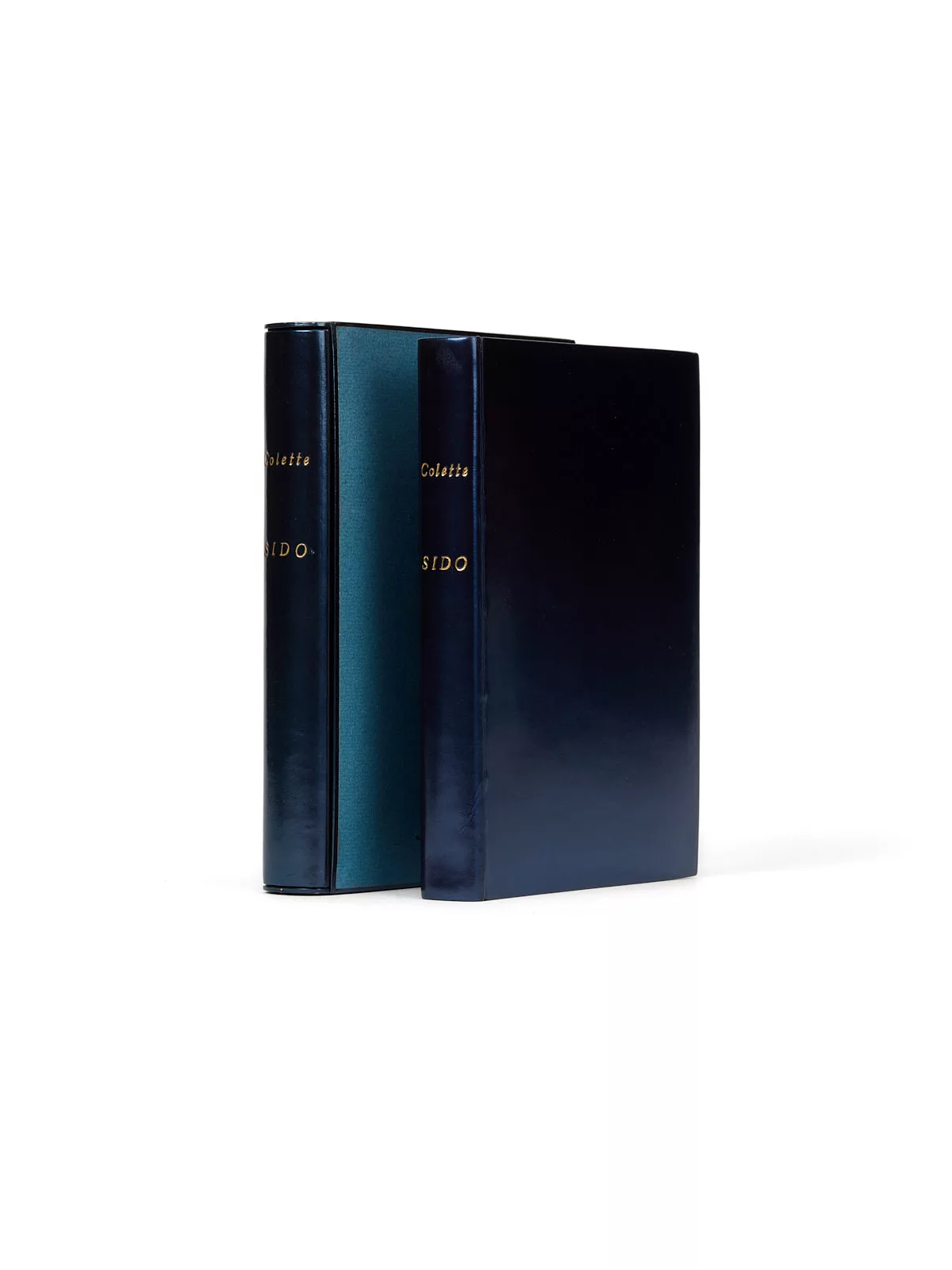
Sido
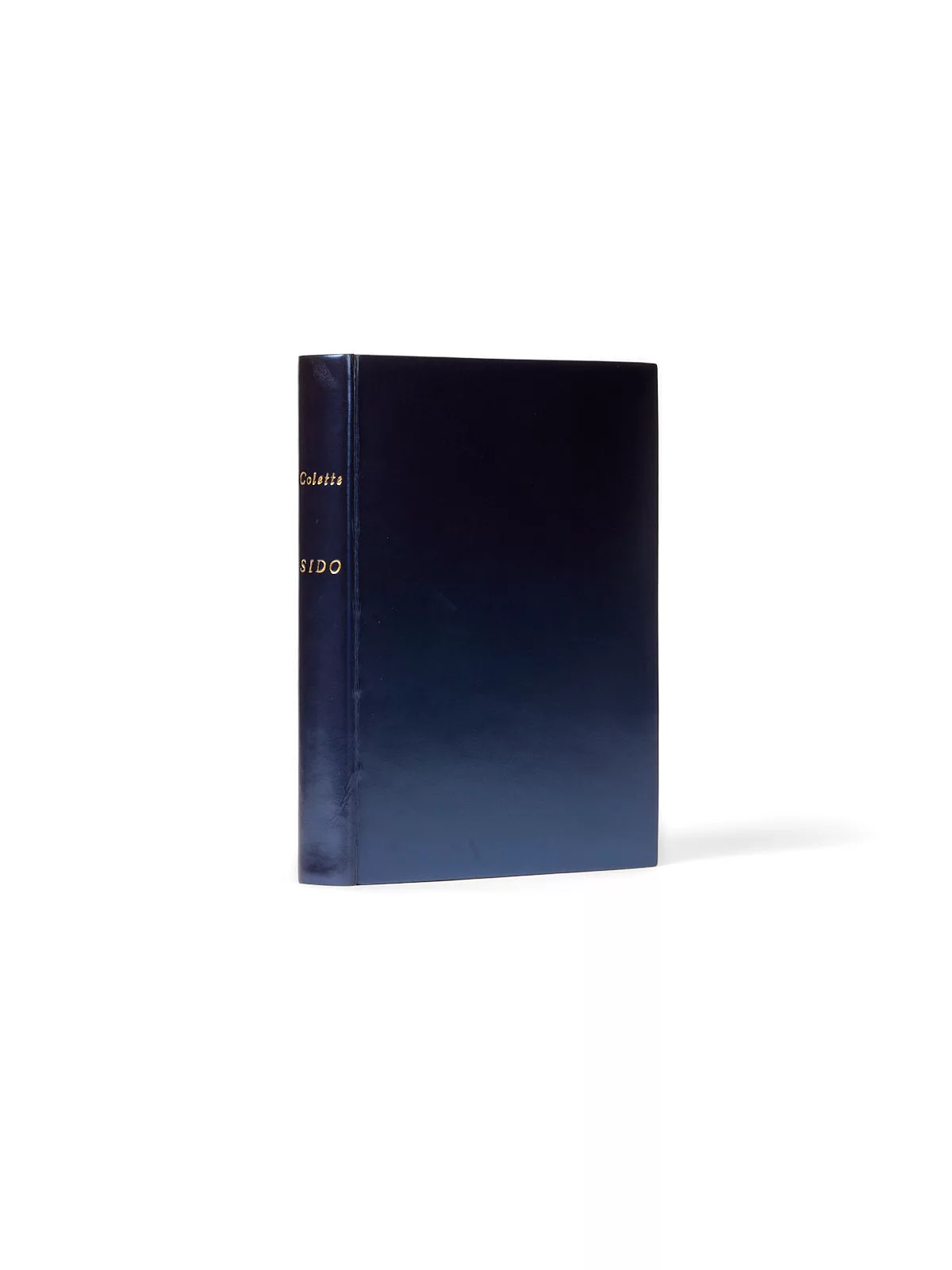
One of 43 deluxe copies on pearl Japan paper, this copy no. 18.
Sido is an autobiographical text, an earlier version of which had appeared the previous year as a forty-page booklet published by Éditions Kra under the title Sido et les points cardinaux.
In autumn 1929, Colette added “Le Capitaine,” a portrait of her father, Captain Jules Colette, tax collector for the canton of Saint-Sauveur-en-Puisaye. The idyllic years Colette spent in the house at Saint-Sauveur came to an abrupt end with the marriage of Juliette, the “sister with long hair,” whose dowry required the sale of the family home. Her parents then moved to join Achille, the eldest son, who had settled as a doctor in Châtillon-sur-Loing (Châtillon-Coligny) in 1891.
Meanwhile, in 1889, during two trips to Paris, the Captain had renewed acquaintance with a former comrade, Jean-Albert Gauthier-Villars, who ran a publishing house. His eldest son, Henry Gauthier-Villars, known as “Willy,” had noticed the beautiful girl with long braids accompanying her father: Gabrielle-Sidonie Colette. Three years later she made her relationship with Willy official, prompting an anonymous item in Gil Blas of 4 May 1893, gossiping about the affair and advising the “owner of two improbable golden braids” to grant her kisses only once married, in the manner of Mephistopheles’s counsel. Incensed, Henry Gauthier-Villars challenged the editor of Gil Blas to a duel and wounded him. The banns had meanwhile been published on 23 and 30 April; Willy was thirty-three, Colette nineteen.
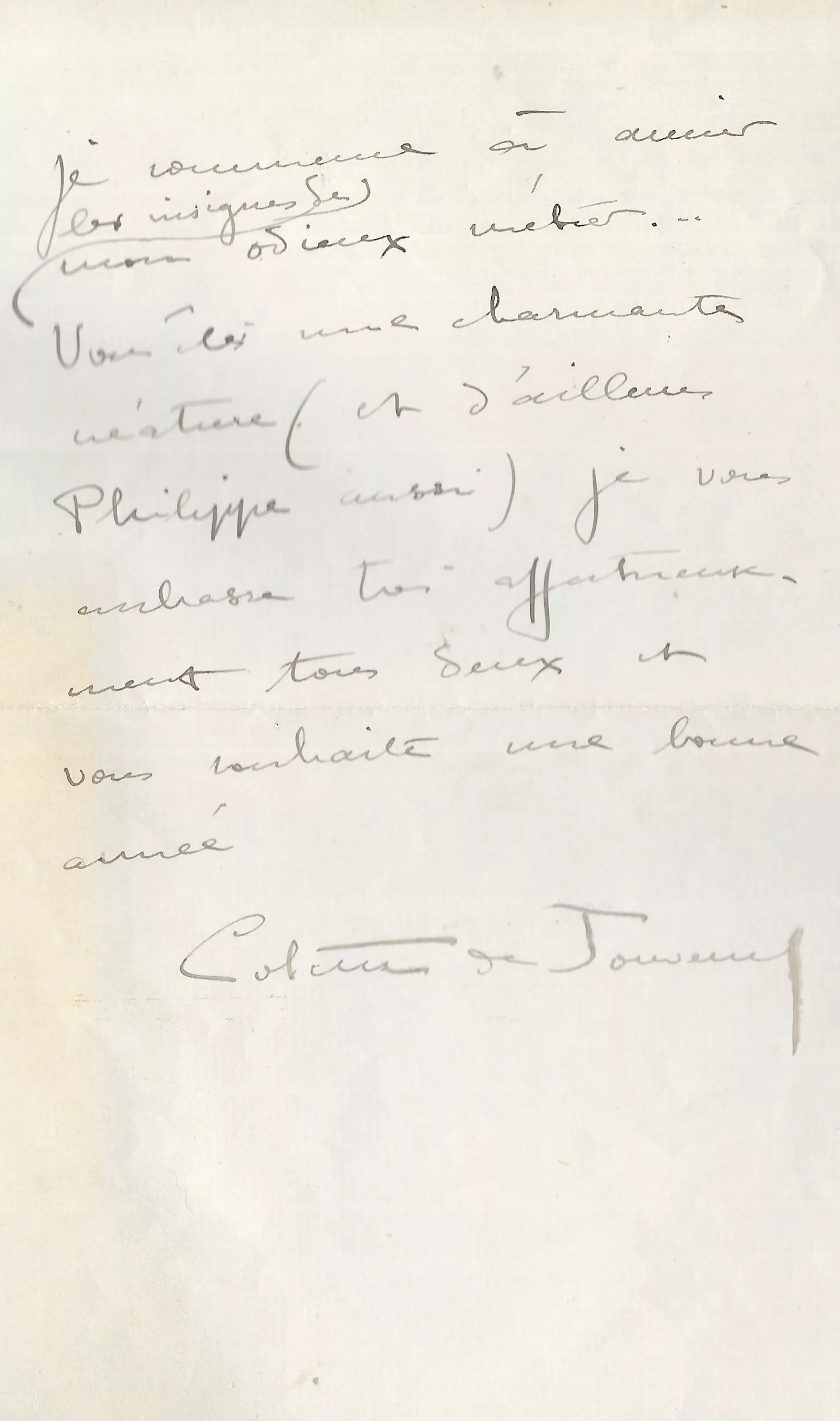
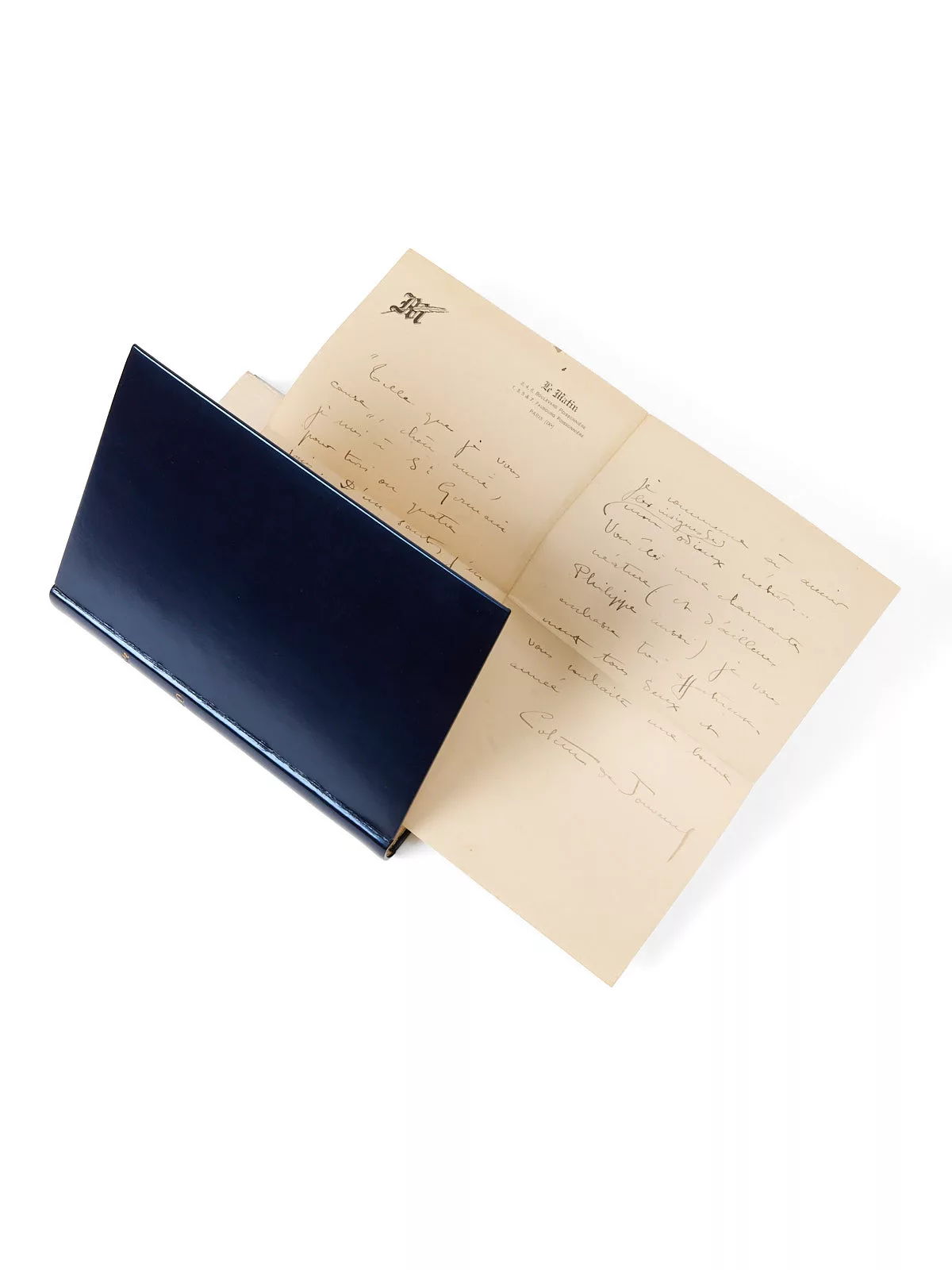
Bound in at front: an autograph letter signed, on Le Matin letterhead [Paris, early January 1923 or 1924]:
“Telle que je vous cause, chère amie, je suis à St Germain pour trois ou quatre jours. D’un saut, je viendrai pour vous voir, chez Natalie, le 6. Il faut vraiment que ce soit un plateau offert pour vous, et un encrier couleur grenouille mouillée offert pour vous, pour que je commence à aimer mon odieux métier. Vous êtes une charmante créature (et d’ailleurs Philippe aussi), je vous embrasse très affectueusement tous les deux et vous souhaite une bonne année. Colette de Jouvenel.”
The letter is addressed to a member of Natalie Clifford Barney’s circle on the rue Jacob, whom it has not been possible to identify. Colette separated from Henry de Jouvenel in 1923 and divorced in 1924; she ended her contributions to Le Matin in February of that same year.
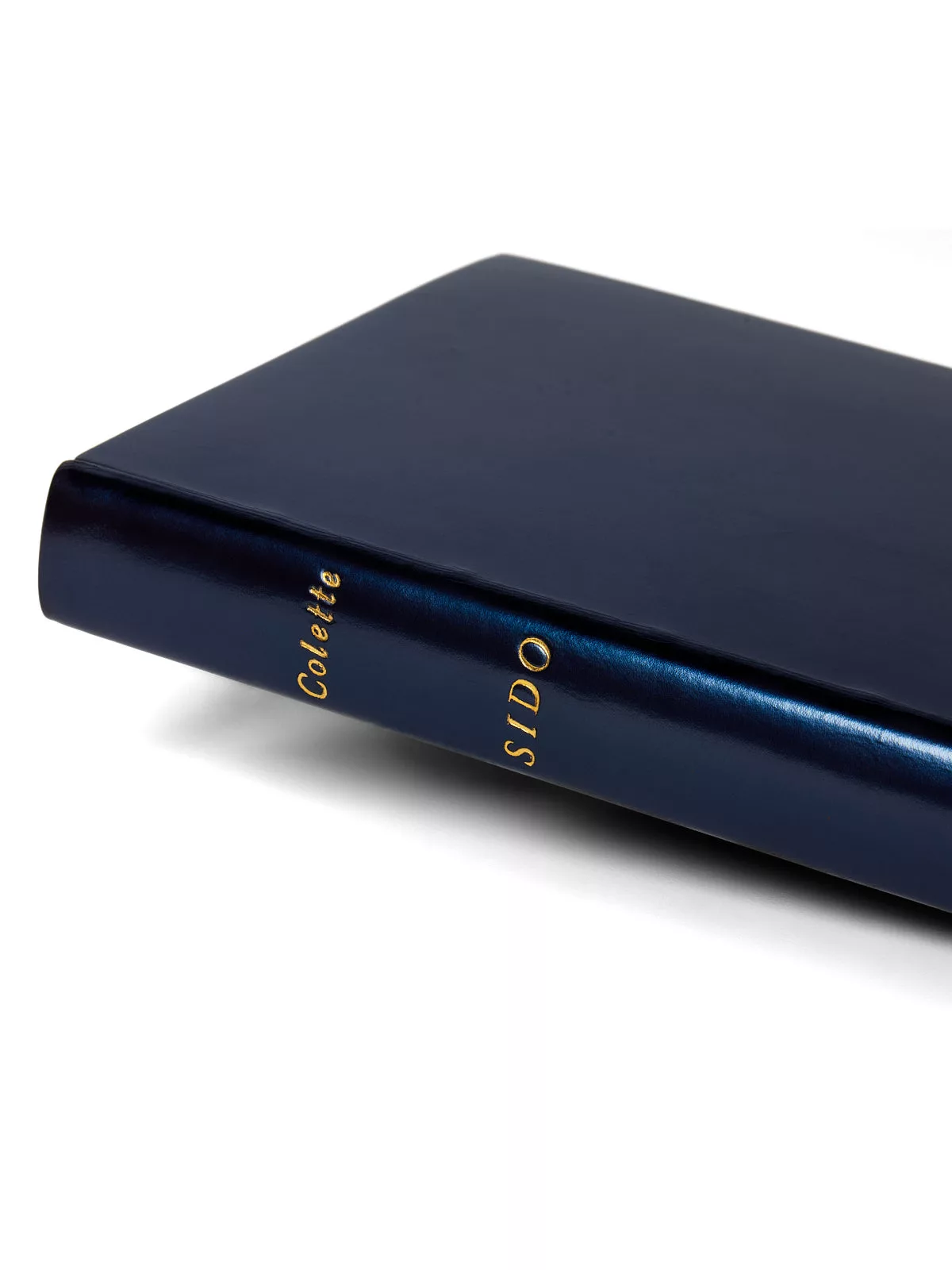
A superbly bound copy by Pierre-Lucien Martin.
From the library of Jean-Pierre Guillaume (bookplate).