

Rue des boutiques obscures
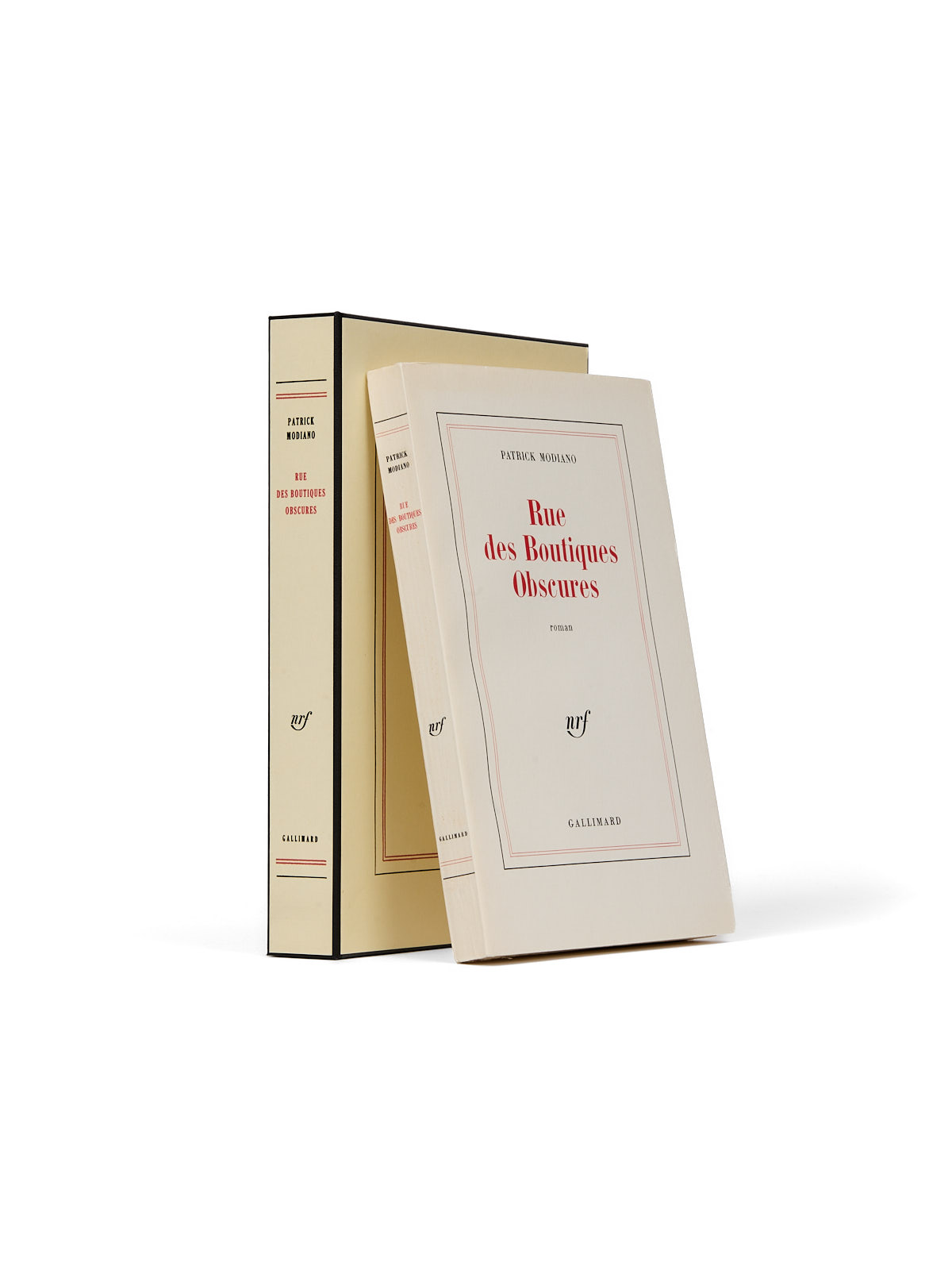
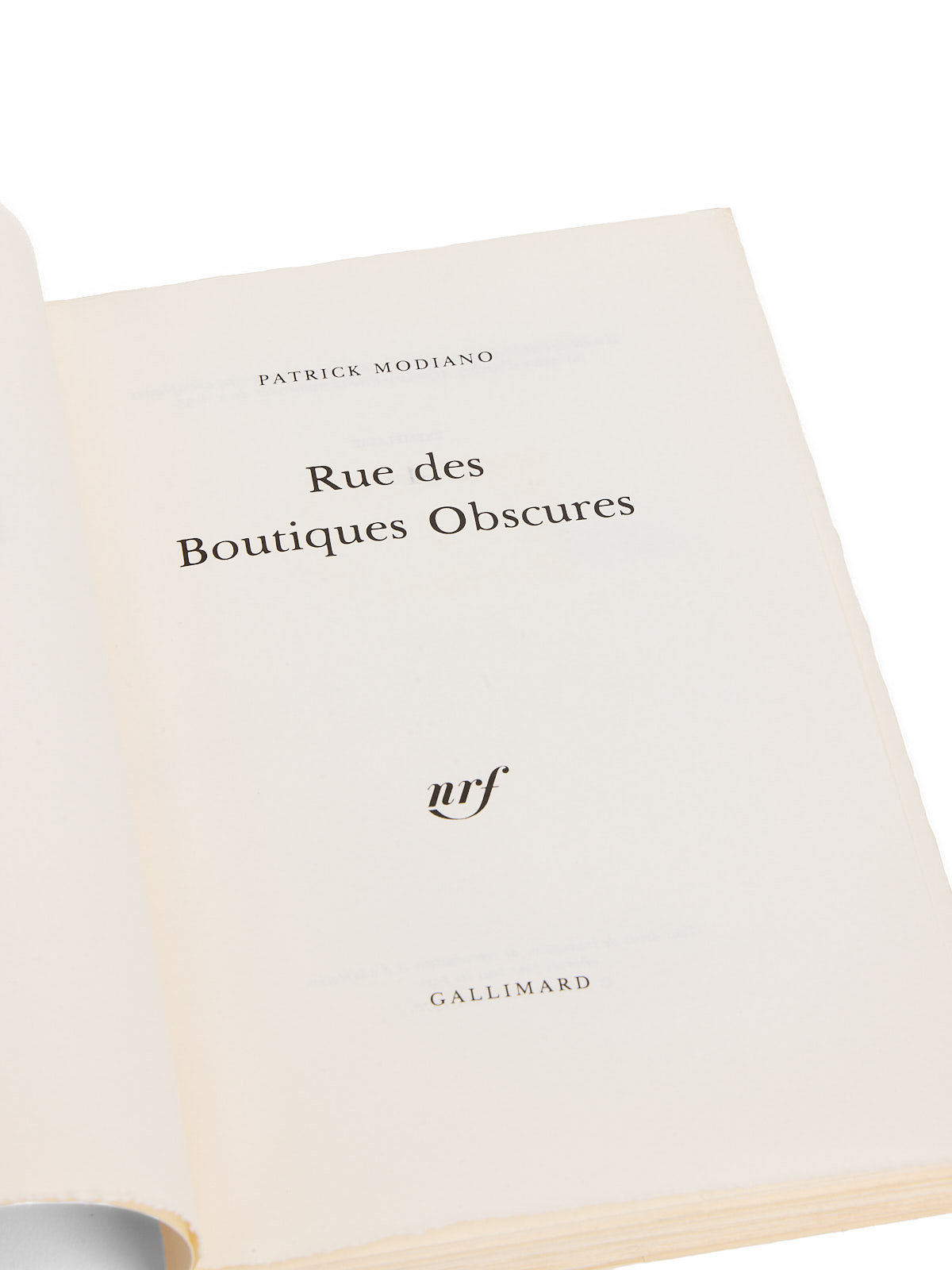
One of 35 copies on vélin d'Arches, from the deluxe issue (no. 11).
Under the protection of Queneau, it took the sixth novel by “the most gifted writer of his generation” to earn him the Prix Goncourt. The jury rewarded — a rare occurrence worth noting — the writer’s entire body of work on that day, crowning his continual quest to exorcise the “troubled and shameful period” that so obsesses Modiano: the Occupation.
Like the Nobel jurors who would honor him thirty-five years later “for the art of memory with which he has evoked the most ungraspable human destinies and uncovered the life-world of the Occupation,” Bertrand Poirot-Delpech, reviewing the book on its publication in the summer of 1978, had already grasped what set this new work apart: “[…] a novel’s success can be measured by its maximum stripping-down for maximum meaning. At first glance, Rue des boutiques obscures seems as transparent and uninhabited as a detective’s report. But this is in the way its style apes the flatness of The Trial. The reference to Kafka’s world is not excessive. Modiano’s narrator chases after his identity and his curriculum vitae just as Joseph K. chases his elusive judges. Like him, he loses himself in side streets, mired in fruitless interviews […]. It is this void of our trace on earth, this mist, that Rue des boutiques obscures suggests, with an economy and a mastery that make it the most essential of Modiano’s novels, if not the best” (Le Monde, 8 September 1978).
A perfect copy, exactly as issued, in a slipcase with a repeated design by Julie Nadot.
From the library of Gérard Pouguet, “collection Goncourt,” with bookplate.