

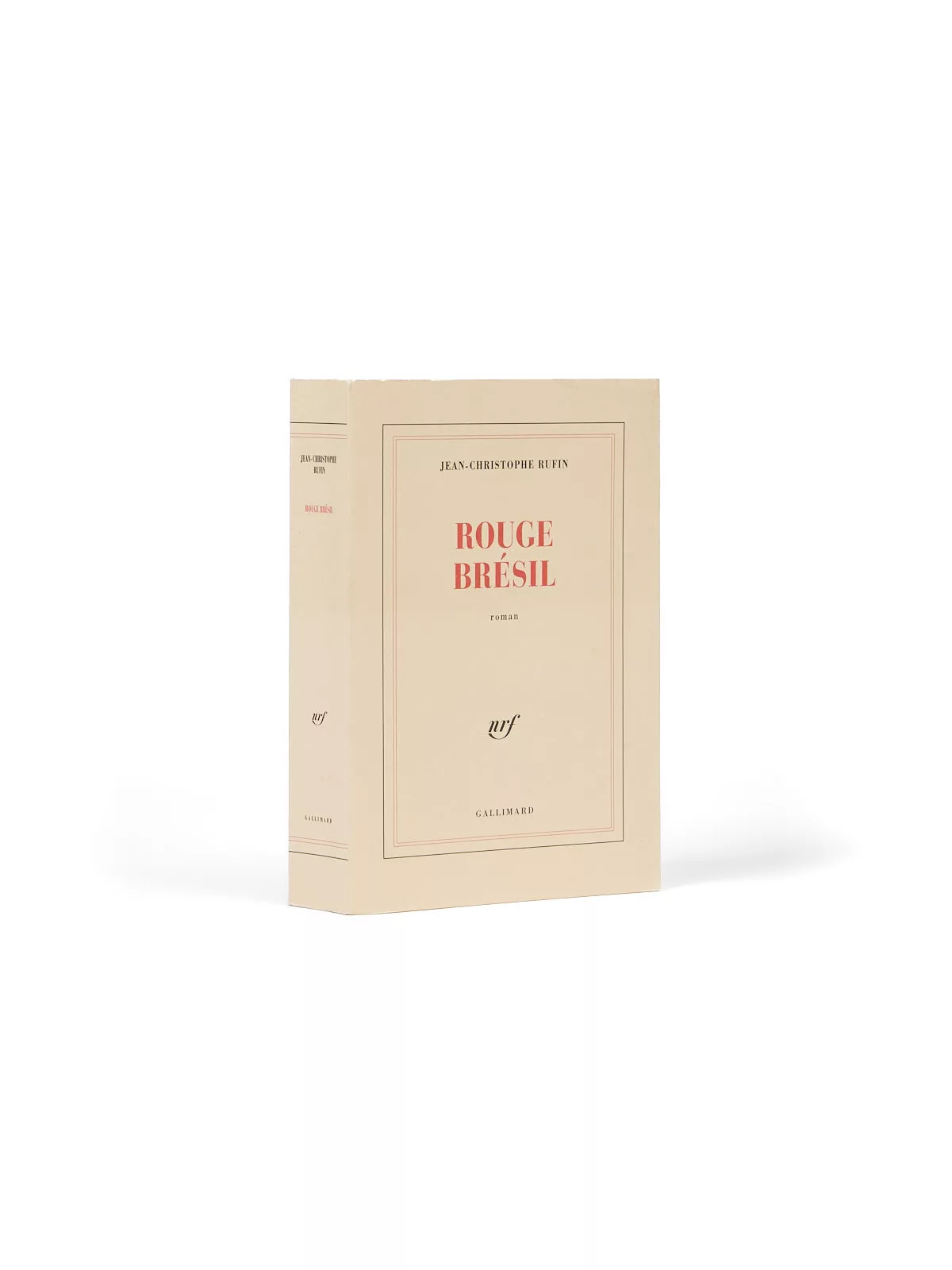
Rouge Brésil
Prix Goncourt 2001. The novel won against, among others, Houellebecq’s Plateforme, which received only a single vote.
A novel of adventure and reflection, Rouge Brésil revisits the forgotten episode of “France Antarctique”: an expedition led by Villegagnon in 1555 to establish a French colony in the bay of Rio. Through the eyes of two children, Just and Colombe, Rufin unfolds a tropical, claustrophobic drama in which the fractures of the Wars of Religion are played out ahead of their time: the citadel is torn apart as much by Portuguese pressure as by theological quarrels imported from Europe.
Trained as a physician and a major figure in humanitarian work (Médecins Sans Frontières, then president of Action contre la Faim), Rufin grounds his fiction in an acute awareness of history. The arrival of Villegagnon and his Protestant companions in the bay of Rio, inhabited by animist Indians, allows him to explore a theme that had long obsessed him in his humanitarian vocation: “the first encounter between different civilizations, the moment of discovery that already contains, in embryo, all the passions and misunderstandings to come.”