

Richard Wagner et Tannhäuser à Paris
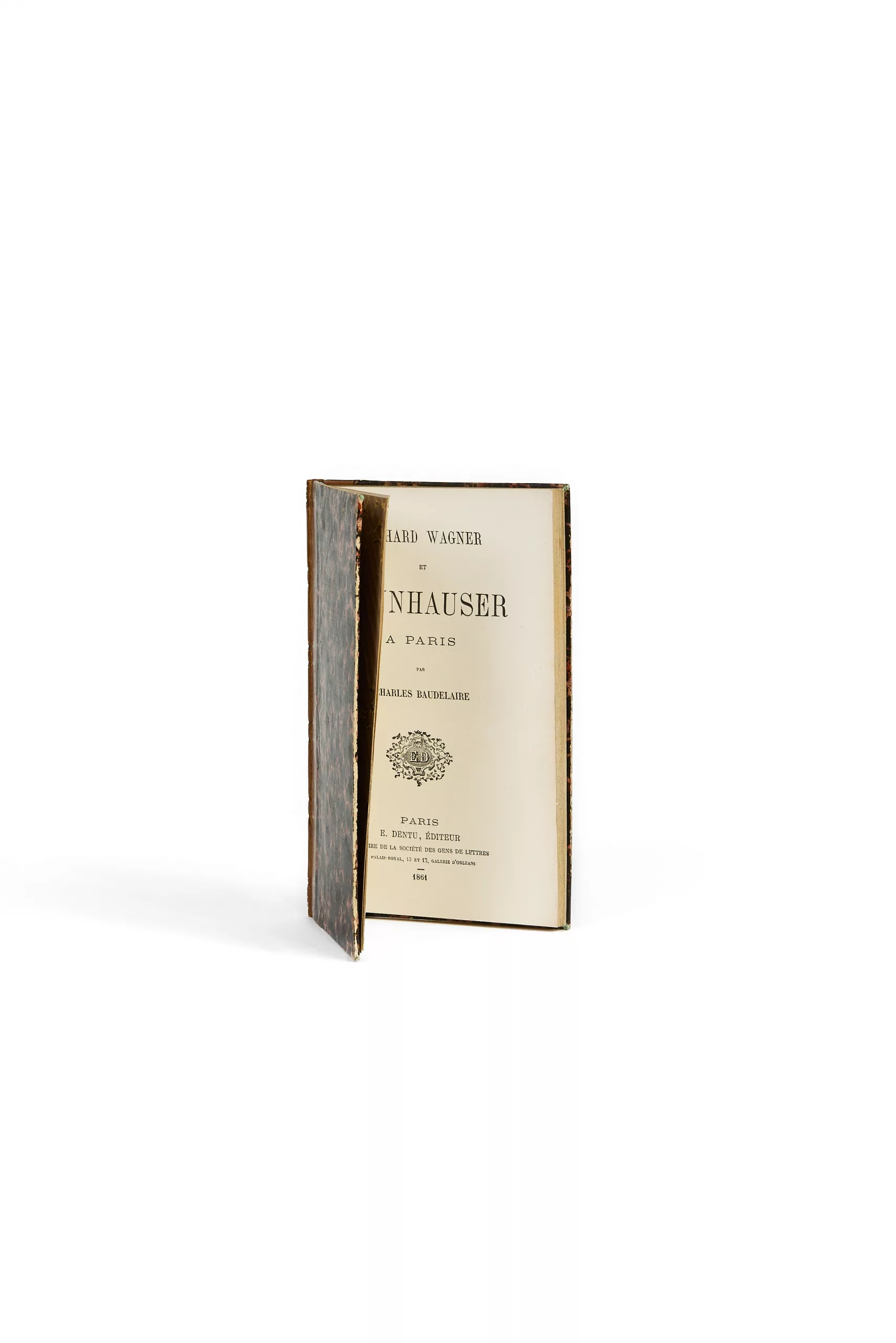
A “very rare pamphlet” (Carteret) and Baudelaire's last great critical text, Richard Wagner et Tannhäuser à Paris revisits the cabal that caused the opera to be withdrawn from the bill after three performances.
The essay was published in La Revue européenne of April 1, 1861, under the title “Richard Wagner.”
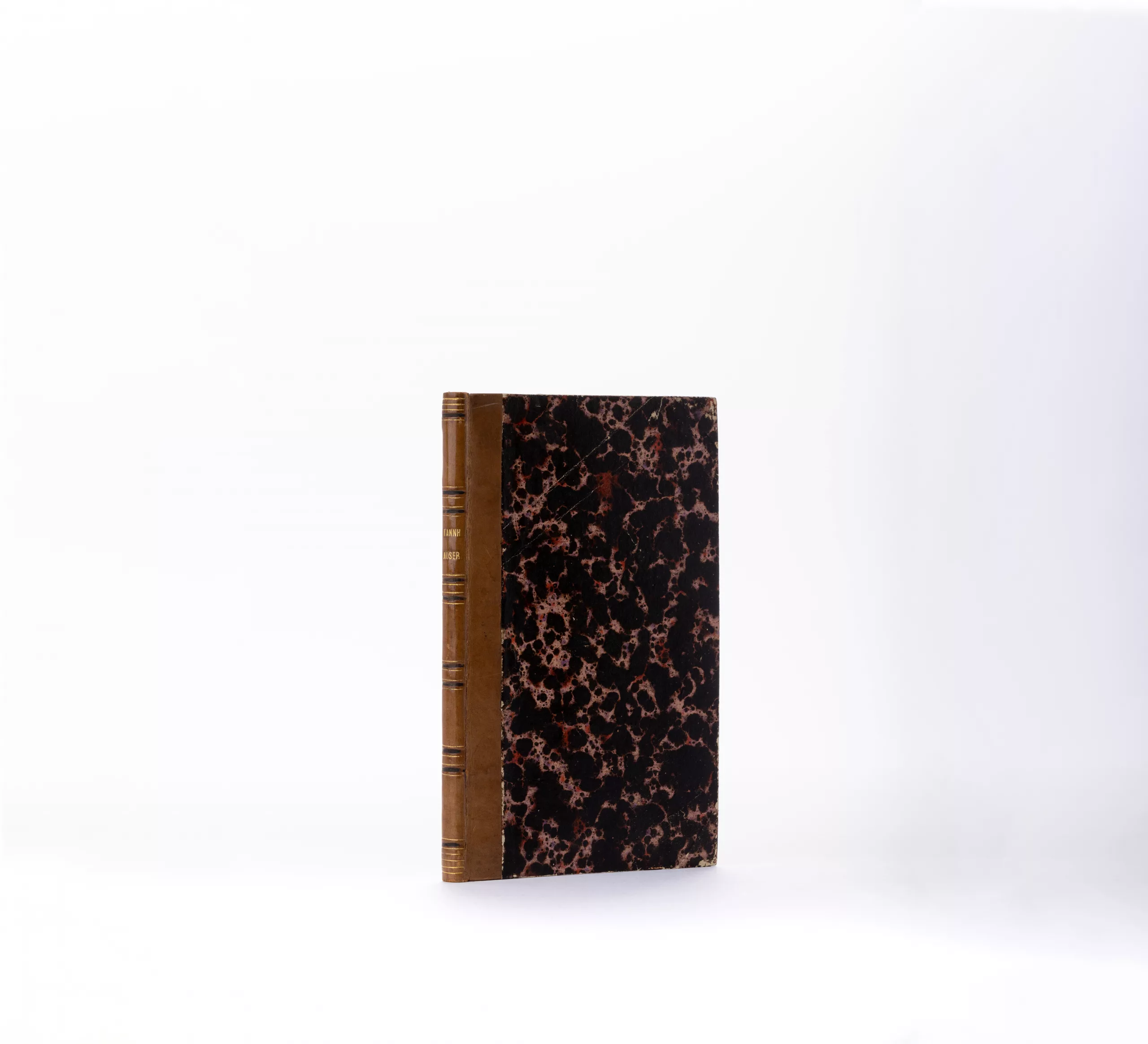
A fine copy, very clean and with generous margins (height: 183 mm), in a carefully preserved contemporary binding — a rare condition.
The essay was published in La Revue européenne of April 1, 1861, under the title “Richard Wagner”: Baudelaire had promised Lacaussade (Sainte-Beuve’s former secretary and translator of Ossian) a twenty-five-page article, which he had twelve days to compose: “nothing is ready by the deadline, and it is in the final hours, besieged, hurried — at the Panckoucke printing house itself, where he is shut in for a whole day — that he feverishly covers his pages one by one, all ablaze with avenging ardor against the flourishing stupidity of the crowds” (Adolphe Tabarant, La Vie artistique au temps de Baudelaire, p. 291).
A document of the first order, a genuine study of Tannhäuser that shows the poet understood, better than most, the full scope and meaning of Wagner’s drama. “Sixty essential pages,” in Dauriac’s words. The article reproduces verbatim several phrases from the famous letter of February 17, 1860, addressed by the poet to Wagner: his admiration knew no bounds after the series of concerts the composer gave at the Théâtre-Italien in January–February 1860. But it was after meeting Wagner, and in reaction to the failure of Tannhäuser at the Opéra (on March 13, 18 and 24, 1861), that the poet decided to write this dithyrambic tribute. The letter at first seems a cry of gratitude: “I owe you the greatest musical pleasure I have ever experienced.” He even carries deference to the point of national self-denial: “this cry might have a value of a singular kind coming from a Frenchman, that is, from a man well suited to enthusiasm and born in a country where poetry and painting are understood no better than music.”
If “[his] pamphlet on Wagner, a highly considered occasional work,” was commissioned, it is also Baudelaire’s last great critical text, written in three days, he told his mother, though pondered “for long months”: “I am working on a major piece on Wagner’s music, a difficult thing for me” (letter to Mme Aupick, April 28, 1860). He would be rewarded for it. Wagner wrote to him on April 15, 1861, to thank him warmly: “My dear Monsieur Baudelaire! I called on you several times without finding you in. You can imagine how eager I am to tell you what immense satisfaction you have given me through your article, which honors and encourages me more than anything ever said about my poor talent. Would it not be possible to tell you soon, aloud, how intoxicated I felt reading these beautiful pages, which recounted to me, as only the finest poem could, the impressions I may boast of having produced on an organization as superior as yours? A thousand thanks for this kindness you have done me, and believe me very proud to be able to call you a friend. Until soon, shall we say? Yours entirely, Richard Wagner.”