

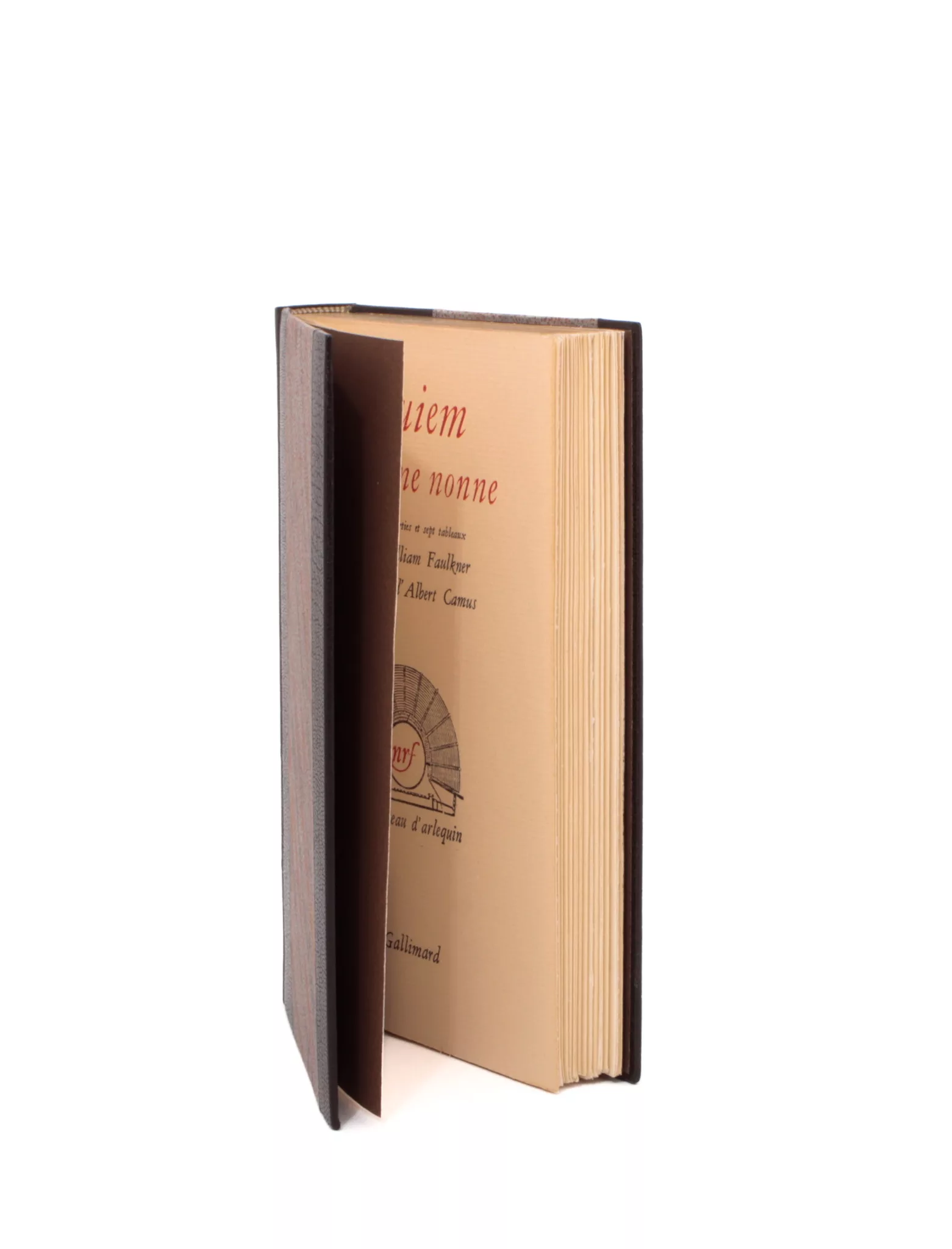
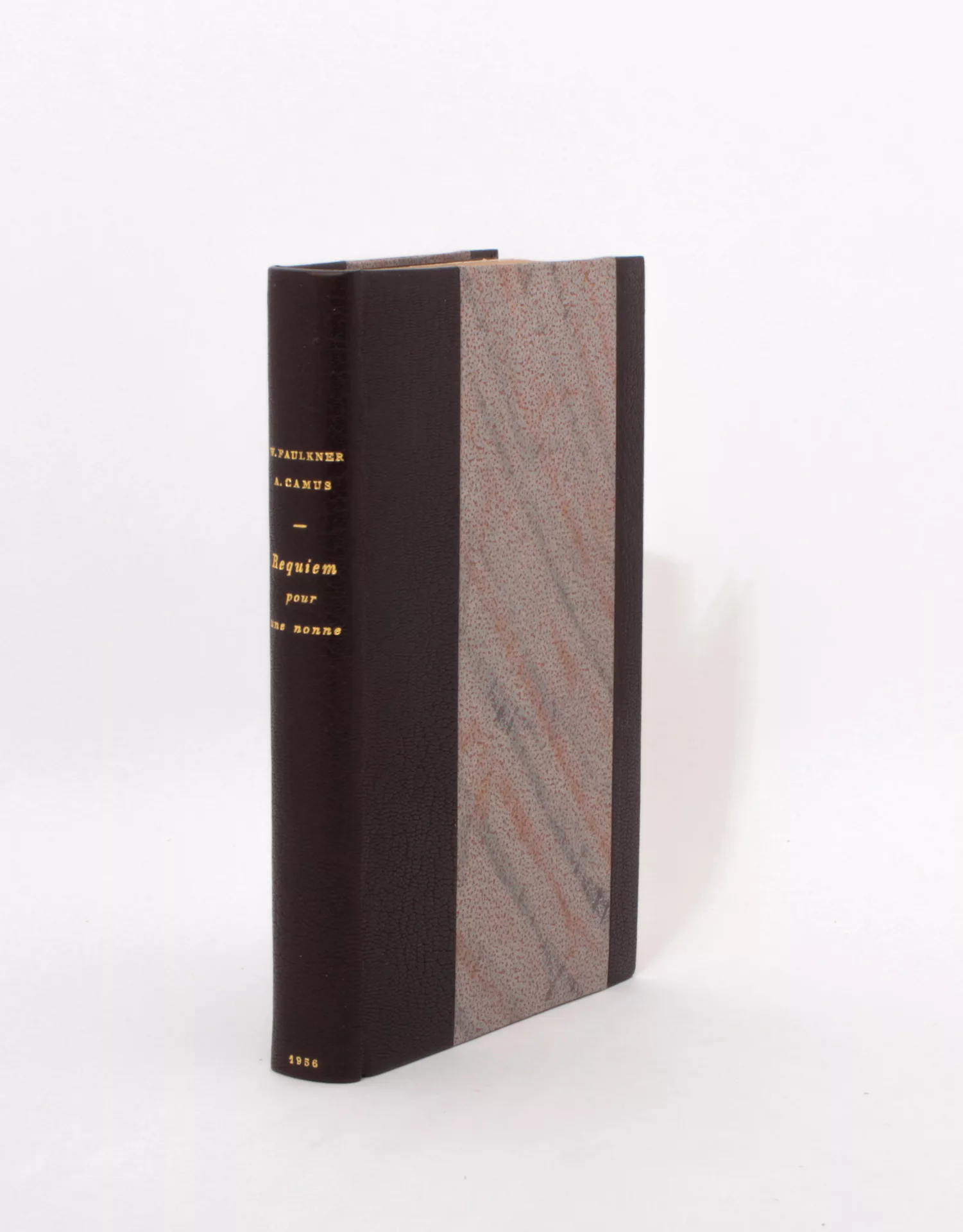
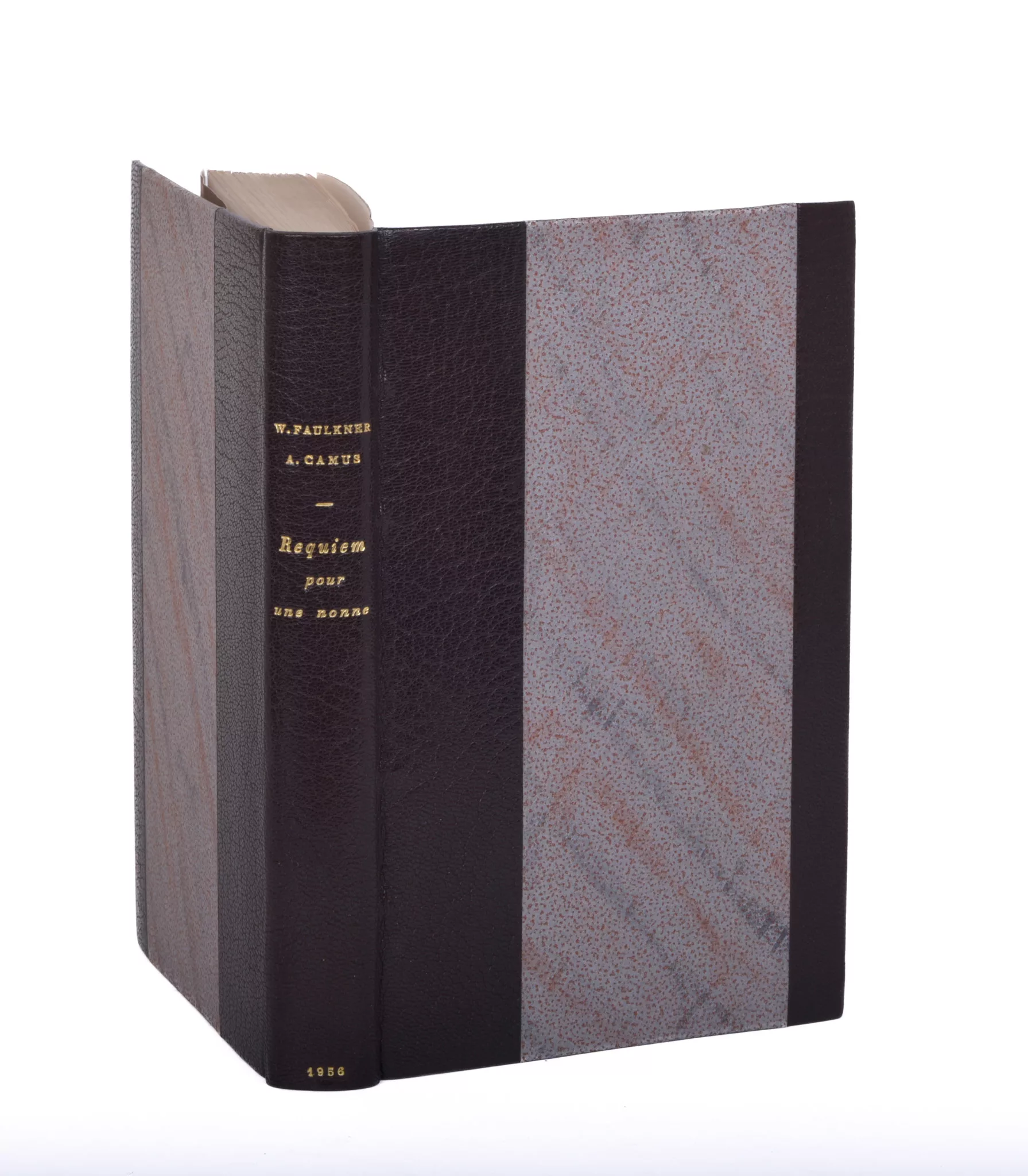
Requiem pour une nonne
“He is, in my opinion, your greatest writer; the only one, it seems to me, who belongs to your great nineteenth-century literary tradition […] I mean that he created his own world, recognizable among a thousand and irreplaceable, as Dostoevsky or Proust had done before him. Sanctuary and Pylon are masterpieces” (Albert Camus, in Yale French Studies, no. 25, Spring 1960, p. 122).
“Albert Camus, praising the writers of the American South, once remarked to a friend that what he loved in their books was ‘the dust and the heat.’ For the man from North Africa, with his dazzling memories of Noces, a world Paris could never enter, Faulkner’s particular sense of local color must have been especially moving” (Alfred Kazin, The Stillness of Light in August, in Faulkner: Three Decades of Criticism, pp. 249–250). And well before Requiem for a Nun, and well before the Nobel Prize — which Faulkner would in turn receive —, the American writer declared: “… I think Camus will get better; but I don’t think Sartre ever will” (lecture at the University of Virginia, May 1957); “yes, I know Camus very well and hold him in very high esteem. He is a man who… always does what I have tried to do, that is, probe… his own soul.” Fittingly, the Hommage à Albert Camus, published by the Nouvelle Revue Française on March 1, 1960, included a translation of Faulkner’s article entitled “L’âme qui interroge”: in it he returns to Camus’s essential themes and, referring to the telegram sent after the Nobel Prize, dwells on “the soul which constantly seeks and questions itself […].”
Camus, for his part, admitted in a 1945 interview with Janine Delpech that L’Étranger drew on the novelistic technique of Faulkner and Steinbeck, and that he considered Sanctuary — for which Malraux had written the preface — a masterpiece (Hommage de la NRF, p. 538). Finally, for a special issue of the Harvard Advocate devoted to Faulkner, Camus provided a letter confirming that he was “a great admirer of William Faulkner, whose work I have known and read for a long time. He is, in my opinion, your greatest writer; the only one, it seems to me, who belongs to your great nineteenth-century literary tradition […] I mean that he created his own world, recognizable among a thousand and irreplaceable, as Dostoevsky or Proust had done before him. Sanctuary and Pylon are masterpieces” (Yale French Studies, no. 25, Spring 1960, p. 122).