

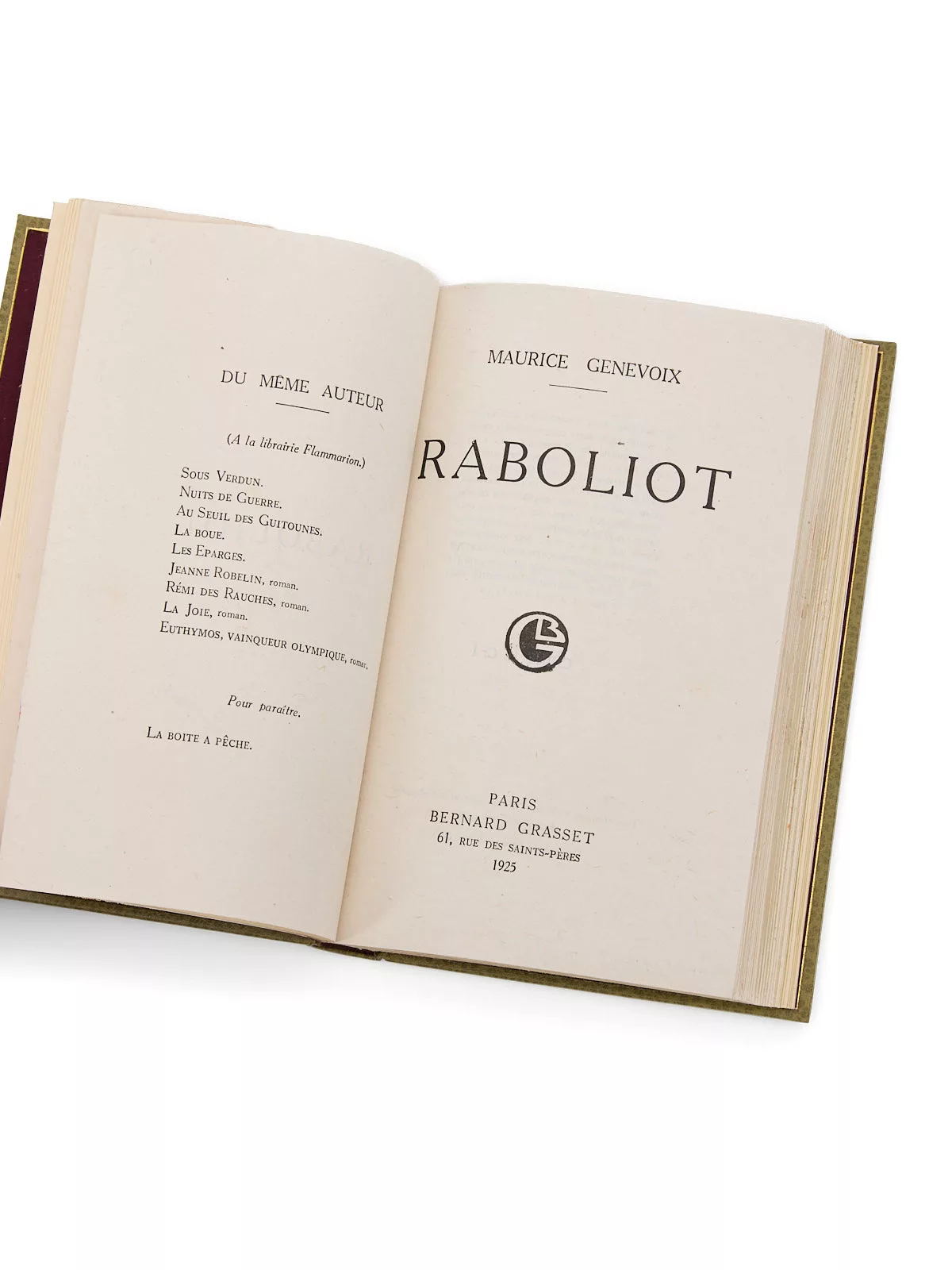
Raboliot
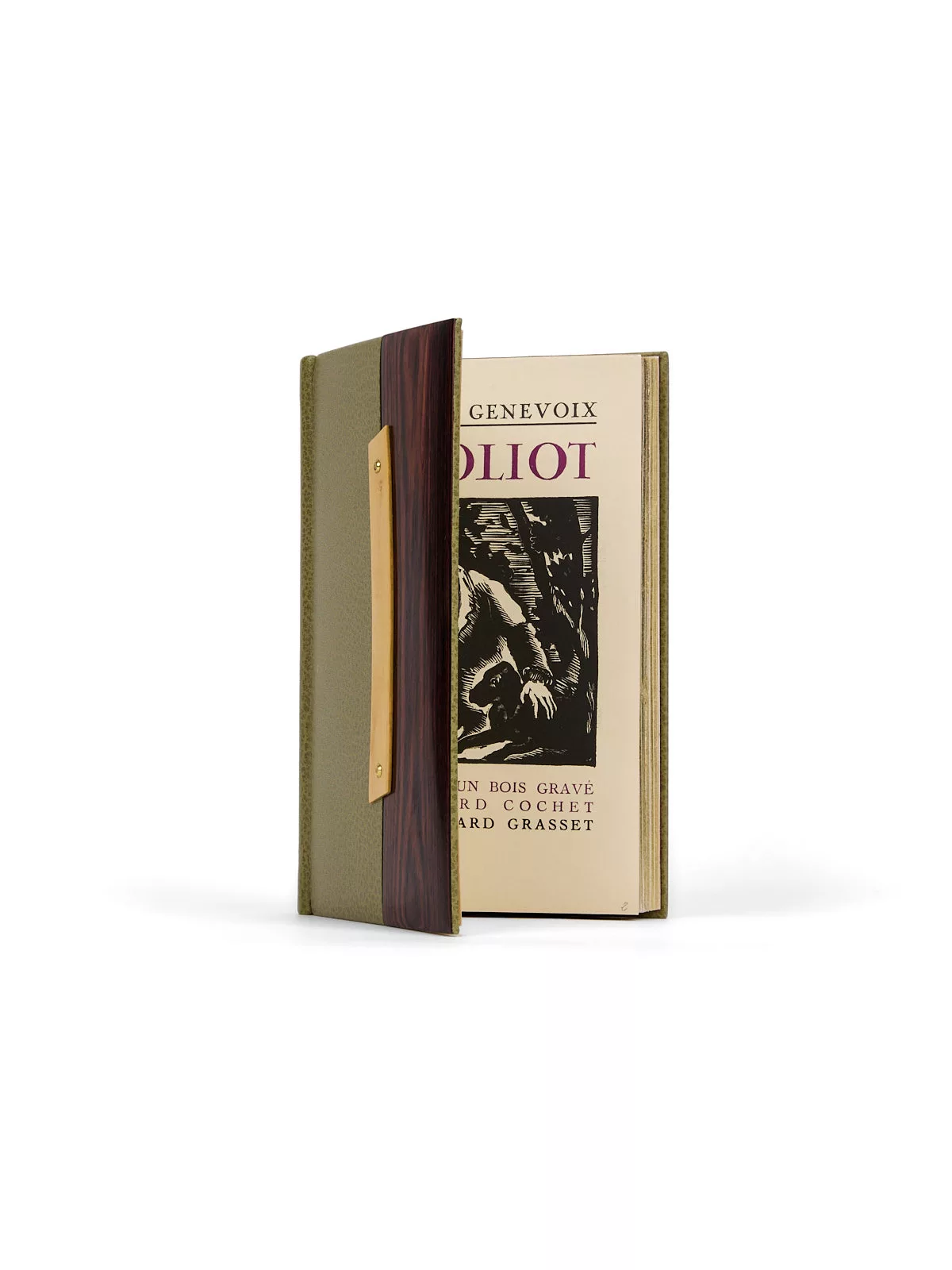
One of the first 7 copies on China paper (no. I).
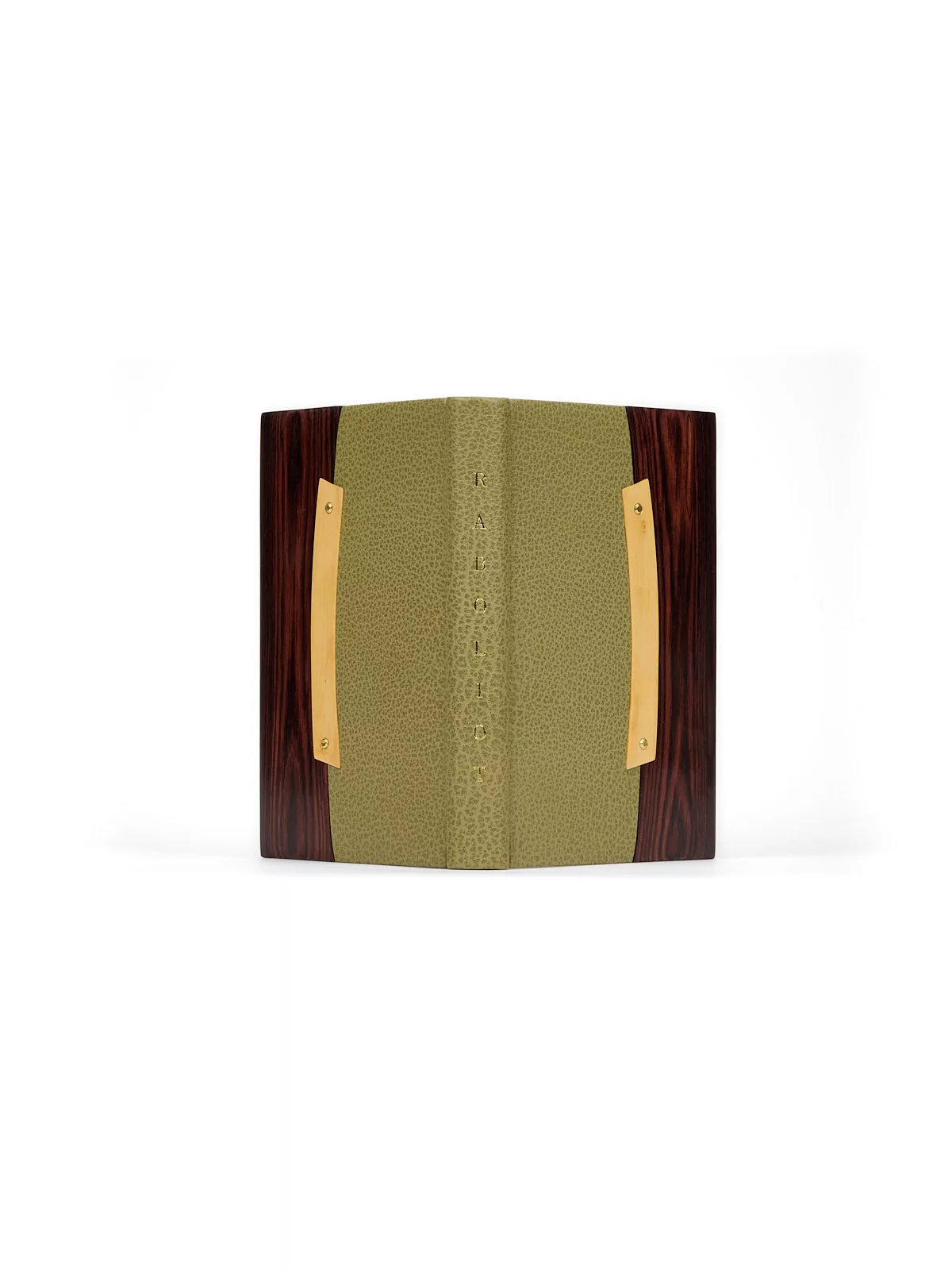
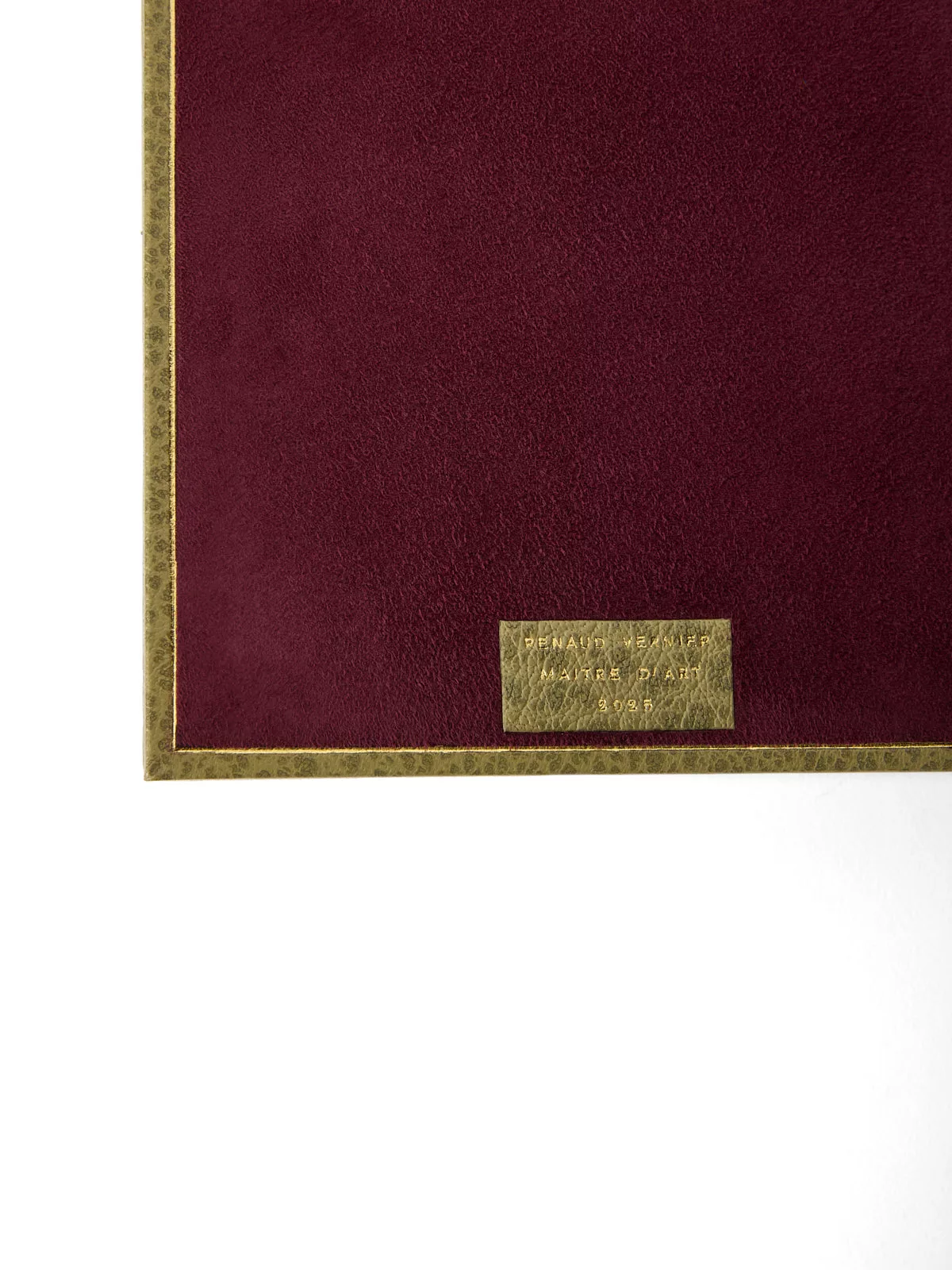
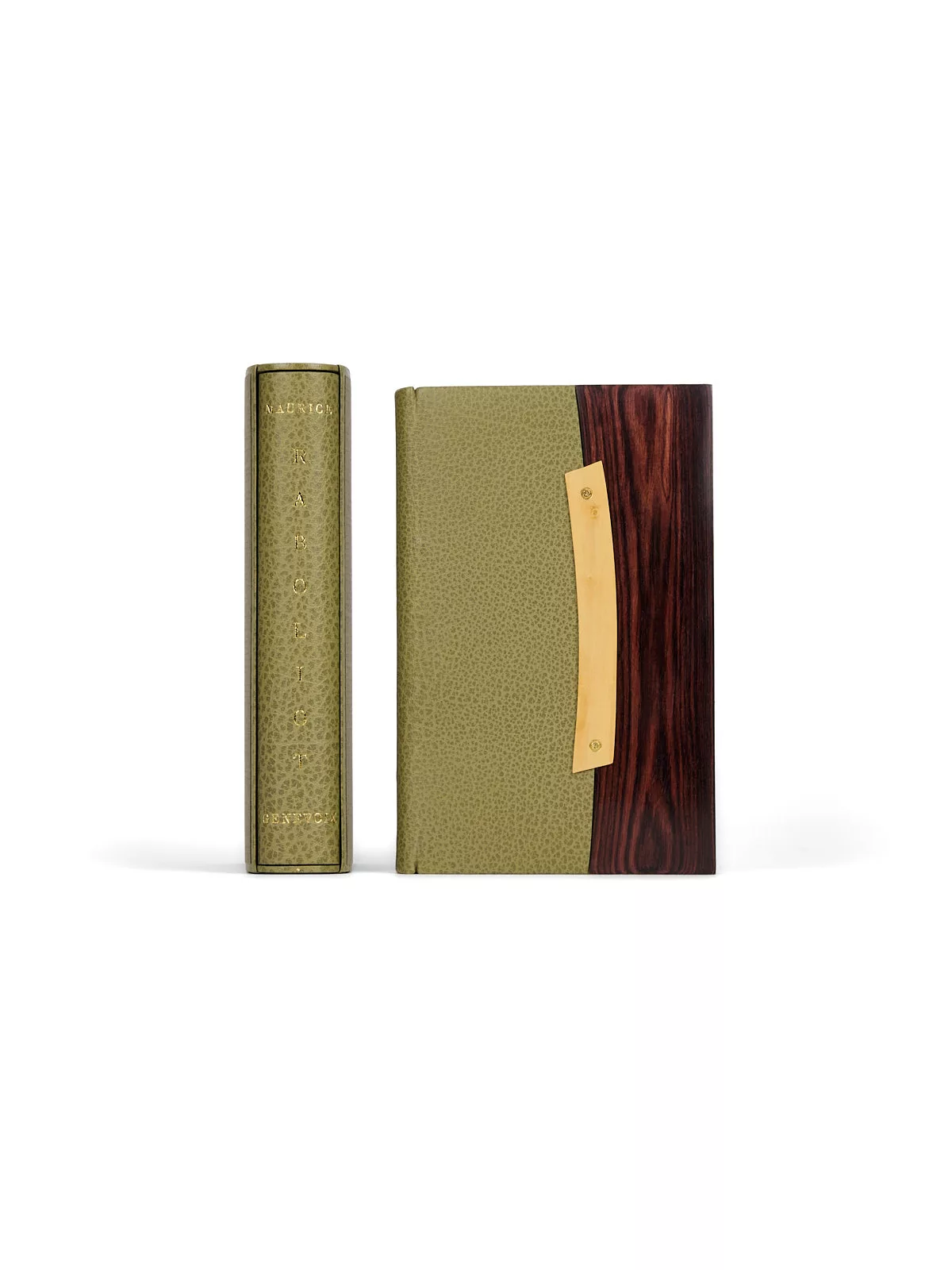
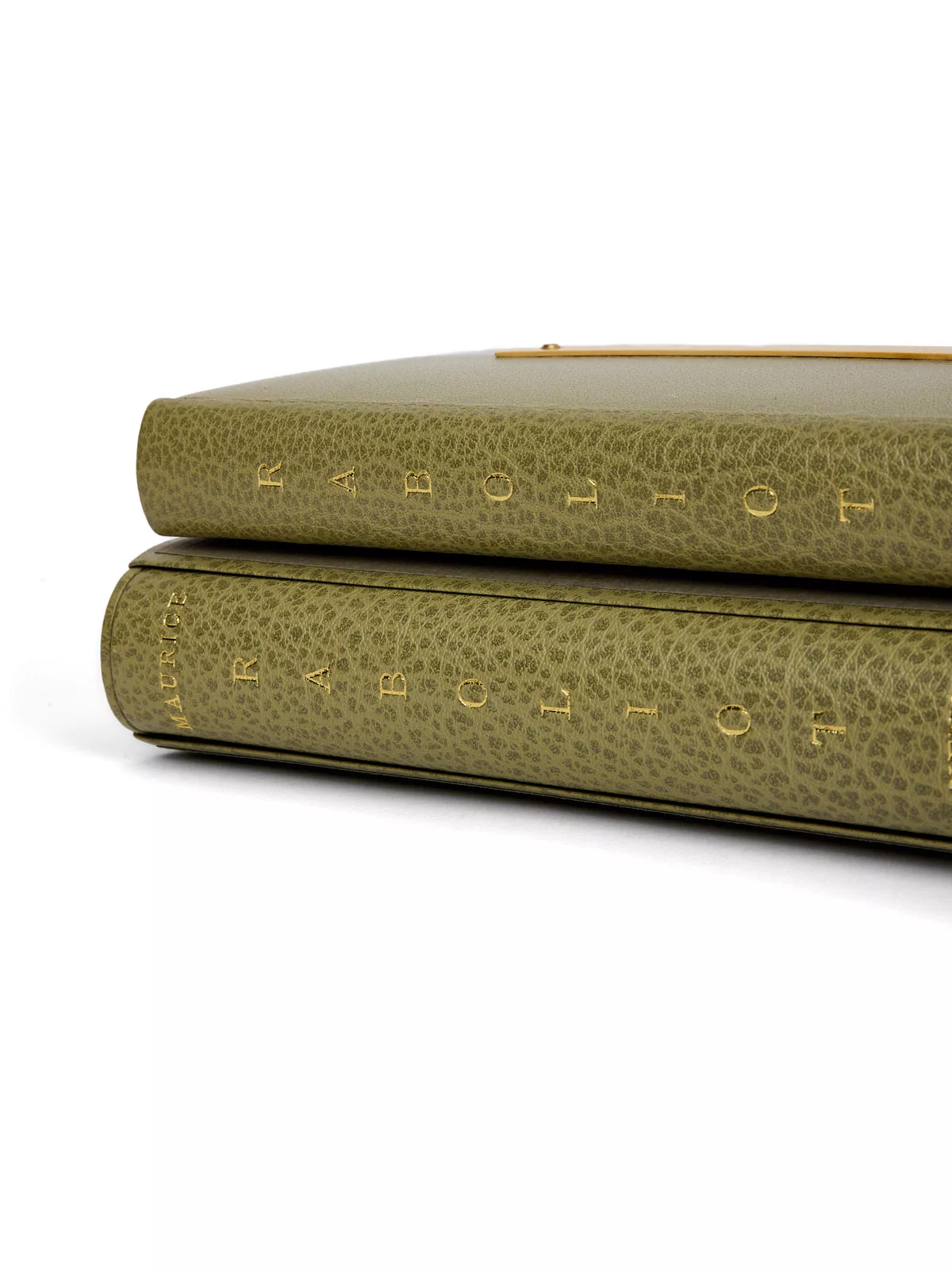
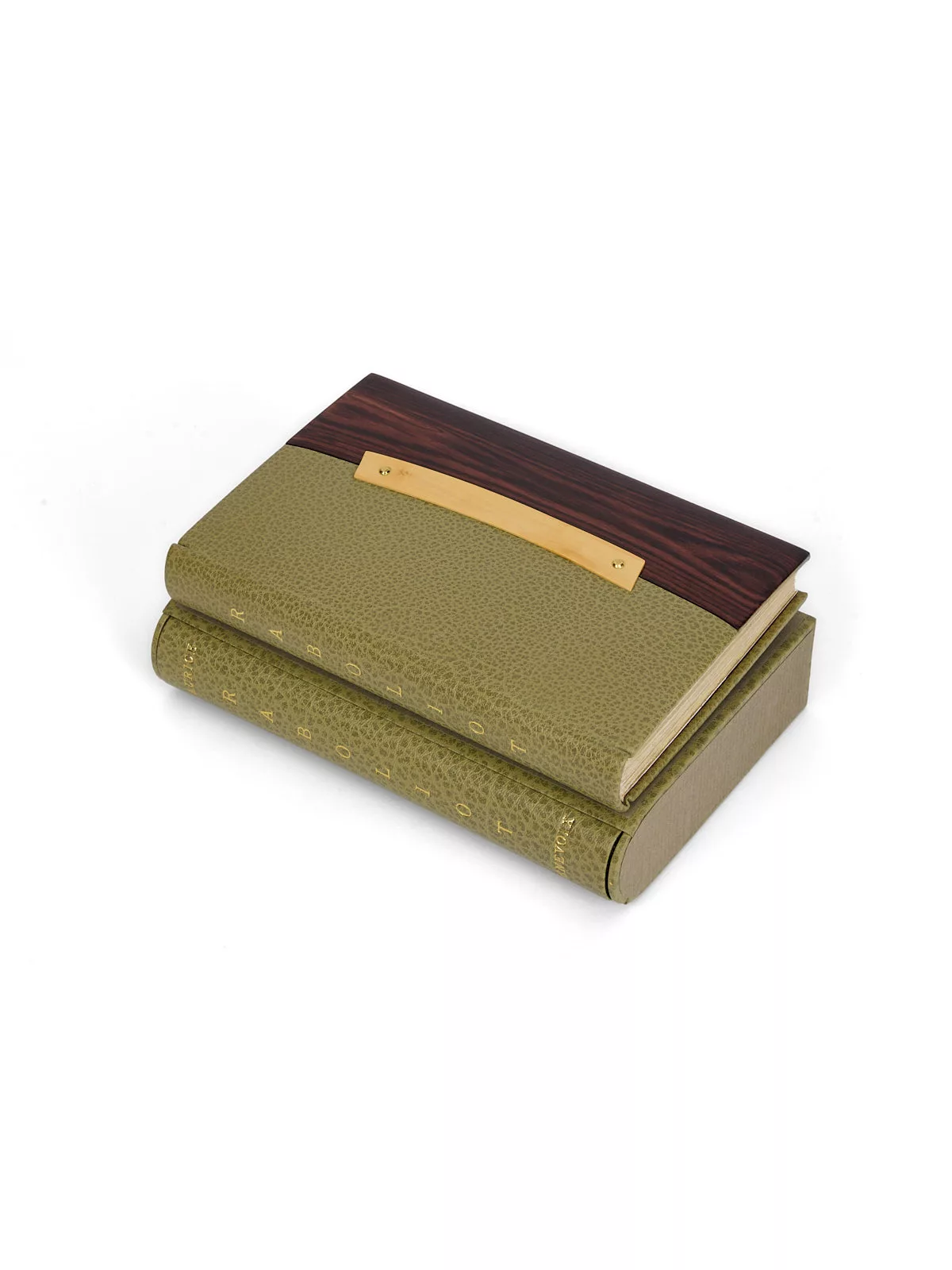
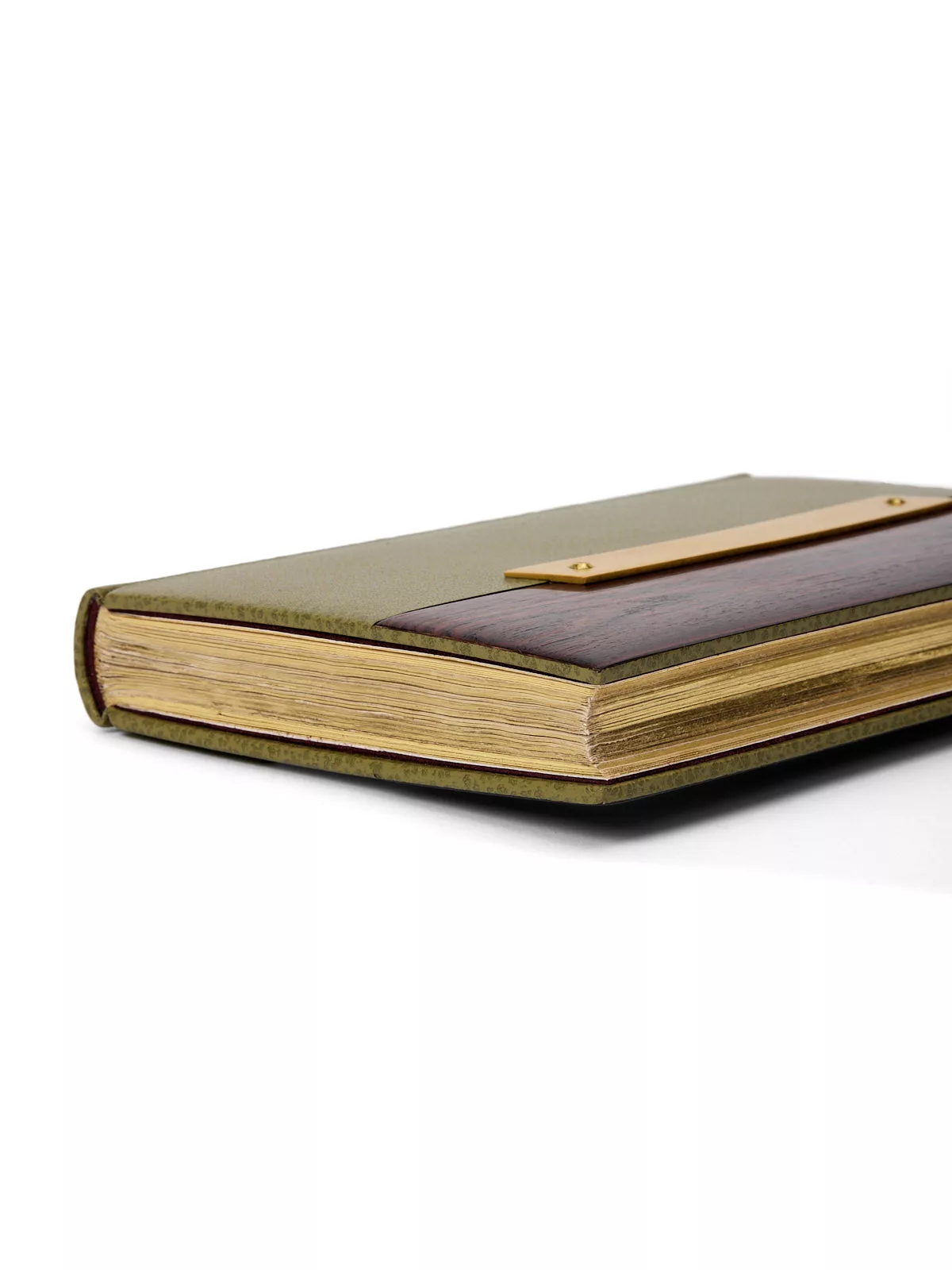
This precious copy, the first of only two hors commerce copies on China paper (the other reserved for Bernard Grasset), is Maurice Genevoix’s own copy, bound by Renaud Vernier.
From his return from the front, and during his convalescence, as early as 1919, Genevoix had begun exploring the Sologne region. He quickly resolved to write about it: “I wanted to do for the Sologne what I had done three years earlier for the Val de Loire: to evoke it, to translate it in my own way, expressing my attachment since childhood, my gratitude for all it meant to me.”
It was at Brinon-sur-Sauldre that his uncle had acquired a hunting ground after the war, and it was there, perhaps yielding to the same call and impulse toward nature, that Maurice Genevoix decided to settle in the summer of 1924: “One evening I took my bicycle on my shoulder, boarded the little road train that would take me to Brinon. I arrived at dusk, jumped into the saddle, and dismounted after six kilometers in front of the gamekeeper Trémeau’s house” (in Trente mille jours, p. 200). It was there, facing the Étang des Clouzioux — which becomes the Étang de la Sauvagère in the novel — that his ideas took shape: “The Sologne is a land teeming with game. The hero of my future novel, a true son of this hunting country, could only be a hunter: not an occasional hunter, some Sunday rifleman, but a hunter by instinct, a free man, indifferent to social constraints, who answers only to his own nature and to the calls that summon and compel him — in other words, a poacher.” Brinon is the native commune of the man known as “the most famous, the cleverest, the most skillful, the most sensational poacher of the region: Alphonse Depardieu,” called Carré, with whom Genevoix secured an “audience” in the autumn, just as the certainty of the novel and its cast of characters were taking shape. A meeting was arranged in Brinon. It never happened: suspicious, the poacher failed to appear. No matter. Genevoix, determined to shape this universal poacher by merging several real-life figures, created “his” poacher: Pierre Fouques, known as Raboliot.
He would recall this failed meeting with Carré-Depardieu with precision in Jeux de glaces (1961), noting that Carré “was not the last to claim, and perhaps to believe, that he had served as my model. And truly I owe a great deal to this man who did not come, one autumn day in 1924, to the back room of the rustic inn where I waited for him in vain” (p. 90). He also explains there the origin of his hero’s nickname: the name Raboliot — designating a young rabbit still in its nest, the “rabolière” — comes from the hunters of the Sologne: quick, cunning and free amid this vast territory. The commune remains, to this day, the largest by area in its département: it covers 11,600 hectares and is crossed by some 340 kilometers of rural paths! In 2025, only 132 communes in France cover more than 100 km².
Consecration by the Prix Goncourt would follow. Sous Verdun had brought him onto the final shortlist in 1916, as had Rémi des Rauches in 1922. A year before Raboliot was published, a decisive meeting took place with Lucien Descaves, an important figure of the Académie Goncourt: “Genevoix, I must clear my conscience. We have long wished to award you our prize. ‘We’ means a majority. Unfortunately for you, there is a veto. Rosny aîné, our president, for reasons that are none of our business, harbors such resentment against the Fischer brothers that he has sworn to himself: never, as long as he lives, will the Prix Goncourt go to an author of the house whose literary directors they currently are…
— Then I must give up hope.
— And why on earth?
— Because I am bound to that house by a fifteen-year contract.
— So what?
— There are still nine years left to run.
— And then what? Descaves repeated. I guarantee you that if your next novel is as good as your Rémi des Rauches, you will not lack for publishers willing to risk a lawsuit. As for me, I have told you what I wanted to tell you. Draw your own conclusions.” (in Trente mille jours, p. 224).
It was Bernard Grasset, through Louis Brun, who took that risk, after months of battles, lawyers’ letters and formal notices, between February and July 1925 — culminating in a lawsuit, largely won: Genevoix was granted a dispensation allowing him to publish three books outside the Flammarion house. Raboliot, whose manuscript had been finished since 23 January 1925, was thus published by Grasset, with whom the contract was signed that summer.
The book, printing completed on 29 September, appeared in October and was an immediate success. On 16 December, Genevoix sat down with his uncle and aunt for a waiting luncheon whose minutes felt like hours. Finally, at 1 p.m., when the verdict was announced, it was Louis Brun, trailed by a crowd, who brought him the good news. A journalist from Le Figaro was the first to record his reaction: “It was there, in the company of a few friends, that we ourselves brought him the good news, handing him the official letter signed by the ‘nine,’ announcing his success. At once his fine, intelligent face lit up, and great joy shone in his eyes: ‘Please convey above all my deep gratitude to all the members of the jury, to all those who voted for me as well as to the others, and in particular to MM. Descaves, Geffroy and Hennique, who always encouraged my efforts.’”
He thus gave Bernard Grasset his third Goncourt laureate — after the 1911–1912 double with Alphonse de Châteaubriant’s Monsieur des Lourdines and André Savignon’s Les Filles de la pluie. Fifteen further Goncourt-winning titles would follow at Grasset (Peyré, Charles-Roux, Laurent, Chessex, Maillet, Bodard, Fernandez, Host, Vautrin, Combescot, Maalouf, Rambaud, Quignard and Weyergans). And 16 December was a fortunate day for the publisher on rue des Saints-Pères: the Prix Femina, on the same day, crowned Joseph Delteil for his Jeanne d’Arc. That year, Orléans was thus doubly honored in the literary prizes!
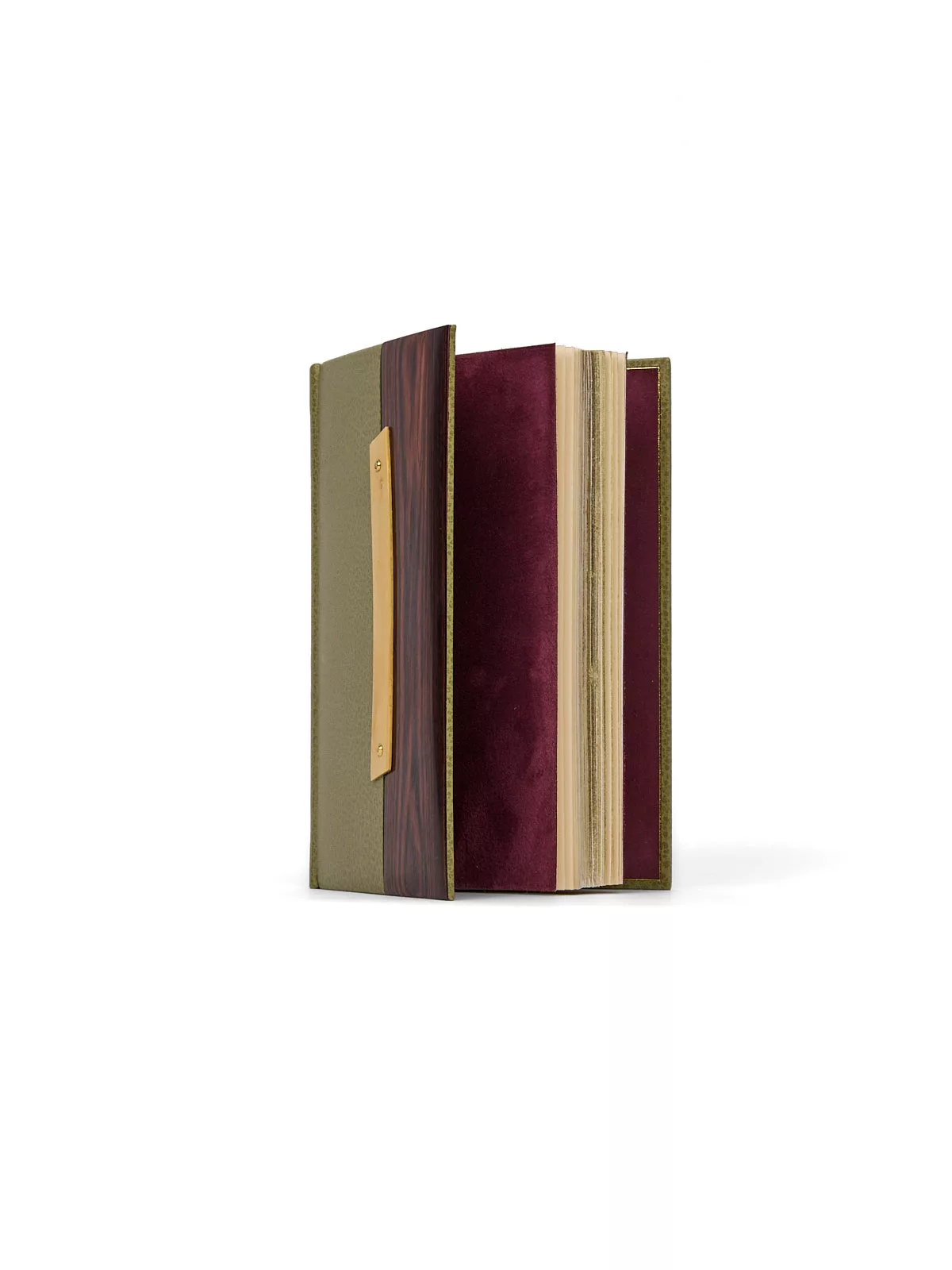
An impeccable and most precious copy, in a flawless and harmonious binding by Renaud Vernier, Maître d’Art, made specially for the occasion, one hundred years after the book’s publication: an anniversary binding well deserved by such a copy.
From the library of Maurice Genevoix, at “Les Vernelles” (bookplate).