

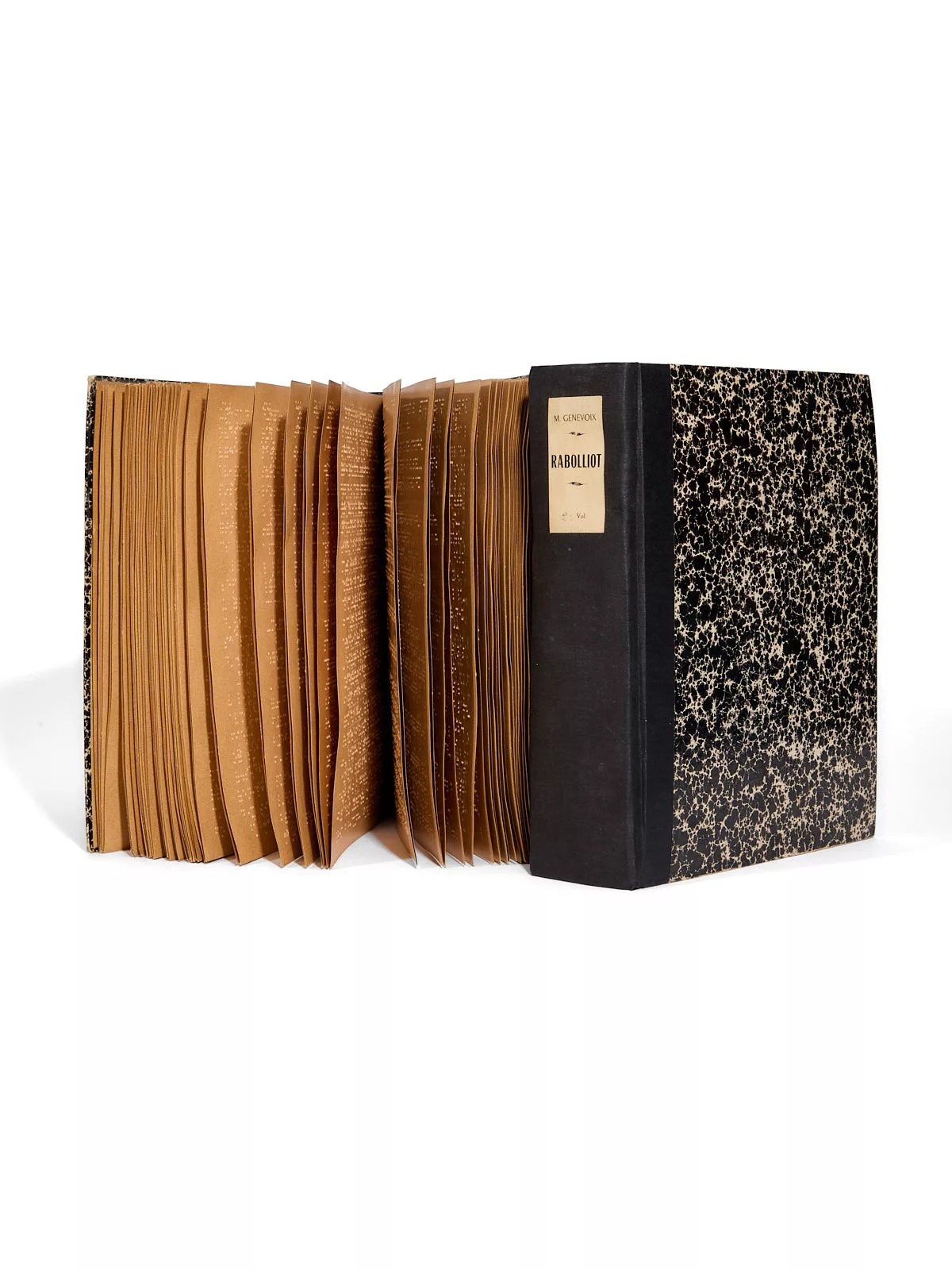
Raboliot
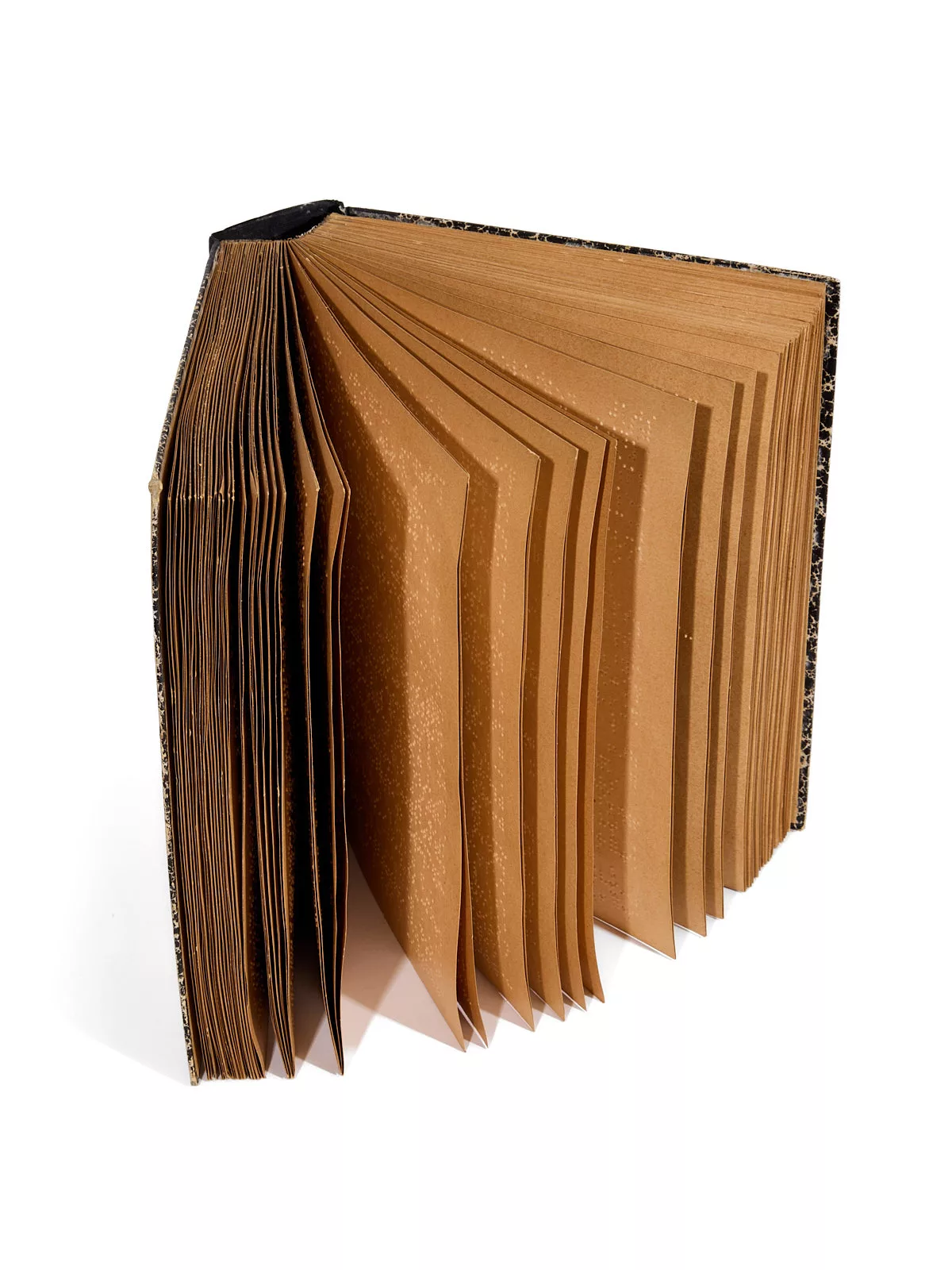
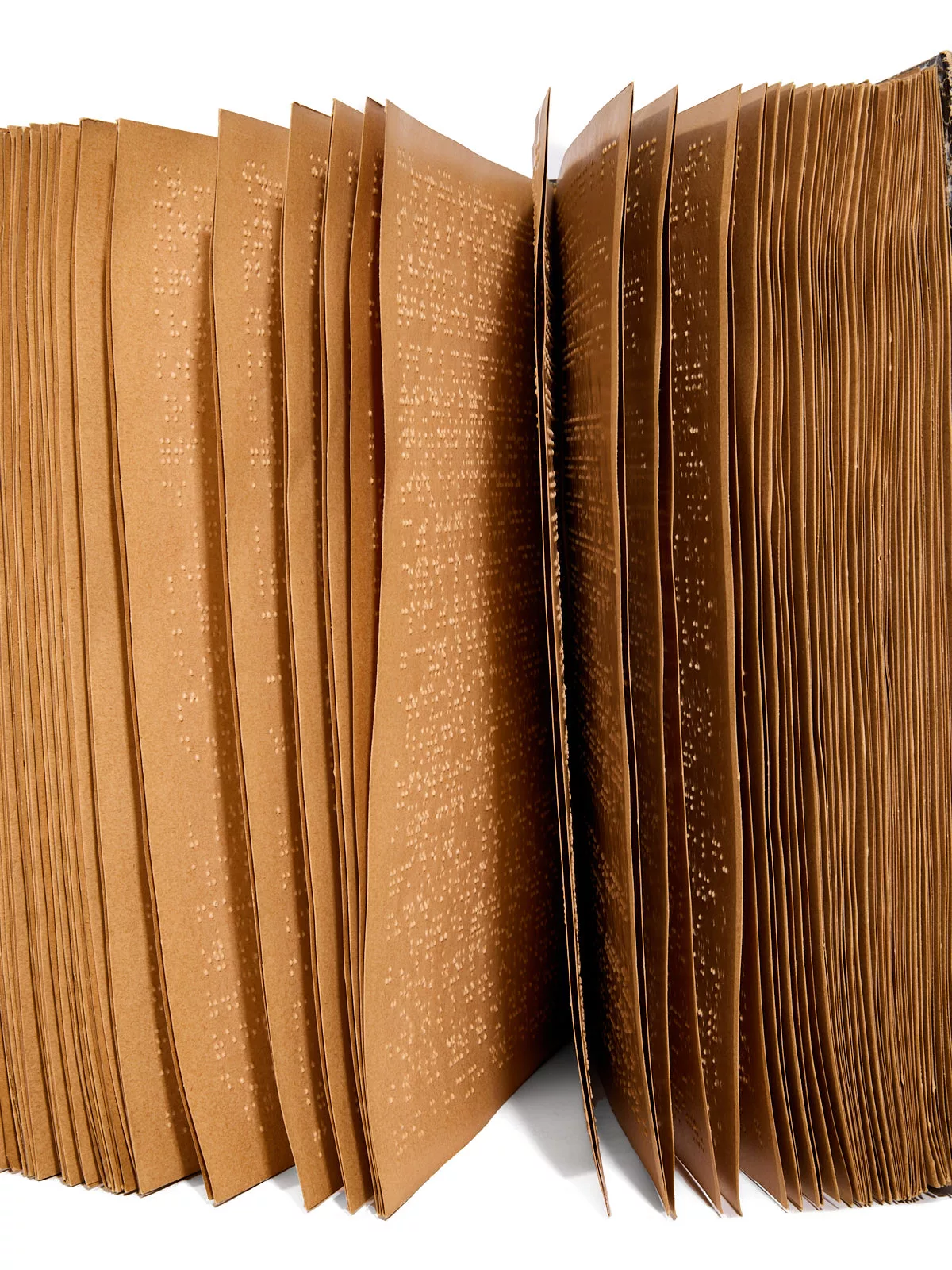
Braille uses the sense of touch for both writing and reading, by means of raised dots. It takes its name from Louis Braille, blinded by accident at the age of three, who studied at the Institution Royale des Jeunes Aveugles in Paris. In 1821 he learned of a system of raised-dot writing devised specifically for the blind by Charles Barbier de la Serre: a phonetic script of up to twelve dots, together with an alphabetic script of up to ten dots. After several years of research based on this alphabetic method, Louis Braille published his own six-dot system in 1837, which simplified the process while making it even more effective: this is the orthographic braille script still used today.
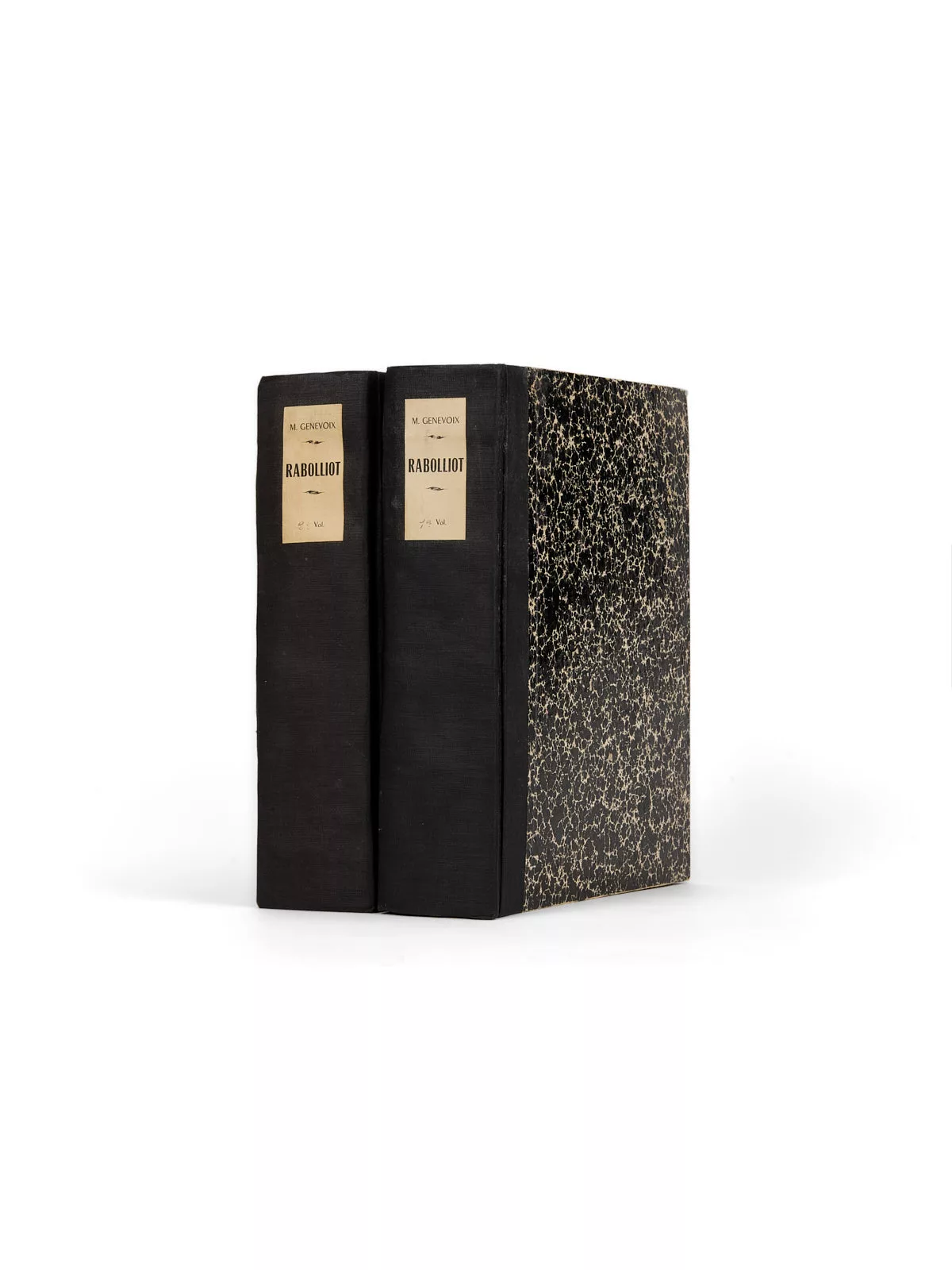
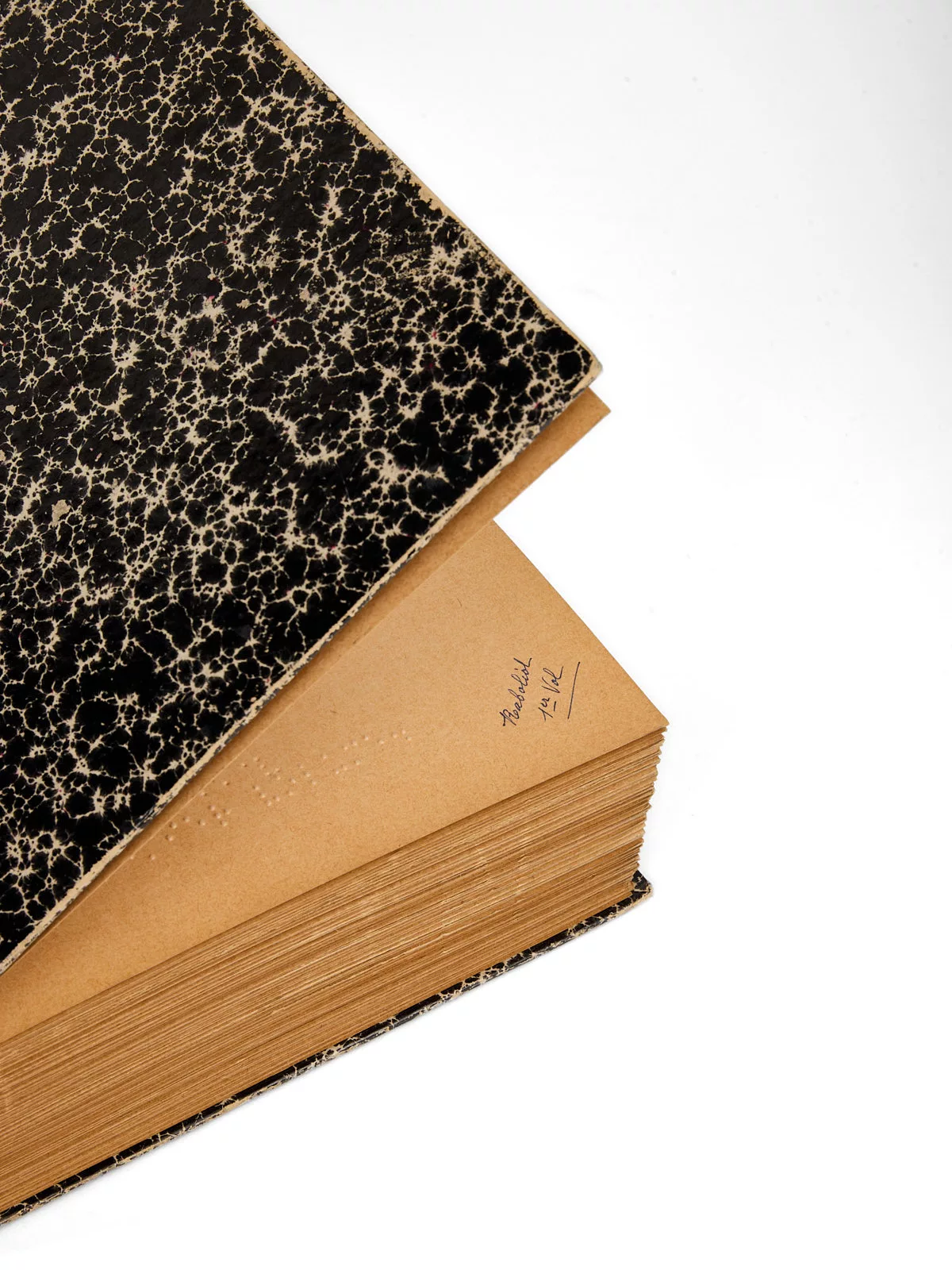
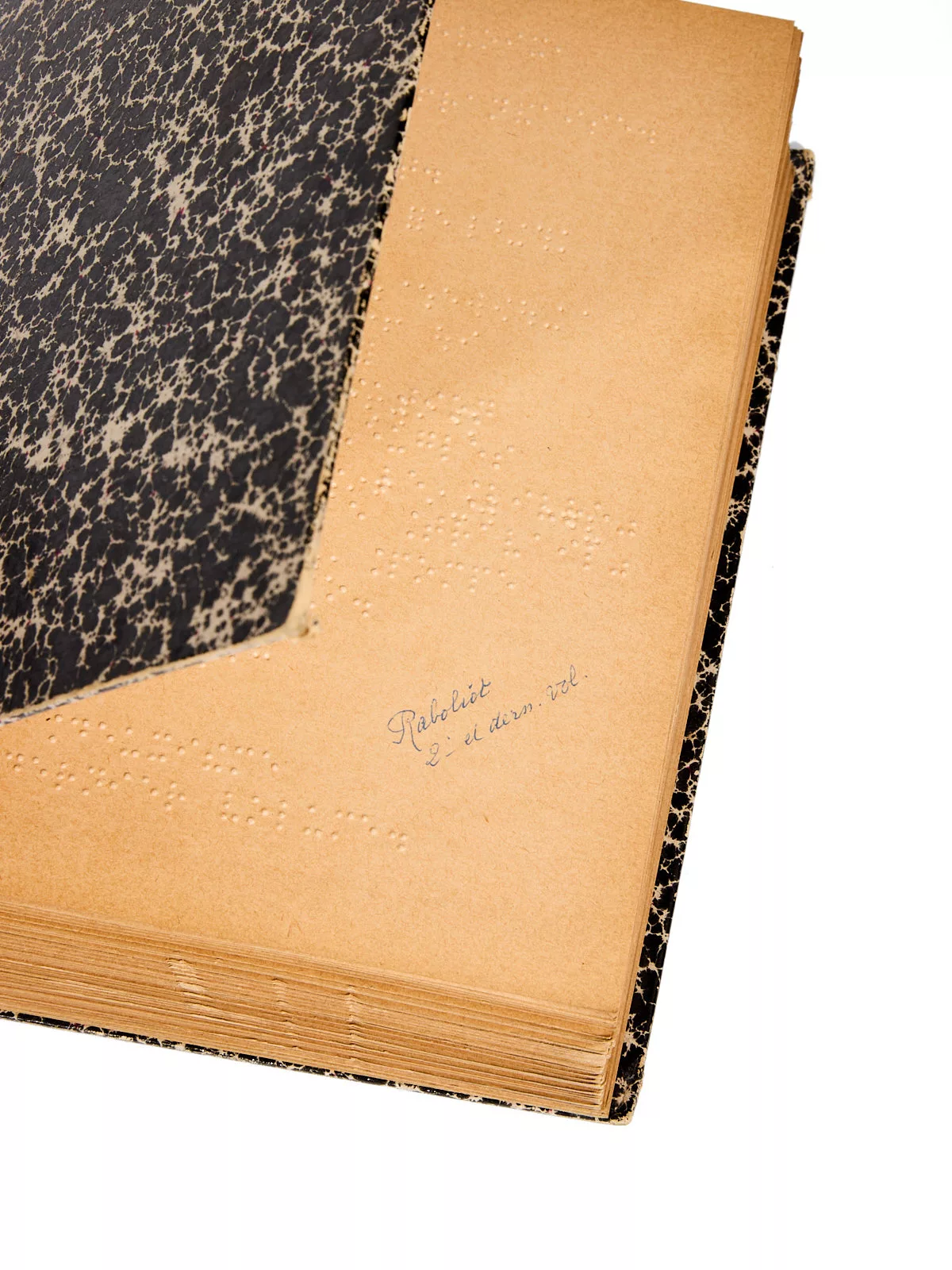
A rare embossed edition of Raboliot, intended solely for tactile reading in braille: no visible printed text appears, apart from the titling on the spines of the volumes. Produced non-commercially, it was issued at the initiative of the Association pour les Aveugles, founded in 1917 by Mme Chambet-Chenault, whose purpose was the care and social reintegration of the blind. A rehabilitation center for the recently blinded was established in 1963 at the Domaine des Ombrages, in Marly-le-Roi: a pioneering national institution, the first of its kind in France for supporting people who become visually impaired in adulthood.
This edition of Raboliot was published there, and the present copy was presented to Maurice Genevoix, accompanied by an autograph card signed by Mme Chambet, dated November 29, 1967, addressed to the Permanent Secretary of the Académie française in tribute to his support for the Association: “En hommage de gratitude à Monsieur Maurice Genevoix […] pour l’intérêt qu’il eut bien voulu porter à l’Association ‘Pour les Aveugles’ et à sa Présidente-Fondatrice.”
The work comprises two thick volumes, probably produced in a very small print run for institutional use, intended for consultation in specialized centers. The fact that Raboliot was transcribed into braille shows that the novel was regarded as a fundamental text in accessible reading programs and, beyond its “ordinary” readership, as a major title of national memory, justifying its presence in collections intended for the blind and visually impaired.
From the library of Maurice Genevoix, at “Les Vernelles” (bookplate).