

Raboliot
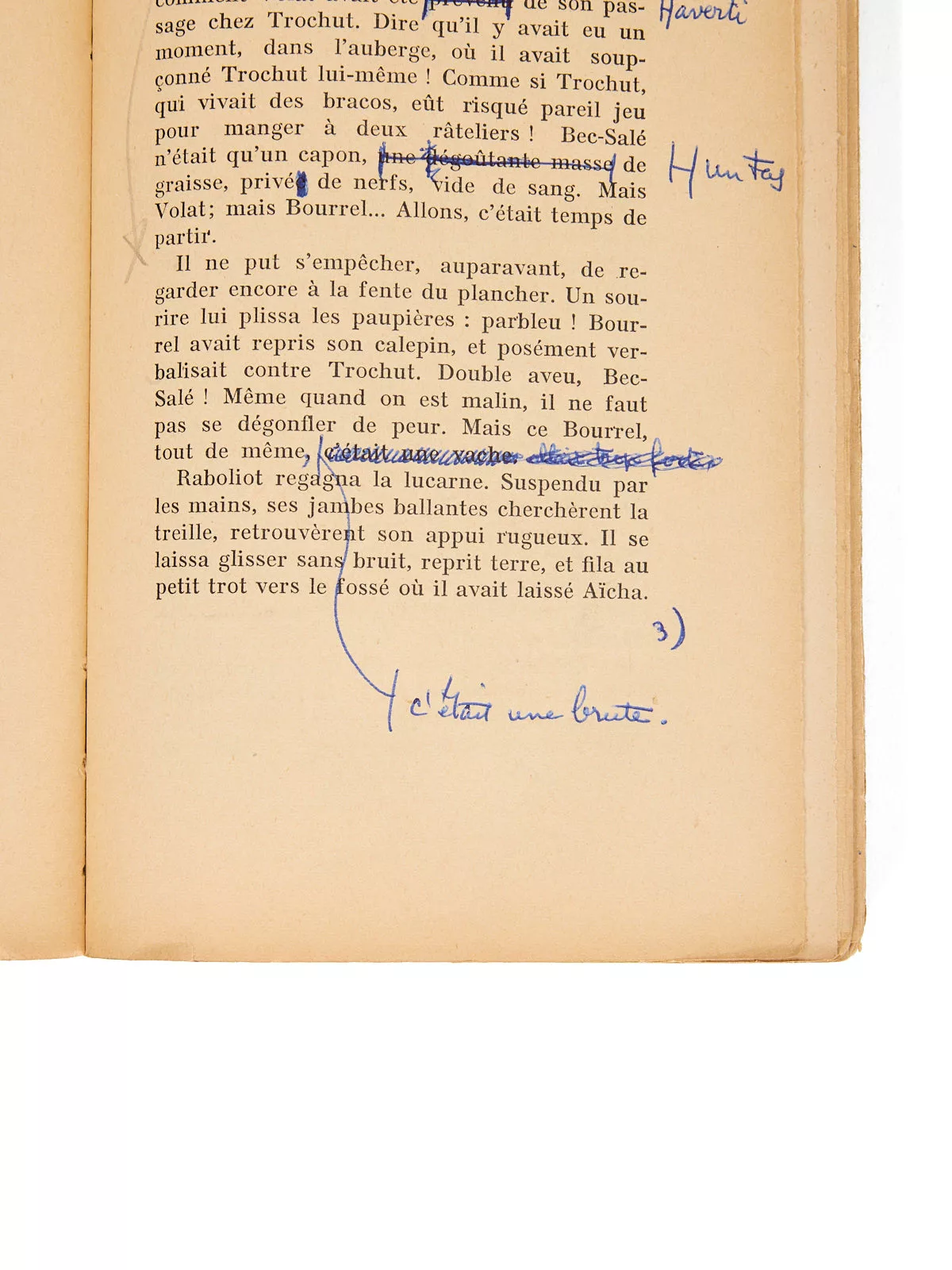
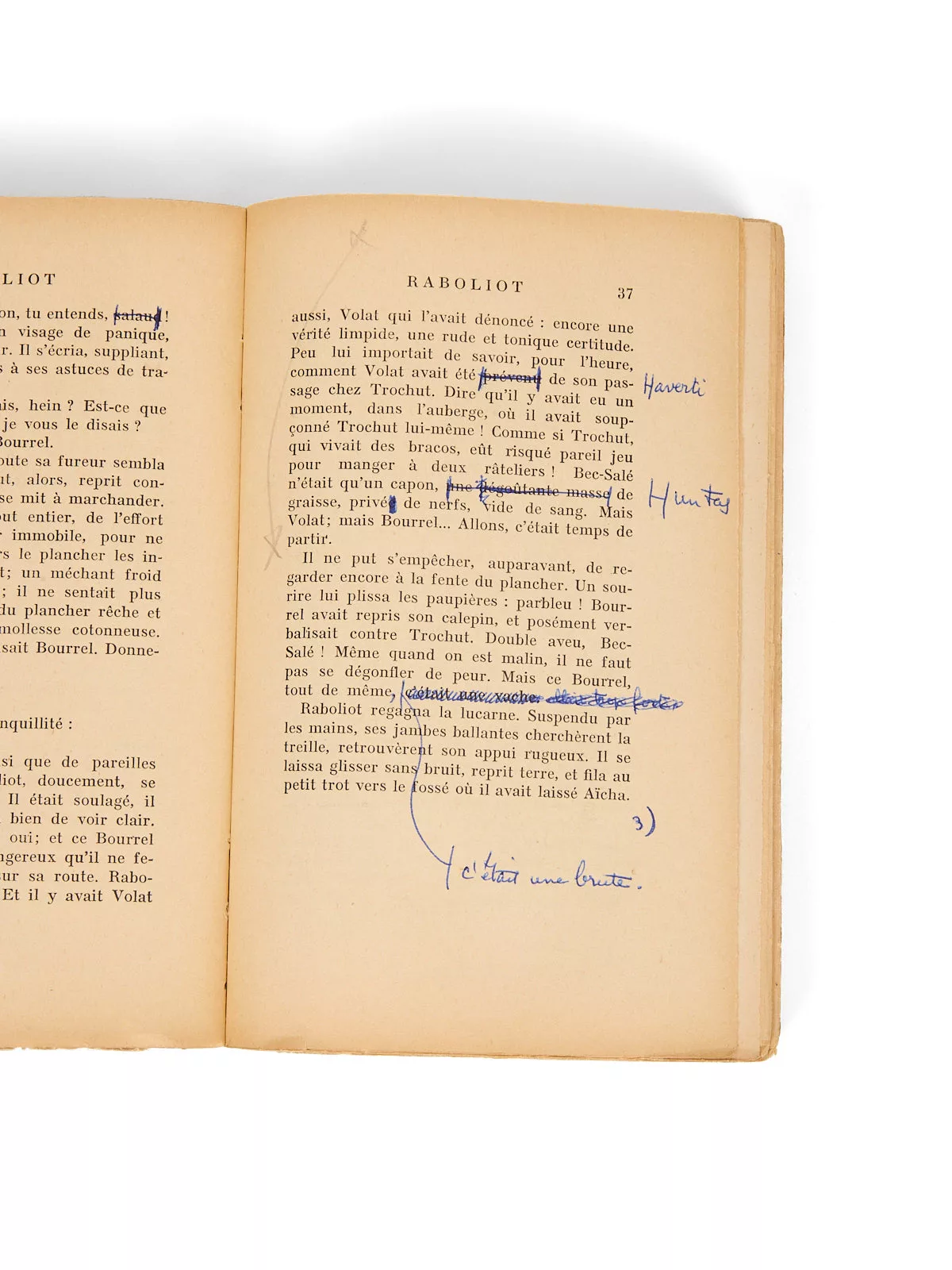
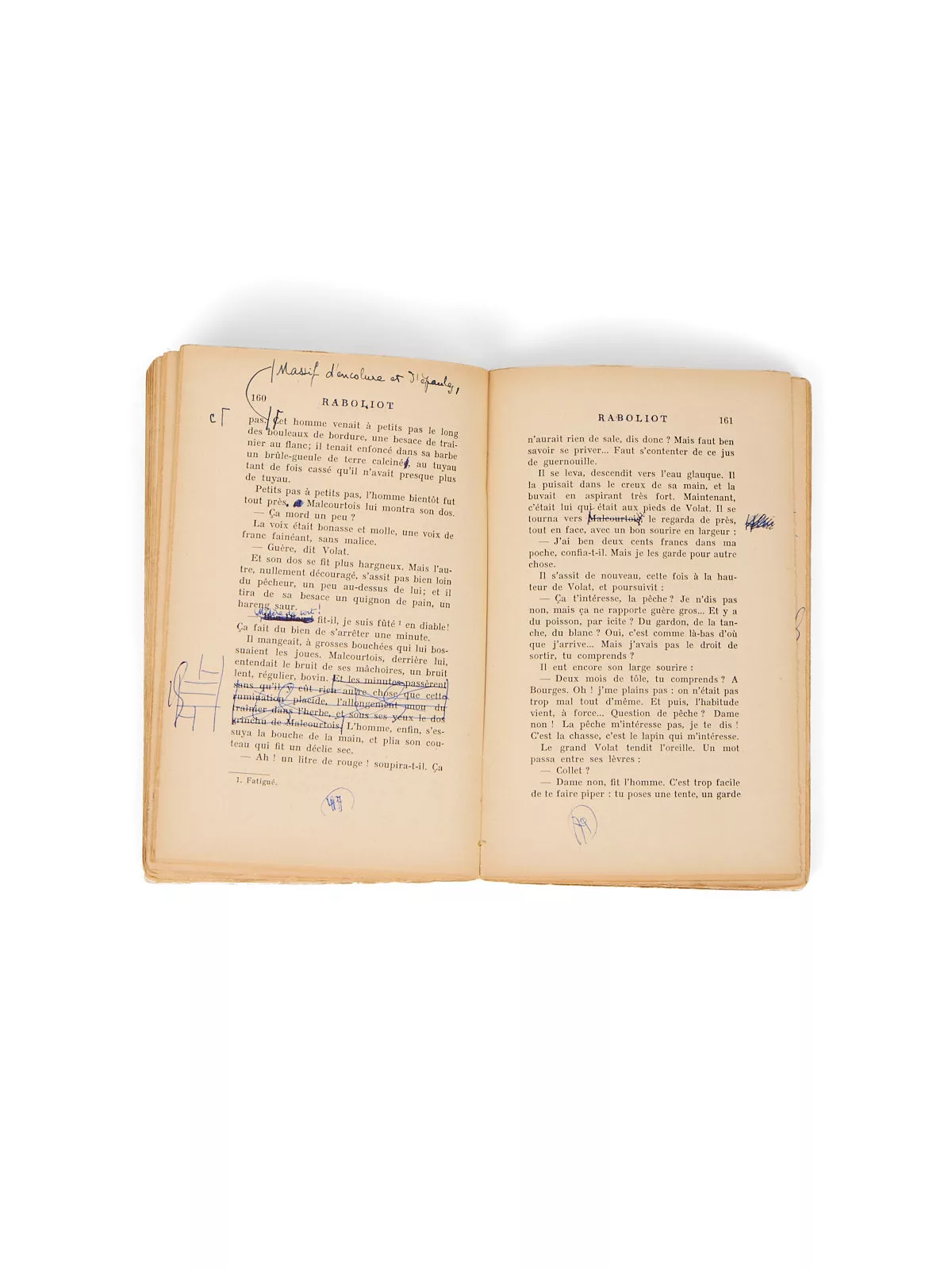
The volume bears at the front this autograph note: “Copy revised for the microphone reading. The deletions will need to be transferred (with adjustments) to another copy intended for the illustrated Delagrave edition. There, perhaps, some of these changes (much less extensive) could be retained, in anticipation of a new Grasset edition.”
Elected to the Académie française in 1949, Genevoix entered the pantheon of French letters. The 1950 publication of Ceux de 14 further confirmed this standing. It was in this context that he decided to revise Raboliot, in preparation for its inclusion in the Livre de Poche series.
This 1953 printing, from which the equivalent of 26 pages was cut from the original text, is described as a “new edition” and includes a foreword in which Genevoix explains his approach:
“This is not the first time that the reprinting of one of my books has exposed me to a temptation: so much so that this temptation gradually became familiar to me, and I learned at the same time to be wary of it, generally to the point of not giving in. If I have done so this time, it is partly because men, however reasonable they believe themselves to be, take pleasure in the weaknesses they allow themselves. But it is also because a long interval of time allows a novelist to react more objectively to a story he has told, to perceive its echoes more truthfully. How, then, could I not give in? Here, then, is a Raboliot that I did not wish to make different, nor artificially rejuvenated, but a little closer to the image that, as the years and life have passed, I now have of him.”
In this same context, Genevoix was also preparing a radio reading of the text: this copy contains the novel divided into 28 sequences, each timed and annotated. On page 95, he notes: “I had recorded 7 readings so far. It will be necessary to record again because of the time imposed on each reading: 19 minutes maximum…” Beyond the cuts required for timing, Genevoix reworked certain passages: lexical additions, deletions of words, simplification of phrasing. Many corrections also concern substance, intended to stabilize the text for future editions.
Already in November 1952, Genevoix had given a talk on national radio, preceded by a lengthy reading. In it he confessed that he could not say whether Raboliot was his best novel, but that it remained “the one to which he remained most attached.” He recalled that Raboliot is not an invented novel, but “the novel of a lived truth”: a work born of the Sologne land, its people and its forests. He said he had lightened and refined it, so as to let the force of the character express itself without artifice: “To revisit my sentences twenty-five years later was like meeting a young man one once was: I kept the momentum, removed the superfluous.”
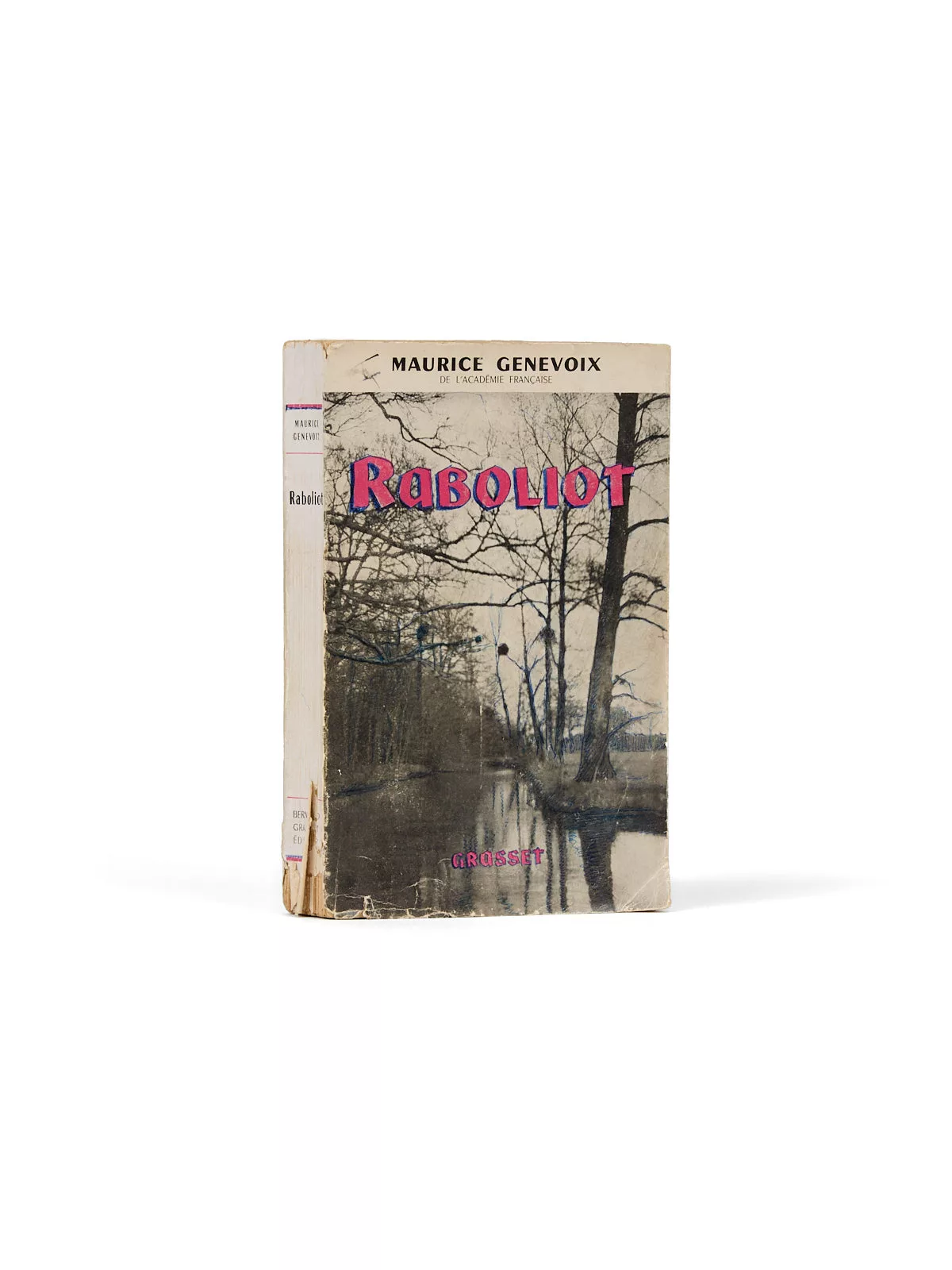
Genevoix highlighted the title and photograph on the cover.
This copy was included in the exhibition “Maurice Genevoix” organized at the Bibliothèque historique de la Ville de Paris (December 12, 1990 – February 12, 1991, no. 186 of the catalogue).
From the library of Maurice Genevoix, at “Les Vernelles” (bookplate).