

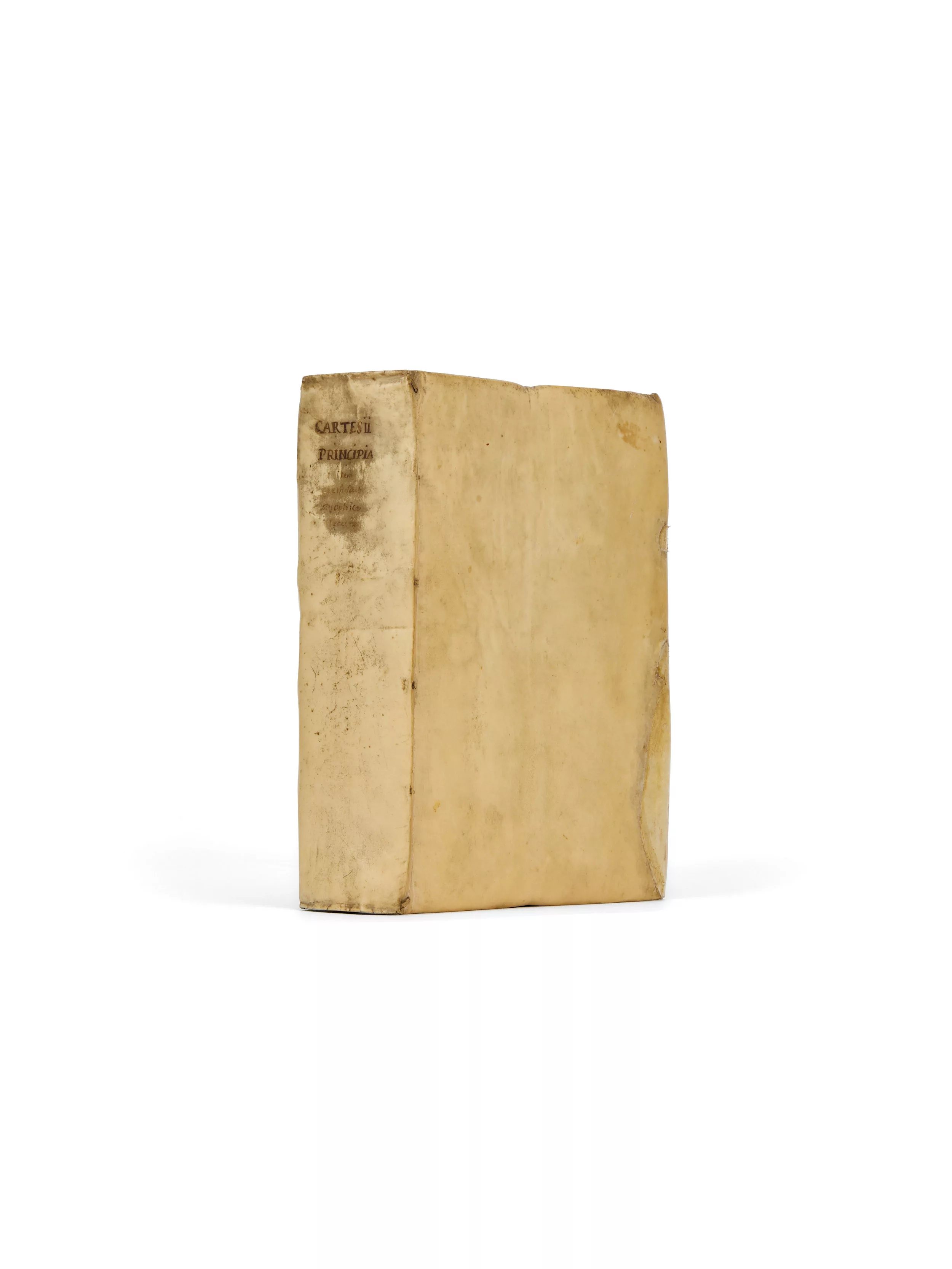
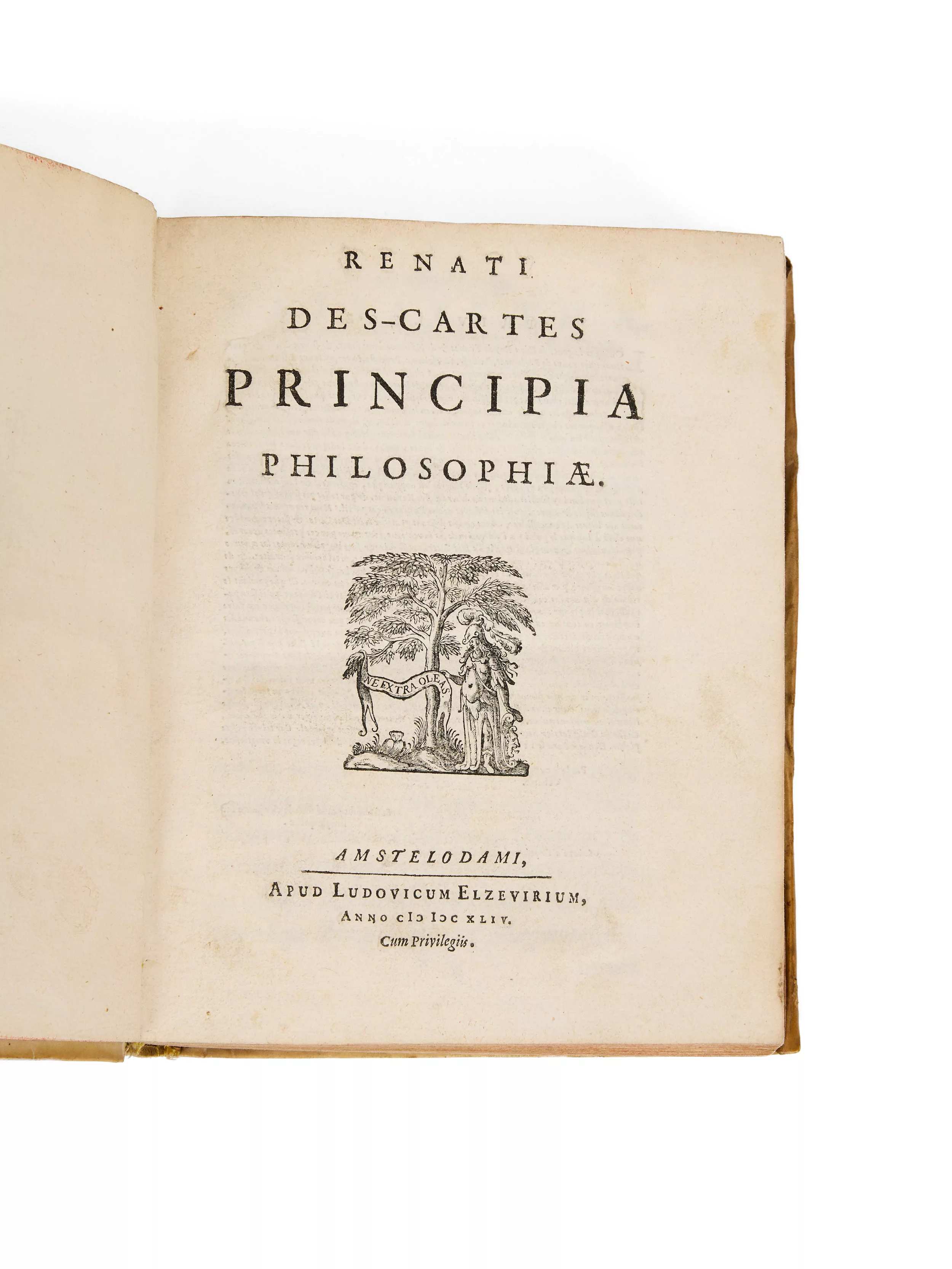
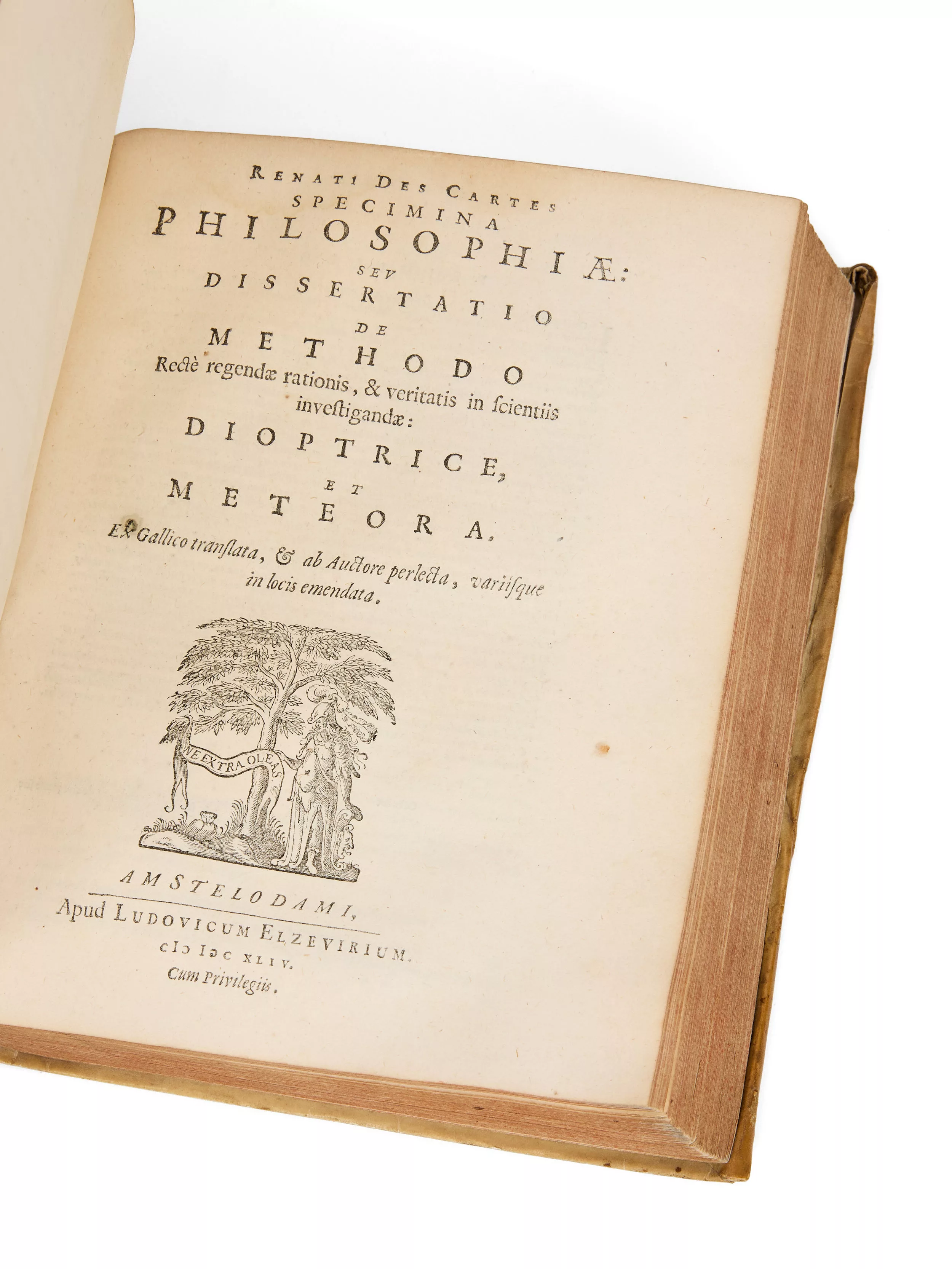
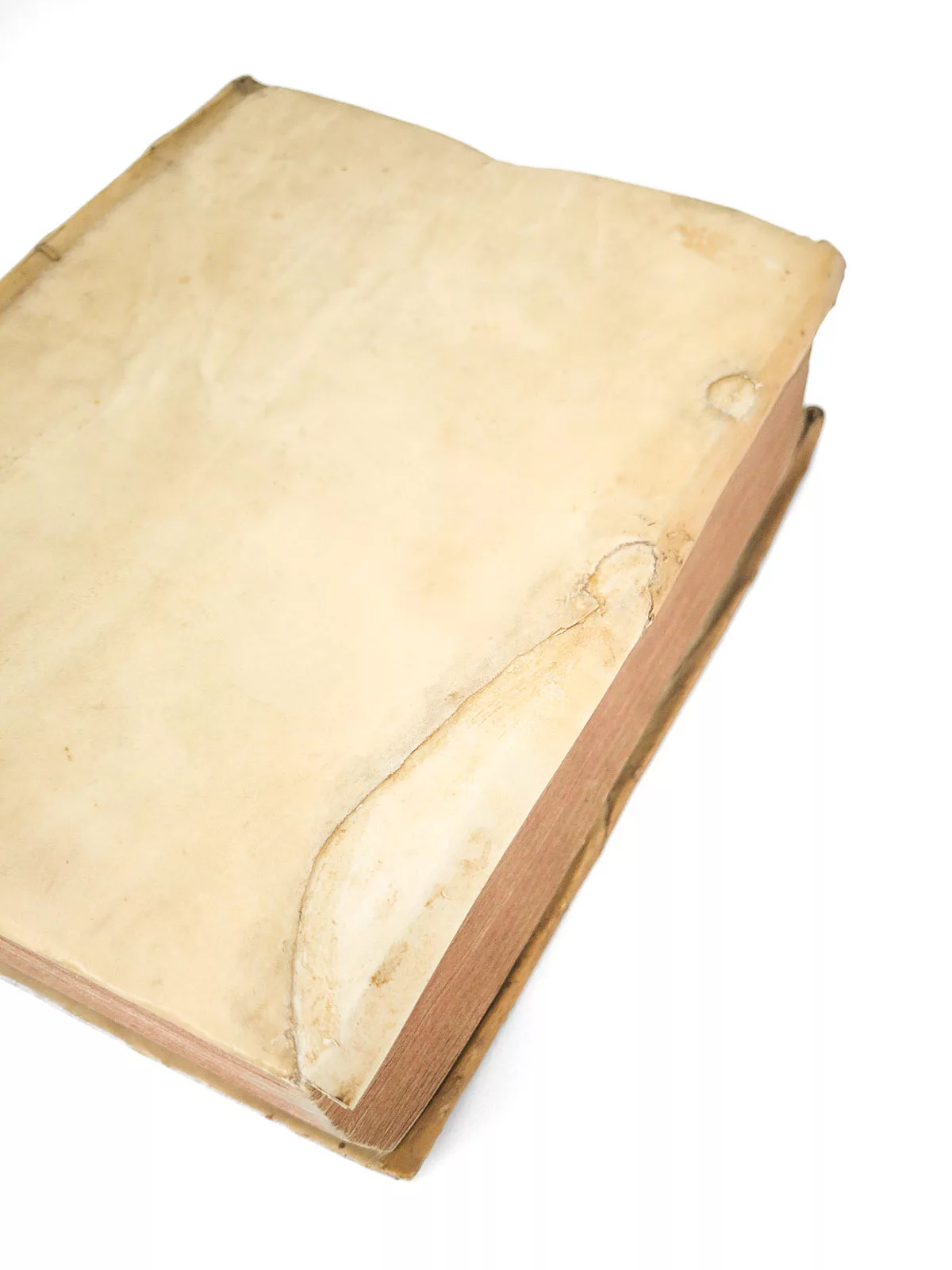
Principia philosophiae. Specimina philosophia :
It would be translated into French by Abbé Picot in 1647.
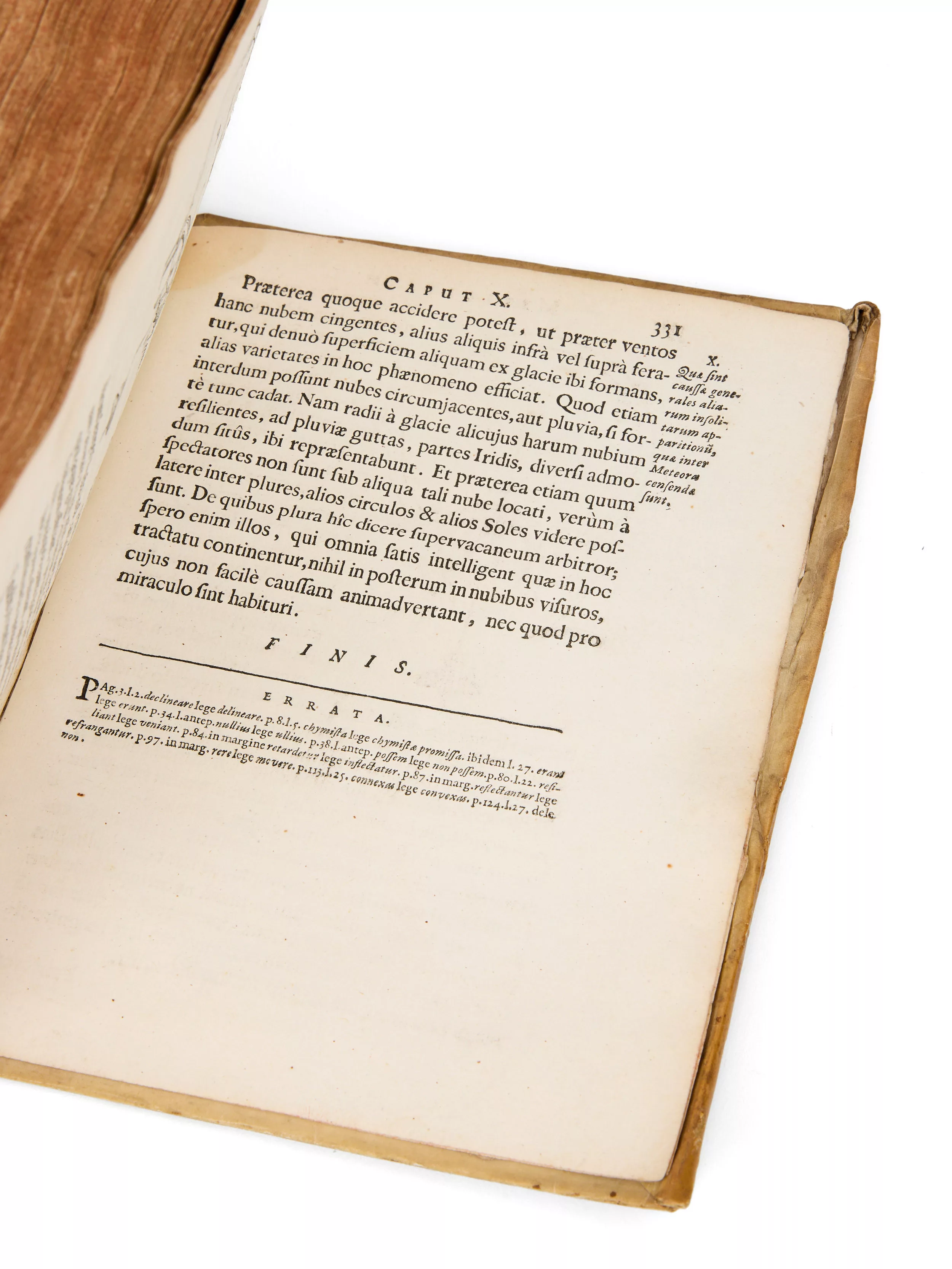
This volume contains the first edition of the Principia. It is followed by the Specimina philosophiae, a title grouping together the Discours de la méthode, the Dioptrique and the Météores, all in their first Latin translation, by Estienne de Courcelles. The Discours de la méthode was, in this translation, slightly modified by Descartes.
The volume contains the very first occurrence of the famous “I think, therefore I am” in its Latin form, “cogito, ergo sum,” probably the most celebrated philosophical formula in the world.
This thought was first forged in the Méditations métaphysiques, in its initial form “Ego sum, ego existo” (1641), then given in French in the Discours de la méthode in 1637 as “Je pense donc je suis,” before taking its Latin form, “Ego cogito, ergo sum,” in 1644 in the Principia philosophiae, where it appears on the last line of the first part, “De principiis cognitionis humanae.”
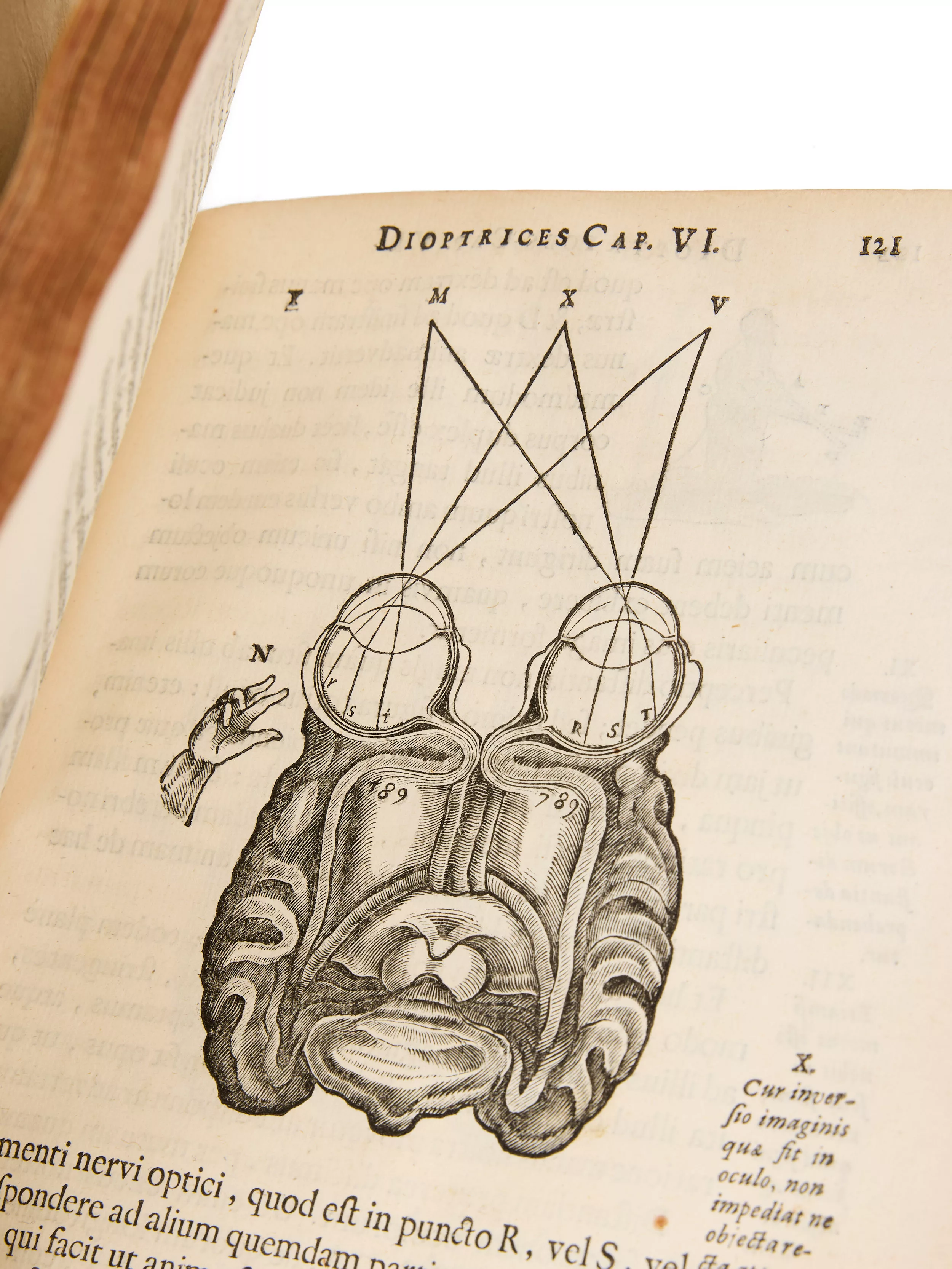
Numerous woodcut figures, illustrating Descartes’s work on the refraction of light, vision and the phenomena of the rainbow and the winds, accompany the text of the Dioptrique and the Météores, where Descartes explains the movements of the heavenly bodies in the solar system through the action of forces, supposing that each body is surrounded by a vortex of subtle matter that carries it along. This is the first edition of Descartes’s system of physics, in which he develops his theory of vortices, the starting point for all serious work in physical theory in the mid-seventeenth century, including that of Newton.
On the verso of the title page is the privilege, which, according to Nodier, is “the most memorable monument of the protection that the kings of France have granted to letters.”
Descartes’s philosophical works were printed six times by the Elzevirs in this quarto format, and this 1644 edition is the very first.
A copy complete with its two blank leaves (b4 and another in QQ4), with 83 geometrical and scientific figures engraved on wood, including 21 plates included in the pagination for the Principia.
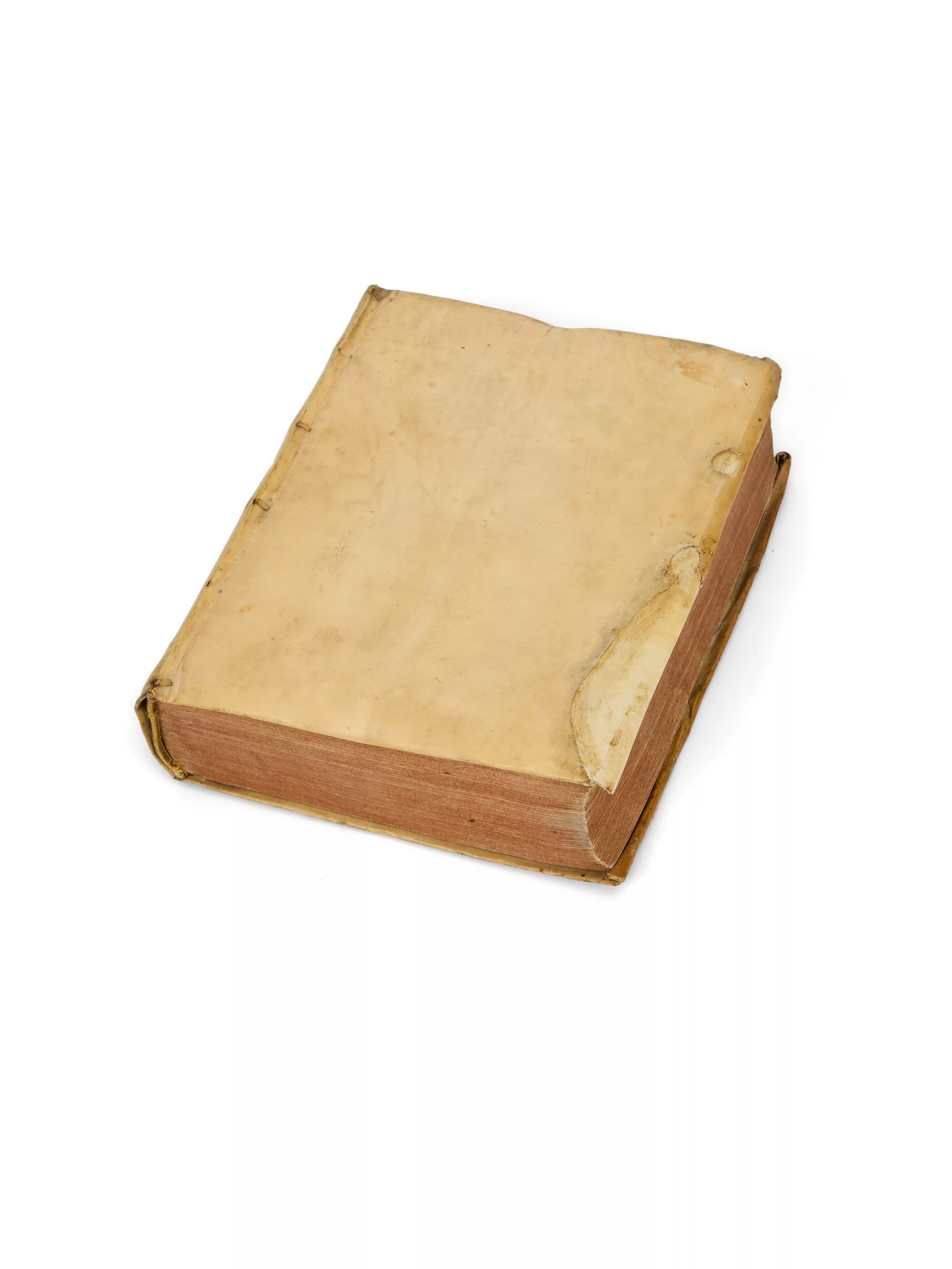
The right margin of the front cover has been restored at an early date; otherwise a very fine copy, very fresh, in perfect internal condition.
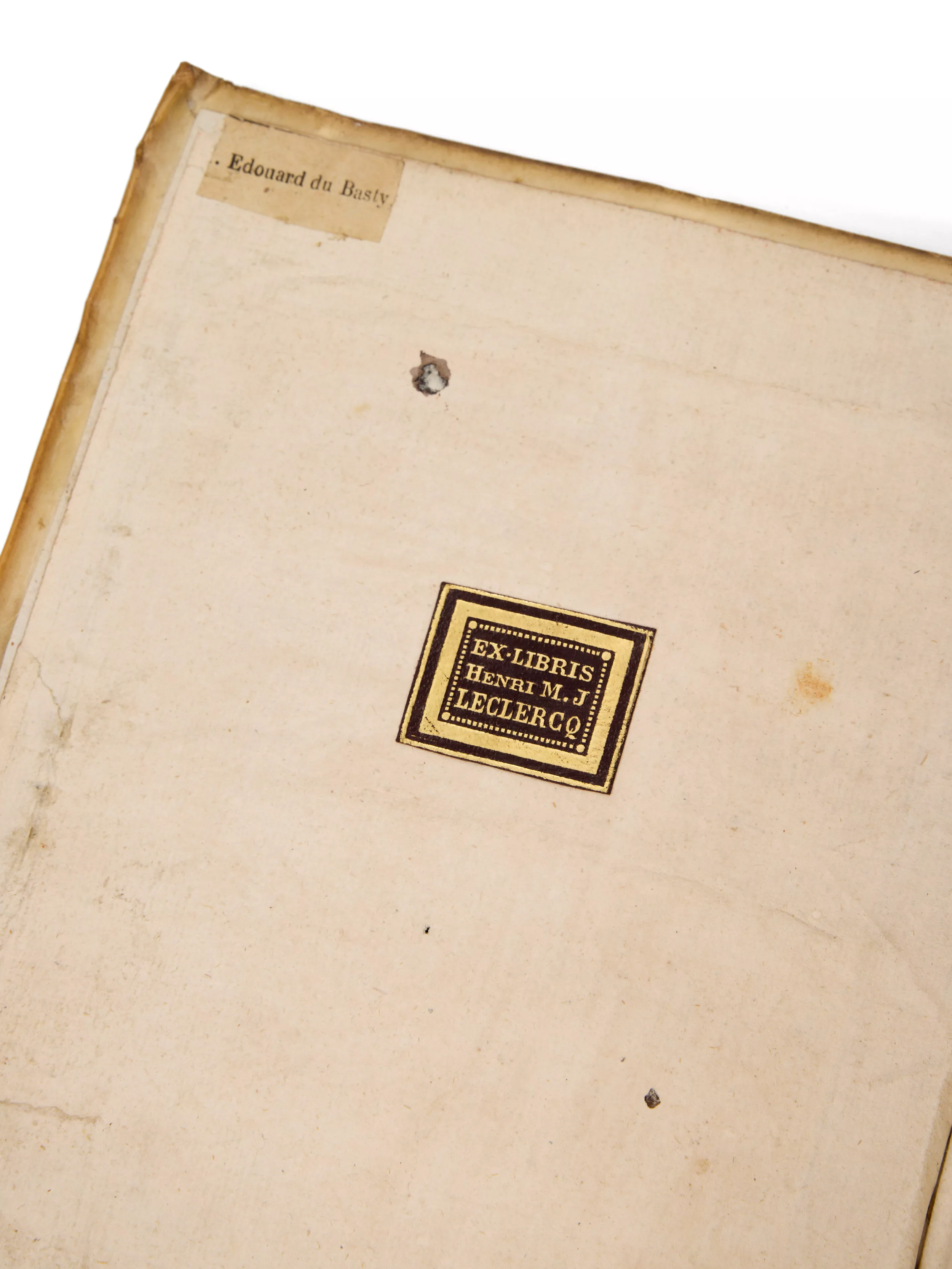
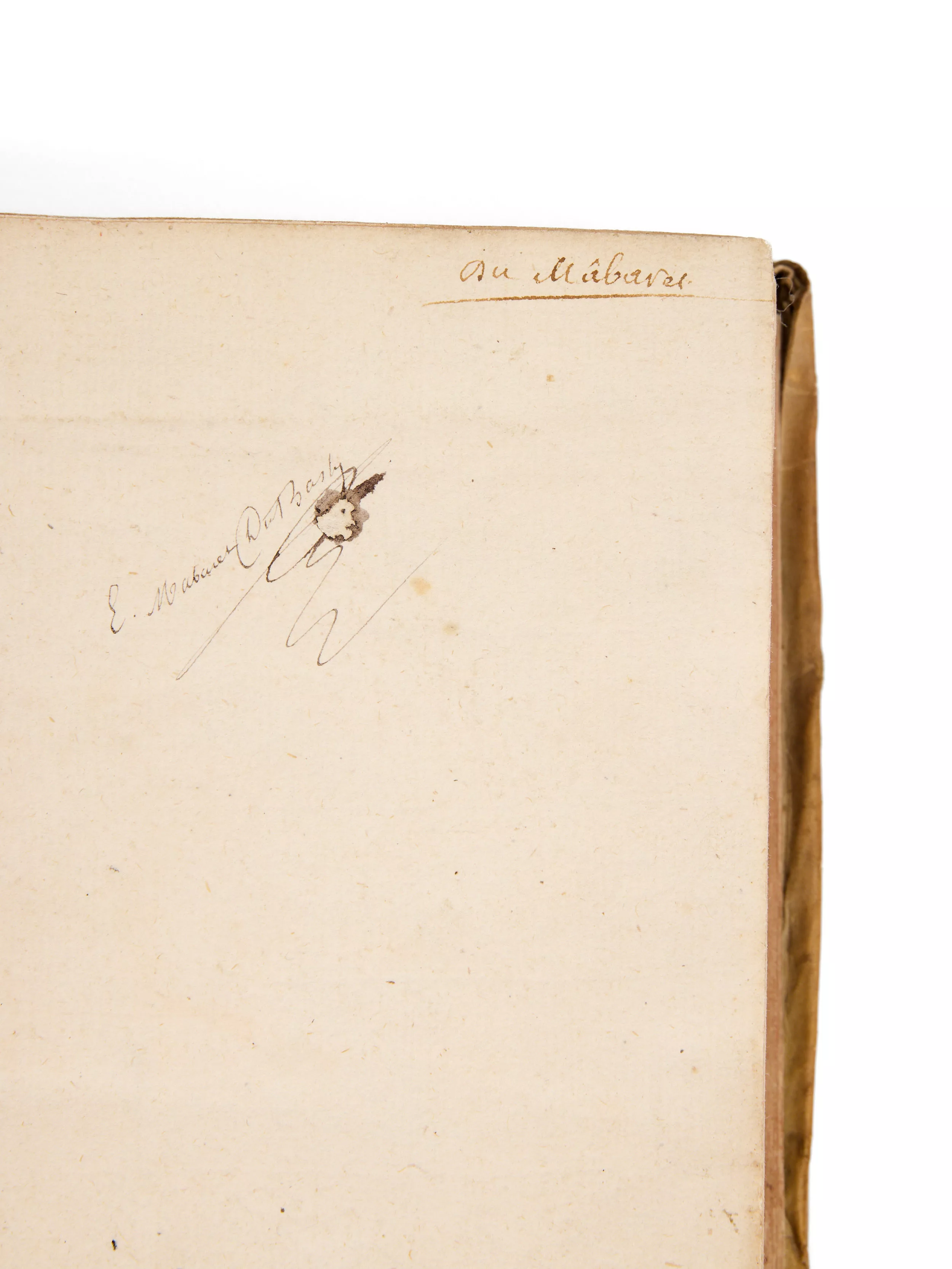
Provenance: Edouard du Basty (bookplate and manuscript ownership inscription “A Madame du Basty”); Henri Leclerq (bookplate and sale, Brussels, 1947); private collection.
En français dans le texte, 90; Guibert, Descartes, pp. 118–119; Tchemerzine, Éditions originales et rares, II, 777 and 787; DSB, IV, 52; Norman 622 and 623; Willems 1006–1008.