

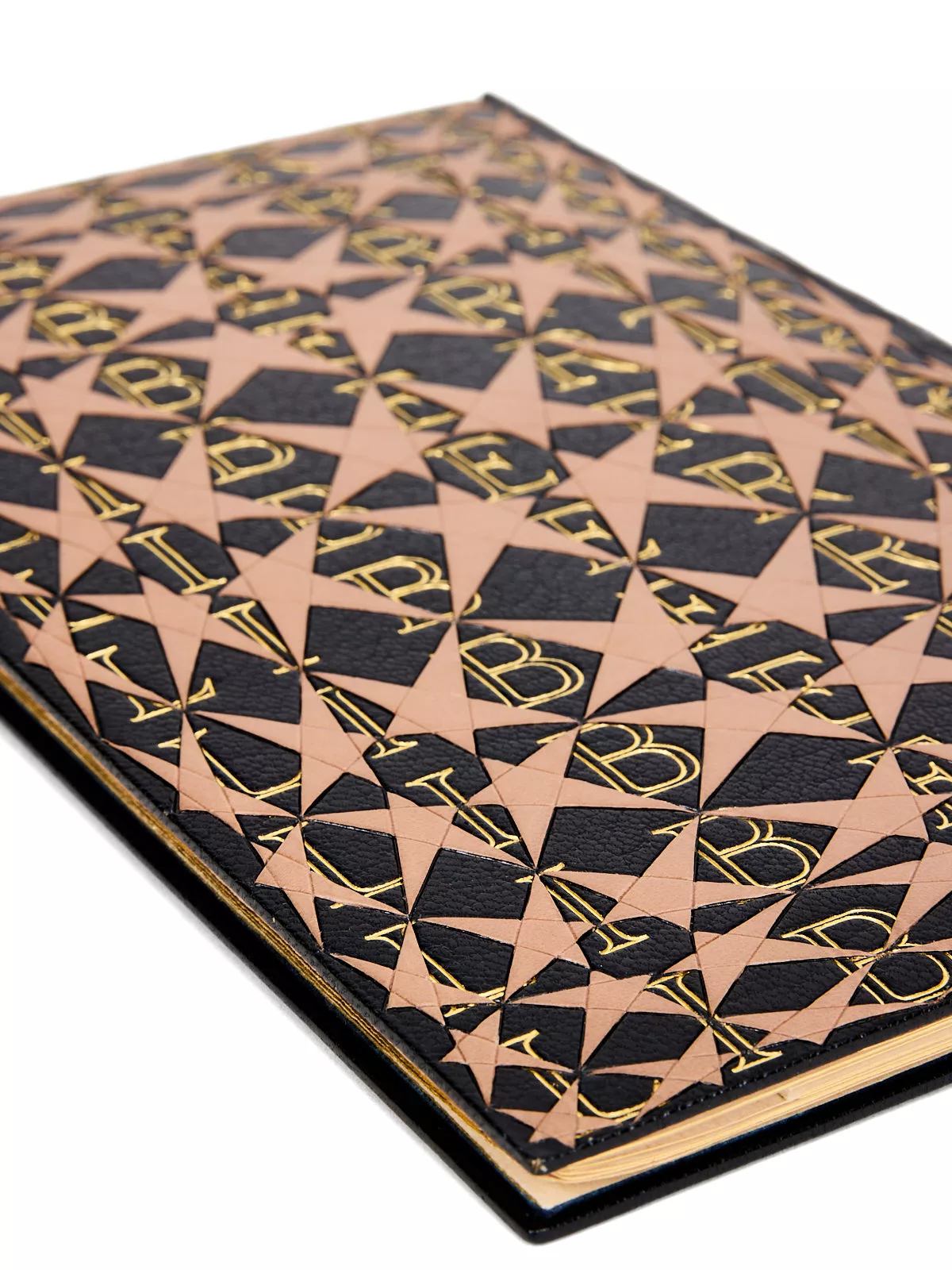
Poésie et Vérité 1942
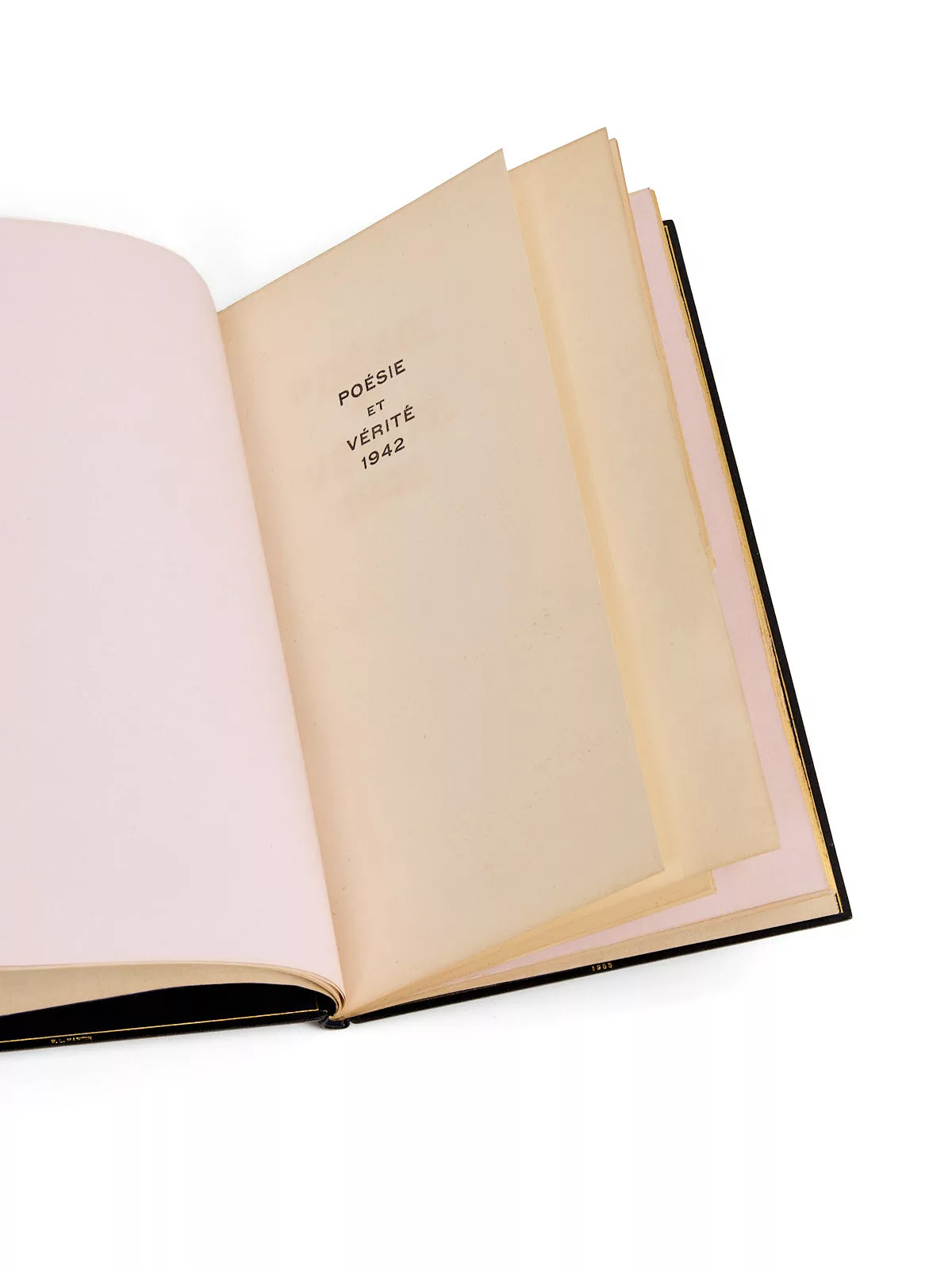
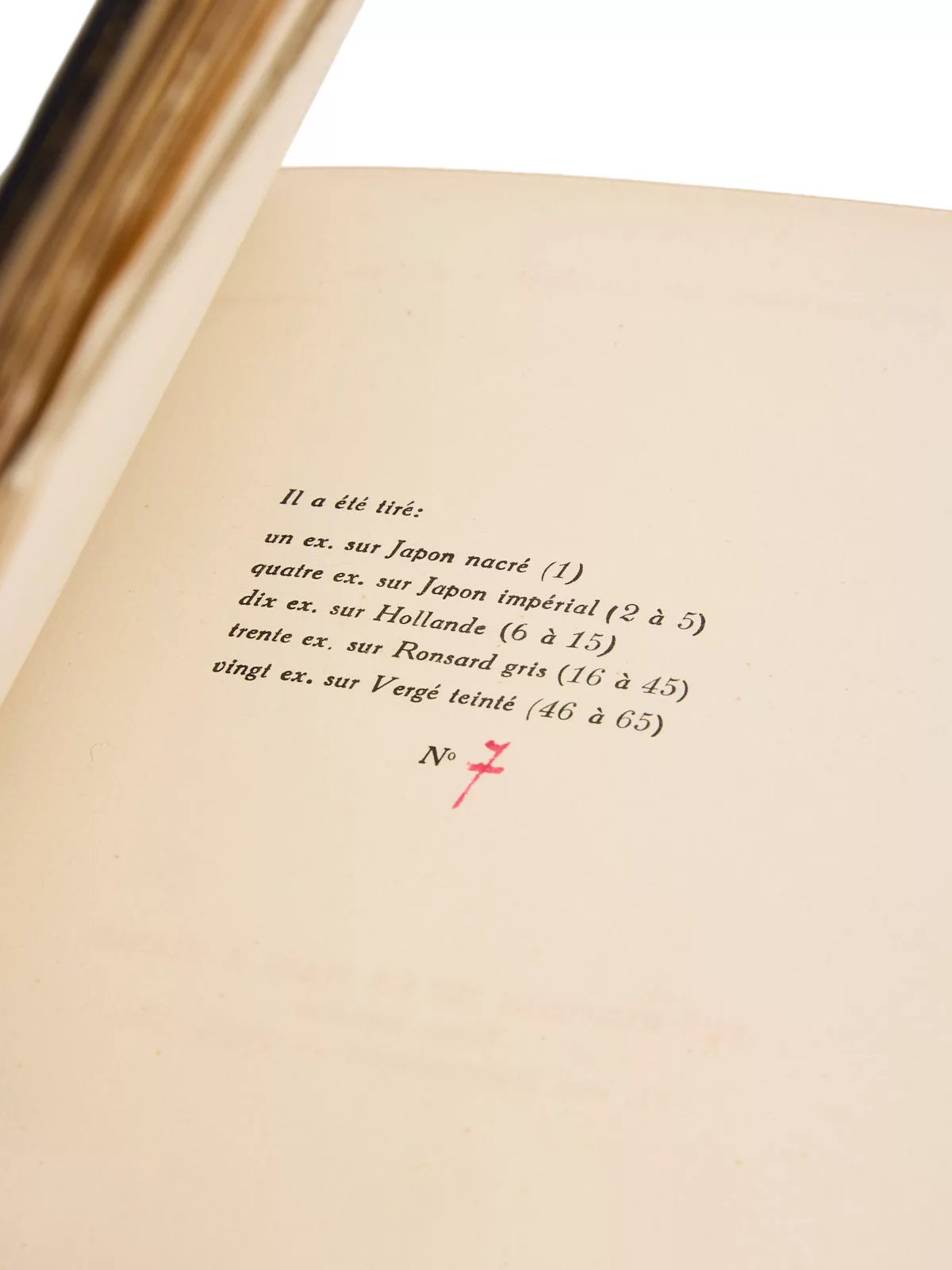
One of 10 copies on vergé de Hollande paper.
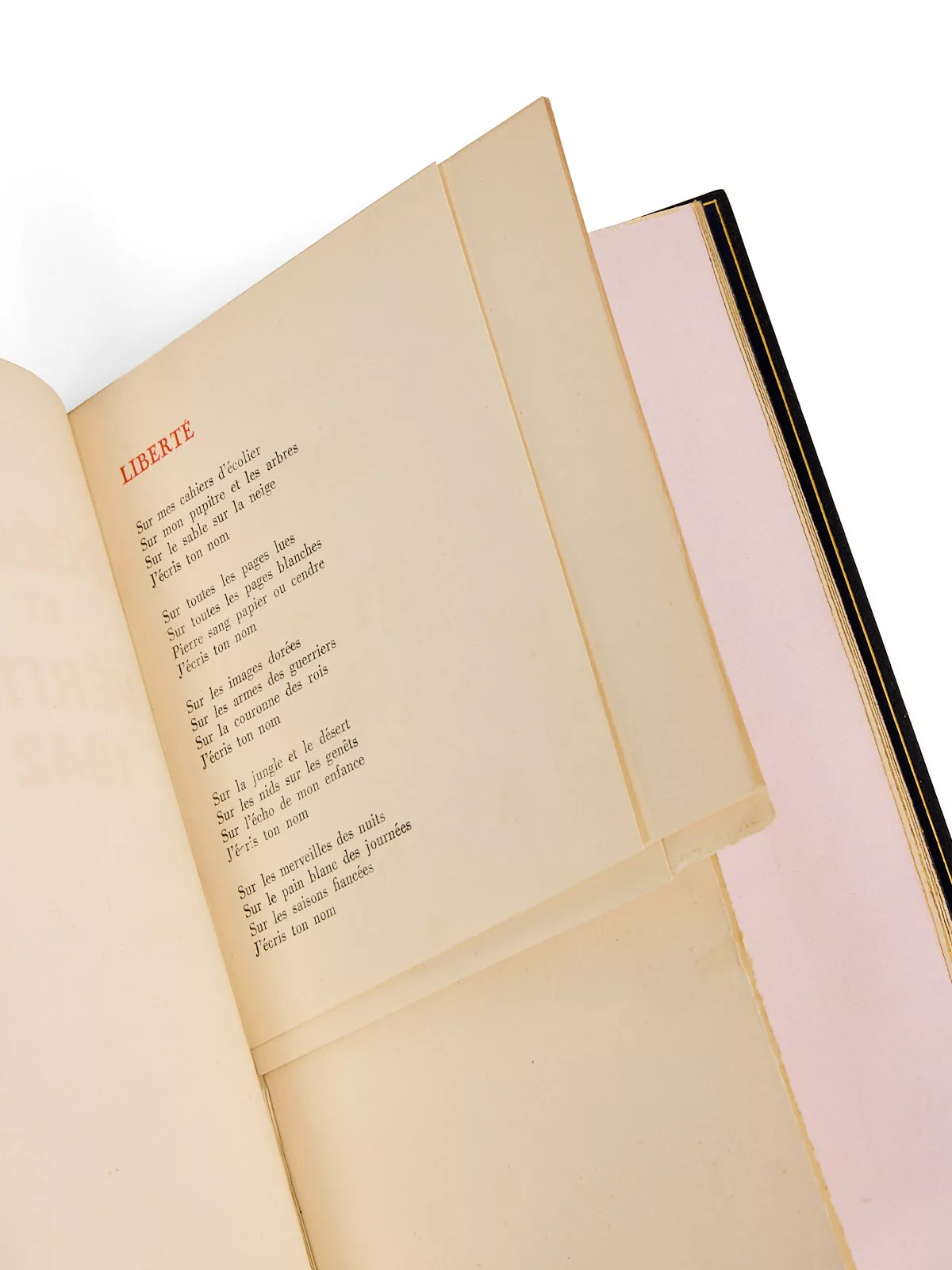
The poet’s first collection of Resistance poems, and the last he published openly, Poésie et Vérité 1942 borrows its title from Goethe’s Dichtung und Wahrheit, whose first complete French translation, by Pierre du Colombier, had just appeared from Aubier in early 1942 and been awarded a prize by the Société des gens de lettres. When Éluard’s booklet went to press in the autumn, it was backdated to 3 April 1942 for two reasons: to circumvent the new requirement, in force since 15 May, that printers obtain official approval to receive paper, and to turn the pamphlet into a manifesto-response to the occupying authorities — a bolder gesture than Claude Roy’s own poem entitled “Poésie et Vérité,” published in August 1942 by the Éditions de la revue Fontaine.
In autumn 1941, Éluard had made contact with the Surrealist group La Main à plume (a Rimbaldian name taken from Une saison en enfer: “La main à plume vaut la main à charrue”), and in particular with the young Noël Arnaud, who would become the publisher of Poésie et Vérité 1942. By late October 1941 the two men already had joint projects under way, as shown by the letters and pneumatic dispatches Éluard sent Arnaud, photocopies of which are preserved at the Bibliothèque de l’Arsenal for the years 1941–1942.
By May, as Éluard was preparing to entrust the manuscript of “Liberté”/“Une seule pensée” to Fouchet, he and Arnaud were already occupied with the publication of Poésie et Vérité 1942, though their brief correspondence, sometimes requiring strict discretion, rarely mentions it directly: “would you telephone me late tonight or very early tomorrow morning. I need to see you during the day,” the poet wrote on a pneumatic card on 12 June. Serious difficulties disrupted the activities of La Main à plume in July, delaying the project to the point that Éluard also considered a separate edition of Poésie et Vérité 1942 in the unoccupied zone or abroad, as he explained to Parrot at the end of August: “Perhaps with Poésie 42, because of the title, or with Éditions Charlot? Otherwise, in Switzerland? Jouve’s publisher? Or at my own expense” (Scheler, p. 152).
The booklet was finally published at the very end of September or the beginning of October by La Main à plume, run by Noël Arnaud from his personal address at 11 rue Dautancourt in the 17th arrondissement, printed on the cover. It was certainly out before 6 October, since one of the Japan-paper copies bears an inscription dated that day and described as the “premier envoi” (the Spyridaki copy).
The day before, on 5 October 1942, Éluard had already sent five hundred copies of Poésie et Vérité 1942 to Louis Parrot in the southern zone; others reached the painter Cicero Dias at the Brazilian embassy in Vichy, who forwarded them to Roland Penrose in London. Parrot gave a reading of it in Clermont-Ferrand, as did Gabriel Audisio in Marseille: “It was a message of hope reaching us from the other zone, a message like those prisoners sometimes managed to send us from their cells. The R.A.F. dropped thousands of copies over France” (Louis Parrot, L’Intelligence en guerre, p. 99).
Soon translated by Penrose, the text achieved extraordinary resonance throughout the “free world.” Despite occupied Paris, despite the risks, despite the arrests that would decimate half of La Main à plume’s members in July, Noël Arnaud, Paul Éluard and their printer Lucien Cario took the trouble to produce a deluxe issue of the booklet, on various papers and evidently with whatever means were at hand:
– 1 copy on japon nacré (no. 1, bound by Martin, Destribats sale, I, 2019);
– 4 copies on Imperial Japan paper (no. 2, inscribed to Hugnet; no. 3, inscribed to Spyridaki; and two unnumbered, uninscribed copies, one bound by Marguerite Fay [Bibliothèque Gwenn-Aël Bolloré, Sotheby’s, 2002, no. 21], the other by Pierre-Lucien Martin [Bibliothèque Jean-Pierre Guillaume, 1995, no. 165, then Houdayer, I, 2021, no. 97]);
– 10 copies on Holland paper;
– 20 copies on tinted laid paper;
– 30 copies on gray Ronsard paper;
to which must be added an unrecorded copy on strong vellum, marked “exemplaire d’auteur” in Éluard’s own hand (Artcurial, 2014, no. 213), and a final one on an unprinted trial cover “rescued from the waste bin” by Arnaud — 67 copies in all on fine papers.
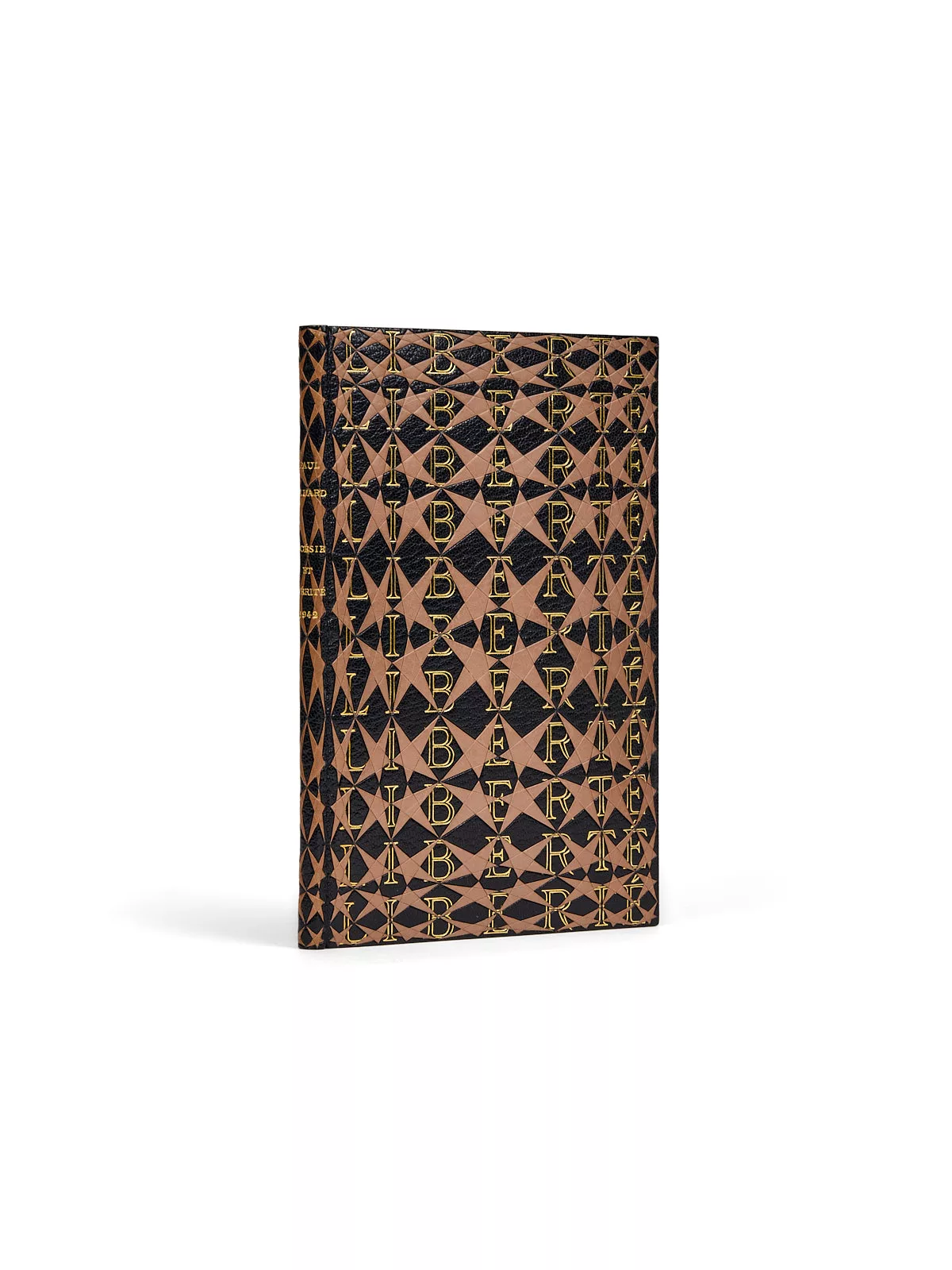
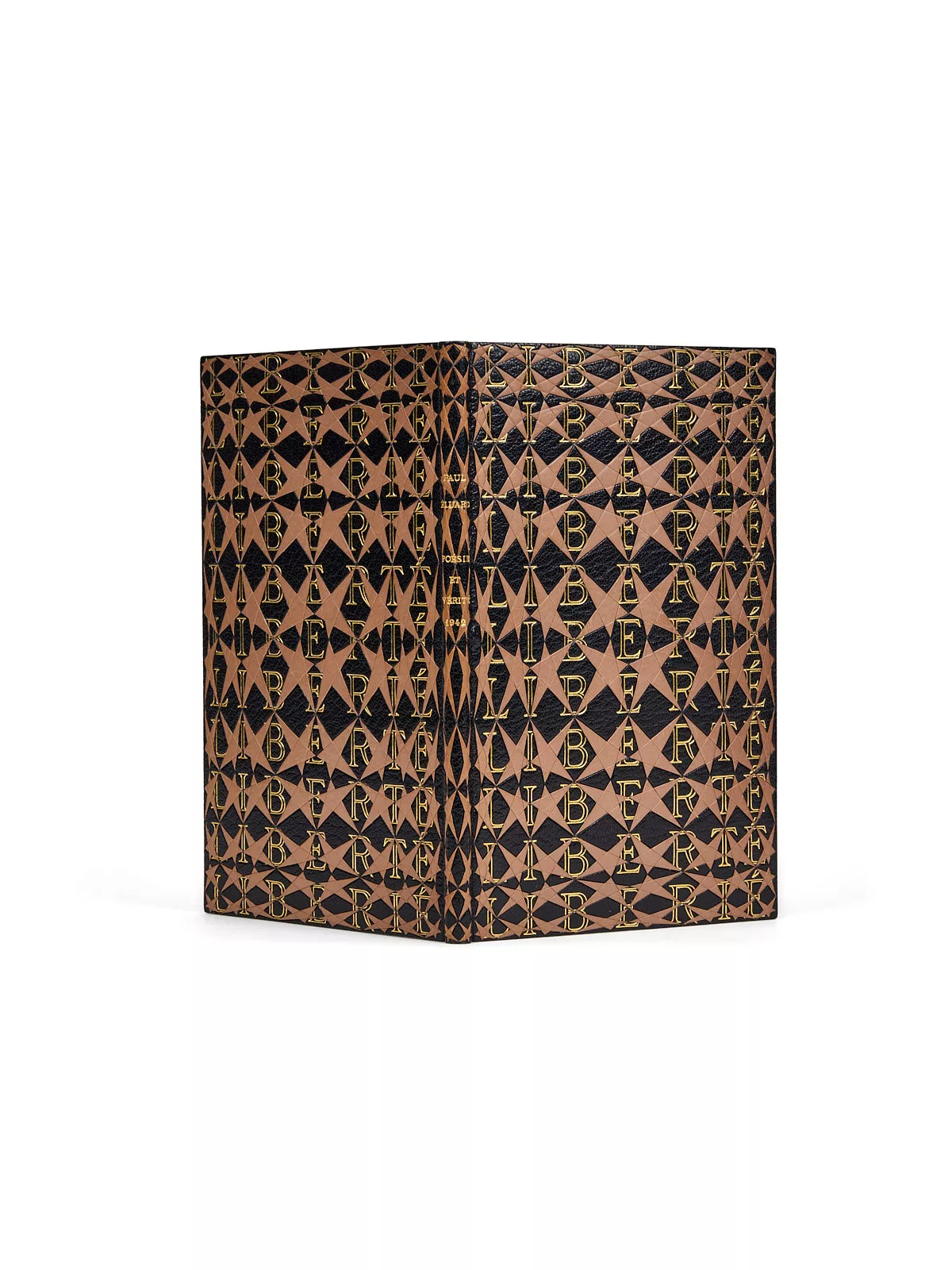
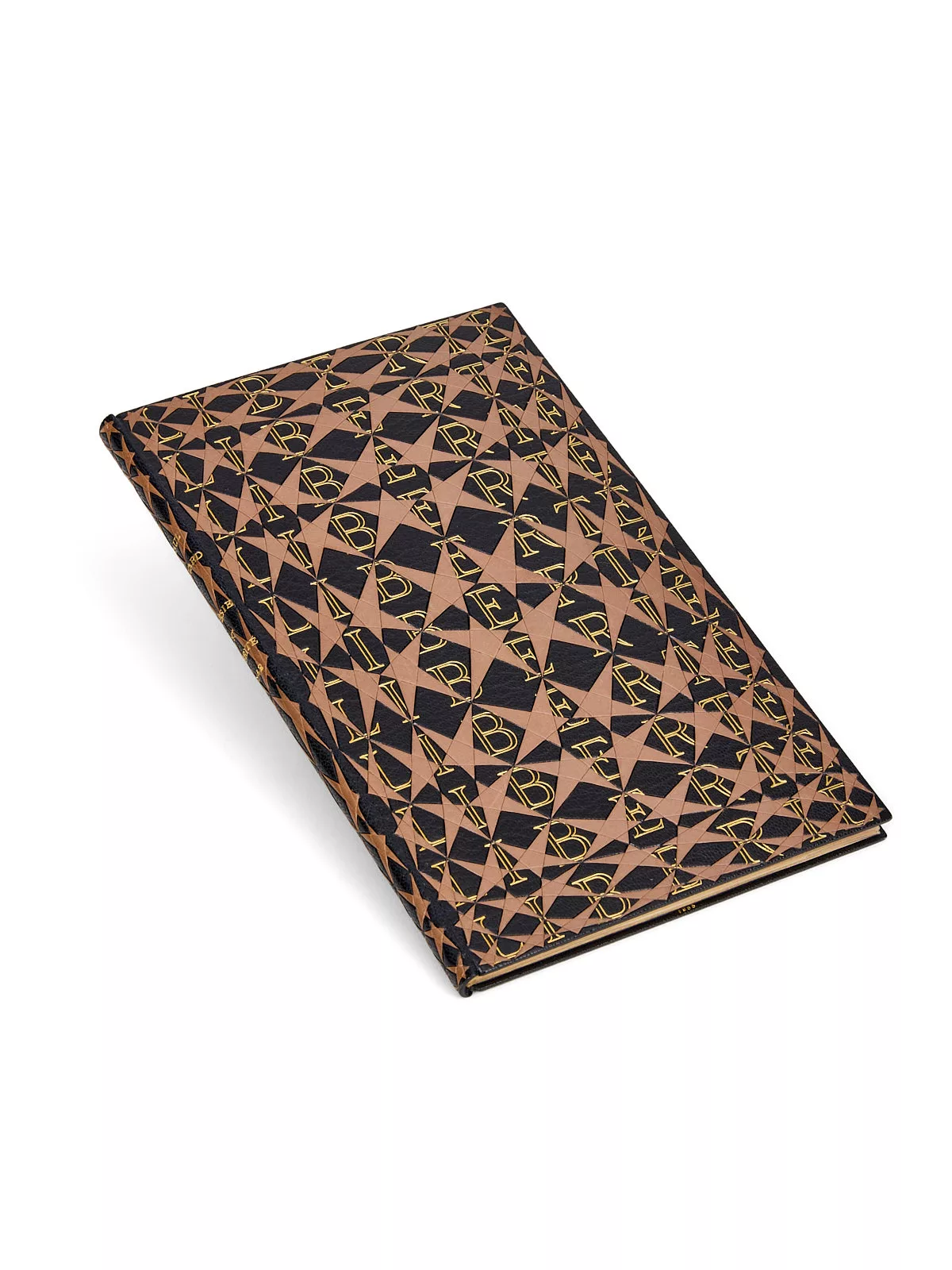
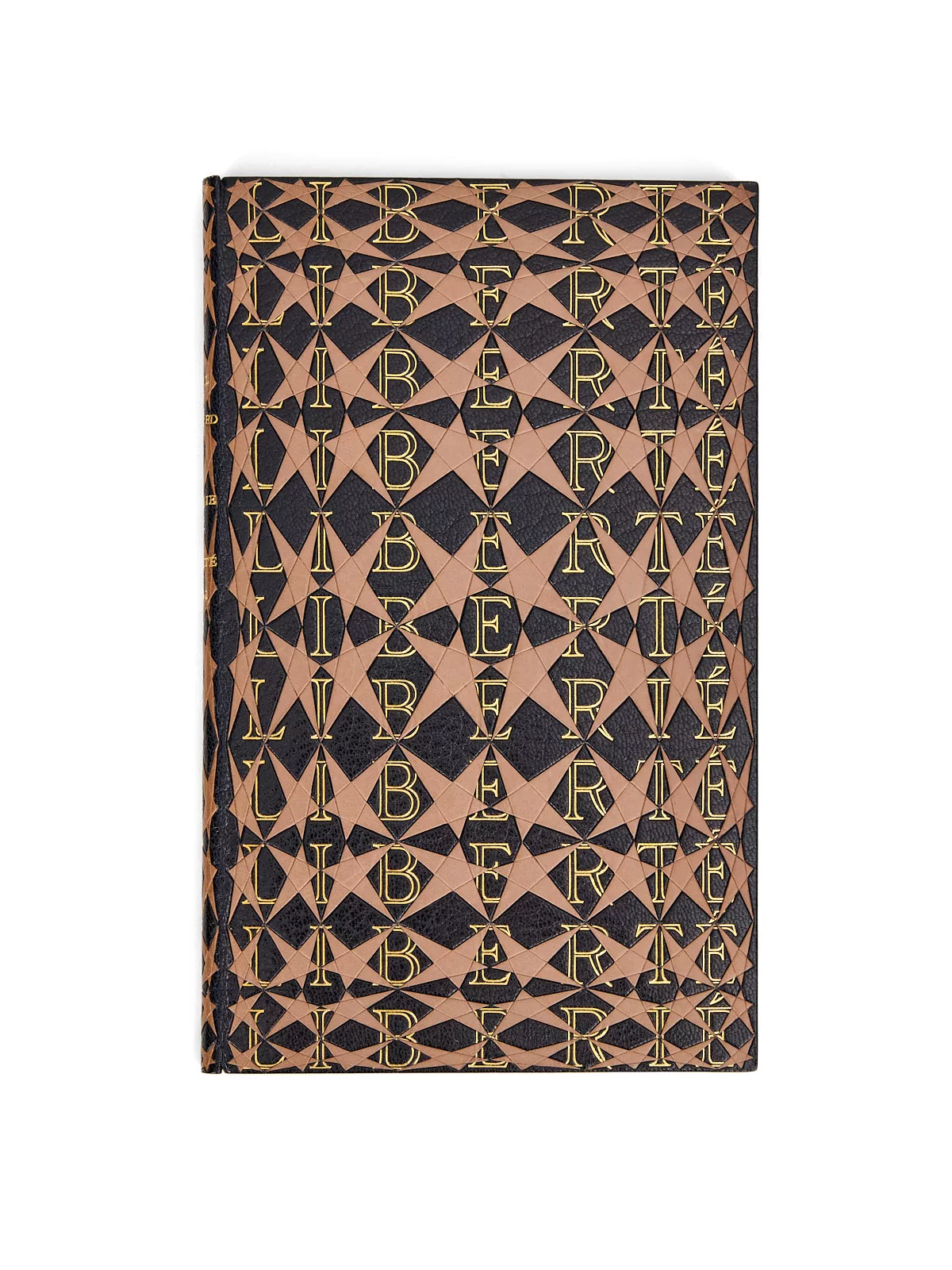
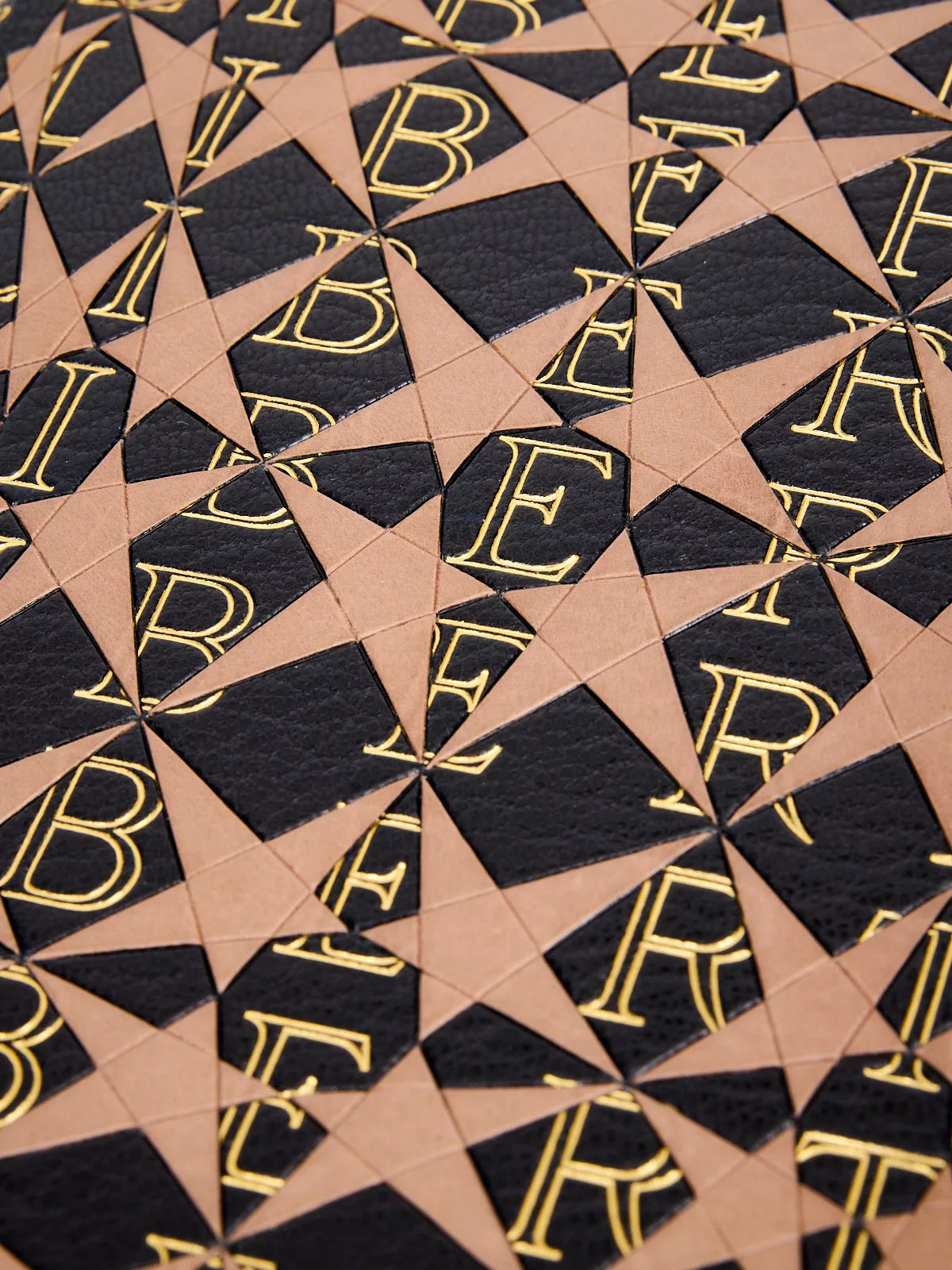
A superb copy, dressed in a sumptuous design by Pierre-Lucien Martin.