

Piove in giardino
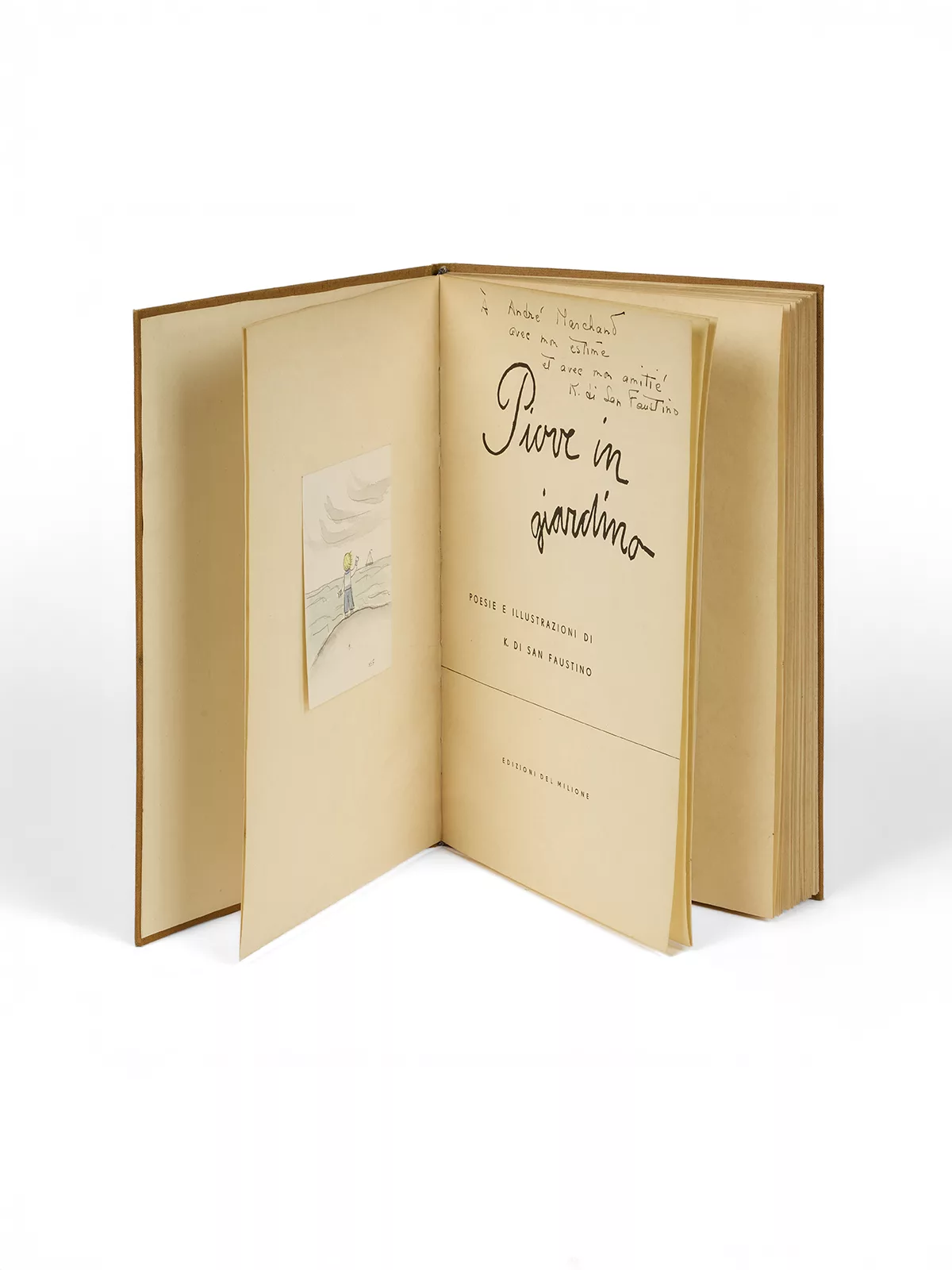
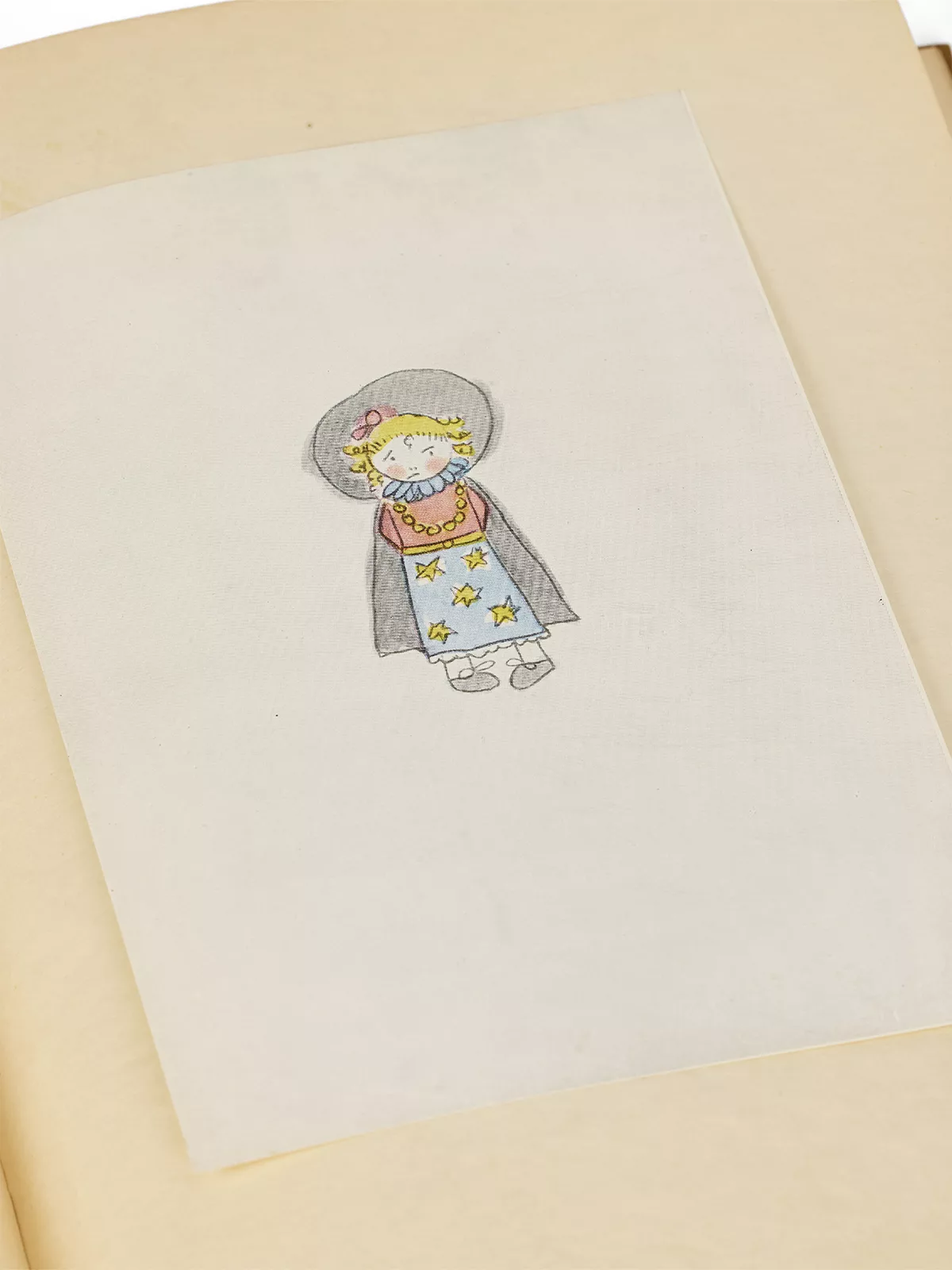
One of the first 50 copies on Japanese paper (no. 17), signed. Only the deluxe issue includes the signed original watercolor.
Signed presentation inscription: “À André Marchand, avec mon estime et avec mon amitié. K. di San Faustino.”
Born into a wealthy American family, Kay Sage traveled extensively with her mother, notably in Italy, where she lived for about ten years. In 1925 she married Prince Ranieri di San Faustino, an unhappy marriage that took her away from painting. She took refuge in Milan, where she resumed painting lessons and exhibited her first canvases, abstract in style, before showing at the Salon des Indépendants in Paris, presented by the Wildenstein gallery, where she caught the attention of André Breton and Yves Tanguy, whose mistress she became.
Returning to the United States at the start of the Second World War, she worked to help many artists still in France emigrate, hosting Breton and Tanguy in Greenwich Village; she married Tanguy in 1940. The couple settled in Woodbury, Connecticut, from 1941, in two adjoining studios. The Calders and the Massons lived nearby. In 1955 Yves Tanguy died of a cerebral hemorrhage. Deeply affected by his sudden death, Kay Sage gradually gave up painting; she took her own life on 8 January 1963, a few days before the publication of the catalogue raisonné of Yves Tanguy’s work, which she had completed.
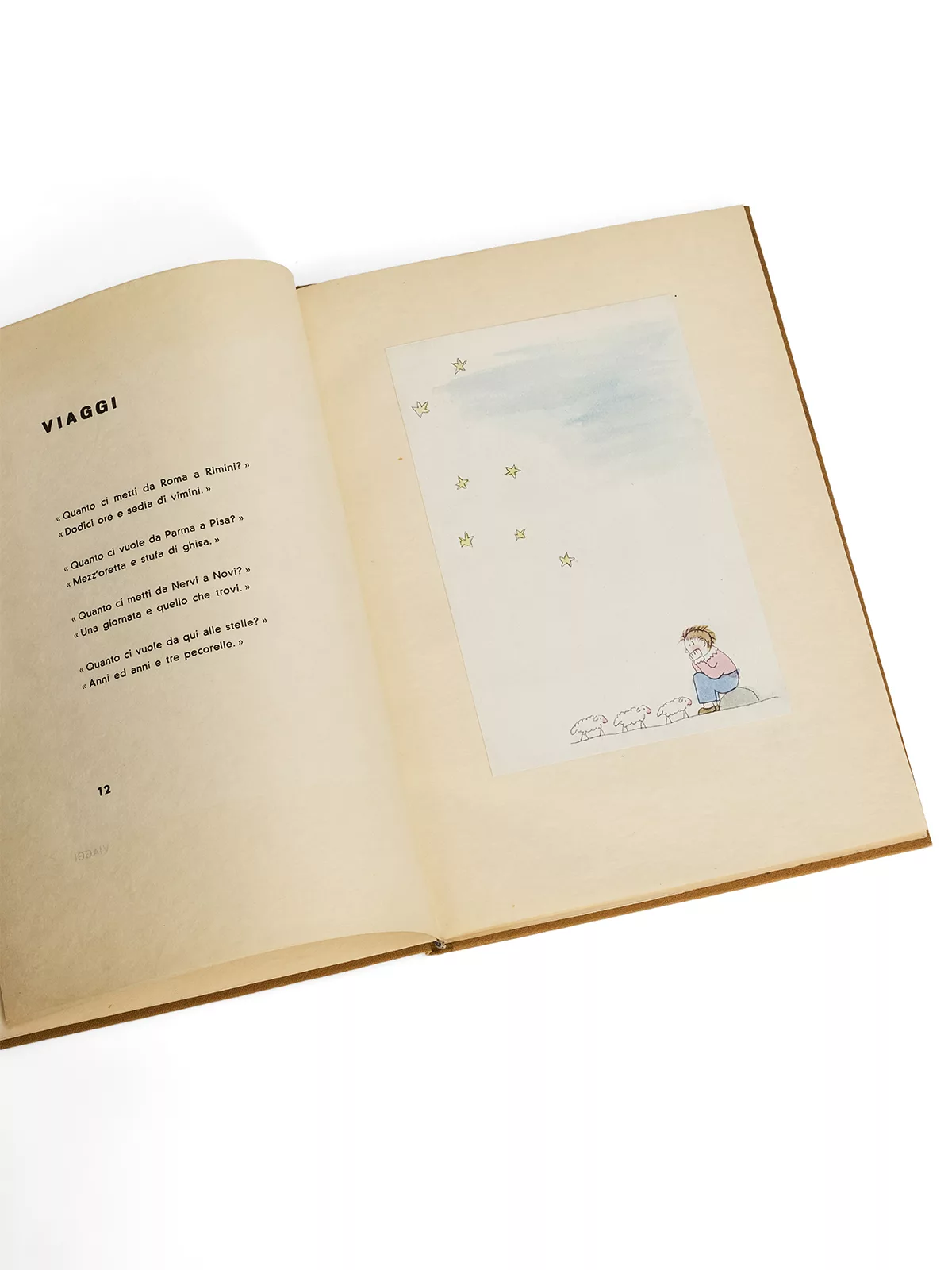
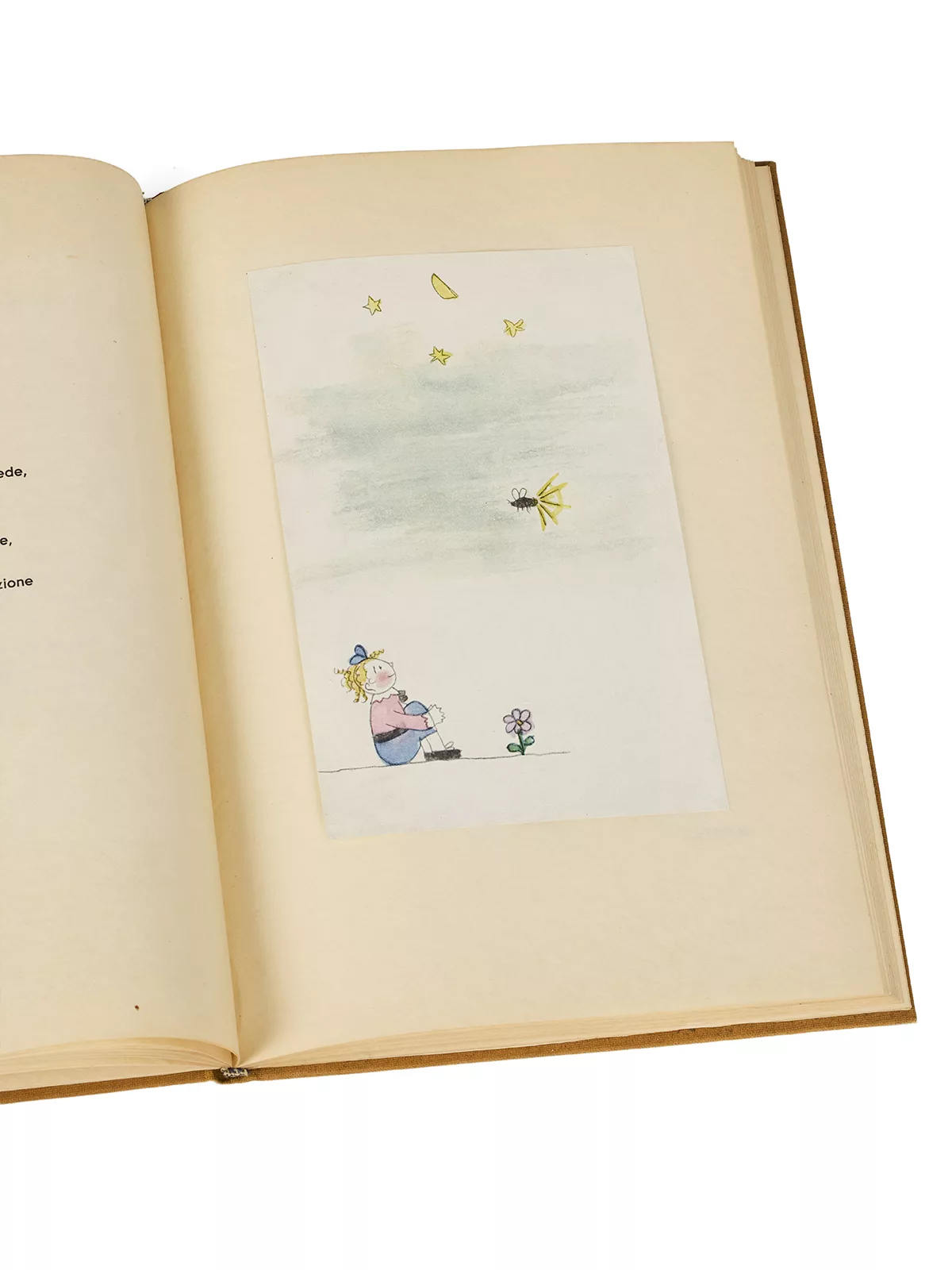
Piove in giardino is her first book, begun at the end of her Milanese period, and dedicated to her great-nephew by marriage.
André Marchand probably met her at the 1937 Salon, one of the first he took part in. That same year he received the Prix Paul-Guillaume, awarded to recognize the talent of a young painter. Settled in Paris on rue Campagne-Première, in 1943 he was one of the founders of the Salon de mai, which opened for the first time in 1945 and in which he took part for twenty years. A painter and lithographer of the École de Paris, he was close to Tal-Coat and Bazaine.
Very rare on Japanese paper — only these copies contain an original watercolor at the front.
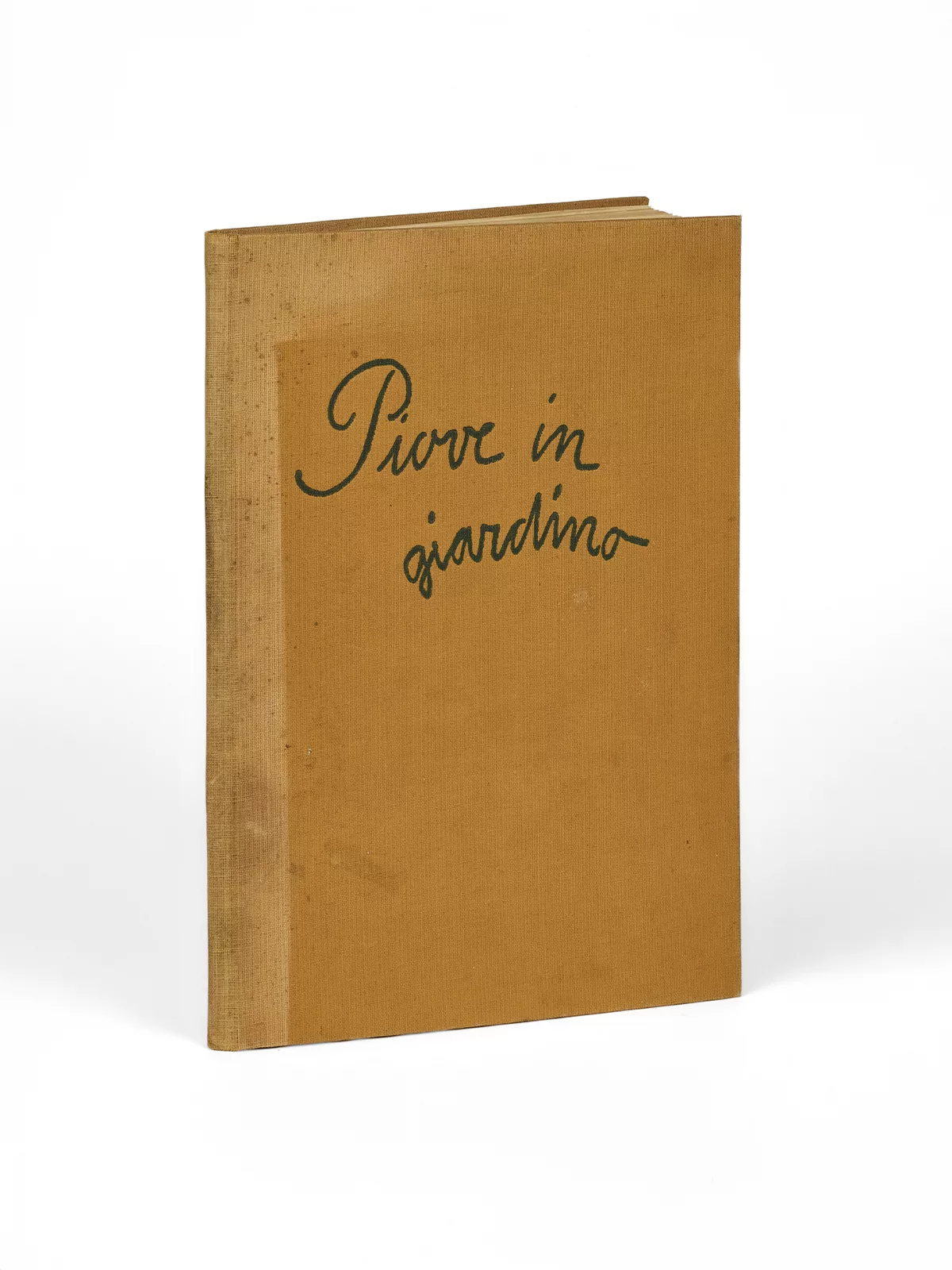
Some marks and fading to the boards, otherwise the interior is perfect.