



Pilote de guerre
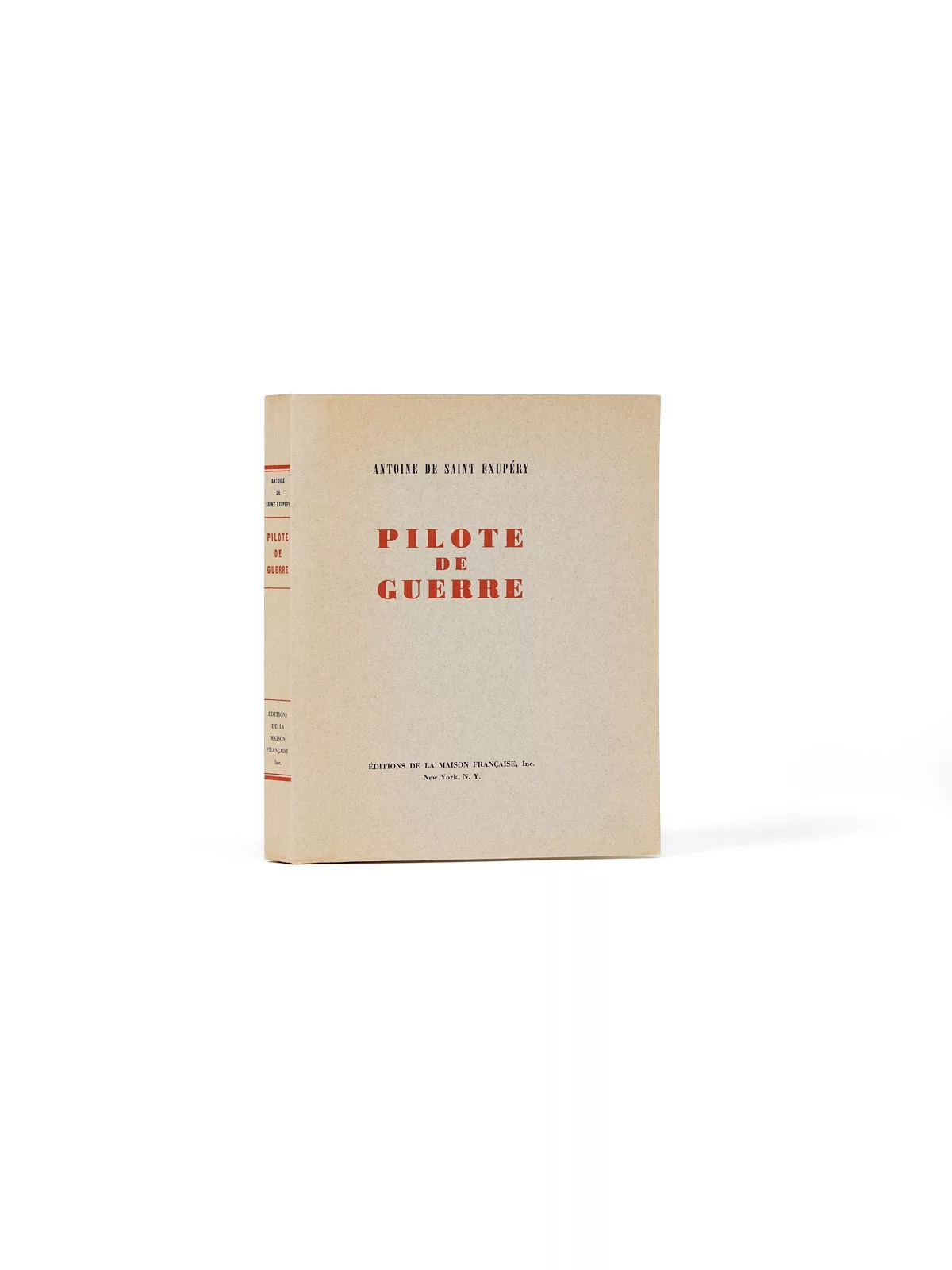
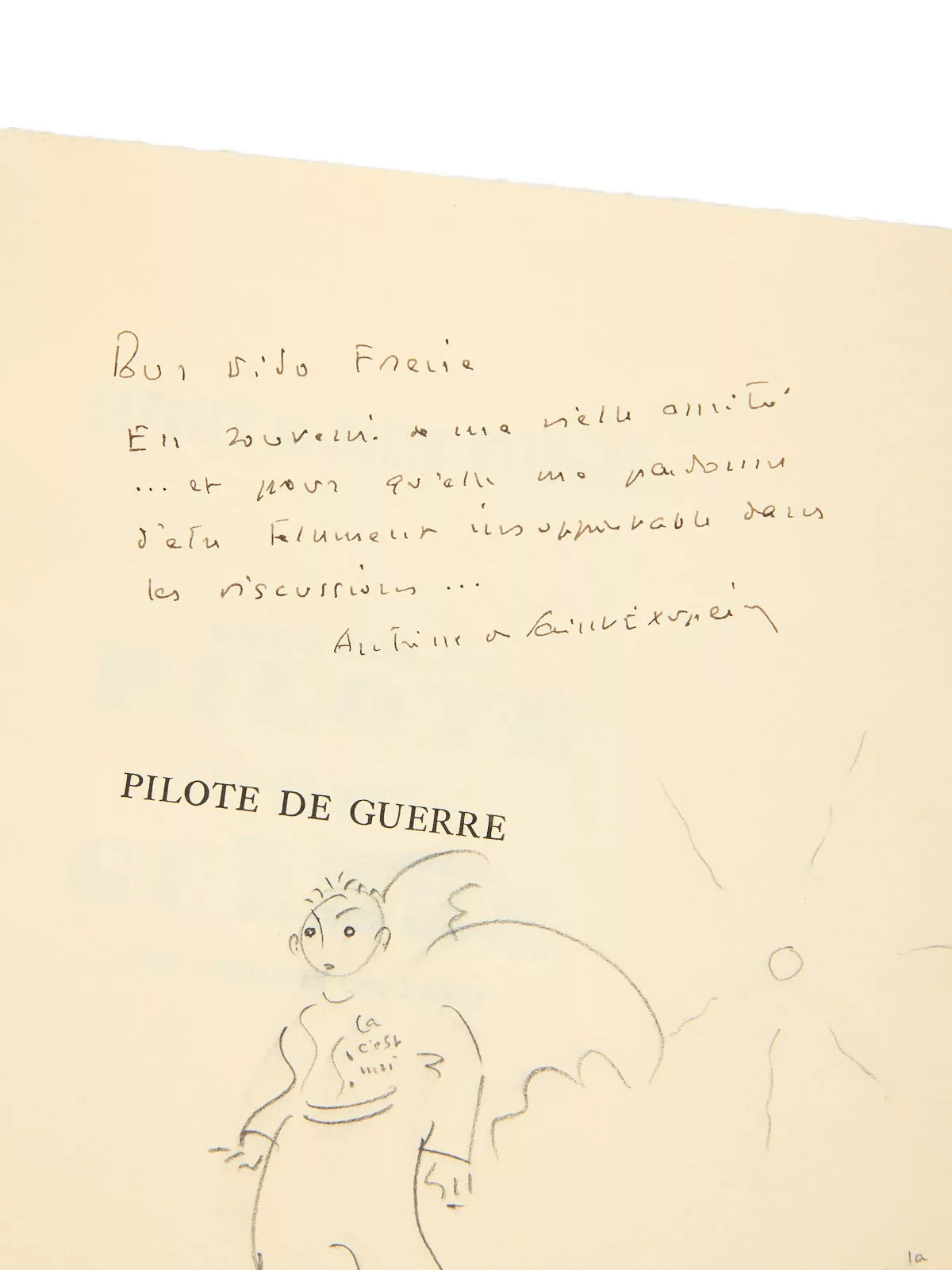
Precious copy inscribed by Antoine de Saint-Exupéry to Dido Freire, with two autograph letters and an autograph inscription.
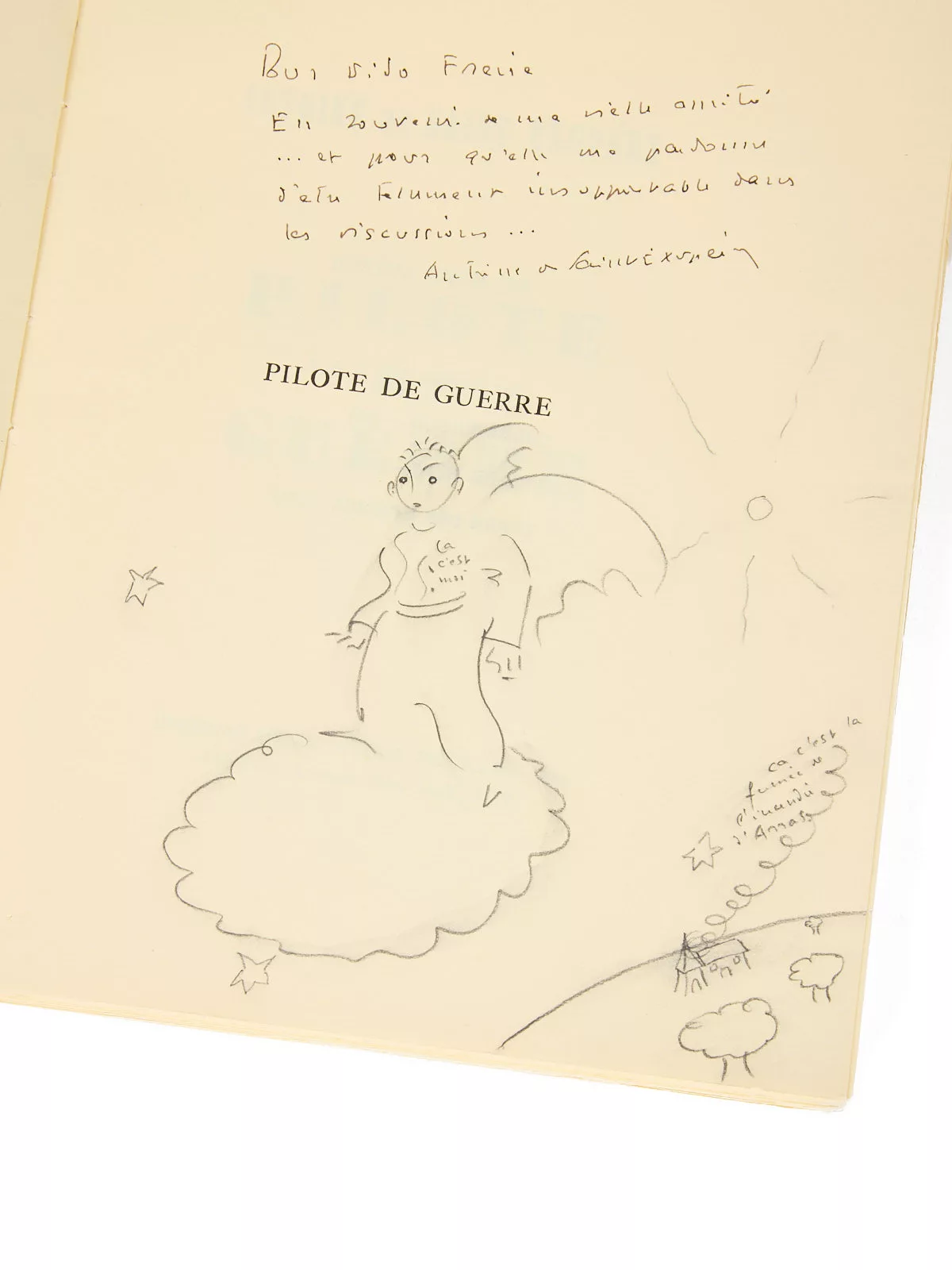
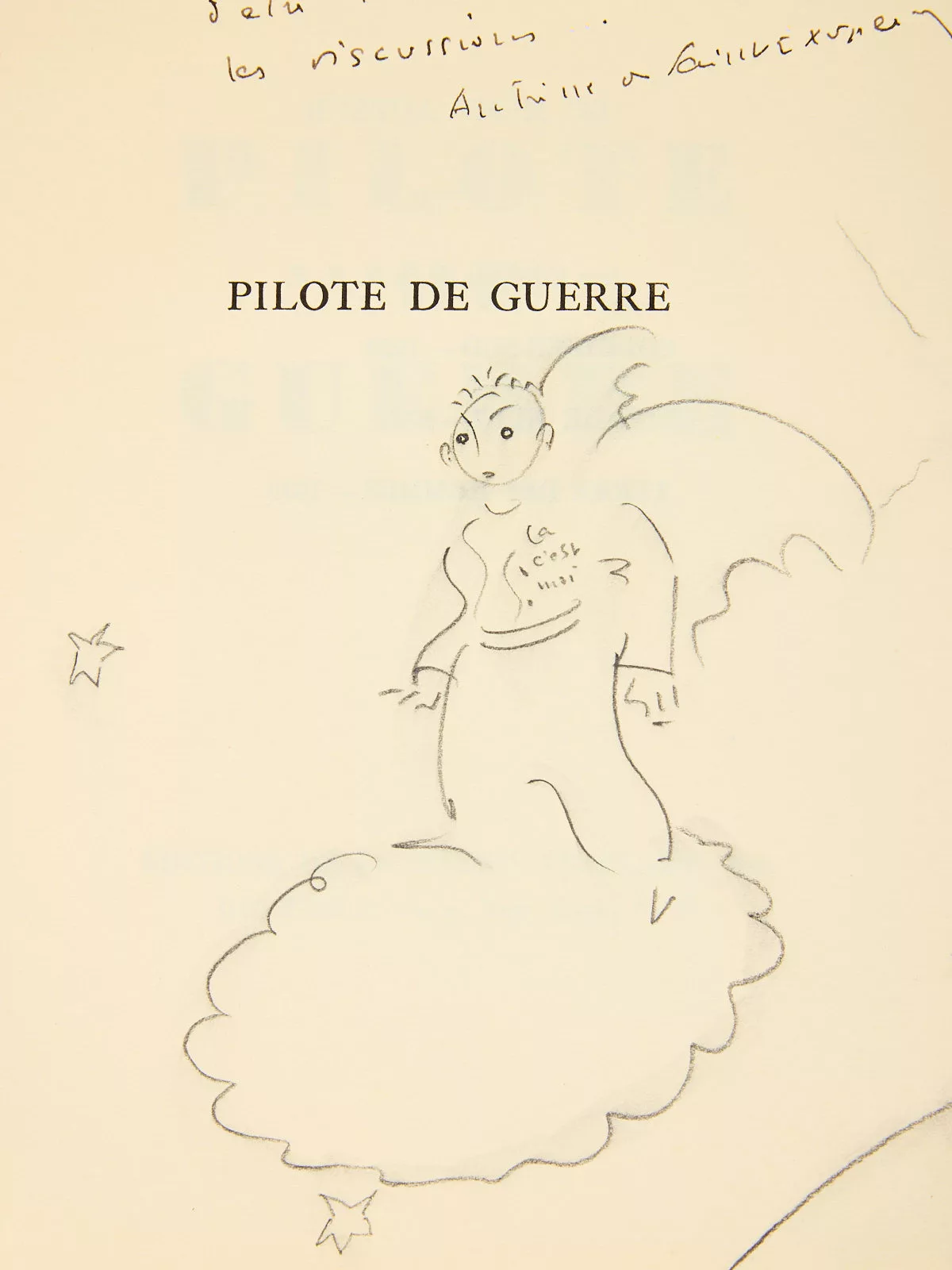
A precious copy inscribed by Antoine de Saint-Exupéry to Dido Freire, second wife and companion of Jean Renoir, enriched with a long autograph inscription, two autograph letters, and two exceptional drawings.
On a full page, Saint-Exupéry depicts himself, winged, perched on a cloud, with the caption “Là, c’est moi” [That’s me], flying over a landscape with two trees and a church spire, accompanied by the note “Ça c’est la fumée de l’incendie d’Arras” [That’s the smoke from the fire at Arras].
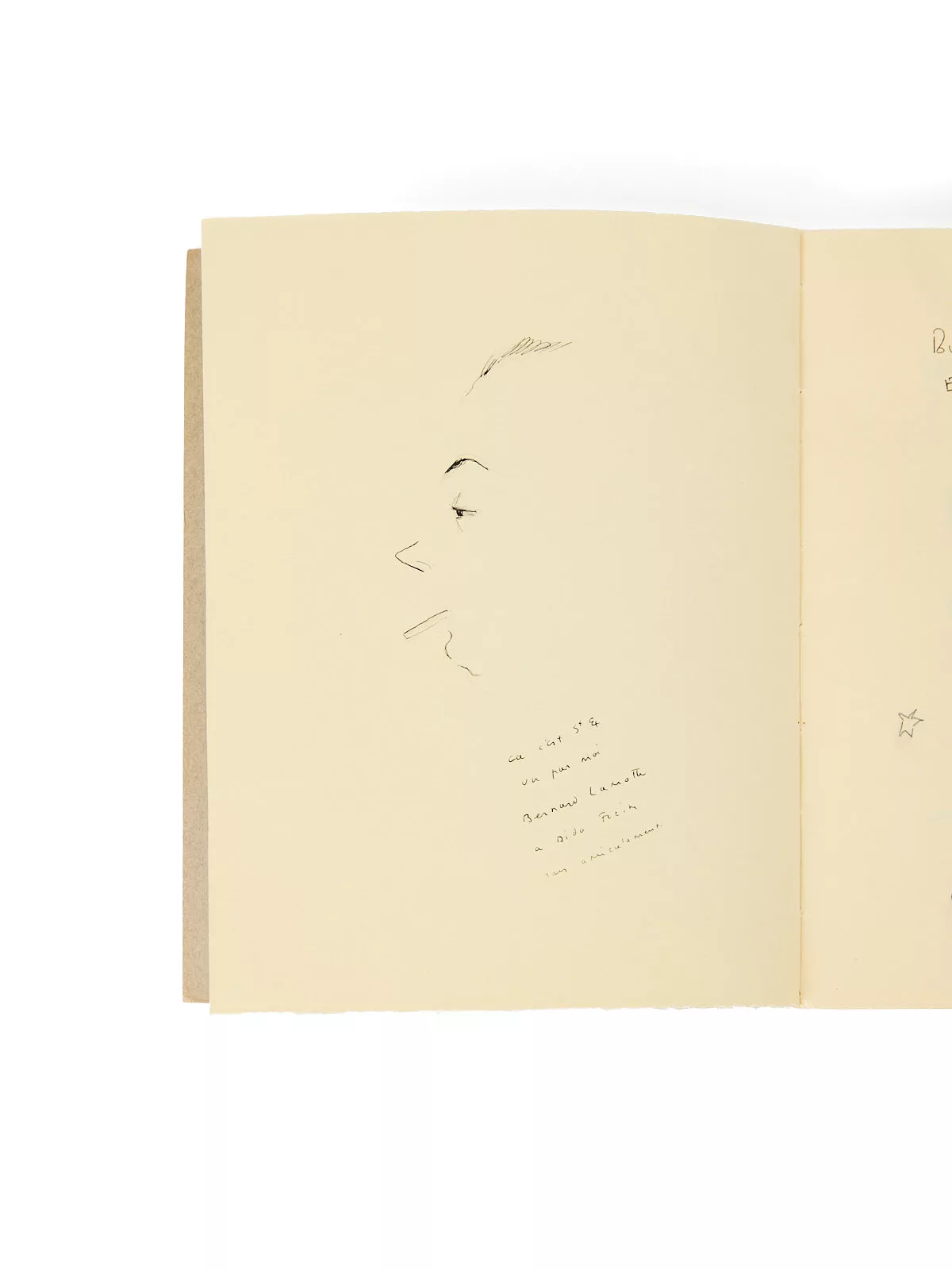
Facing it is another drawing, a profile portrait of the writer by his friend Bernard Lamotte, painter and illustrator of the American edition, a companion of Saint-Exupéry’s New York circle.
Context:
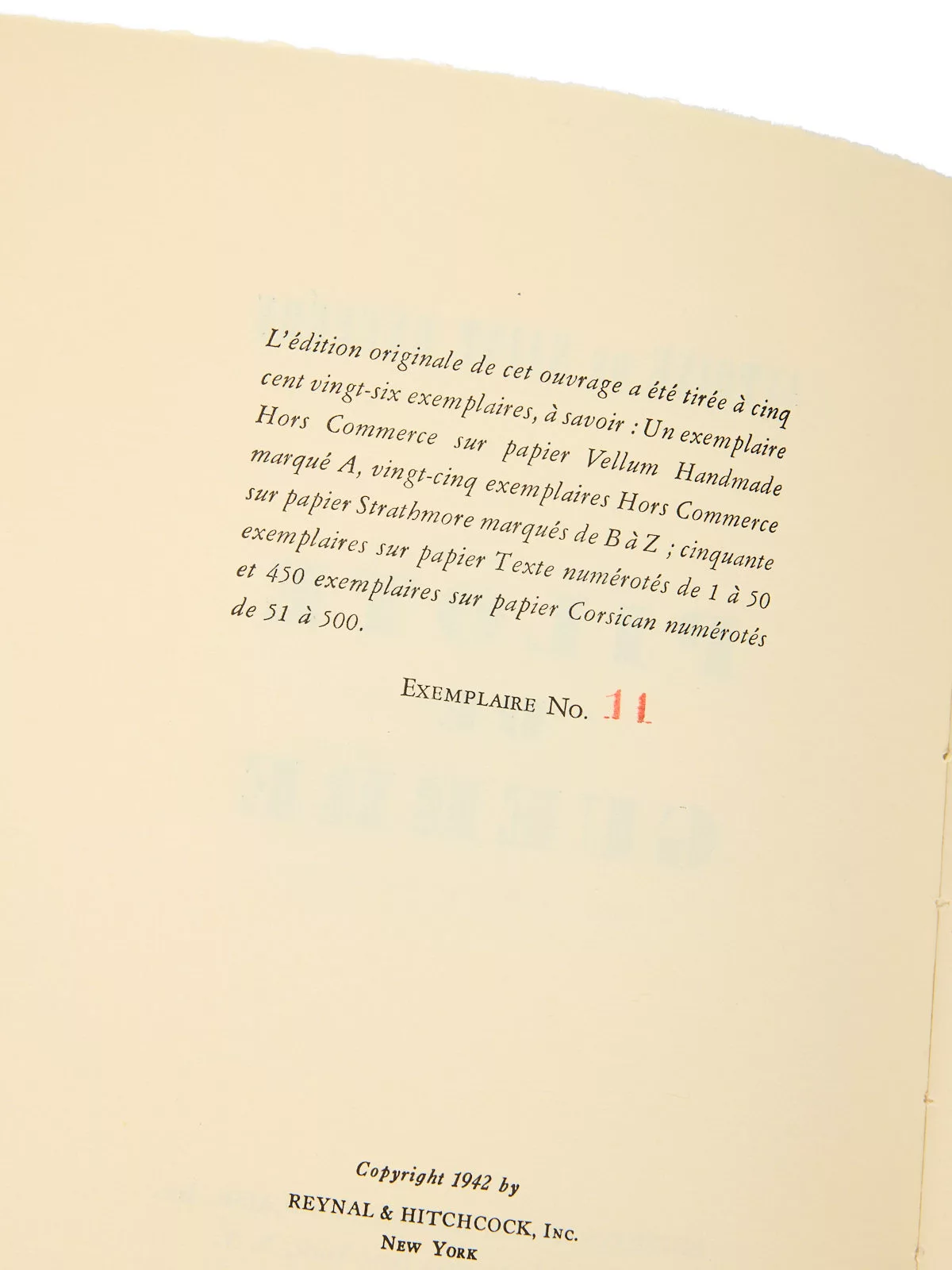
After the defeat of 1940 and the “Phoney War,” Saint-Exupéry, demobilized, sailed for the United States, where he hoped to persuade America to enter the war. It was in New York, surrounded by exiles and artists, that he wrote Pilote de guerre. The book recounts his mission with squadron 2/33 in May 1940, during the perilous reconnaissance flights over Arras. It captures both the military collapse and the honor of the combatants, paying tribute to his friend Lieutenant René Gavoille. First published, in English, in The Atlantic Monthly (January 1942) under the title Flight to Arras, and then in book form in February, it topped American bestseller lists for six months. In France, the Gallimard edition (December 1942) was censored, notably losing the passage in which the author calls his orderly, a senior officer and Hitler himself “imbeciles”: the New York edition therefore remains the first complete text. Pierre Mac Orlan wrote in January 1943: “This book is a great and beautiful book, perhaps the true book of the war of 1939.”
Provenance:
Brazilian by birth, Dido Freire (1912–1990) was the second wife of Jean Renoir. She shared his life from the American years onward and was his discreet collaborator. During their crossing to America in December 1940, Saint-Exupéry and Jean Renoir became friends. The filmmaker, deeply moved by Terre des hommes, proposed to adapt it into a film he hoped would be “the most beautiful of his life.” To this end, Saint-Exupéry recorded, in New York in spring 1941, on 30 cm discs, fragments of an oral screenplay, improvising new plot lines aloud and giving life to his characters. He joined Renoir twice in California to work on the project, but the film was never made. These recordings, published only in 1999 under the title Cher Jean Renoir (Gallimard, NRF), constitute an exceptional document on the interrupted genesis of a dreamed-of work, one that would have united one of the greatest writer-aviators with the greatest French filmmaker of the 1930s. Renoir, recalling this period, described Saint-Exupéry as “a child, with a child’s eyes… who had a passionate love of flowers, trees and women.”
A double, intersecting portrait:
This copy brings together two unique views of the writer-aviator:
Antoine de Saint-Exupéry depicting himself, winged upon a cloud, in a whimsical and melancholic self-portrait (“Là, c’est moi”), flying over a burning Arras.
Bernard Lamotte (1903–1983), painter and fellow exile in New York, providing, facing it, an original profile portrait of his friend. Illustrator of the American edition of Flight to Arras, Lamotte turned his New York studio, “the glass cage,” into a meeting place for French expatriates (Saint-Exupéry, Renoir, Malraux, Consuelo…).
The presence of these two portraits in a single copy — the self-portrait drawn by Saint-Exupéry and the portrait given by his close friend and illustrator — gives this volume an exceptional iconographic dimension, unmatched in quality among other known copies.
A truly major copy, at the crossroads of literature, history and the arts, bringing together Saint-Exupéry, Renoir and Lamotte in the New York of French exiles in 1942.