

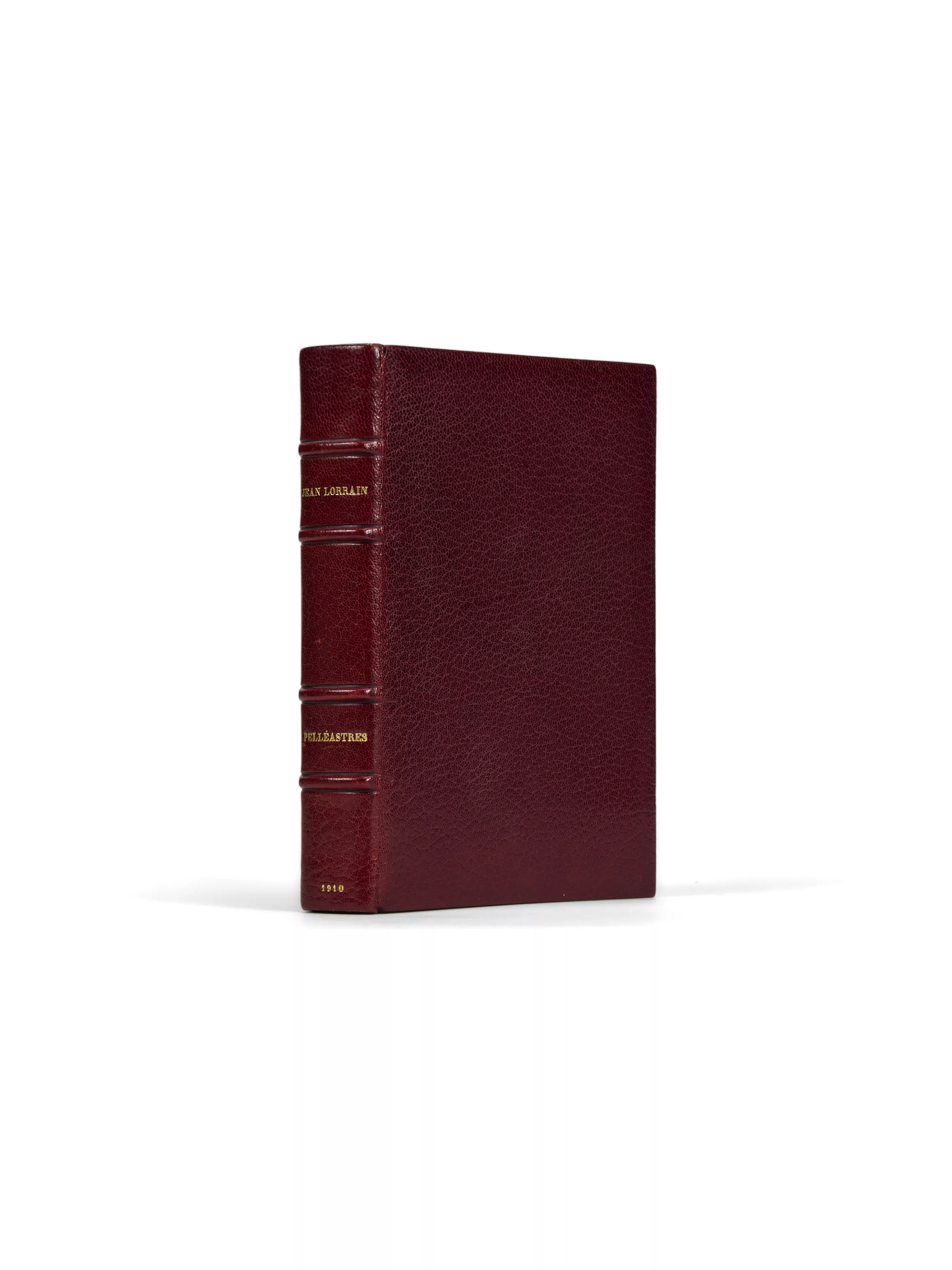
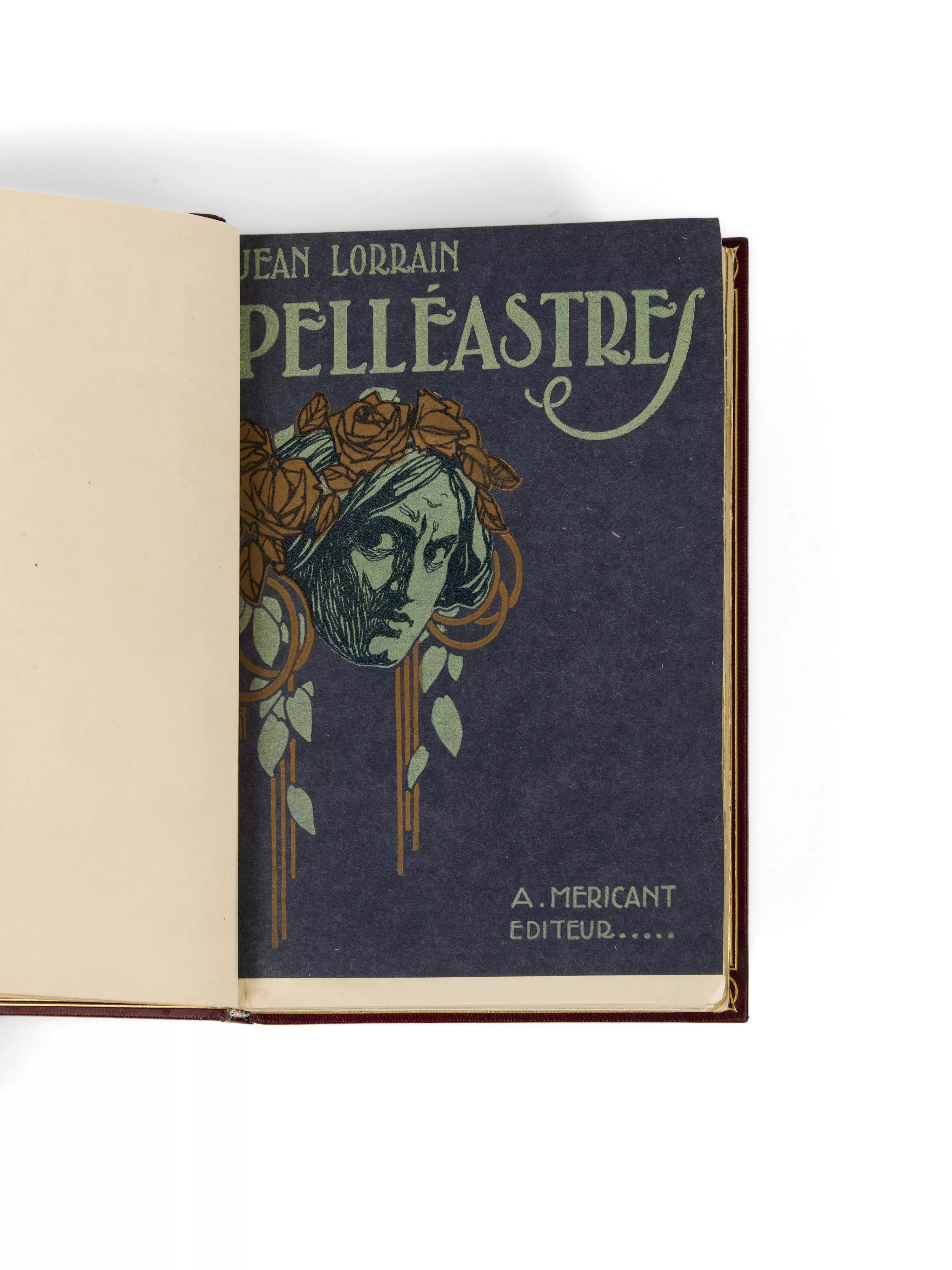
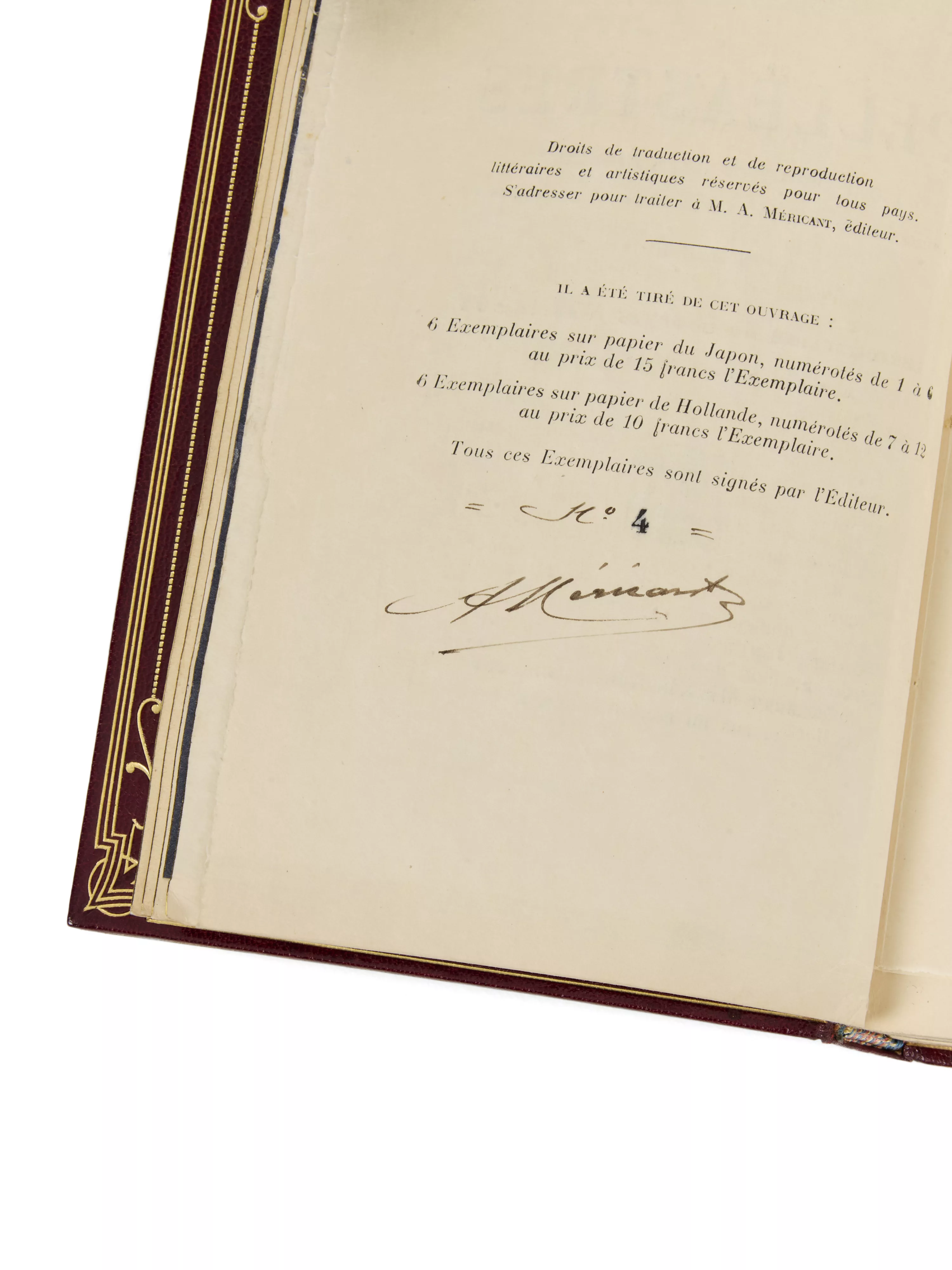
One of the first 6 copies on Japanese paper (no. 4), numbered and signed by the publisher.
The deluxe issue is followed by only 6 copies on Hollande paper: twelve deluxe-paper copies in all.
Jean Lorrain had been dead for four years when Pelléastres was published. Albert Méricant gathered under this title several of the chronicler’s texts, preceded by a long introduction by Georges Normandy, dated from Ajaccio, December 1909. The collection is built around Pelléas et Mélisande, Claude Debussy’s opera premiered at the Opéra-Comique in 1902 after Maeterlinck: in Lorrain’s hands, the admirer of Pelléas becomes a “pelléastre,” a refined music lover turned affected snob, recognizable by his obligatory enthusiasm for the new work. Lorrain does not merely criticize Debussy: he observes those who admire him and turns their admiration into a social phenomenon in which passionate amateurs read, dream and imitate the characters of books — literature acting as a poison administered to the imagination.
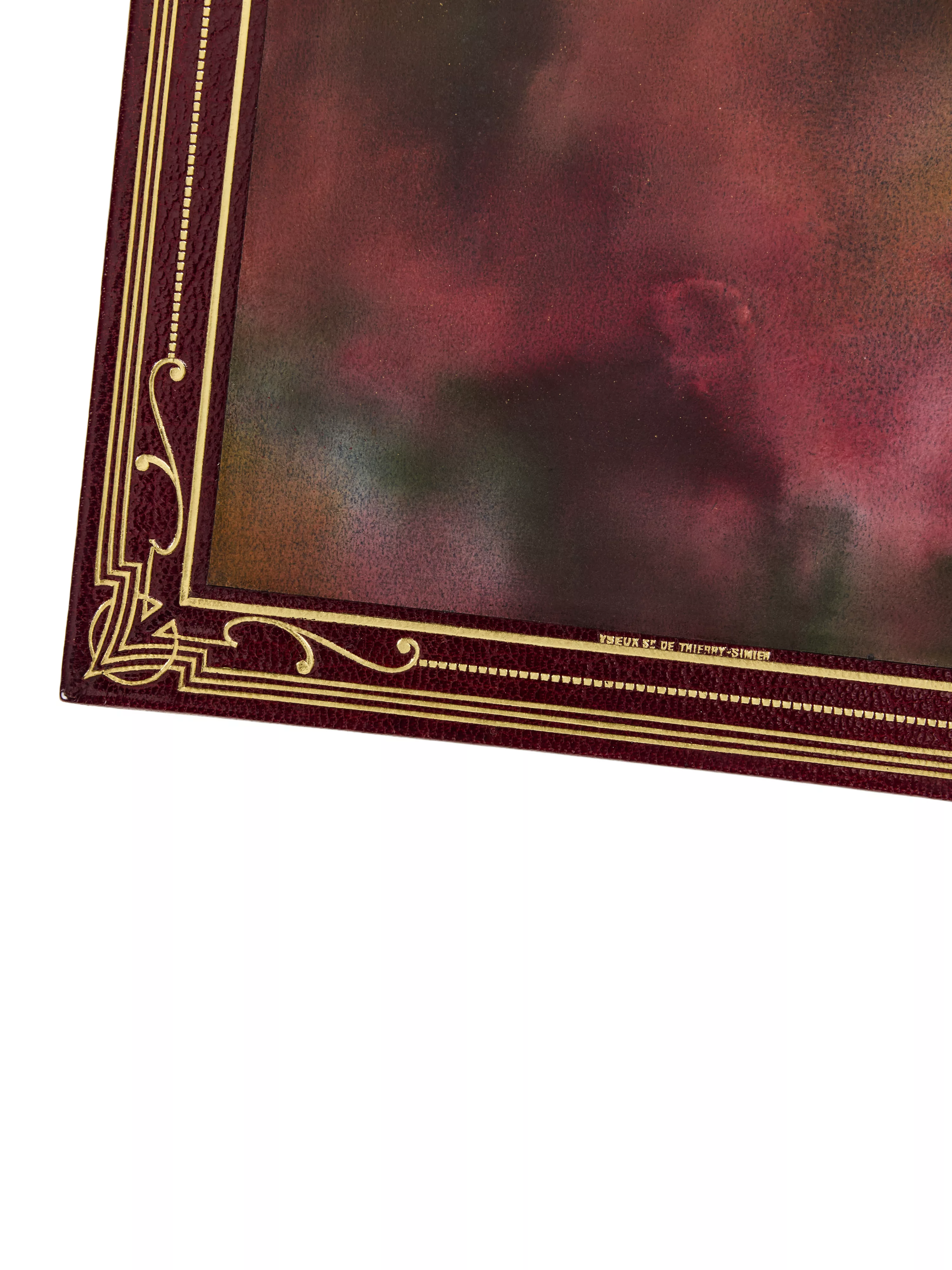
A very fine copy, in a charming edition; the cover is by Armand Rapeño. It belongs to the artist’s very earliest work and adopts a graphic language still strongly marked by fin-de-siècle aesthetics. Pelléastres is indeed among his earliest known book covers.