

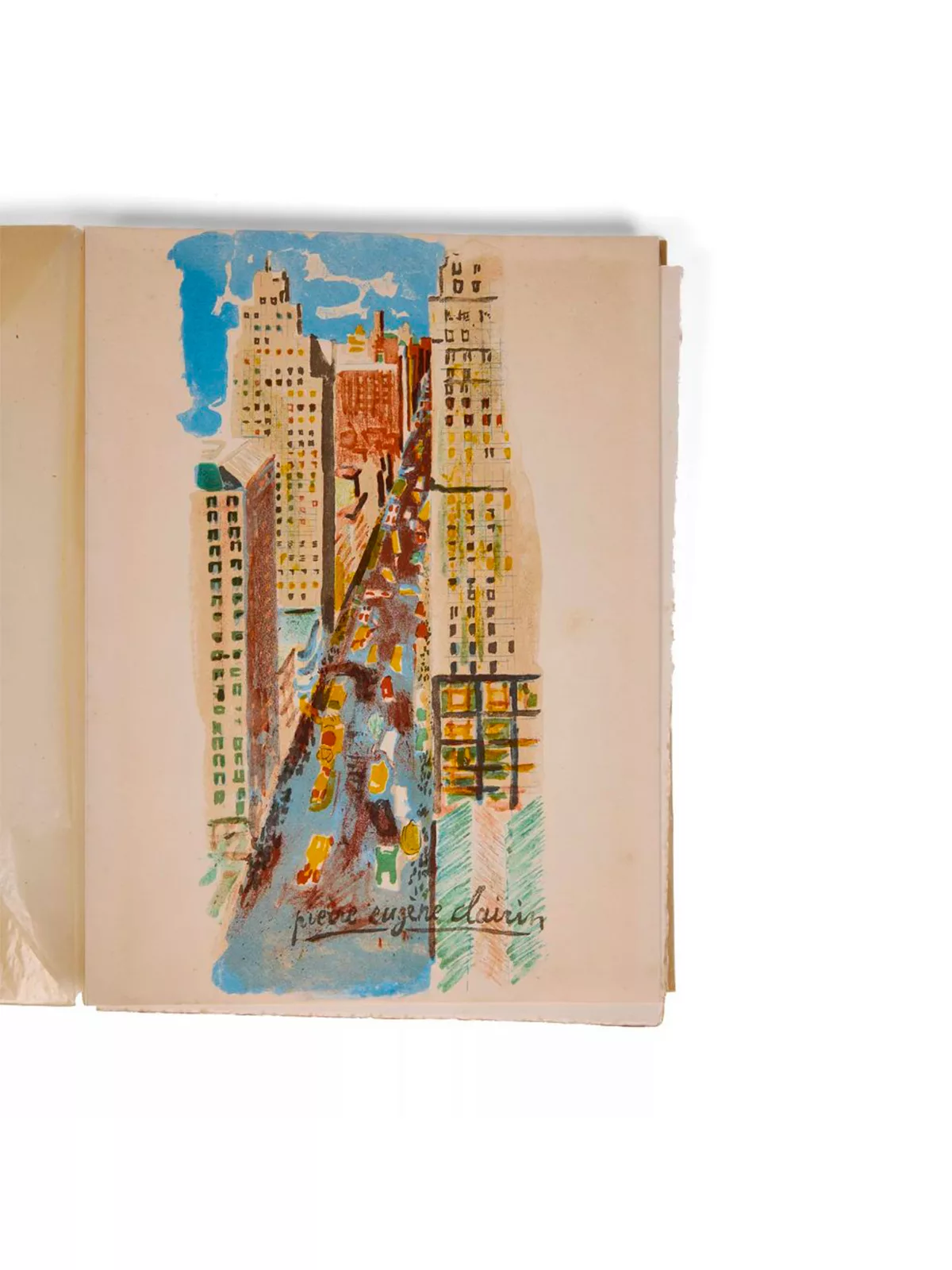
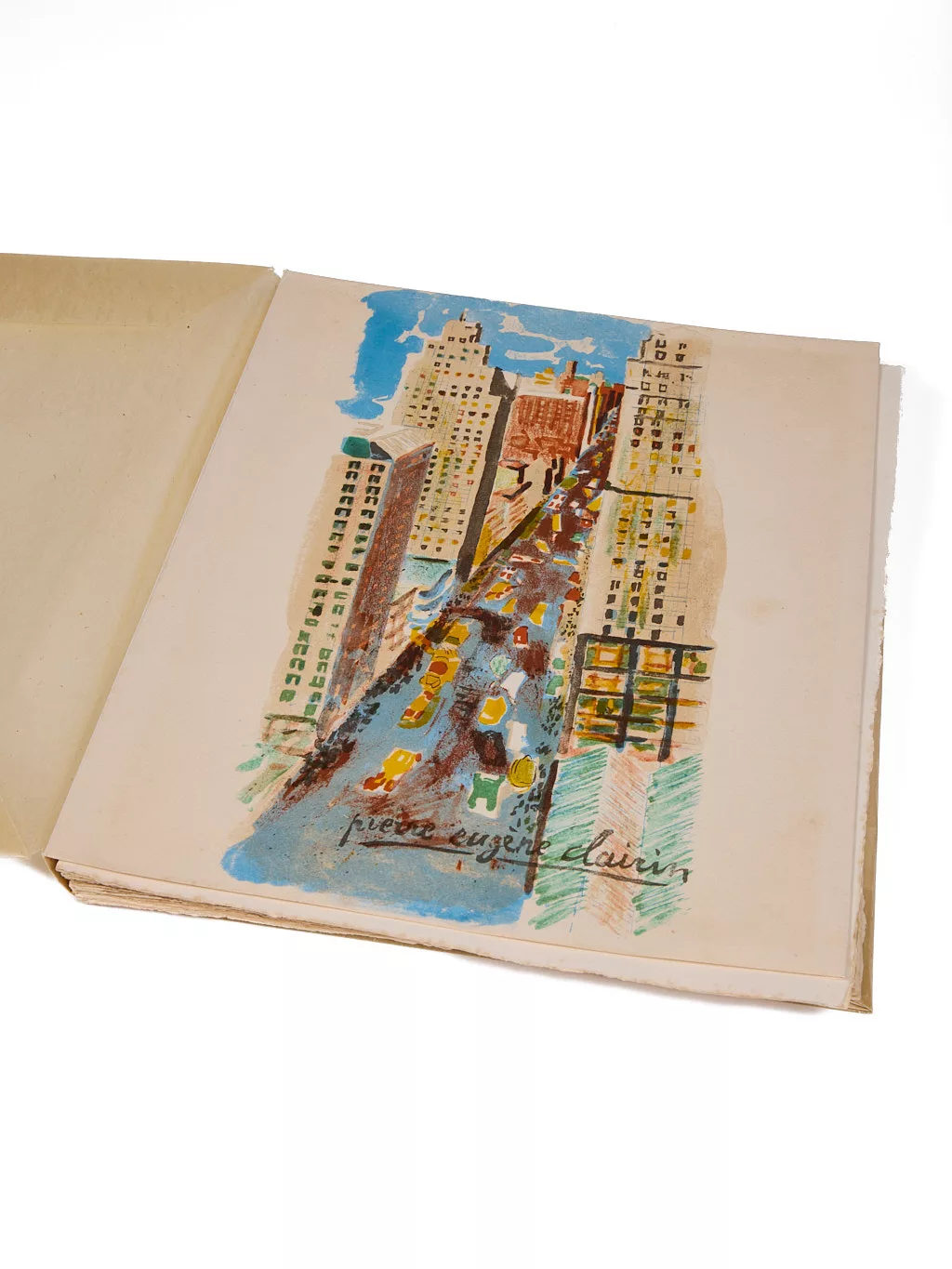
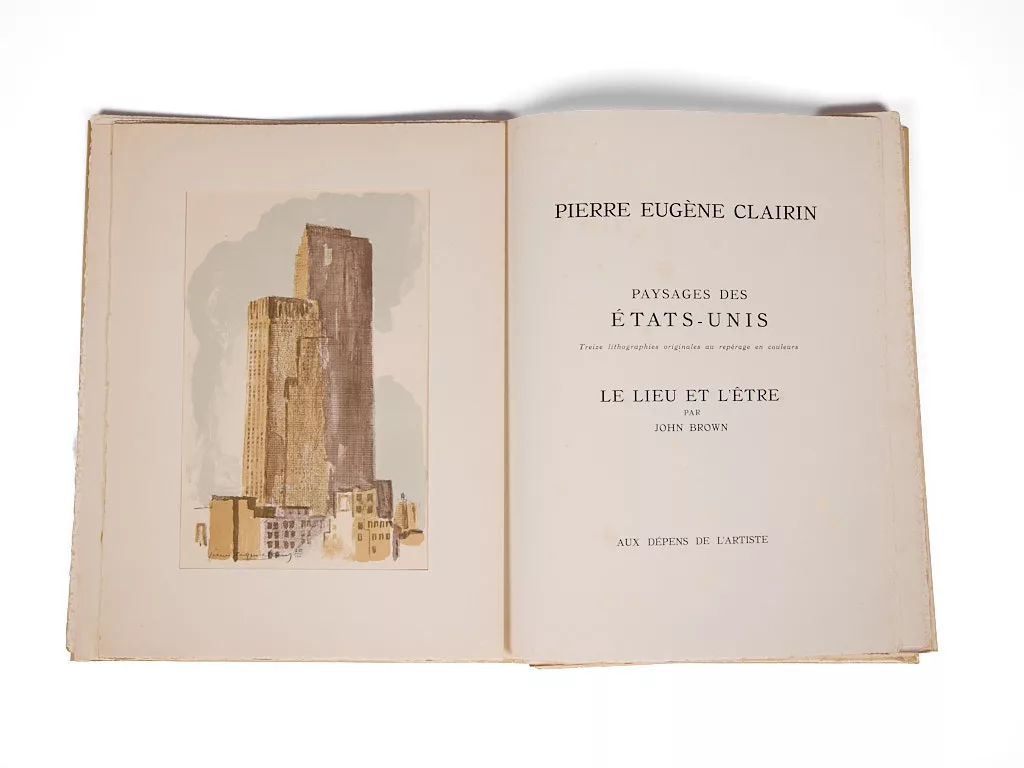
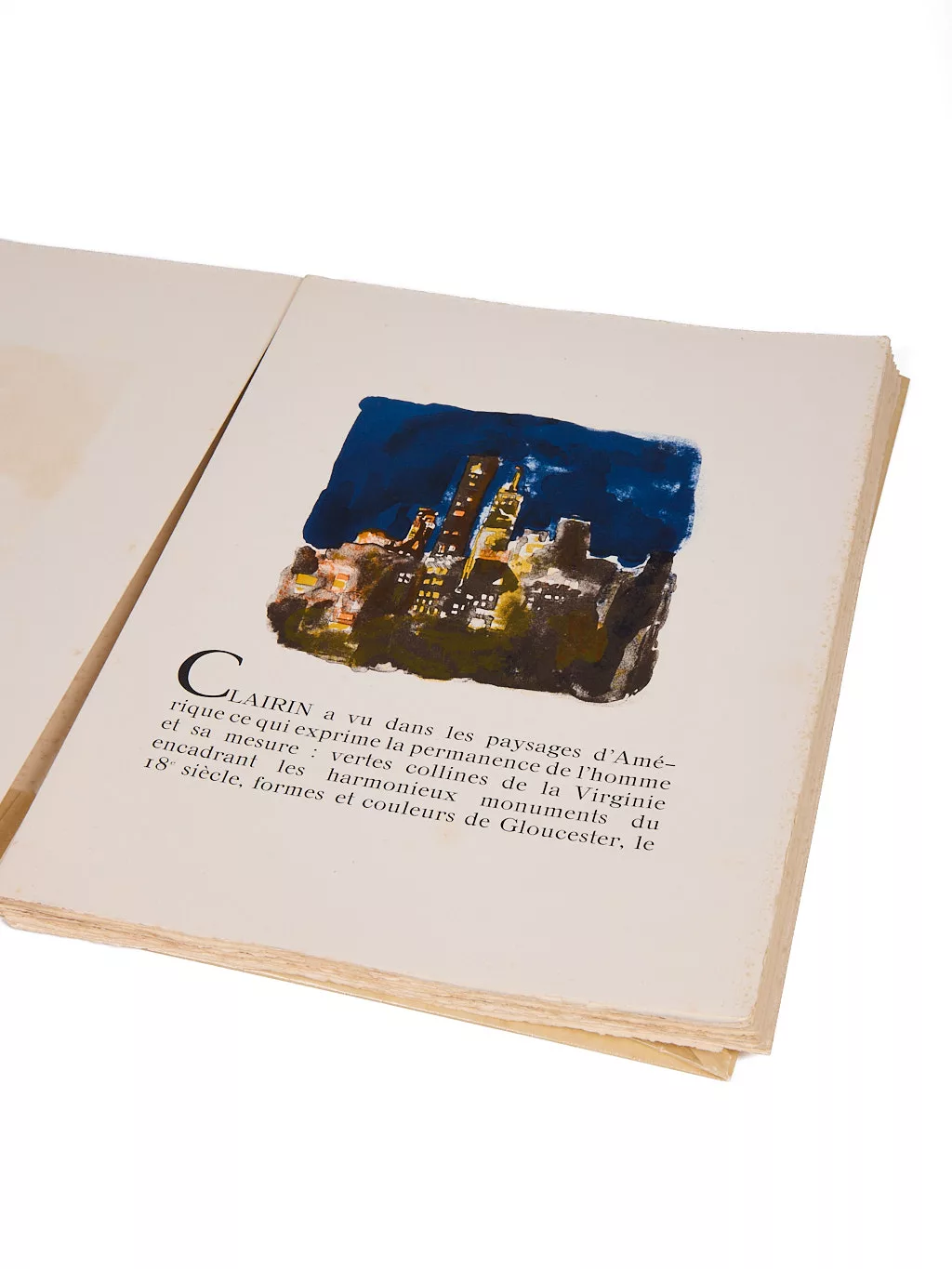
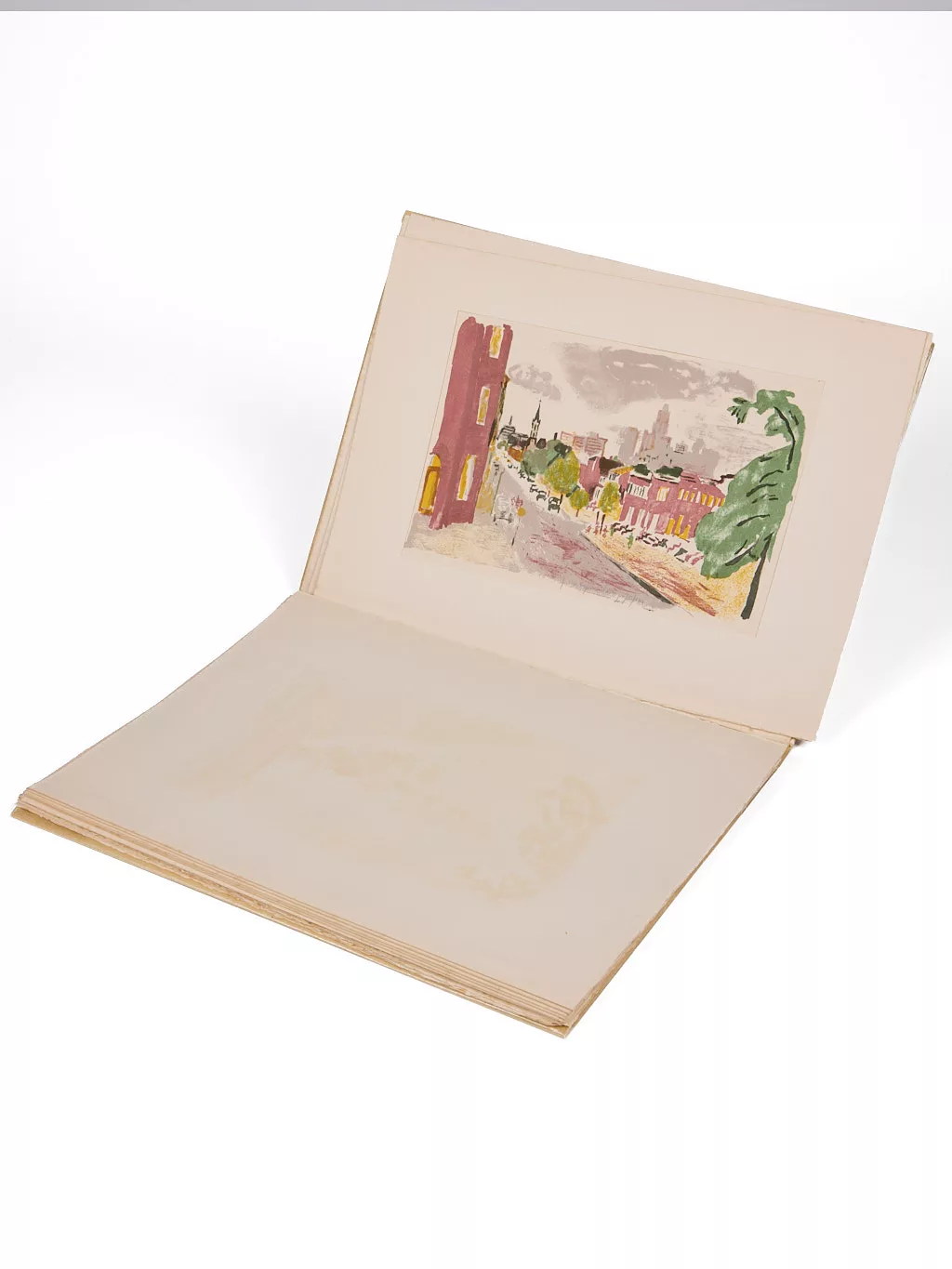
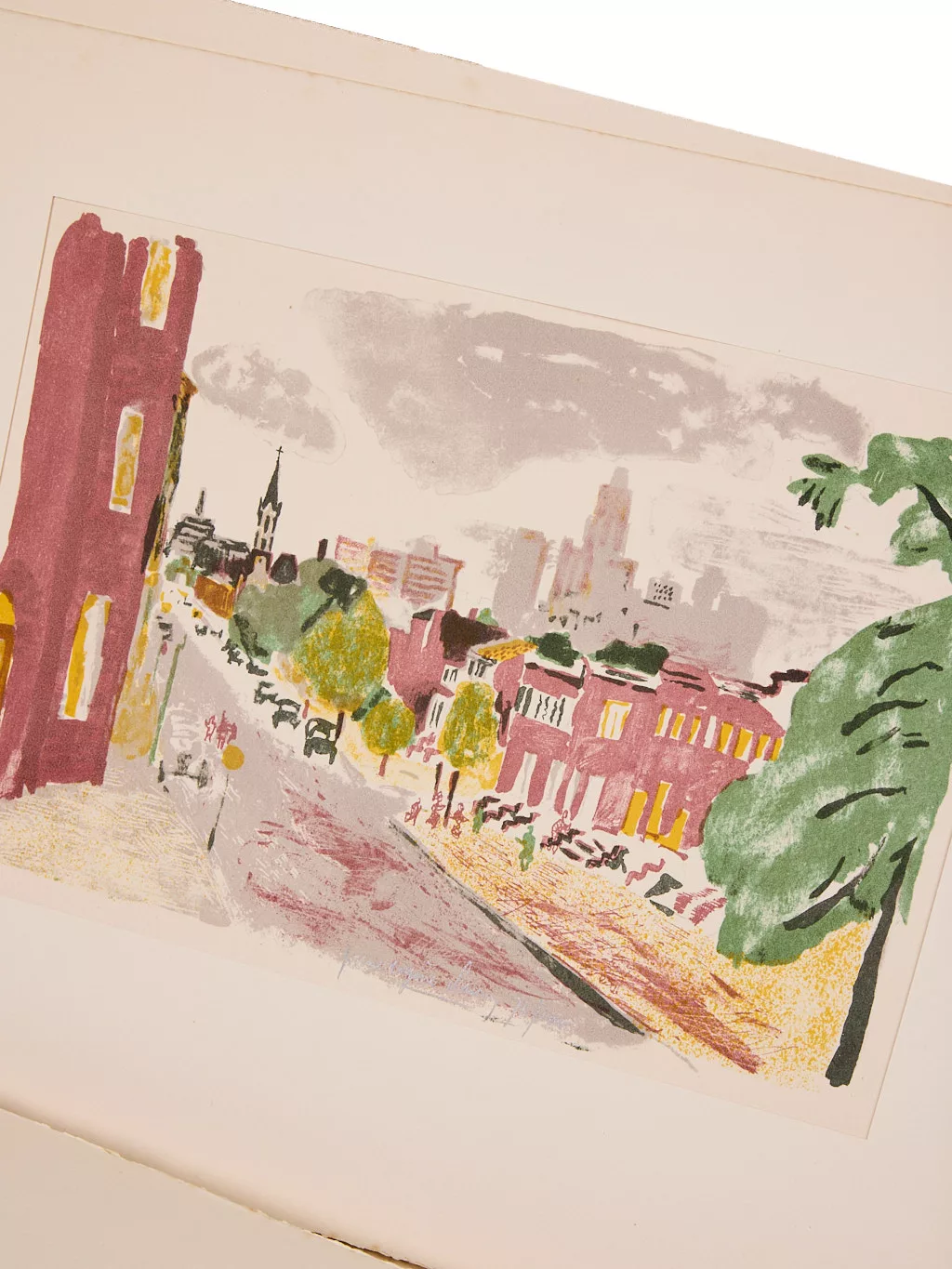
One of 115 copies on vellum (no. 75).
Clairin was introduced to Albert Camus by Marcel Damboise, a fellow resident with him at the Villa Abd-el-Tif in Algiers in 1935. It was through Camus that Clairin, in 1946, began working with the master typographer Raymond Jacquet. Together with Camus, they produced two illustrated editions of his books: Noces, in 1952, and La Femme Adultère, in 1954.
Copy no. III of Paysages des États-Unis was a nominative copy for Albert Camus, bearing this inscription: “Pour Albert Camus en témoignage d’une affectueuse et fière admiration. Merci encore, cher Camus, de votre aide qui m’a permis d’illustrer ce texte que j’aime et en témoignage de mon admiration pour vous. Bien amicalement. Pierre Eugène Clairin.”
The lithographs accompany the text by John Brown, a figure who continues to haunt the American imagination: “America’s first terrorist” to some, “a national hero” to others. He inspired many artists, including Orson Welles, who at seventeen devoted his first play to him, the long-unpublished Marching Song, in which he experimented with the technique of biography reconstructed by a journalist, later reused for Citizen Kane. In 1940, Michael Curtiz turned John Brown into a disturbing fanatic in Santa Fe Trail, a pro-Southern film in the vein of Gone with the Wind.
Henry David Thoreau wrote a long A Plea for Captain John Brown and delivered a eulogy at a service in Concord on 2 December 1859, the date of Brown’s execution.