

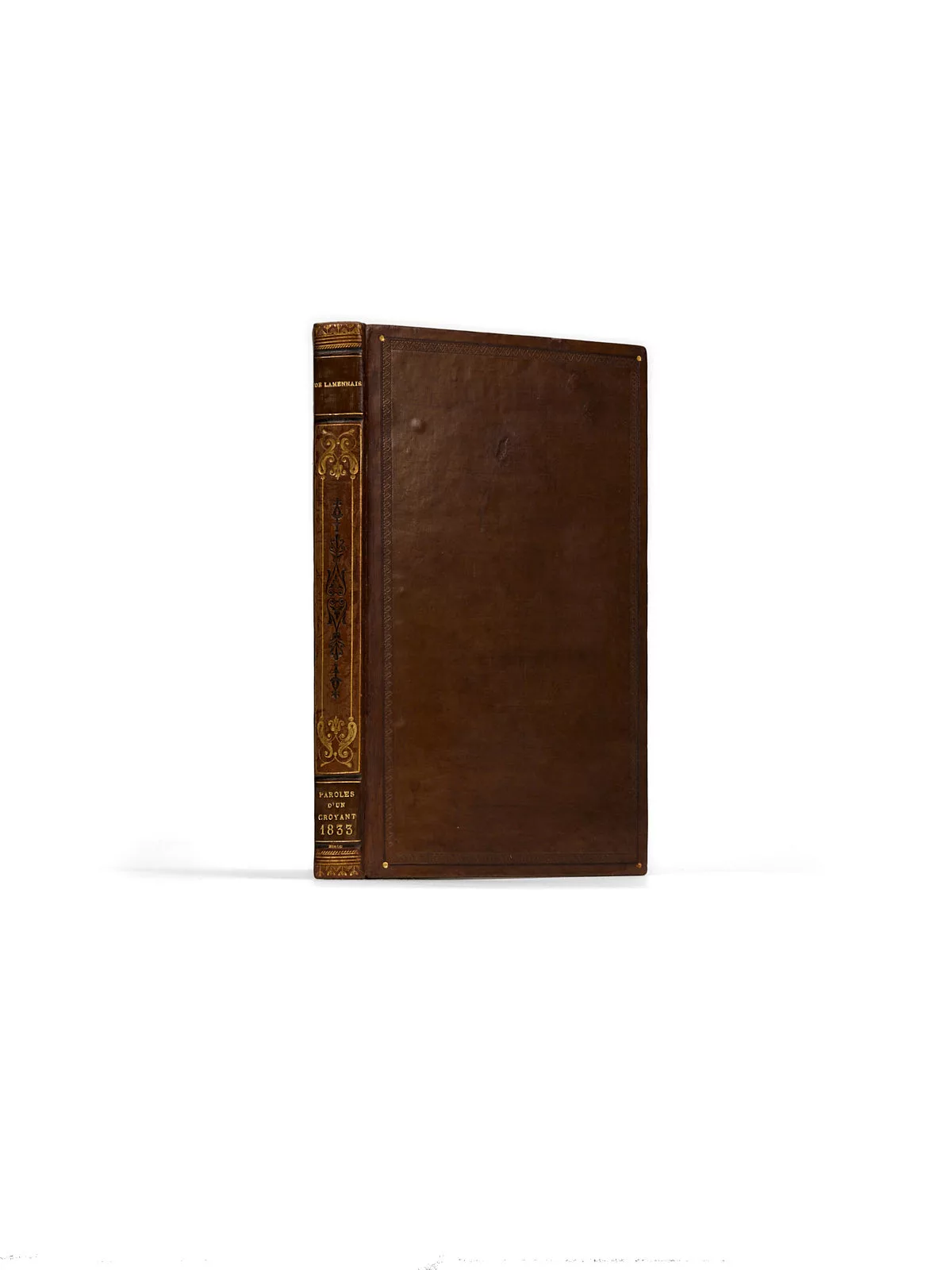
Paroles d’un croyant
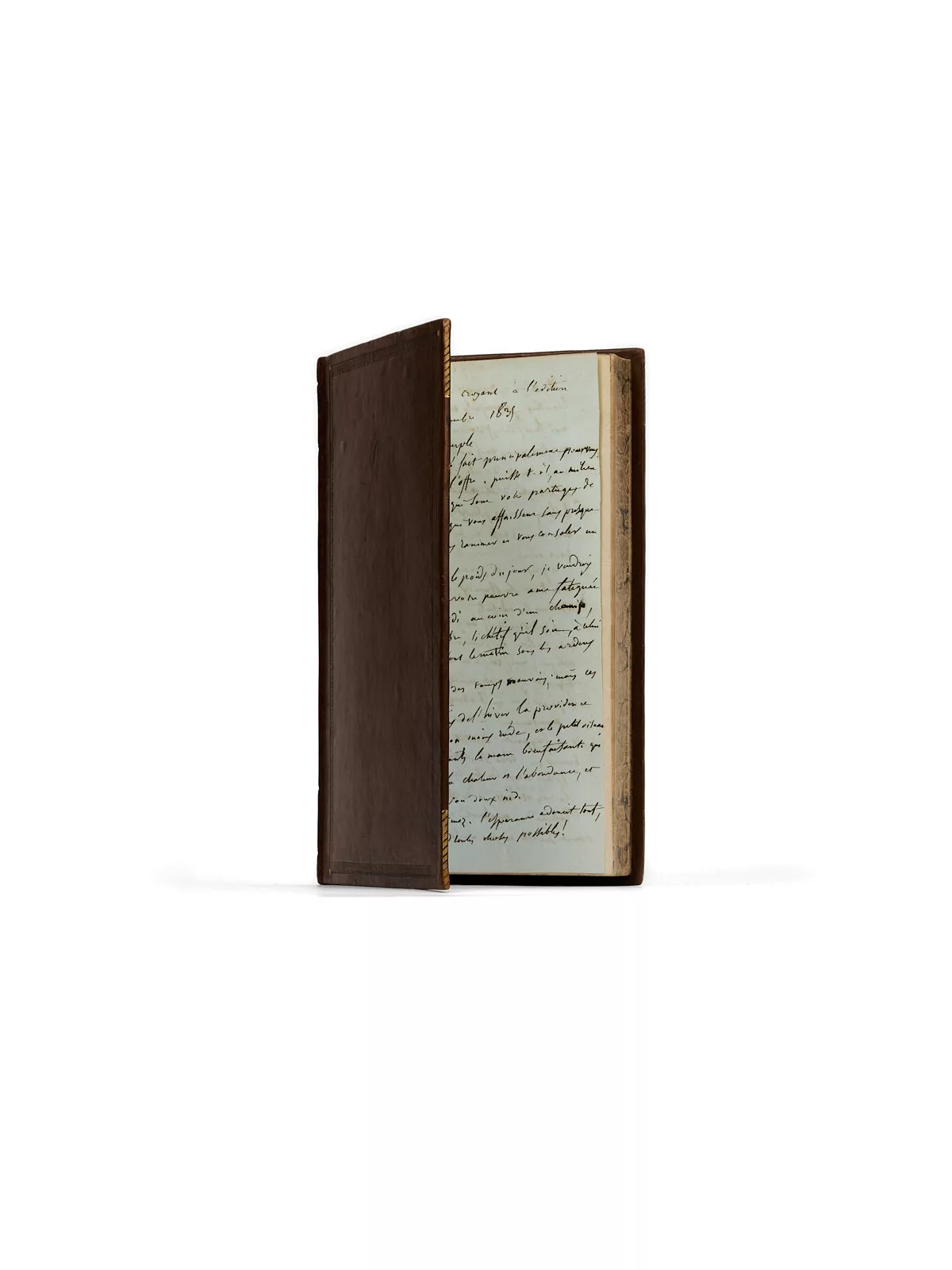
Dedicated “To the people,” “who bear the burden of the day, I would wish this book to be to your poor weary soul what, at noon, at the edge of a field, the shade of a tree, however meager, is to the man who has labored all morning beneath the burning sun,” the book prophesies the death of a Catholicism compromised with worldly powers and the advent of a regenerated, social and fraternal Christianity. Its reception was immediate and resounding: eight editions in 1834, edited under the supervision of Sainte-Beuve, who had to work with two printers as the vehemence of certain passages proved shocking to typesetters. That same year the text provoked papal condemnation and sealed Lamennais’s break with a Church he saw as “complicit with the powers that be,” while feeding, in the realm of ideas, the nascent Catholic social movement and an evangelically inspired socialist sensibility.
George Sand praised the book (“You are the father of our new Church”); Chateaubriand, speaking of the “heresy” professed by a “believer,” expressed the paradoxical grandeur of this dissent in a celebrated page of the Mémoires d’outre-tombe, recounting his visit to the Sainte-Pélagie prison where Lamennais was held in 1840: “the July Revolution has consigned to the darkness of a jail the remains of superior men whose merit it cannot judge, nor whose brilliance it can bear.” Leroux, Liszt and Arago saw in it the founding act of a politics of conscience.
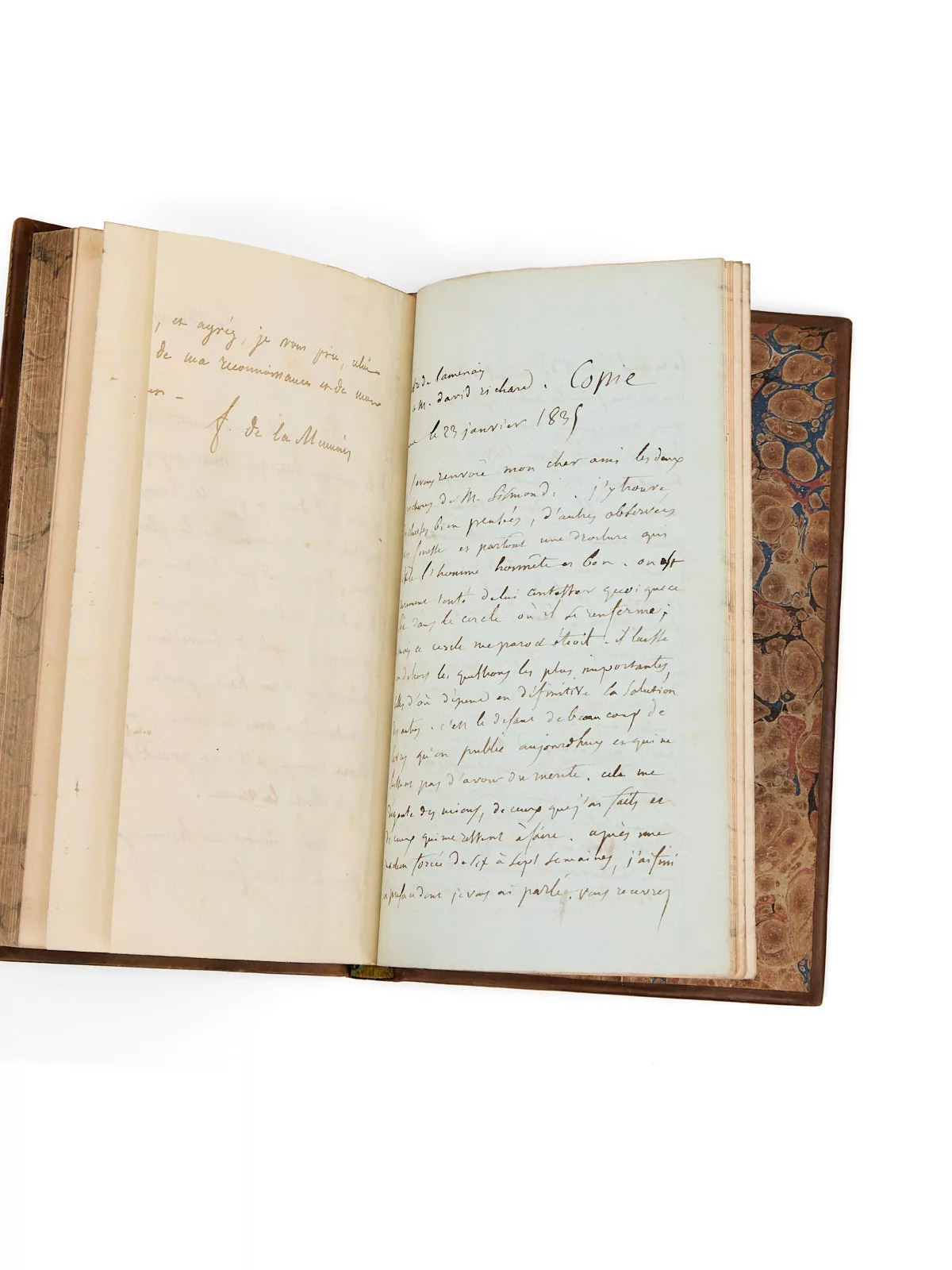
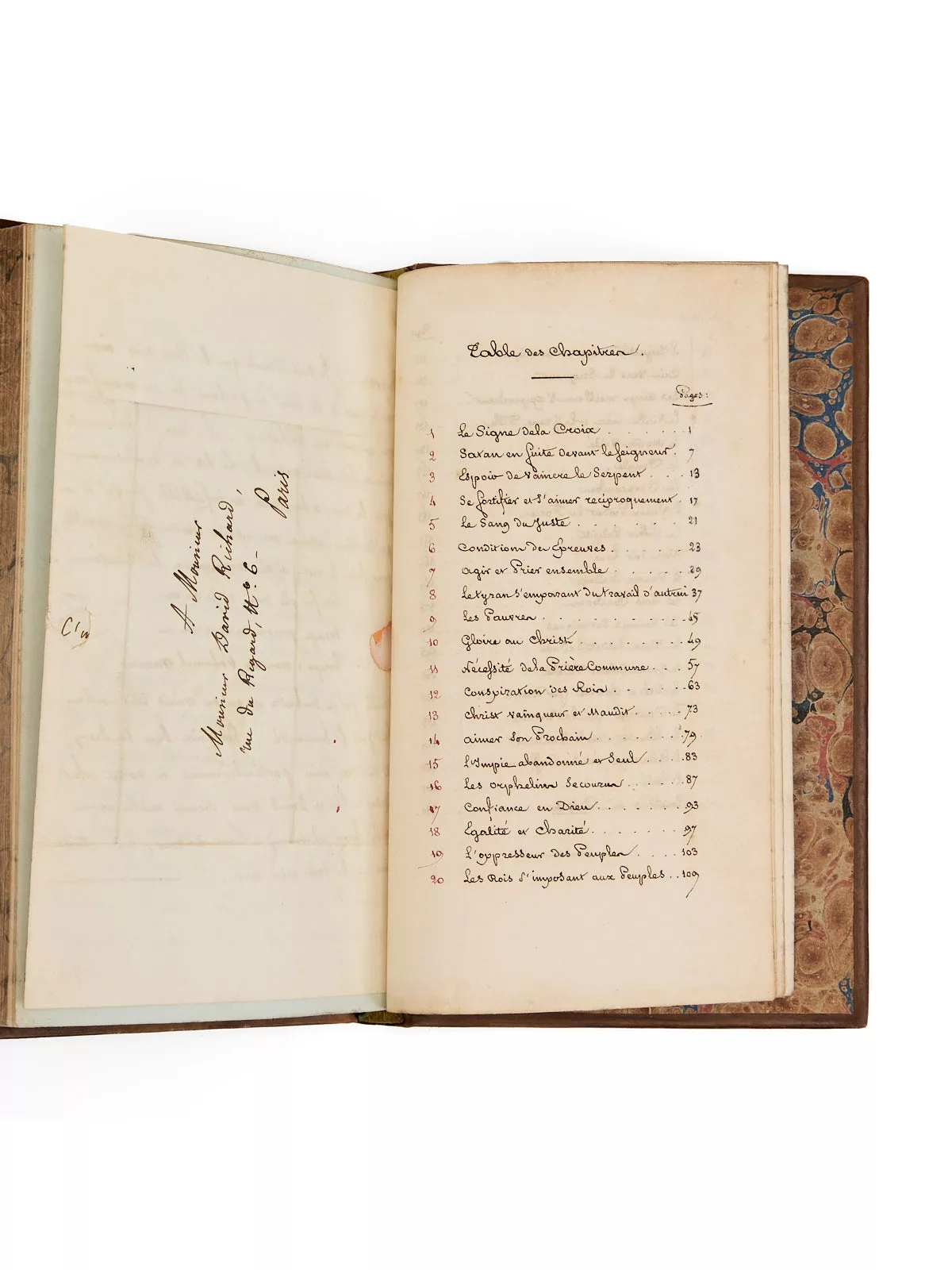
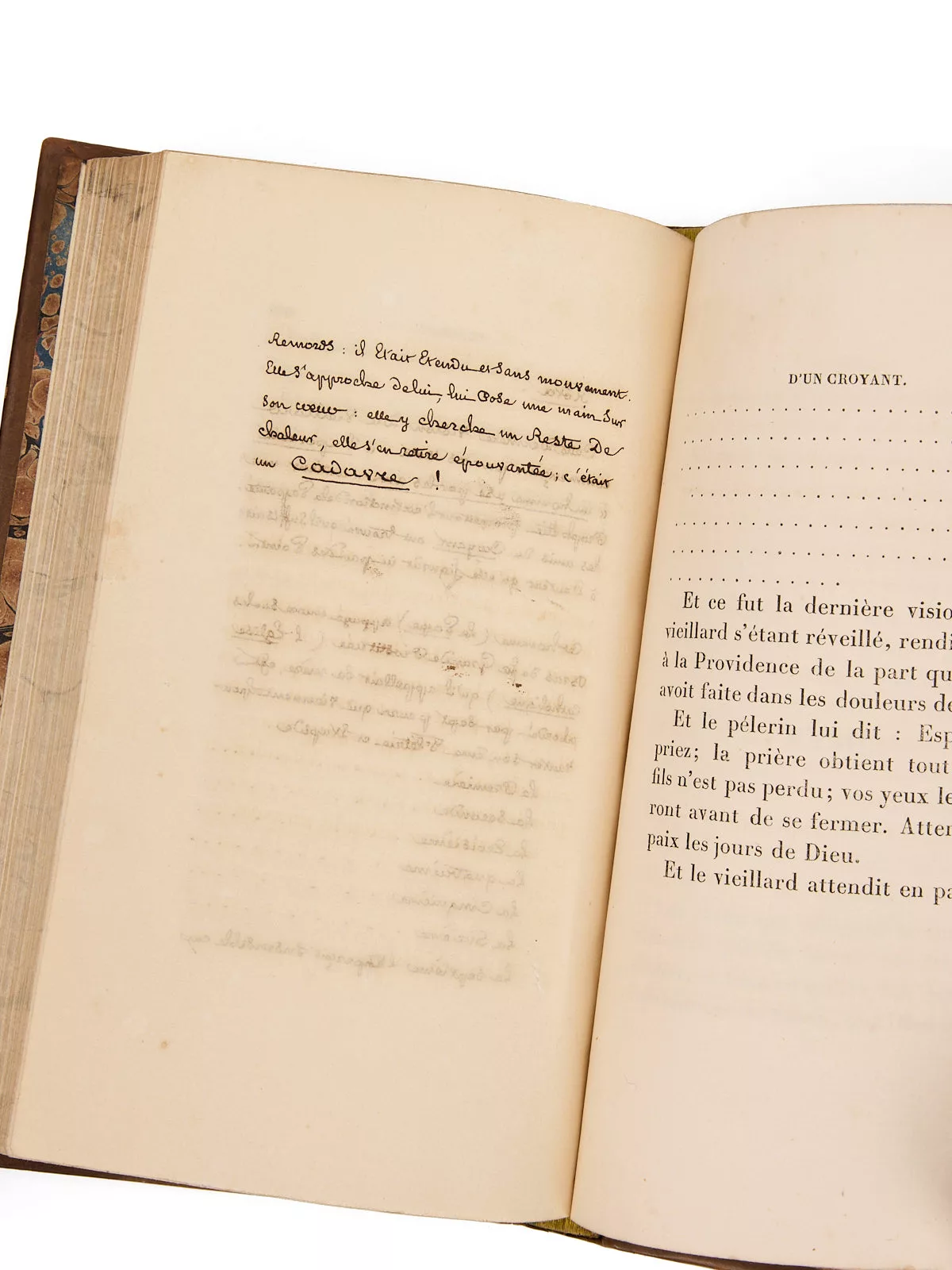
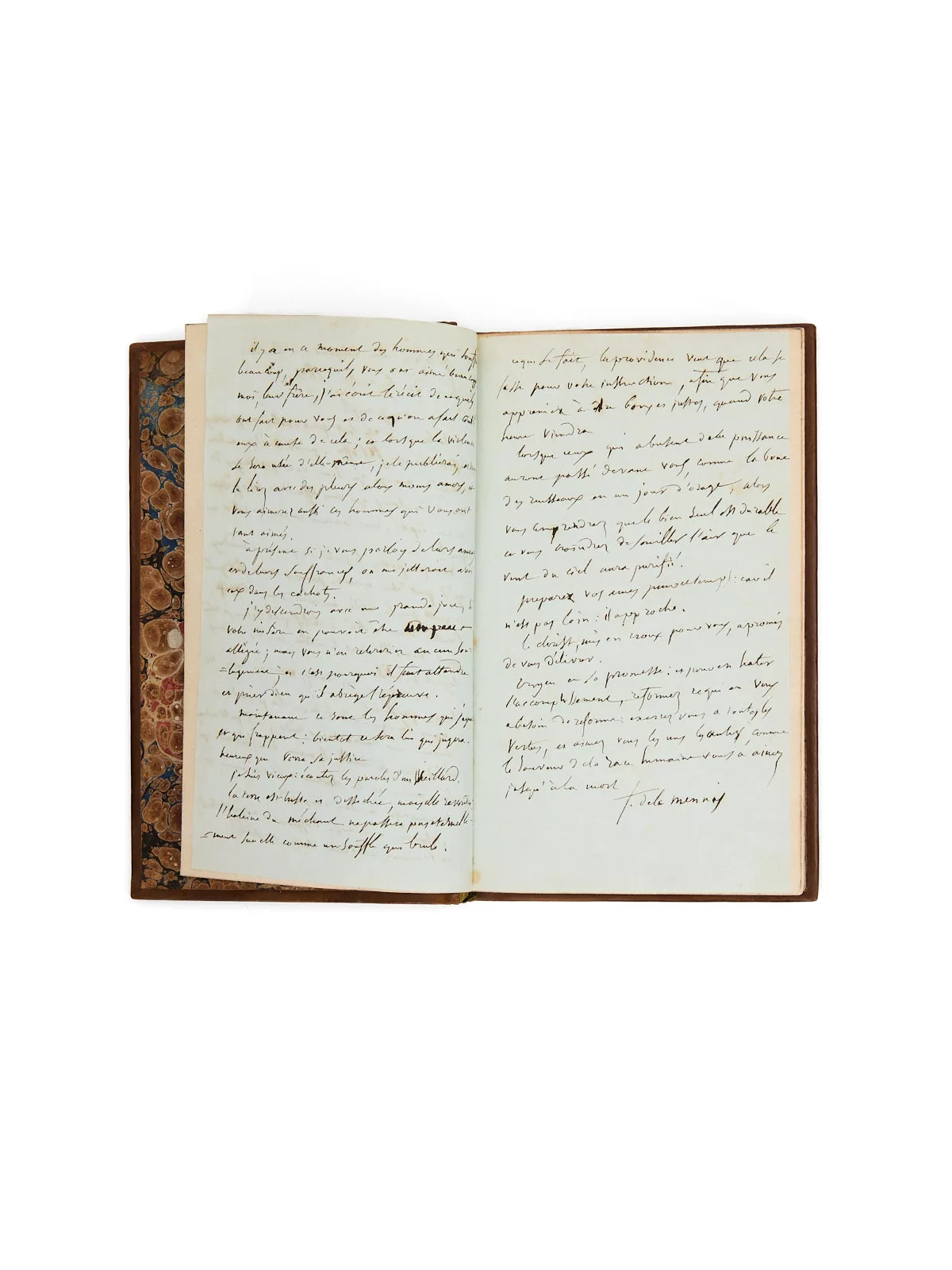
An exceptional copy in which several first-rate documents have been bound in:
– the manuscript of the preface to the popular edition of September 1835, published by Daubrée et Cailleux;
– 2 autograph leaves containing an addition to chapter 10;
– 1 manuscript table of chapters;
– 1 manuscript page for the passages suppressed at the end of chapter 32;
– 1 autograph letter signed by Lamennais to Geoffroy Saint-Hilaire (La Chesnaie, June 28, 1834, 2 pages), with autograph address panel;
– 1 autograph letter signed by Lamennais to David Richard (La Chesnaie, February 28, 1835, 3 pages), concerning his autobiography;
– 1 manuscript copy of a letter from Lamennais to David Richard (January 23, 1835, 4 pages).
David Richard, an Alsatian Protestant, met Lamennais in 1832 — a decisive encounter that exerted a lasting influence on him, notably during a six-month stay at Lamennais’s Breton manor. He entered the civil administration as chief of staff to the prefect of the Gironde (1836–1838), then took charge of the Stephansfeld asylum, where he so thoroughly transformed its management that in 1844 the Minister of Health offered him the post of inspector general of asylums so that his expertise might be more widely applied. He converted to Catholicism four years later.
A most attractive copy, bound at the time by Hirou, a well-regarded gilder-binder of the Rue Saint-Jacques in Paris, established there from 1825. After 1850 he went into partnership with Gayler, forming the Gayler-Hirou workshop on the Rue de Condé, which later became the preferred bindery of Barbey d’Aurevilly. Bindings signed by Hirou alone are rare.
“Lettre de La Mennais adressée à David Richard, datée du 29 mars 1835,” Correspondance générale de Lamennais, VI, p. 437, cited in Frédéric Lambert, 2001, Théologie de la république, Lamennais, prophète et législateur, Paris, L’Harmattan, p. 8.