

Oflag Vi A
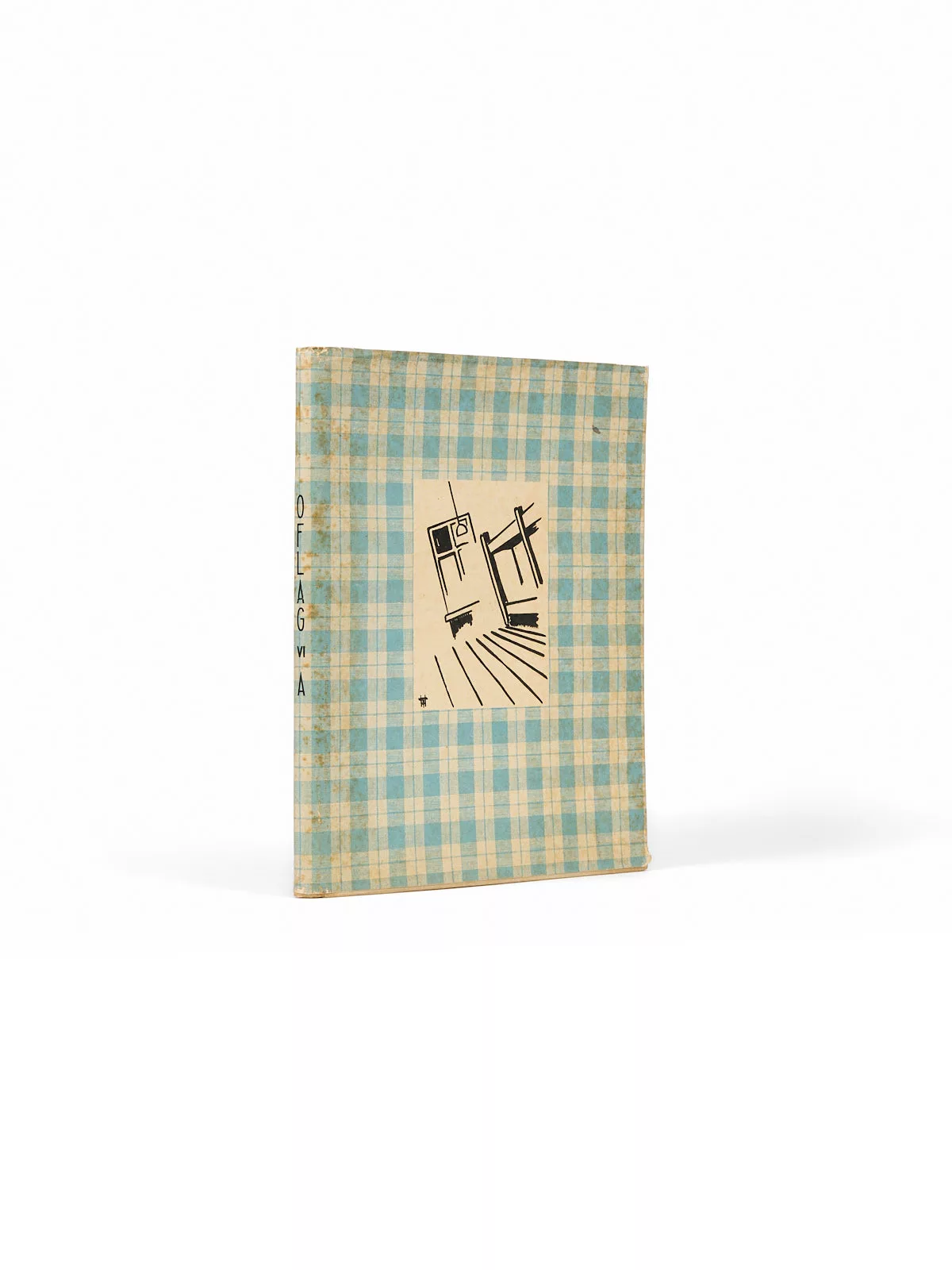
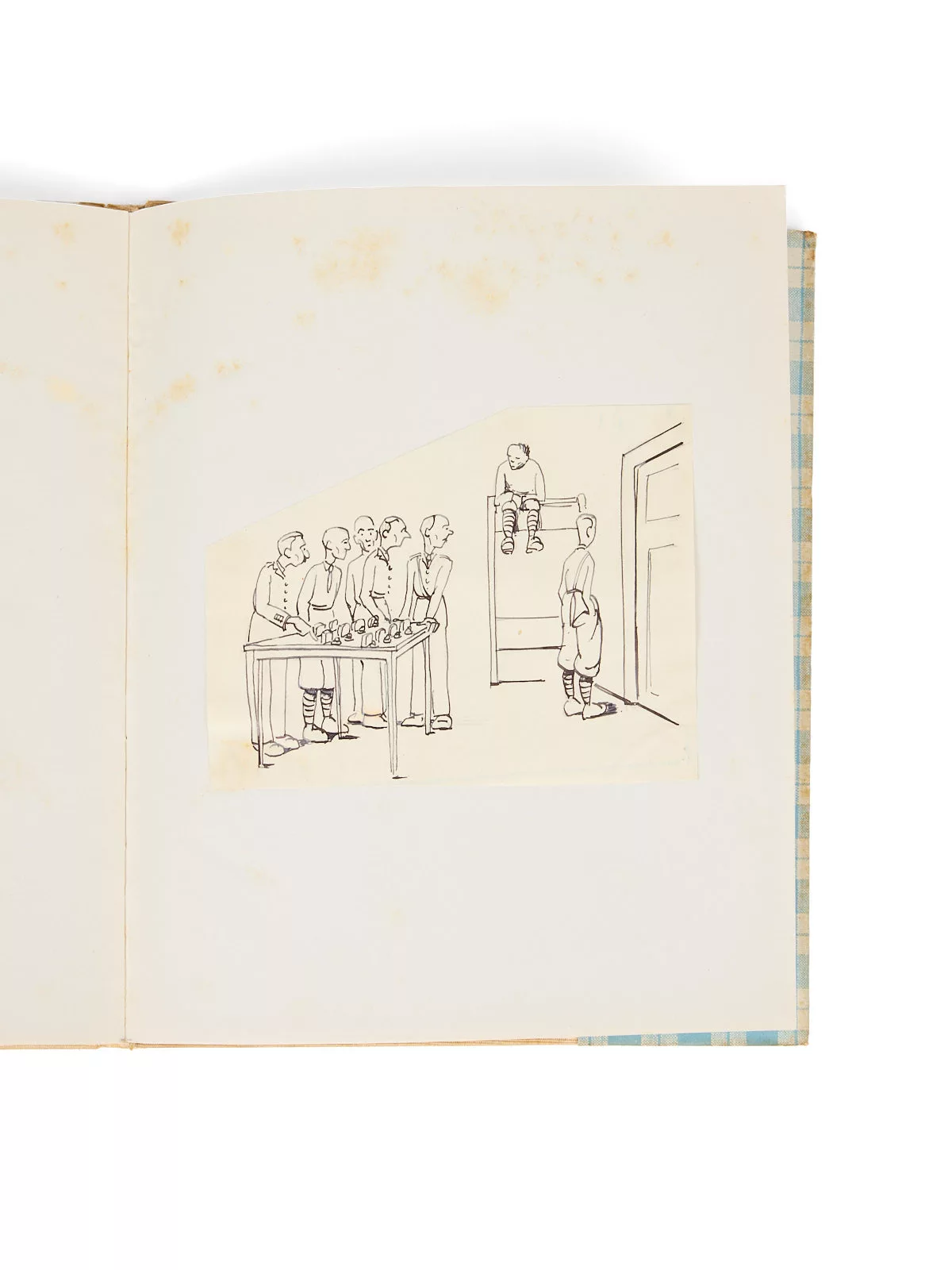
One of the first 50 “deluxe” copies with an original drawing by Morel Fatio (no. 28).
Presentation copy inscribed by Blancpain to Maurice Genevoix: “à Monsieur Maurice Genevoix en respectueux hommage au maître. M. Blancpain.”
From May to June 1940, the fighting of the Second World War caused nearly 100,000 deaths, and 1,900,000 prisoners of war were sent to the oflags and Stalags scattered across the Third Reich. Among them, nearly 36,000 officers were sent to oflags — an abbreviation of Offizierslager [officers’ camp] — and 20,000 of them remained in captivity until the camps were liberated by Allied troops in 1945.
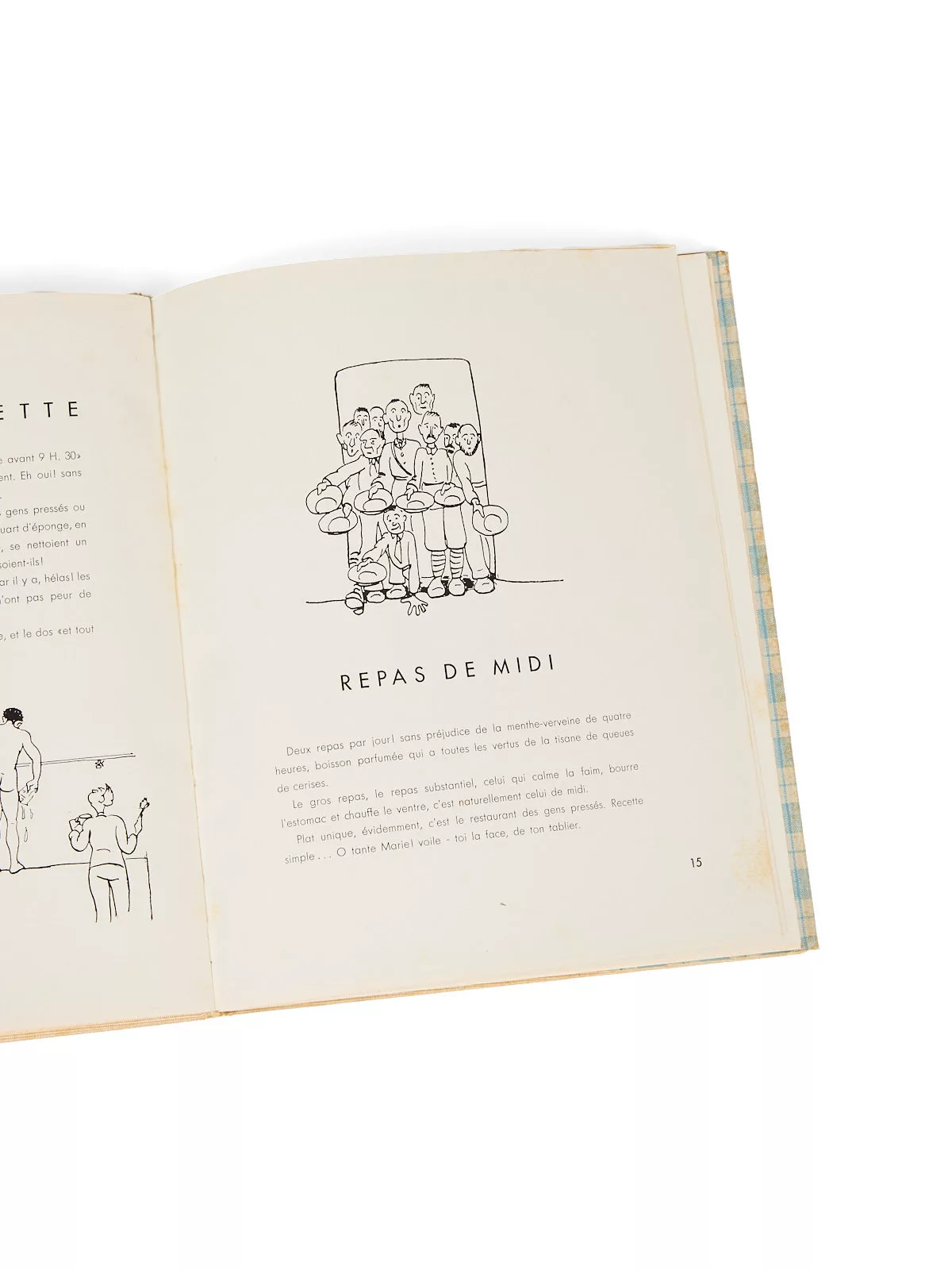
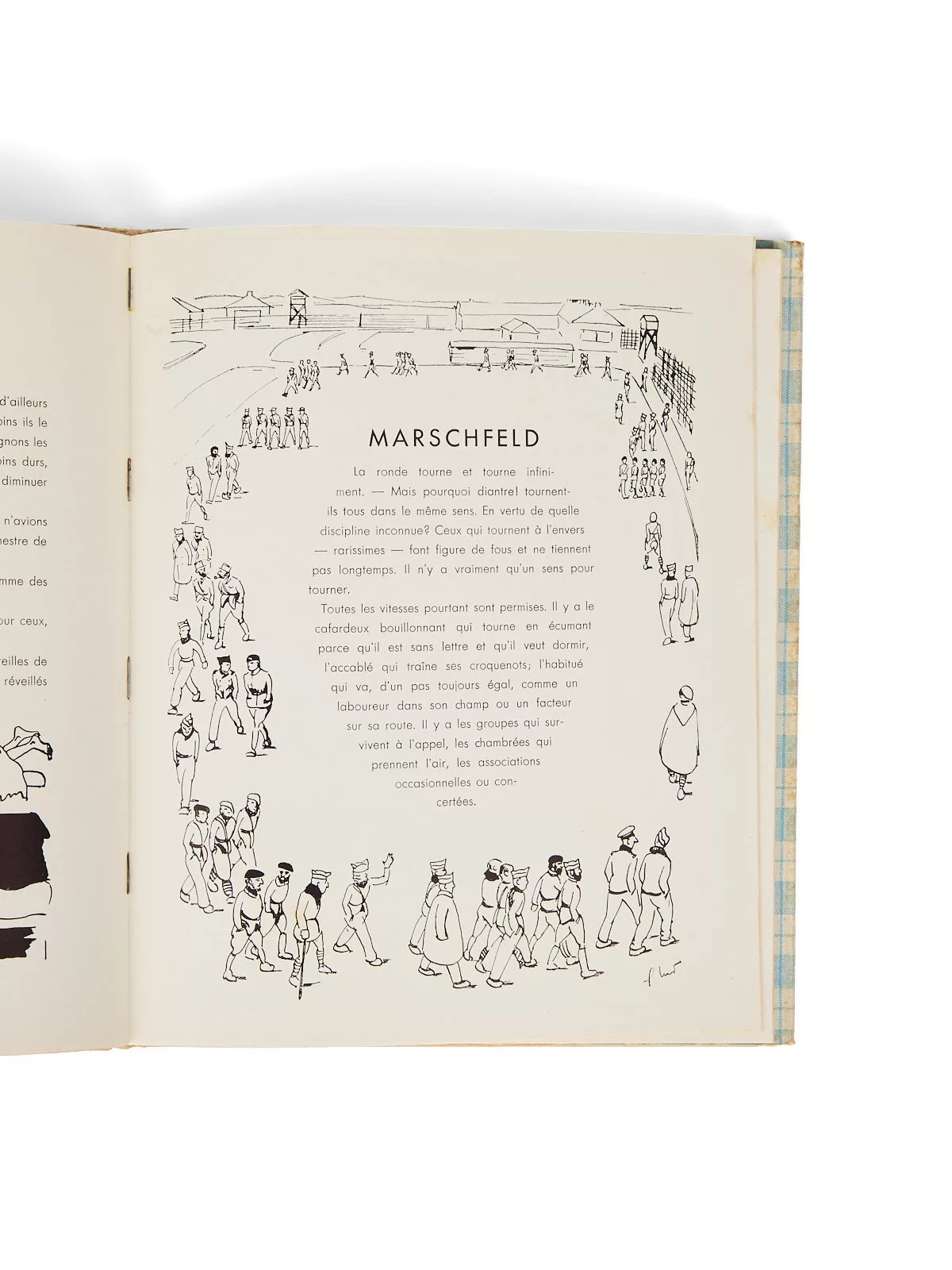
This publication, describing daily life at Oflag VI A in Soest — east of Dortmund, in Westphalia — was produced on site and printed in the nearby town of Wuppertal-Elberfeld, by Marc Blancpain: a graduate in literature and of the École normale supérieure, he had taught in Geneva and then in Cairo until 1939, when he was mobilized as an infantry officer. He was taken prisoner in June 1940 and remained in captivity in Germany until 1943. There he led the Cercle d’études de la Révolution nationale, in a camp that had also held Robert Brasillach, who, at the official request of the German embassy in Paris (which had kept a list of ideologues ready to serve the Nazi cause since October 1940), was quickly released: he returned to Paris in March 1941 to resume his post as editor-in-chief of the weekly Je suis partout.
The front cover illustration depicts a view of the barracks room; it is followed by several scenes of camp life, drawn by Morel Fatio, illustrating the daily occupations of this oflag, which held up to 4,000 prisoners — including two generals and two colonels of the French army — and was liberated by American troops on April 6, 1945. The cover drawing is the work of Henri Tougard, while the layout of the album was designed by Michel Kieffer: a graduate of the École Estienne and the École des Arts décoratifs, he was the son of the binder and publisher René Kieffer, under whom he had practiced bookbinding since 1936. He succeeded his father at the head of the bookshop from 1958.
Marc Blancpain was released in early 1944 and returned to Paris to resume his work in the press; he wrote the editorial of Le Parisien libéré on August 25, 1944 — the first issue after the Liberation of the city — and gave the first free press review on the radio, before becoming secretary general of the Alliance française, which he later presided over from 1978 to 1993. Maurice Genevoix and Marc Blancpain would meet again twenty-five years later, when both sat on the Haut comité pour la défense et l’expansion de la langue française, created in March 1966 by Georges Pompidou, then Prime Minister.
Delphine Richard, “Prisonniers de guerre juifs…,” PhD thesis, Université Lumière Lyon II, June 2021, pp. 675–683.