

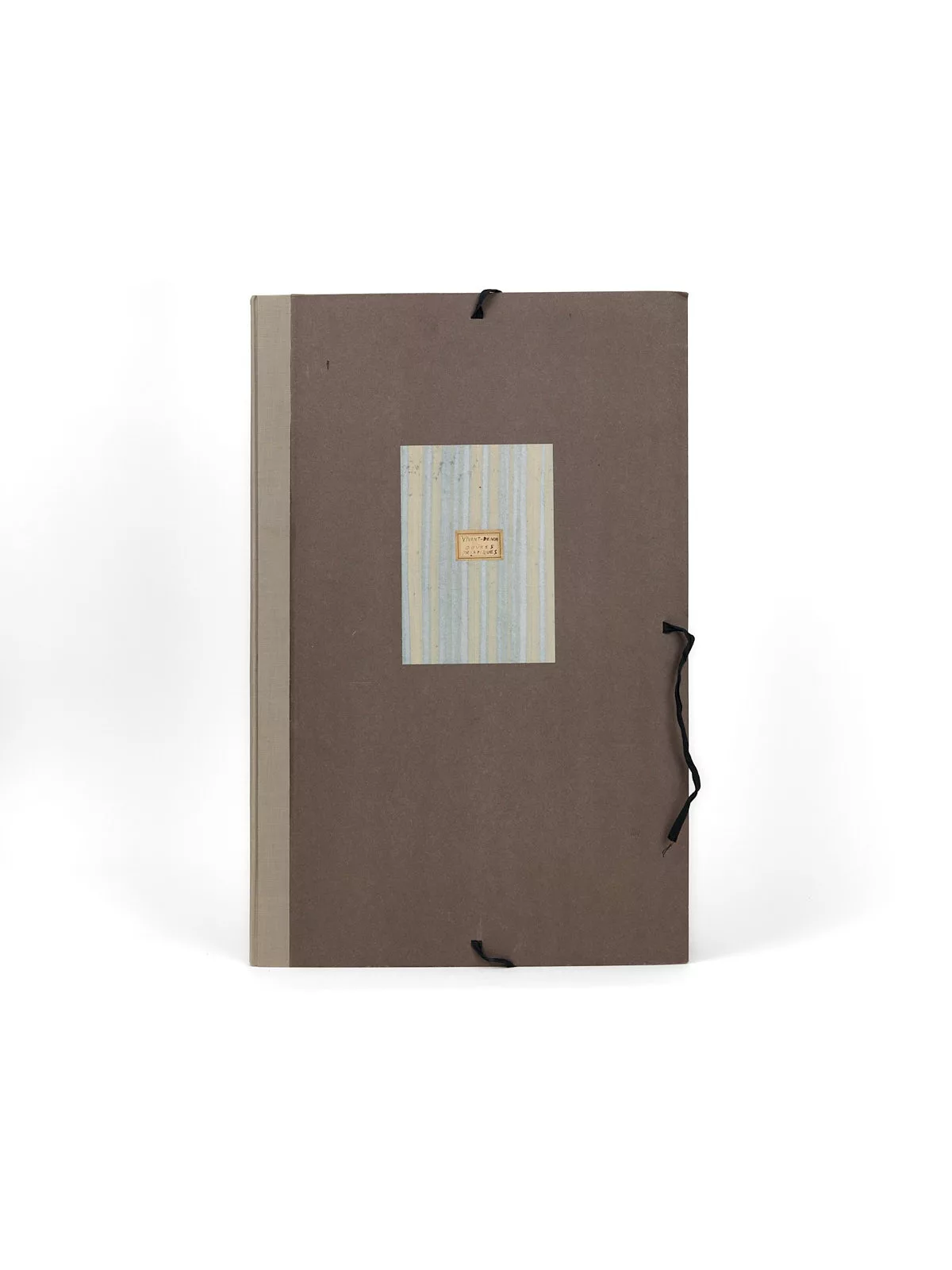
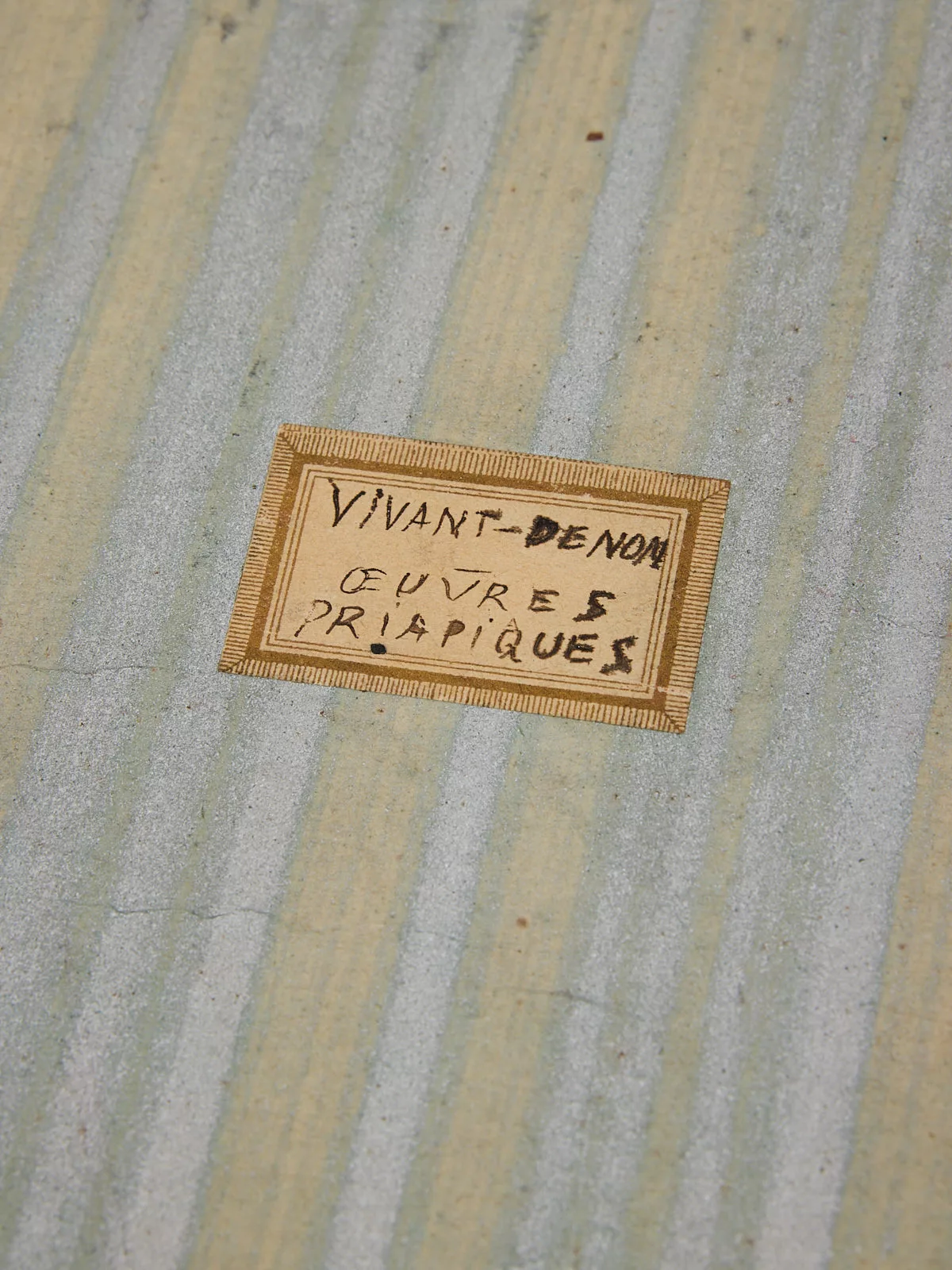
OEuvres priapiques
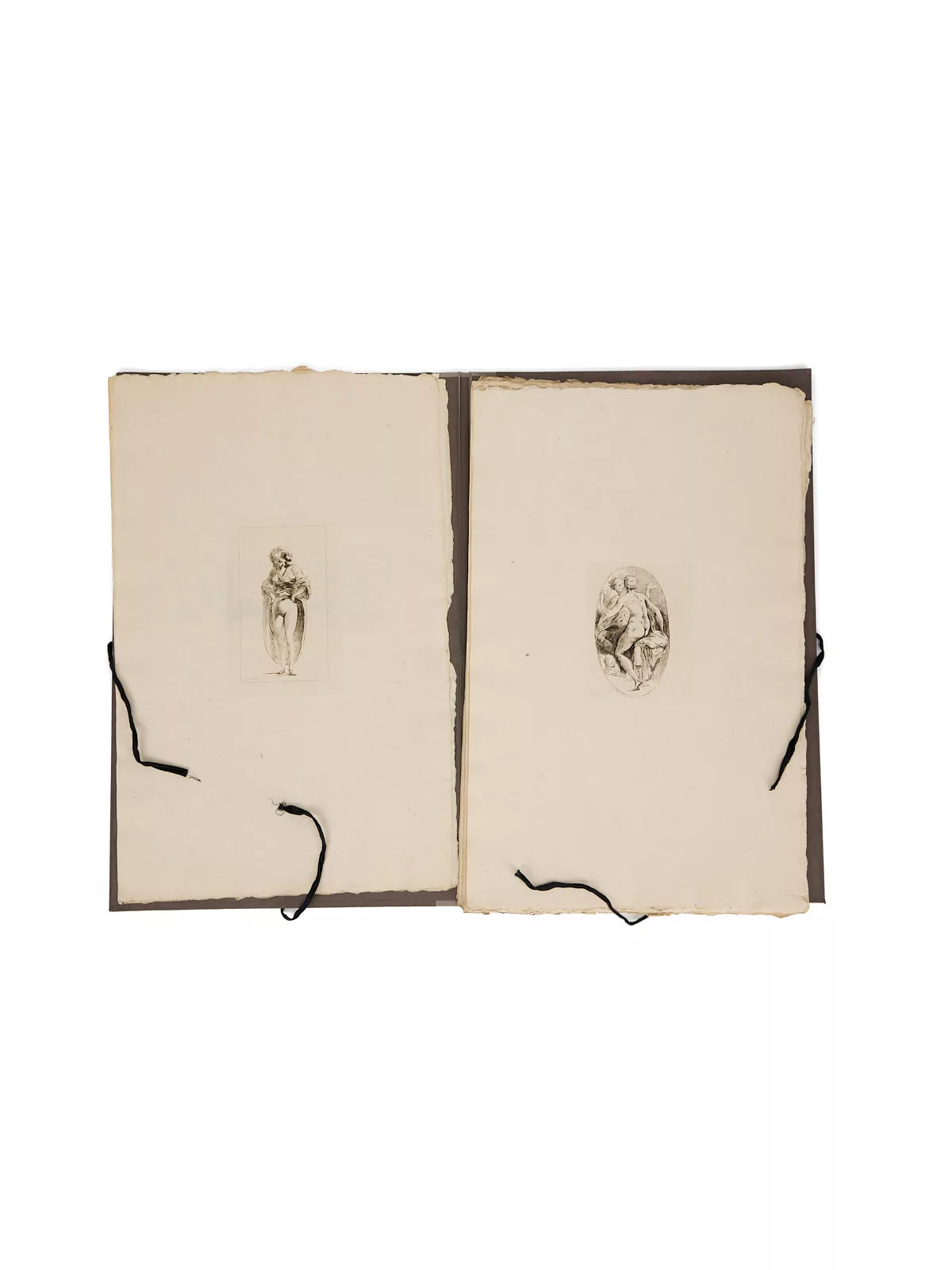
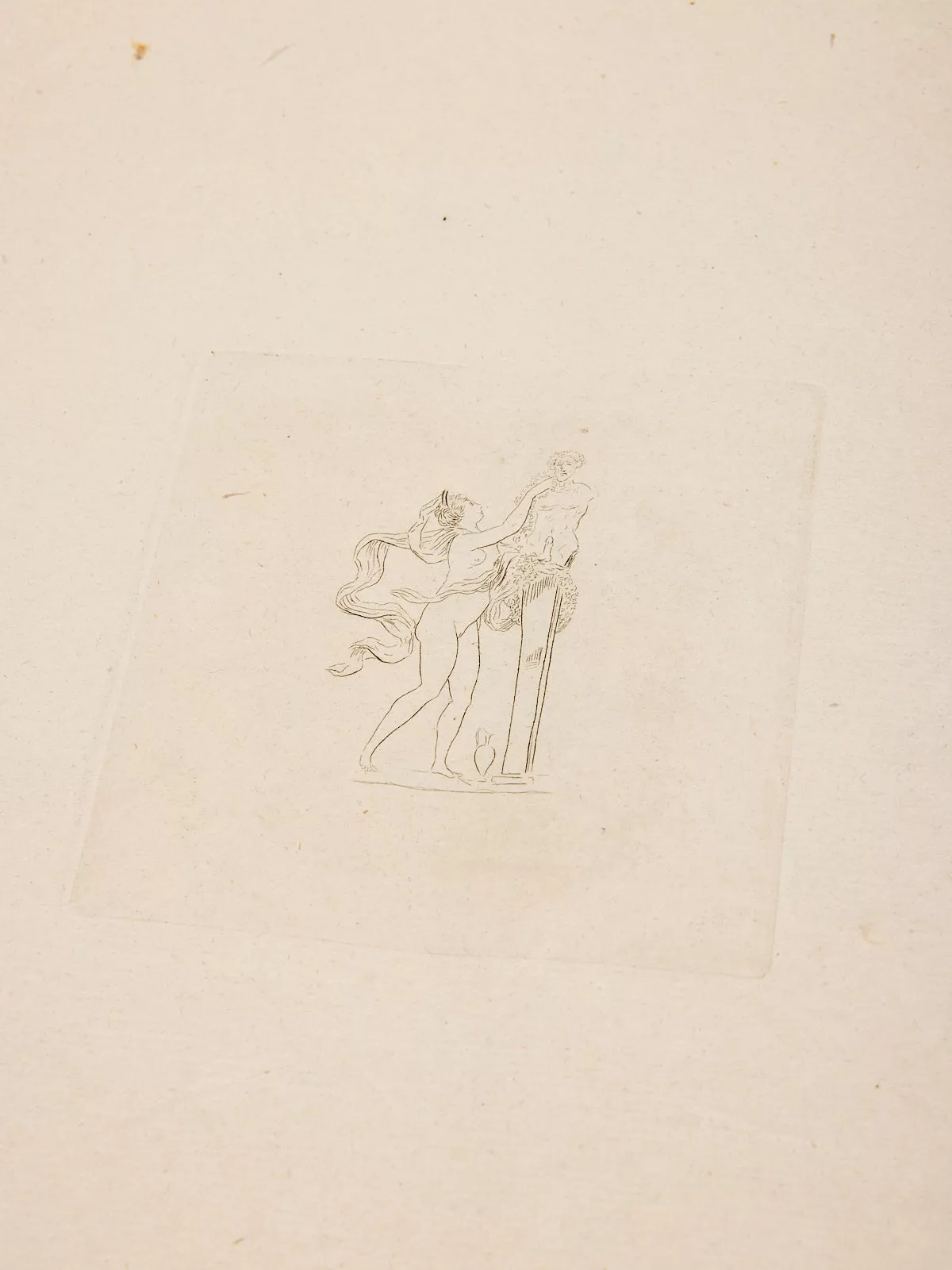
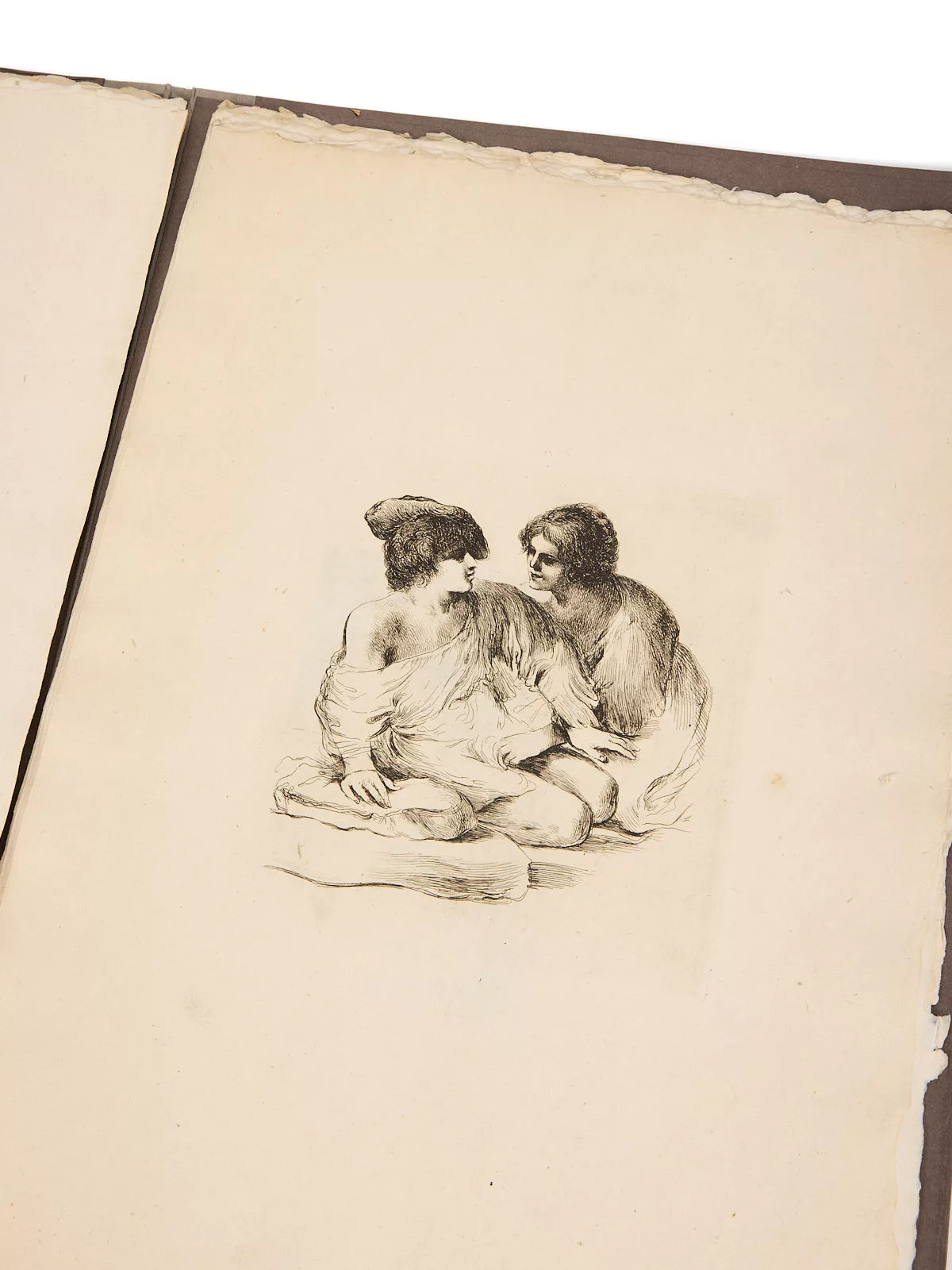
It comprises a folio volume in sheets of 31 etchings, drawn and engraved by Dominique-Vivant Denon, in impressions on laid paper, with very generous margins.
Bibliographers trace the first assembly of these compositions to 1793: under the title OEuvre priapique, a set of 23 etchings was reportedly published clandestinely in Paris by N.-C. Aubourg, hôtel Bullion, rue Jean-Jacques-Rousseau. The venture was audacious, to say the least: in the midst of the Terror, when public morality had become a political matter, the circulation of such an openly licentious collection could expose both author and publisher to serious risk.
This first printing is extremely rare today, and its exact composition remains difficult to establish. Denon had engraved several of these plates as early as the 1780s; some are dated 1787, others from the first years of the Revolution. The series was later expanded to 31 subjects, the state in which it is known through later printings taken, nearly a century afterward, from the original copperplates.
The bookseller-publisher Auguste Barraud had in fact acquired a significant portion of Denon’s plates. Around 1872–1873 he used them to publish L’Œuvre originale de Vivant Denon, a vast compilation of his engraved work, in which the priapic compositions were finally made accessible to collectors. Separate printings of the suite also circulated in small numbers, often under deliberately vague addresses.
The set reveals an unexpected facet of the man who would become the draughtsman of the Egyptian expedition and later the first director of the Musée Napoléon. Here Denon recaptures the freedom of tone of the waning eighteenth century — that of the libertine tale, caricature, and the cabinet print. The eroticism is less gallant than burlesque: ancient gods, satyrs, nuns, oriental couples and sexual personifications form a theater in which the grotesque vies with archaeological fantasy.
The famous plate of the Phénoménal Phallus, surrounded by tiny bustling figures, playfully parodies the motif of Gulliver stranded among the Lilliputians. That of the Sick King Phallus, in turn, transforms the male body into a fallen sovereign, receiving physicians and courtiers.
The Louis Perceau provenance gives this copy added interest. A bibliographer, writer and great connoisseur of clandestine literature, Perceau was, together with Guillaume Apollinaire and Fernand Fleuret, one of the authors of L’Enfer de la Bibliothèque nationale. His library brought together the principal texts and documents in the history of printed erotica. The presence of this Denon suite in his collection is therefore particularly significant.
A very fine copy, complete with all 31 etchings, in remarkable condition.
From the library of Louis Perceau.
Cohen-de Ricci, col. 285; Gay-Lemonnyer, III, col. 451.